

Why Is a Well-Known Firm Cited for One Service and Not Another?
A well-known accounting firm goes missing from artificial intelligence (AI) answers when engines do not link its name to the client's question. Authority gets a firm into the pool of candidates. Categorisation decides which answers it shows up in. Many firms are filed only under their brand name.
BrightLocal's Local Consumer Review Survey came out in March 2026. It found 45% of consumers had used AI tools to find local businesses, up from 6% a year earlier. Its panel was 1,002 US adults, so it signals a trend rather than measuring Australia.
The same survey found use of Google reviews slipping from 83% to 71% in a year, while ChatGPT, TikTok and Apple Maps grew. BrightLocal's co-founder and chief executive, Myles Anderson, warns that firms operating with a "Google-only" mindset risk missing customers. A firm with a wall of five-star reviews in one place can still be a blank to the tool a prospect uses.
In Intelligent Resourcing's view, the first problem is which box an engine puts you in. Trust comes second. With the same site and the same authority, one firm can be:
- Named for one service, such as business tax advice.
- Missing from the next, such as self-managed super fund (SMSF) audit.
- Filed only under its brand, so it appears when someone searches its name and nowhere else.
Picture a mid-sized firm known across its city for business tax work. A prospect asks an AI tool who can help with an SMSF audit, and the answer names 3 other firms. The firm has not lost its reputation. It was never filed under that question.
That is a different gap from why expertise stays unpublished, which is about missing evidence.
Is Accounting One AI Search Category or Several?
Accounting is several AI search categories, because each service line draws on its own sources. Ask about business tax, an SMSF audit or the best accountant near you. Each question gets a different answer from different sites. So a firm has to read one service line at a time.
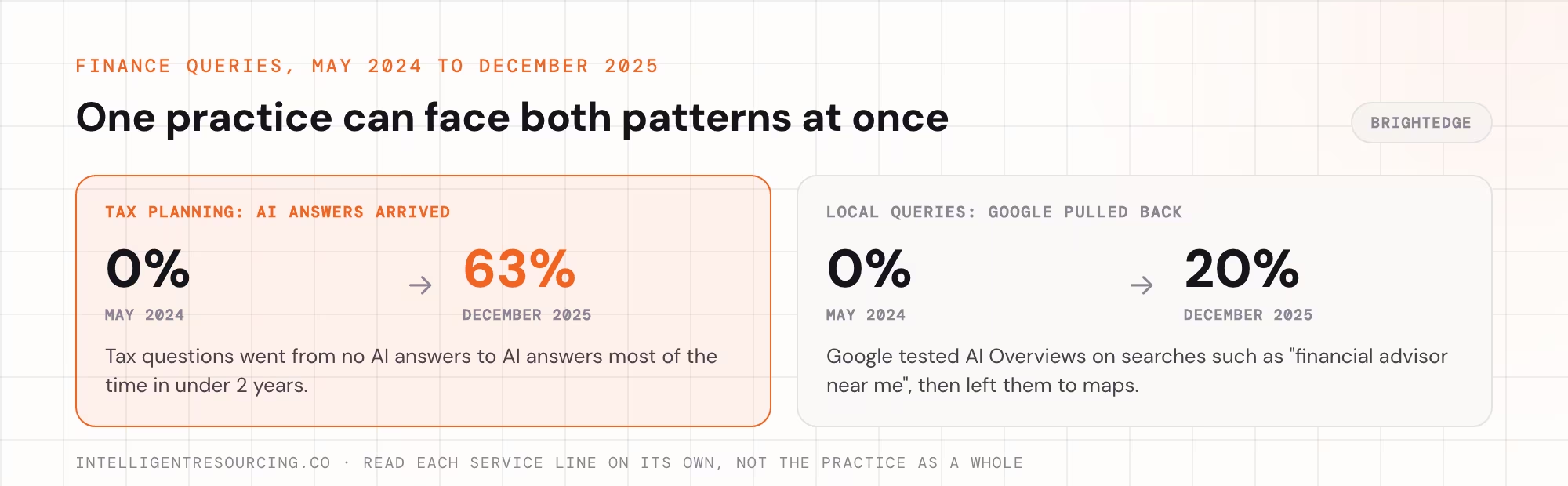
BrightEdge's tracking found AI Overviews on 63% of tax planning queries by December 2025, up from 0% in May 2024. Tax questions went from no AI answers to AI answers most of the time in under 2 years.
Local searches moved the other way in the same BrightEdge data. Google tested AI Overviews on searches such as "financial advisor near me", then pulled back and left those searches to maps. One practice can face both patterns at once.
The table below gives a starting point for each service line. Treat each row as a question to test, never as a result.
| Service line | A client question to test | Sources to watch for |
|---|---|---|
| Business tax advice | Should my company pay me a salary or dividends? | Australian Taxation Office (ATO) pages, software vendors, firm blogs |
| Research and development (R&D) tax incentive | Does my software project qualify? | business.gov.au, the ATO, specialist advisers |
| SMSF audit | Who can audit my super fund? | The ATO, the Australian Securities and Investments Commission (ASIC) register |
| Audit and assurance | Does my company need an audit? | ASIC guidance, professional bodies |
| Local practice | Who is the best accountant near me? | Map listings, review sites, directories |
Read the table one row at a time. A firm strong in the local row can still be absent from the tax row, and the fix for each is different. Our guide to how generative engine optimisation works shows why engines split topics this way.
What Do the Three Category Shapes Mean for Your Firm?
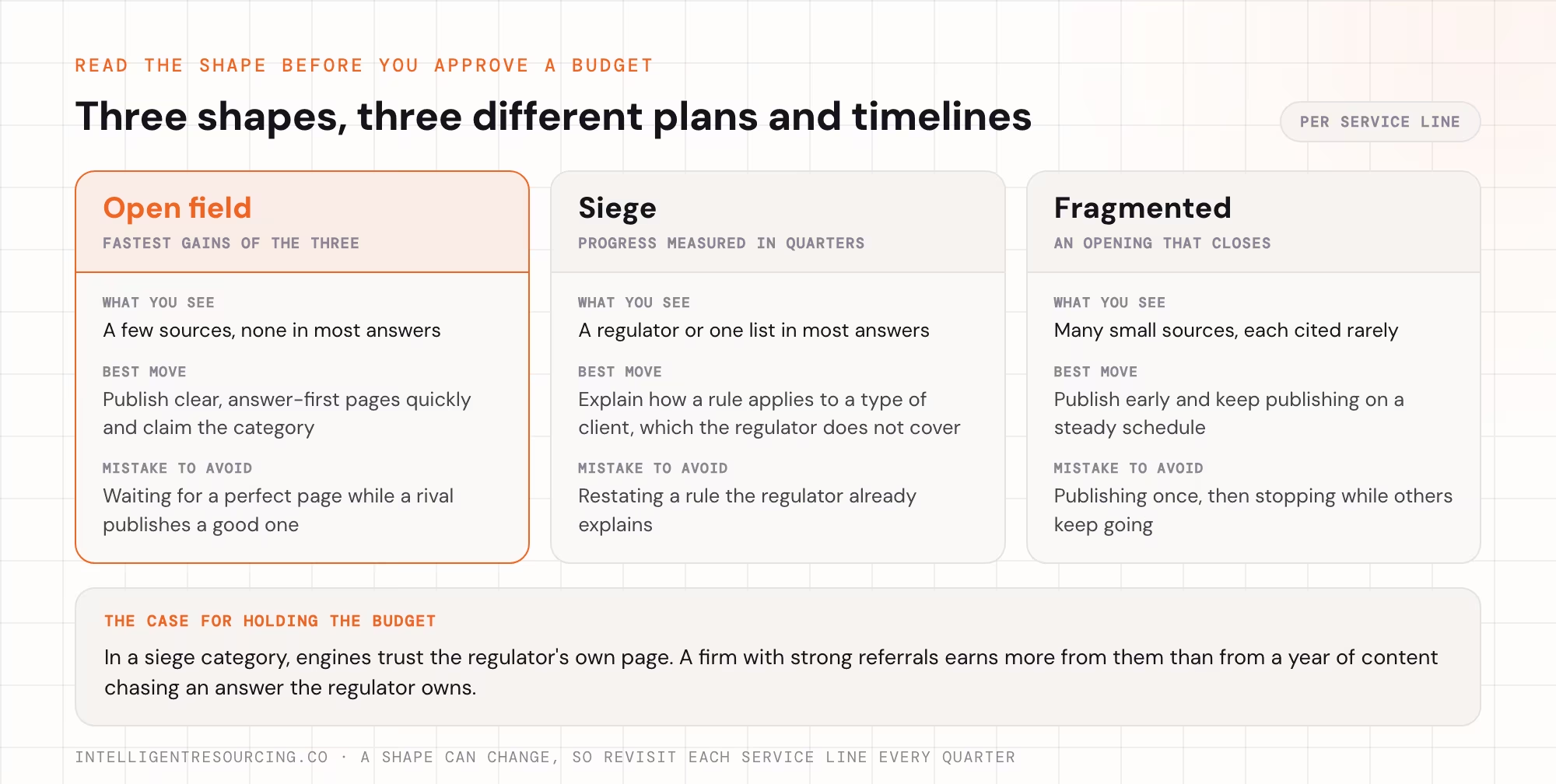
Each shape needs a different plan and a different timeline. An open field rewards speed, a siege rewards patience and a fragmented field rewards moving before rivals do. Read every service line first. It shows where AI visibility work pays back this year, and where to hold the money.
Open Field
In an open field, the engines are still choosing a default source.
- What you see: a few sources appear, but none shows up in most answers.
- Best move: publish clear, answer-first pages quickly and claim the category.
- Where to look: niche advisory questions, such as succession planning for a family business.
- Mistake to avoid: waiting for a perfect page while a rival publishes a good one first.
Siege
A siege has an entrenched leader and a dominant regulator.
- What you see: the ATO, ASIC or one list publisher in most answers.
- Best move: explain how a rule applies to a type of client, which the regulator's page does not cover.
- Where to look: tax and super fund rules, because the ATO and ASIC publish those rules themselves.
- Mistake to avoid: writing another page that restates a rule the ATO already explains.
Google's own documentation on AI Overviews singles out "Your Money or Your Life" (YMYL) queries when it explains how it handles information quality. Money questions fall squarely in that group, so a firm cannot outrank the regulator on the rule itself. The opening is the advice layer: what the rule means for a builder, a family trust or a first-year company.
Fragmented
In a fragmented field, nobody owns the answer, and nobody is building towards it. The risk is timing, because the field closes once 2 or 3 firms publish steadily.
- What you see: many small sites, each cited now and then.
- Best move: publish early and keep publishing on a steady schedule.
- Where to look: general "best accountant in [your city]" questions.
- Mistake to avoid: publishing once, then stopping while others keep going.
Law has its own version, where directories take the citation instead of firms.
How Do You Read the Shape of Each Service Line?
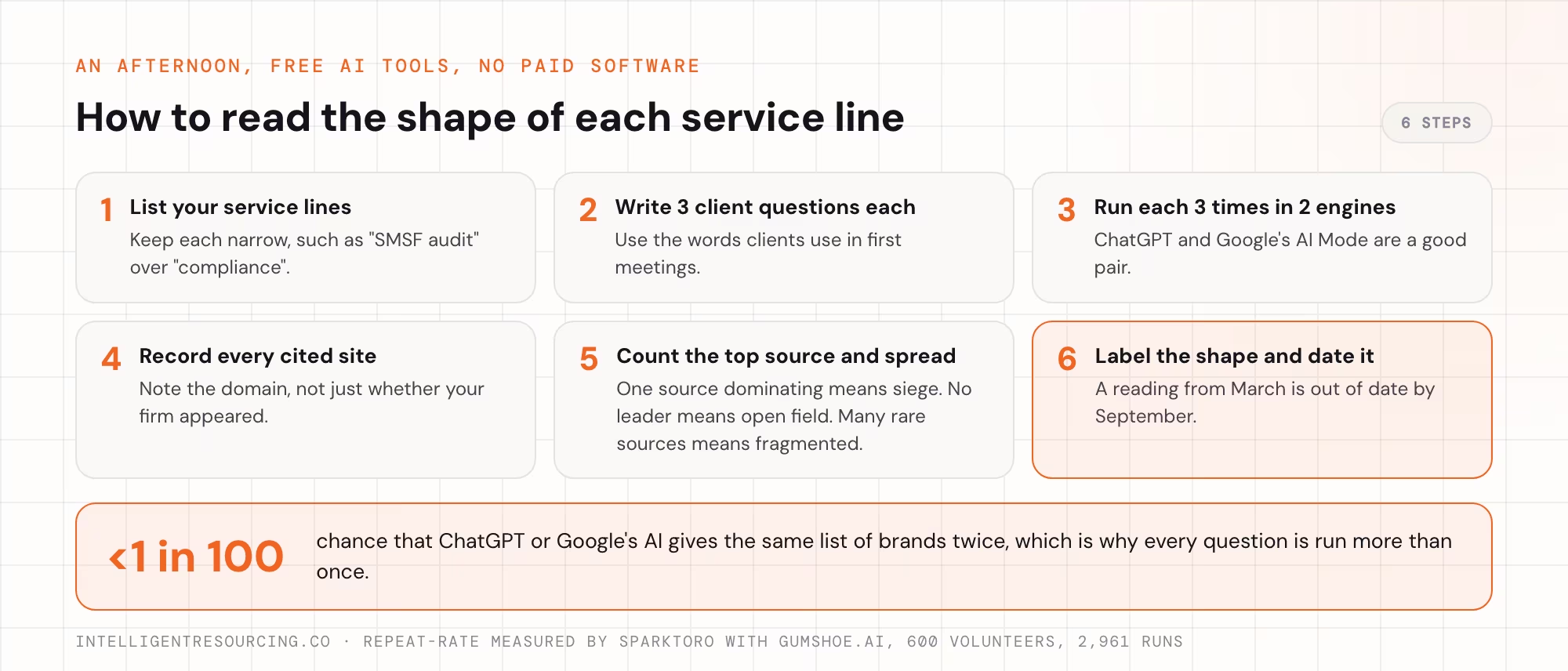
A firm can read its own shape in an afternoon with free AI tools. Ask real client questions for each service line, several times, in 2 engines. Then record which sites get cited. The pattern of those citations shows the shape, and no paid software is needed for a first read.
Ask each question more than once, because one answer proves little. SparkToro's research with Gumshoe.ai found under a 1 in 100 chance that ChatGPT or Google's AI would give the same list twice. Its 600 volunteers ran 12 prompts through 3 tools a combined 2,961 times, in November and December 2025.
Follow these 6 steps:
- List your service lines. Keep each one narrow, such as "SMSF audit" over "compliance".
- Write 3 client questions for each. Use the words clients use in first meetings.
- Run each question 3 times in 2 engines. ChatGPT and Google's AI Mode are a good pair.
- Record every cited site. Note the domain, not just whether your firm appeared.
- Count the top source and the spread. One source in most answers means a siege. A few sources and no leader means an open field. Many rarely cited sources means a fragmented field.
- Label the shape and date it. A reading from March is out of date by September.
A simple spreadsheet is enough to keep the log. Use one row per run:
| Column | What to record |
|---|---|
| Service line | The narrow service, such as "SMSF audit" |
| Question | The client question, word for word |
| Engine and run | Which tool, and whether it was run 1, 2 or 3 |
| Cited sites | Every domain the answer linked or named |
| Your firm named? | Yes or no |
| Date | The day you ran it |
After 3 runs in 2 engines, sort by service line and count how often each domain appears. That count is your shape read.
The shape read shows where to publish. For the outside sources that put a firm's name in answers, see how accounting firms get named.
What Should You Ask Before Approving an AI Visibility Budget?
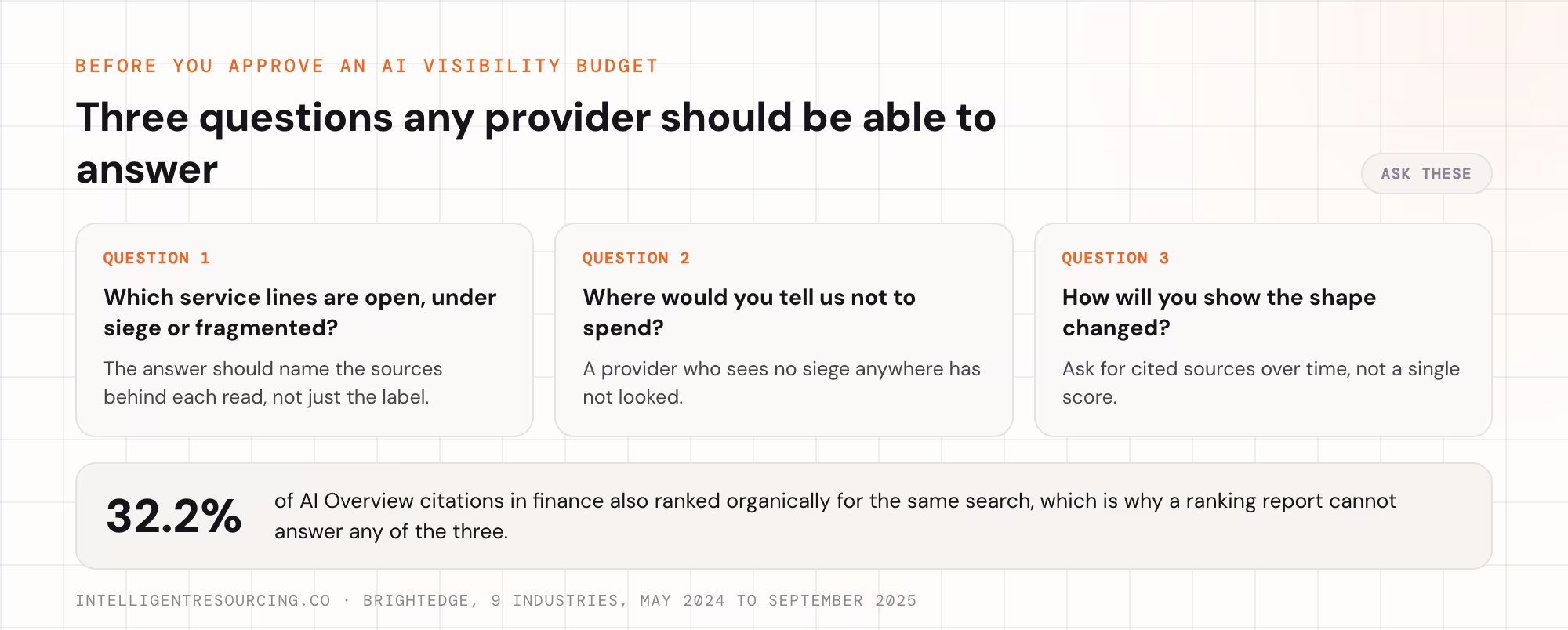
Before you approve an AI visibility budget, ask the provider for 2 things: the shape of each service line, and the proof behind it. A plan that would suit any firm in any sector buys activity without a position. The shape read should come first, and the proposal should come second.
A search ranking report cannot answer this. BrightEdge tracked Google's AI Overview citations across 9 industries from May 2024 to September 2025. In finance, only 32.2% of cited pages also ranked organically for the same search. Rankings say little about what an engine trusts on money questions.
Put these 3 questions to any provider:
- Which service lines are open, under siege or fragmented? The answer should name the sources behind each read.
- Where would you tell us not to spend? A provider who sees no siege anywhere has not looked.
- How will you show the shape changed? Ask for cited sources over time, not one score.
Intelligent Resourcing will sometimes tell a firm that a service line is the wrong shape right now. That answer is free, and it is worth more than a proposal built on a category nobody read. Where the shape is right, our content strategy built on client questions starts from that read.
Find Out Which Shape Your Firm Is In
Knowing the shape of each service line stops you funding the wrong one, and waiting leaves the open fields to rivals. The work starts with the client questions for each of your service lines and the sources engines cite for them. See how our answer engine optimisation services start with that read.
Content Creation
Start with the client questions for each service line and the sources engines cite for them, then spend where the field is open.
FAQs
Why is my firm cited for tax advice but not for audit?
AI engines answer by category, and each service line is its own category. The sources behind a business tax answer differ from those behind an SMSF audit answer. A firm can own one question and be absent from the next.
Which service line should an accounting firm test first?
Start with the line most likely to be an open field, such as succession planning for family businesses. Open fields give the fastest gains. Test tax and super fund lines after, since the ATO or ASIC may already own those answers.
Which accounting services are hardest to get cited for?
The hardest services are those where a regulator publishes the rules. On money topics, engines trust the regulator's own page. Tax rules and super fund compliance are the first places to check. A firm can still be cited for how a rule applies to one type of client, which the regulator's page does not cover.
How often should an accounting firm check its category shape?
Check each service line once a quarter. AI answers change between runs and model updates, so one reading is a snapshot. Keep the questions, engines and number of runs the same each time, so any change in shape is real.
Can a small accounting firm win a category a large firm dominates?
A small firm can win a category where no source dominates yet, by publishing clear answers first. Where one large firm or a regulator already appears in most answers, progress is slow. Look instead for a narrower question in that category that nobody answers well yet.