

Reputation Is Not the Same as AI Evidence
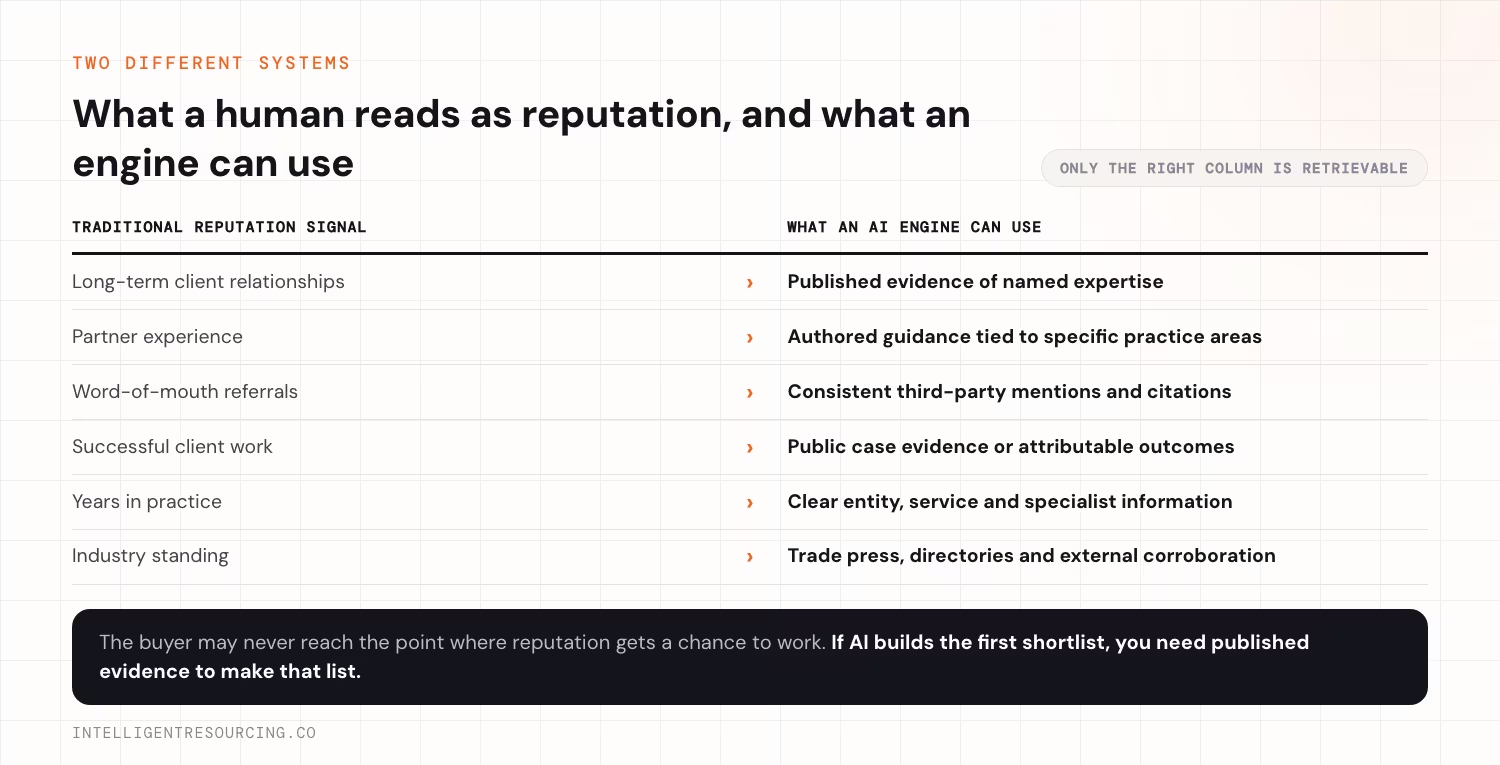
A professional services firm can have a strong reputation and still give an AI engine very little to work with. Human buyers understand reputation through relationships and experience. AI systems rely on what has been published and can be checked.
| Traditional reputation signal | What an AI engine can use |
|---|---|
| Long-term client relationships | Published evidence of named expertise |
| Partner experience | Authored guidance tied to specific practice areas |
| Word-of-mouth referrals | Consistent third-party mentions and citations |
| Successful client work | Public case evidence or attributable outcomes |
| Years in practice | Clear entity, service and specialist information |
| Industry standing | Trade press, professional directories and external corroboration |
The gap matters because the buyer may never reach the point where reputation gets a chance to work. If AI builds the first shortlist, a firm needs enough published evidence to make that list.
Why Is an AI Recommendation Different From a Google Ranking?
An AI recommendation squeezes the whole search into one short answer. A Google result can place a firm twentieth, and a determined buyer can still find it. An AI answer usually names only a handful of firms.
That creates a different form of visibility:
- A low search ranking still leaves the page somewhere in the result set.
- An omitted AI recommendation leaves the firm outside the answer entirely.
The distinction between answer engine optimisation (AEO), generative engine optimisation (GEO) and traditional search engine optimisation matters here. Optimisation is no longer only about where a page ranks. It is also about whether an AI system can find enough credible evidence to name the firm.
For professional services, that changes the question. It is no longer just "Can clients find our website?" It is "Does our evidence online give an AI engine a reason to name us for this matter?"
Why Are Clients Asking AI Before They Contact a Professional?
Clients are using AI early because it is fast, and it feels more private than a first phone call. Ravical's 2025 research, a survey of 500 senior decision-makers at United Kingdom accountancy firms, found 64% of businesses now consult ChatGPT before seeking advice from their accountants.
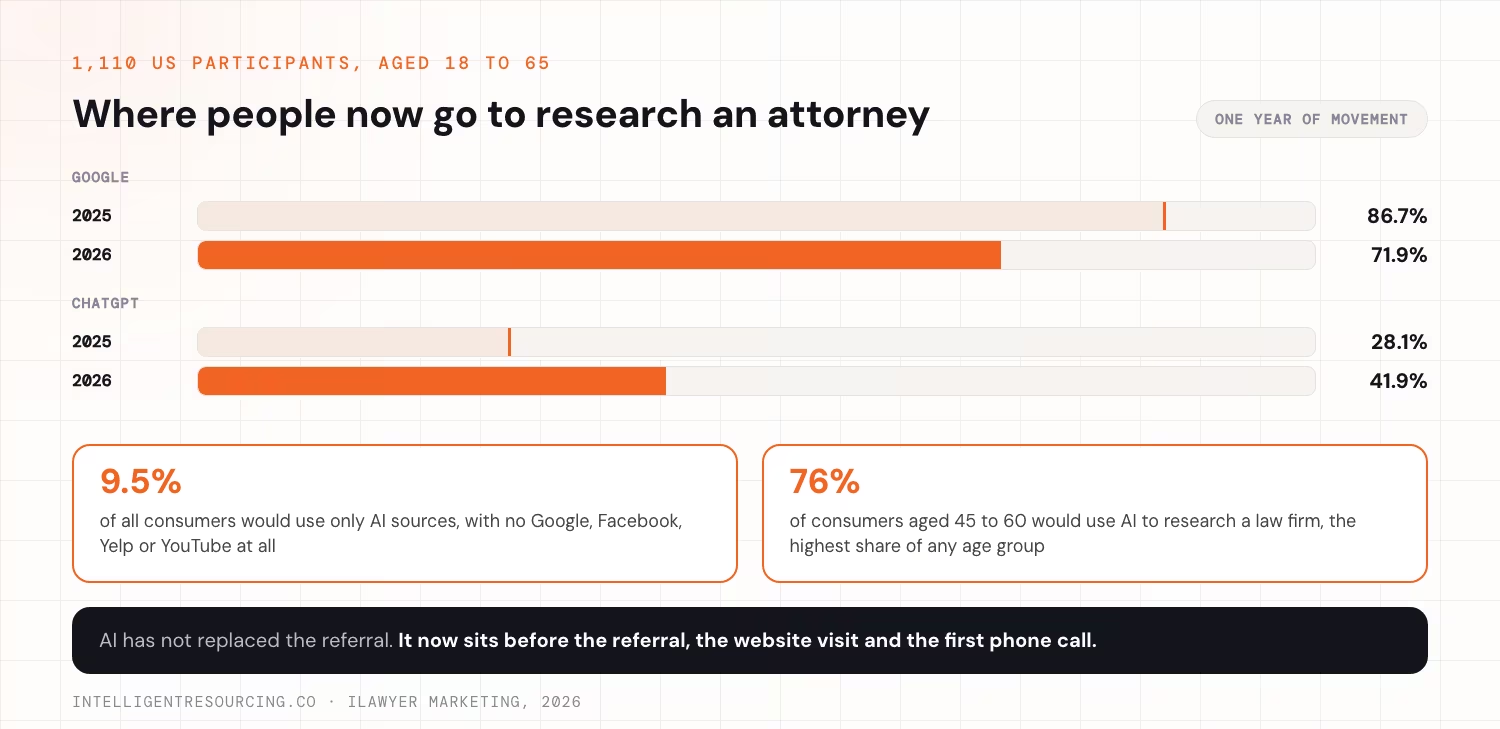
Legal research shows the same shift. iLawyer Marketing's 2026 study of 1,110 United States participants aged 18 to 65 found Google usage for attorney research fell from 86.7% to 71.9% in a year, while ChatGPT use climbed from 28.1% to 41.9%. In the same study, 9.5% of consumers said they would use only AI sources, with no Google, Facebook, Yelp or YouTube at all.
Older clients were also active. 76% of consumers aged 45 to 60 said they would use AI to research a law firm, the highest share of any age group in that study. This does not mean AI has replaced referrals. It means AI now sits before the referral, the website visit or the first phone call.
AI Is Helping Clients Shortlist Firms, Not Replace Them
Clients still want a real person once research turns into a real professional relationship. AI's job is usually to narrow the field, not to deliver the service itself. In LEX Reception's 2026 survey, run with OnePoll across 6,000 United States respondents, 89% said they would rather speak to a real person than AI when contacting a law firm. Trust in AI handling a law firm enquiry correctly has fallen to just 32%.
So the client is not asking AI to become the lawyer, accountant or adviser.
They are asking:
- Which firms handle this type of matter?
- Who has relevant experience?
- Which specialists should I compare?
- Who should I contact first?
That makes AI visibility a shortlisting problem. If a firm is absent at that stage, the high-touch relationship it is good at delivering never gets the chance to begin.
Why Can Deep Expertise Still Look Invisible?
Deep expertise looks invisible to an AI engine when most of the evidence for it stays private. A partner may hold decades of judgement and hundreds of successful cases, but an AI system cannot read experience that lives only in someone's head, or inside confidential client work.
Professional services run into this problem naturally. A strong piece of work might be:
- a difficult matter resolved successfully,
- a complex audit completed,
- a regulatory problem navigated,
- a technical project delivered,
- or a transaction structured cleanly.
Human clients see that expertise directly. AI systems usually do not. The expertise needs to become public somehow: named guidance, case evidence, commentary, or a technical explanation. Without that, the system has little to connect the firm to the problem a client is asking about.
That is why the firm doing the strongest work is not always the firm an AI engine can name with confidence.
Why Don't Firms See the Visibility Gap in Their Analytics?
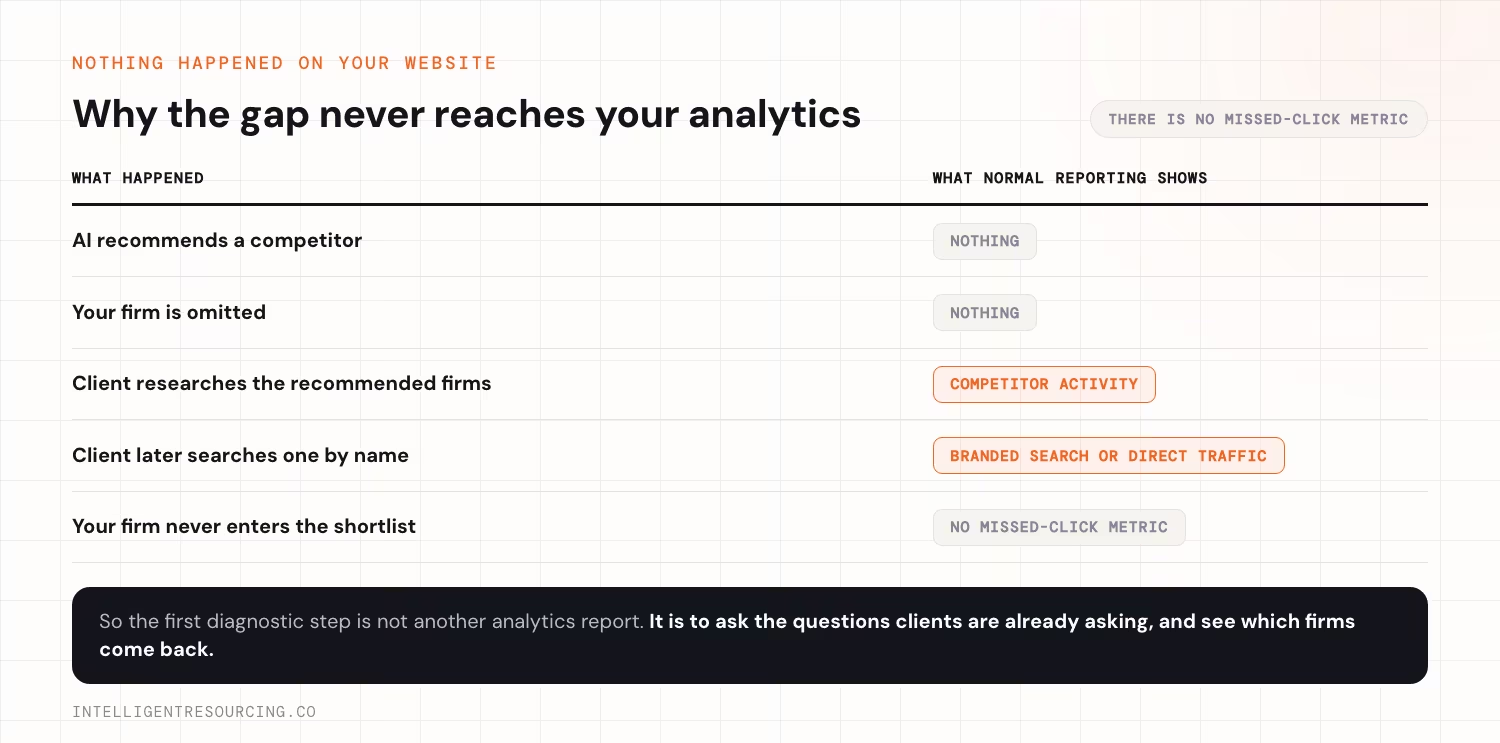
AI visibility can be easy to miss, because there is often no normal website event to measure. If a client asks an AI engine for three firms and yours is not named, there is no lost click sitting inside Google Analytics.
Nothing happened on your website. That is what makes the gap hard to spot. One law firm website was tracked from its June 2026 launch and recorded more than 7,200 impressions inside Google's generative AI search features in its first three months, according to BSD Legal Marketing.
The wider measurement problem looks like this:
| What happened | What normal reporting shows |
|---|---|
| AI recommends a competitor | Nothing |
| Your firm is omitted | Nothing |
| Client researches the recommended firms | Competitor activity |
| Client later searches one by name | Branded search or direct traffic |
| Your firm never enters the shortlist | No missed-click metric |
That is why the first diagnostic step is not another analytics report. It is to ask the same questions clients are already asking, and see which firms come back.
How Does the Visibility Gap Differ Across Law, Accounting and Engineering?
The mechanism stays the same across professional services. Only the evidence an AI engine needs changes by discipline.
Law and accounting already show real, measurable movement toward AI-assisted research. Engineering and other technical services may be earlier in this shift, but the need is the same: published evidence tied to the exact problem a client is researching.
| Profession | What clients value | Evidence AI can retrieve |
|---|---|---|
| Law | Matter experience and specialist judgement | Practice-area guidance, named case outcomes and attributable commentary |
| Accounting | Regulatory and service expertise | Tax, audit and advisory content tied to specific client problems |
| Engineering | Technical capability and project experience | Named project types, technical standards, methodologies and project evidence |
The professional expertise itself does not matter less. What changes is that the expertise now needs a public version before an AI system can use it as evidence.
What Happens If a Firm Stays Missing?
A firm that stays missing from AI recommendations can lose enquiries it never gets the chance to compete for. This is not a failed pitch or a rejected proposal. It is an opportunity that never reaches the firm at all.
The sequence runs in four steps:
- A client asks the question.
- An AI answer builds the shortlist.
- The named firms get researched.
- The first calls get made.
A firm missing from the second step may never appear in the other three.
Over time, this compounds. Firms already being cited keep building up more evidence an engine can find. Invisible firms keep relying on a reputation that mostly sits outside where the machine can read it.
The principles behind generative engine optimisation focus on closing that gap by making expertise easier for AI engines to retrieve, understand and corroborate.
Run the Visibility Test
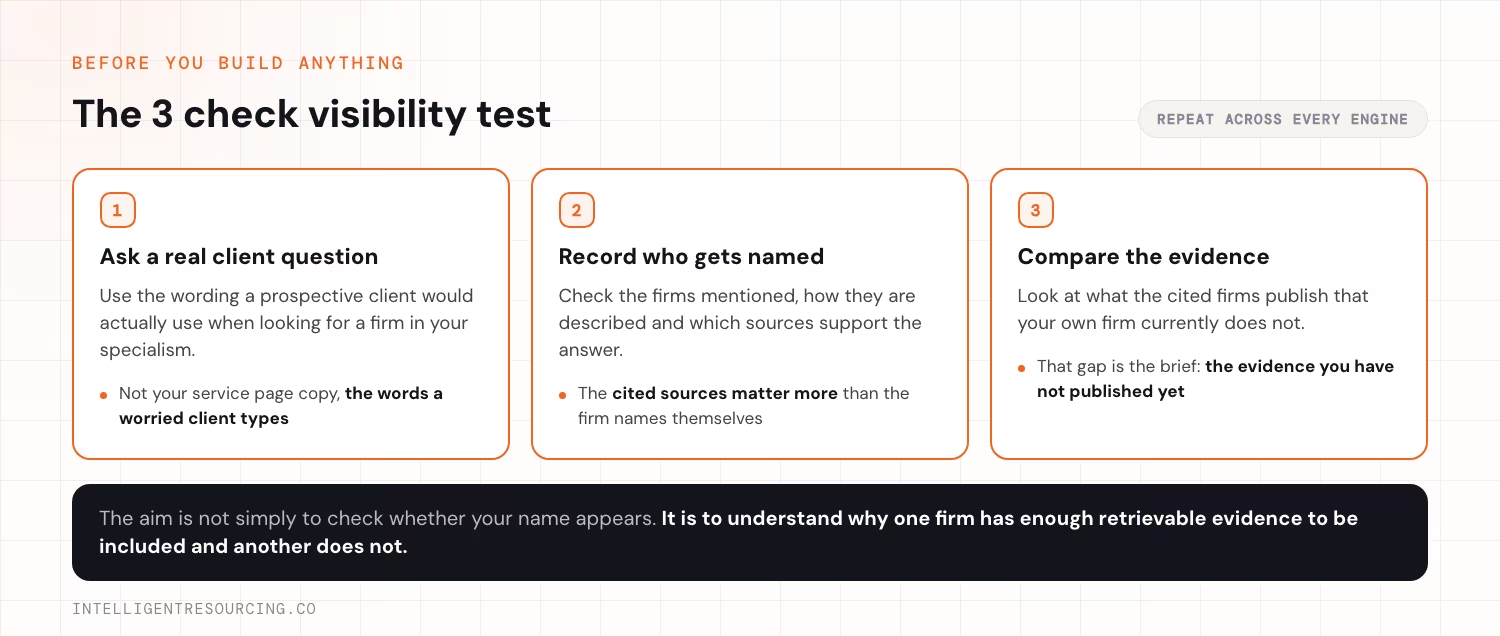
The first step is not a large content programme. It is finding out whether the problem exists. Use three checks:
| Step | What to test |
|---|---|
| 1. Ask a real client question | Use the wording a prospective client would actually use when looking for a firm in your specialism. |
| 2. Record who gets named | Check the firms mentioned, how they are described and which sources support the answer. |
| 3. Compare the evidence | Look at what the cited firms publish that your own firm currently does not. |
Repeat the process across the AI engines that matter to your buyers rather than relying on a single answer. The aim is not simply to check whether the firm's name appears. It is to understand why one firm has enough retrievable evidence to be included and another does not.
Closing the Awareness Gap
Professional services firms are not becoming less credible because clients use AI. The problem is that credibility built through human relationships does not automatically turn into evidence an AI system can find.
That makes this a publishing and evidence problem first, and a marketing problem second. The firm needs to turn more of what it already knows into specific, citable material tied to the questions clients actually ask.
For firms deciding whether to build that capability in-house or bring in a specialist partner, the AEO agency versus DIY decision comes down to one question: can the team consistently research those questions, publish the evidence, and watch how AI engines respond?
Content Creation
Test how your firm appears across real client questions, which competitors get named instead, and where the evidence behind those recommendations comes from.
FAQs
Why don't law firms and accounting firms show up when clients ask AI for recommendations?
Professional services firms can be missed when most of their expertise sits in relationships and private client work, not in published evidence an AI engine can find. A strong offline reputation does not automatically give an AI system enough to connect the firm with a specific client problem.
How can a professional services firm tell if it is missing from AI answers?
Ask the kind of question a prospective client would use when searching for your service and record which firms the AI engine names. Then inspect the cited evidence behind those recommendations and compare it with what your firm publishes.
Does the same AI visibility problem affect engineering firms?
The mechanism here is similar. Engineering clients research capability before they make contact. AI engines need published evidence connecting a firm to specific project types, technical standards and areas of expertise. The evidence differs from law or accounting, but the visibility problem is the same.
Do clients actually want AI to replace speaking to a professional?
No. In a 2026 survey of 6,000 United States respondents, 89% said they would rather speak to a real person than AI when contacting a law firm, and trust in AI handling an enquiry correctly has fallen to 32%. AI narrows the field. The relationship still happens with a person.
Where should a firm start if its expertise is not published anywhere?
Start with the questions clients already ask at the first enquiry, and publish a specific, named answer to each one. Practice-area guidance, case evidence and attributable commentary give an engine something to connect the firm to a matter, which a general capabilities page does not.