

Why Is Publishing More Pages the Wrong First Move?
Publishing more pages is often the wrong first move. Artificial intelligence (AI) engines retrieve passages that answer specific questions, and they do not favour a site for having more content.
What Does ChatGPT Citation Research Show?
AirOps ran 16,851 queries through ChatGPT, three times each, producing 815,484 query-page pairs across 353,799 pages. Writing up that data in Search Engine Journal, Kevin Indig reported that shorter, focused content wins.
Three findings matter for a consultancy deciding what to commission:
- Heading match beat coverage. Pages whose best heading matched the query at 0.90 or above were cited 41% of the time, against 30% for pages below 0.50.
- Covering every subtopic added little. Covering 100% of subtopics added 4.6 percentage points over covering none, and that gap shrank further once query match was controlled for.
- Length had a ceiling. The citation sweet spot was 500 to 2,000 words, so long "ultimate guides" were less reliable than focused pages.
What Should Engineering Consultancies Prioritise Instead?
A firm may gain more from improving six to eight existing pages than from 40 new articles on geotechnical topics. Those pages should answer its most important client questions.
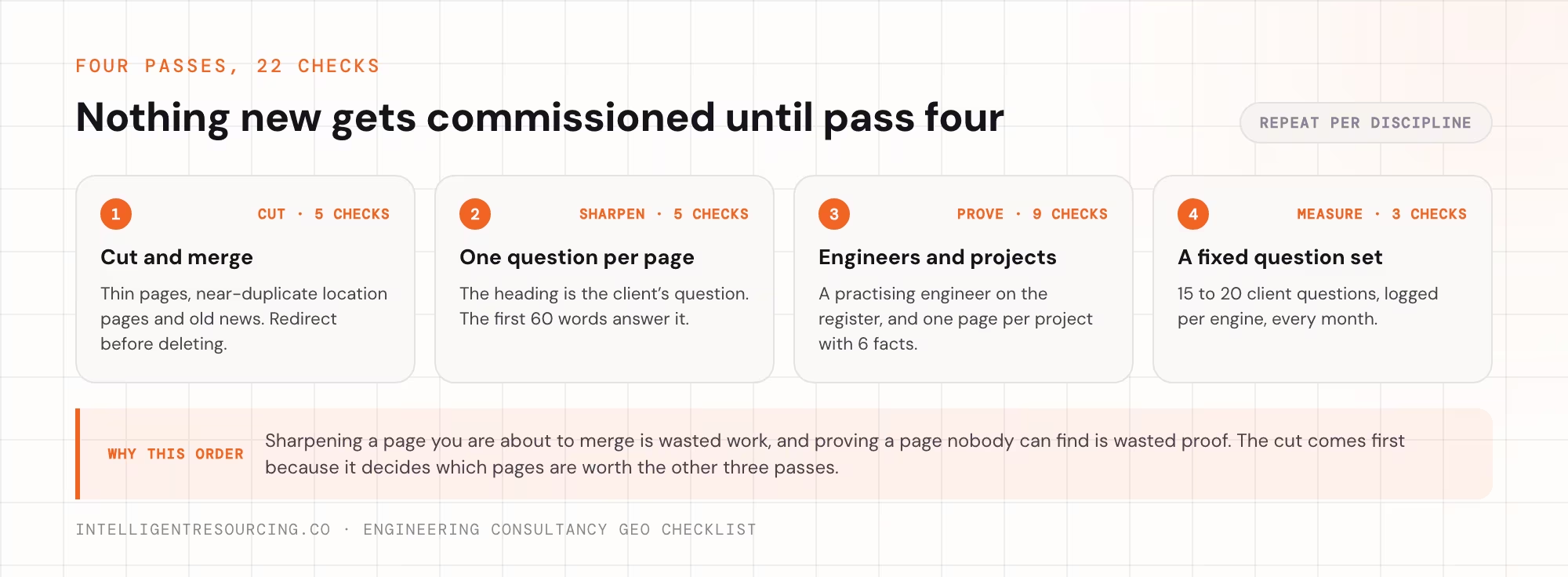
We cover why engineering consultancies go missing separately. This generative engine optimisation (GEO) checklist is the fix. It runs in four passes, cut, sharpen, prove and measure, with 22 checks.
Which Pages Should an Engineering Consultancy Cut or Merge?
A consultancy should cut pages that answer no client question and merge pages that answer the same question twice. Thin service pages, near-duplicate location pages and old news posts dilute the site. Merging them into one strong page, with a permanent redirect from the old web addresses (URLs), gives an engine a single, clear source.
Near-duplicate location pages carry a second risk. Google's spam policies define scaled content abuse as many pages generated for the primary purpose of manipulating search rankings.
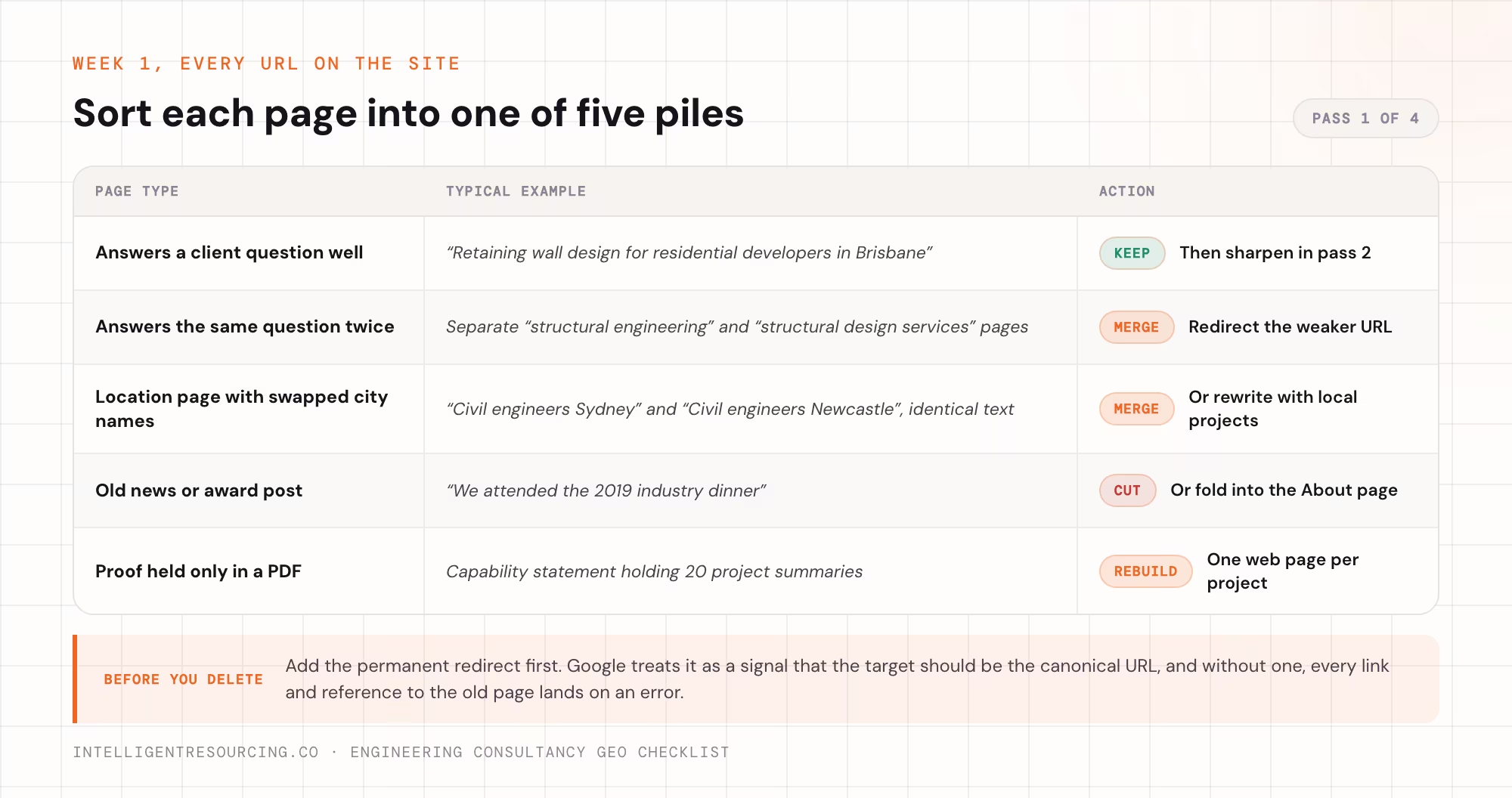
Start with a page inventory. Export every URL and sort each one into a group:
| Page type | Typical example | Action |
|---|---|---|
| Answers a client question well | "Retaining wall design for residential developers in Brisbane" | Keep, then sharpen |
| Answers the same question as another page | Separate "structural engineering" and "structural design services" pages | Merge into one, redirect the other |
| Location page with swapped city names | "Civil engineers Sydney", "Civil engineers Newcastle" with identical text | Merge, or rewrite with local projects |
| Old news or award post | "We attended the 2019 industry dinner" | Cut, or fold the fact into the About page |
| Proof held only in a PDF (Portable Document Format) file | Capability statement with 20 project summaries | Turn the strongest projects into web (HTML) pages |
What Are the First Five GEO Checks for Engineering Consultancy Websites?
Start by checking whether each page answers a distinct client question, shows local experience and points to one preferred URL. These five checks find overlapping, thin or unneeded pages before you pay for new ones.
- Check for overlapping answers. Test: write down the primary client question each page answers, and flag pages that answer the same one without adding distinct value. If it fails: merge them into the strongest relevant page.
- Verify location-specific evidence. Test: each city or regional service page shows genuine local evidence, such as a completed project. If it fails: add local project details or fold the page into the main service page.
- Identify keyword-only pages. Test: ask whether a prospective client would miss anything if the page disappeared. If it fails: remove it or fold it into a stronger page.
- Consolidate duplicate URLs. Test: retired URLs redirect to the surviving page, which Google's guidance on duplicate URLs treats as a strong signal. If it fails: add the permanent redirect before retiring the old URL.
- Review the final page inventory. Test: compare the original inventory with the new structure and confirm every remaining page serves a distinct purpose. If it fails: reassess overlapping pages before commissioning new content.
These five checks leave a cleaner site. The next step is to sharpen each surviving page around one client question, so its answer is easy to find.
Does Each Remaining Page Answer One Client Question?
Each remaining page should take a single client question and answer it in the heading and first paragraph, with figures a reader can check. Engines match headings to queries, so "Structural engineering services" answers nothing specific, while "How long does a structural assessment take for a commercial building?" answers one question directly.
- The heading states the client's question. Test: the page title (H1) or first subheading (H2) reads like something a developer, council or asset owner would type. If it fails: rewrite it from a real enquiry email.
- The first paragraph answers it. Test: the first 60 words give the answer, the scope and who it applies to. If it fails: move the answer up and the firm history down.
- The page carries numbers. Test: the page includes at least 3 specific figures, such as typical timeframes, design standards or project sizes. If it fails: pull them from recent proposals.
- The relevant standard is named, with its edition. Test: the page names the Australian Standard or code the work follows and the edition applied, such as AS 4678 for earth-retaining structures. If it fails: add it beside the method, and confirm the edition is the one the work actually used.
- The page stays focused. Test: the page covers 2 or 3 related angles, not every subtopic in the discipline. If it fails: split the extra angles into their own pages only if a client asks them separately.
Choosing what to leave out matters as much as what to cover. Being selective about which topics to leave out is part of building the topical authority engines reward.
Can an Engine Confirm the Engineer Behind the Work?
An engine can confirm an engineer when the page names them and their registration matches a public register. A named, registered engineer gives the engine a second source that agrees with the firm's own page. The same corroboration test decides which credentials an engine verifies at firm and project level too.
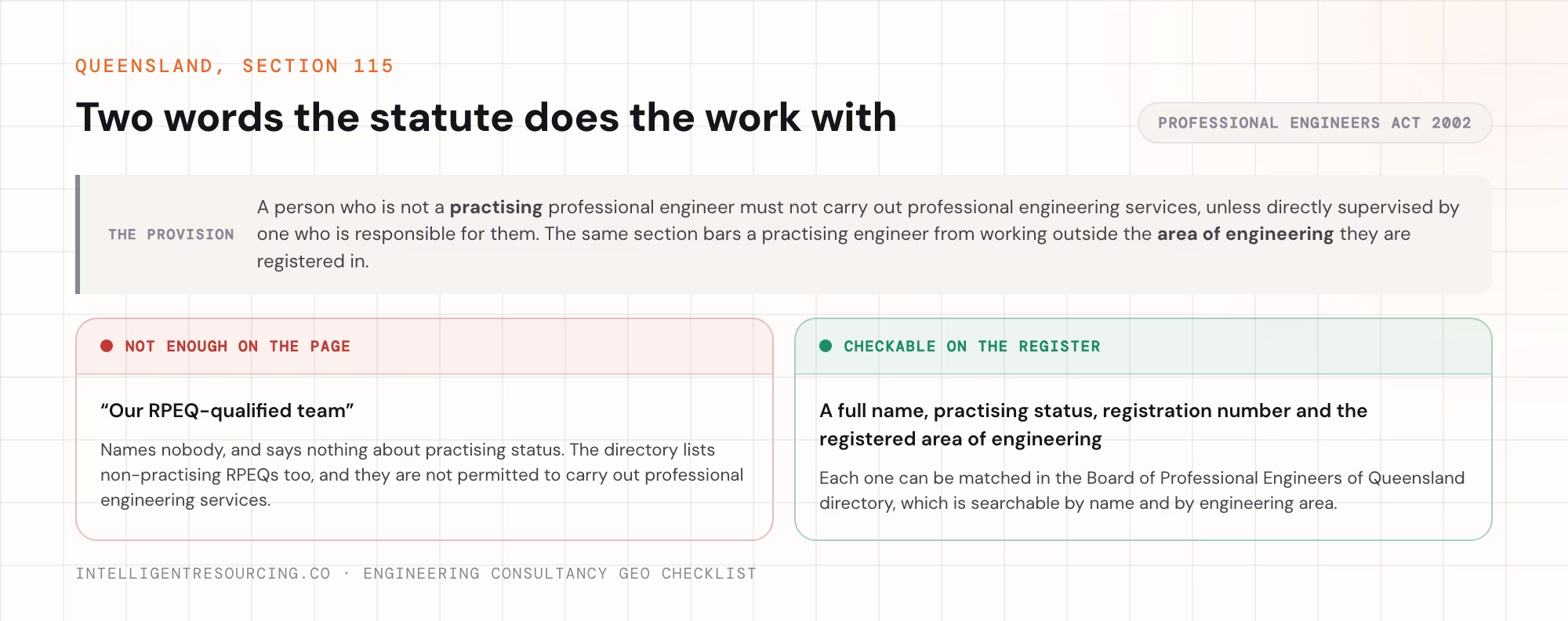
Queensland makes this concrete. Under section 115 of the Professional Engineers Act 2002, a person who is not a practising professional engineer must not carry out professional engineering services, unless they do so under the direct supervision of a practising professional engineer who is responsible for the services. The same section bars a practising professional engineer from working outside the area of engineering they are registered in, again unless supervised by someone who is registered in it.
Two details follow from that wording, and both belong on the page:
- Practising status is part of the claim. Queensland's RPEQ directory, run by the Board of Professional Engineers of Queensland, lists non-practising RPEQs too, and states they are not permitted to carry out or be responsible for carrying out any professional engineering services.
- The registered area has to fit the work. The directory can be searched by engineering area as well as by name, so a mismatch between the project and the register is visible to anyone who looks.
Outside Queensland, use Engineers Australia's National Engineering Register. Anyone can search it by name, area of engineering, location or occupational category.
- Every project page names the responsible engineer. Test: the page gives a full name and role, not "our team". If it fails: add the engineer who signed off the work.
- Registration details appear in text and match the register. Test: the profile shows the registration type, area of engineering and number as plain text, copied from the register entry. If it fails: copy them across from the register.
- Practising status is stated for Queensland work. Test: the profile of any engineer credited on a Queensland project says whether they are a practising RPEQ. If it fails: check the directory entry and add the status.
- The registered area covers the project. Test: the area of engineering on the register, such as civil or structural, fits the discipline of each project on the profile. If it fails: credit the engineer whose registered area covers that work.
- Each engineer has one profile page. Test: every named engineer links to a single profile with their projects listed. If it fails: build the profile and link project pages to it.
Are Project Facts Published Where Engines Can Read Them?
Project facts are readable when each important project has its own page with the client type, scope, standard, location, timeframe and result. Google can index PDFs, but a capability statement holding 20 projects gives an engine 20 facts buried in one file. A dedicated page puts one project in front of one question.
Google's list of indexable file types includes Adobe Portable Document Format, so an engine can read the file. Focus decides whether it gets quoted. A 40-page statement matches no single client question, while a page titled "Bridge deck rehabilitation for a regional council in north Queensland" matches one exactly.
- The top 10 projects each have a page. Test: count project pages against the projects the firm leads with in proposals. If it fails: build pages for the strongest projects first.
- Each project page states 6 facts. Test: client type, scope, standard, location, timeframe and measurable result all appear. If it fails: fill the gaps from the project file, with client approval where needed.
- Results are specific. Test: the page gives a number, such as a programme saving, a load capacity or a defect rate. If it fails: replace "successful outcome" with the figure.
- Project pages link to the service and engineer. Test: each project page links to its service page and the responsible engineer's profile. If it fails: add both links.
Write the engineer's credential line on each project page in the register's exact wording. Our guide to credentials AI search can verify sets out the method.
Which Measures Show Fewer Pages Are Working?
Measure against a fixed set of client questions, not page count. Before changing any page, write down 15 to 20 questions a developer, council or asset owner would ask. Each month, put them to several AI engines and log one of three outcomes per engine: the consultancy is named, linked as a source, or left out.
Several engines matter because they rarely agree. An analysis of 3.7 million citations across ChatGPT, Perplexity and Google AI Overviews found that only 2.37% of cited URLs showed up across all 3 engines for the same prompt. 91.07% showed up in only one.
- The question set is fixed in advance. Test: the 15 to 20 questions are written down before any page changes. If it fails: write them from real enquiries and proposals.
- Results are tracked per engine. Test: the monthly record shows ChatGPT, Google AI Overviews and at least one other engine separately. If it fails: split the results by engine.
- New pages earn their place. Test: every new page proposed names the client question it is built to answer best. If it fails: do not publish it.
Tracking named mentions question by question is the measurement side of generative engine optimisation. It shows whether the cuts and rebuilds are working.
What Should a Consultancy Do in Its First 30 Days?
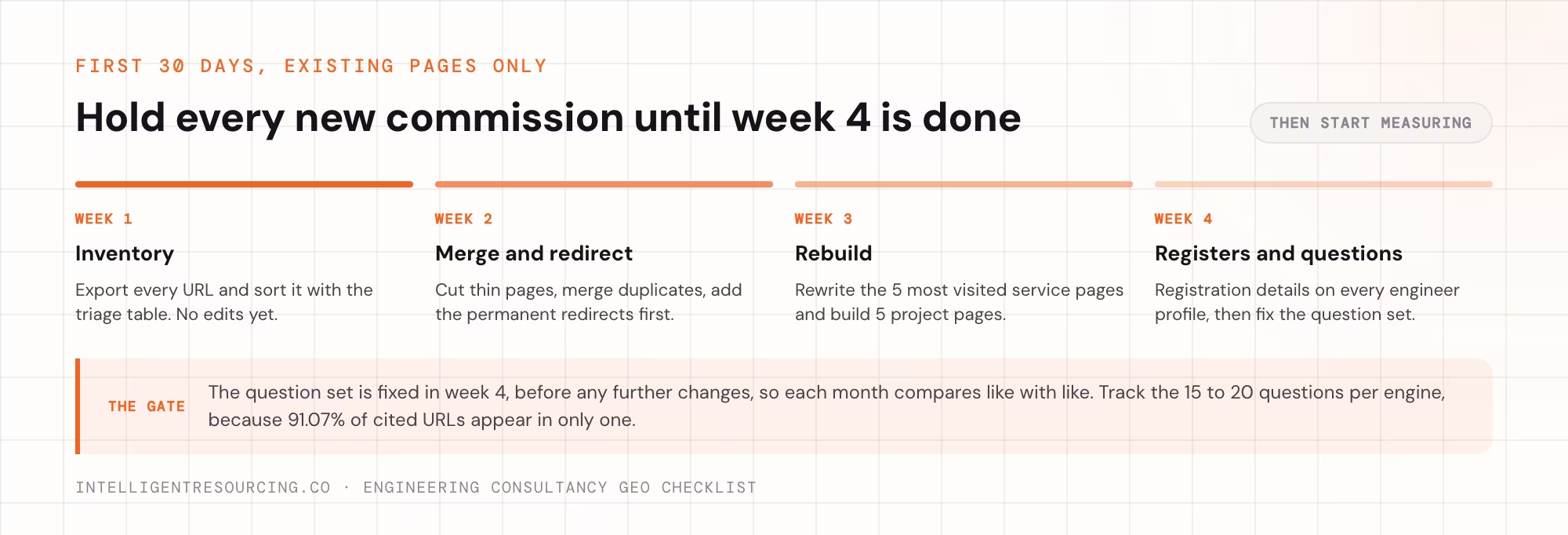
Spend the first 30 days on existing pages and hold any new commissions until week 4 is done. Run the inventory in week 1, merge and redirect in week 2, sharpen the top service and project pages in week 3, and fix engineer profiles in week 4. Start measuring once the rebuilt pages are live.
Redirect before deleting. Google's redirects guidance says a permanent redirect tells Google to show the new redirect target in search results, and treats it as a signal that the target should be the canonical URL. Without a redirect, links and references to a deleted page lead to an error page.
A realistic month:
- Week 1: export every URL and sort it with the triage table.
- Week 2: merge duplicates, cut thin pages and add permanent redirects.
- Week 3: rewrite the 5 most visited service pages and build 5 project pages.
- Week 4: add registration details to every engineer profile, then fix the question set.
Content Creation
Find out which client questions already bring up your consultancy in AI answers, where competitors appear instead, and what to fix first.
FAQs
Should an engineering consultancy stop publishing blog articles?
No, but it should stop publishing articles that answer no client question. Each new article should name the question it is built to answer best. Fix and merge existing service and project pages first, because those are the pages clients and engines land on most.
How many pages does an engineering consultancy website need?
Enough to answer each client question once. That usually means one page per service, one per significant project and one profile per named engineer. That gives an engine one clear page to quote for each question, where a larger site splits the same answer across several URLs.
Do capability statement PDFs hurt AI visibility?
They do not hurt, but they rarely help on their own. Google can index PDFs, yet a long statement covering many projects matches no single client question. Publish the strongest projects as individual pages and keep the PDF as a download for procurement teams.
What should a project page say if the engineer who signed it off has left?
Keep the engineer's name and registration as they stood when the work was signed off, and add a current contact for that discipline. Removing the name strips out the detail a register can confirm. Link the project to a current engineer's profile only if they reviewed the work.
How long before a smaller, sharper site shows results in AI answers?
Expect to track results monthly for at least a quarter before judging. Most AI citations appear in only one engine, so each engine needs its own monthly record. Fix the question set before changing any pages, so each month compares like with like.