

What Does an Artificial Intelligence (AI) Engine Check in an Engineering Credential?
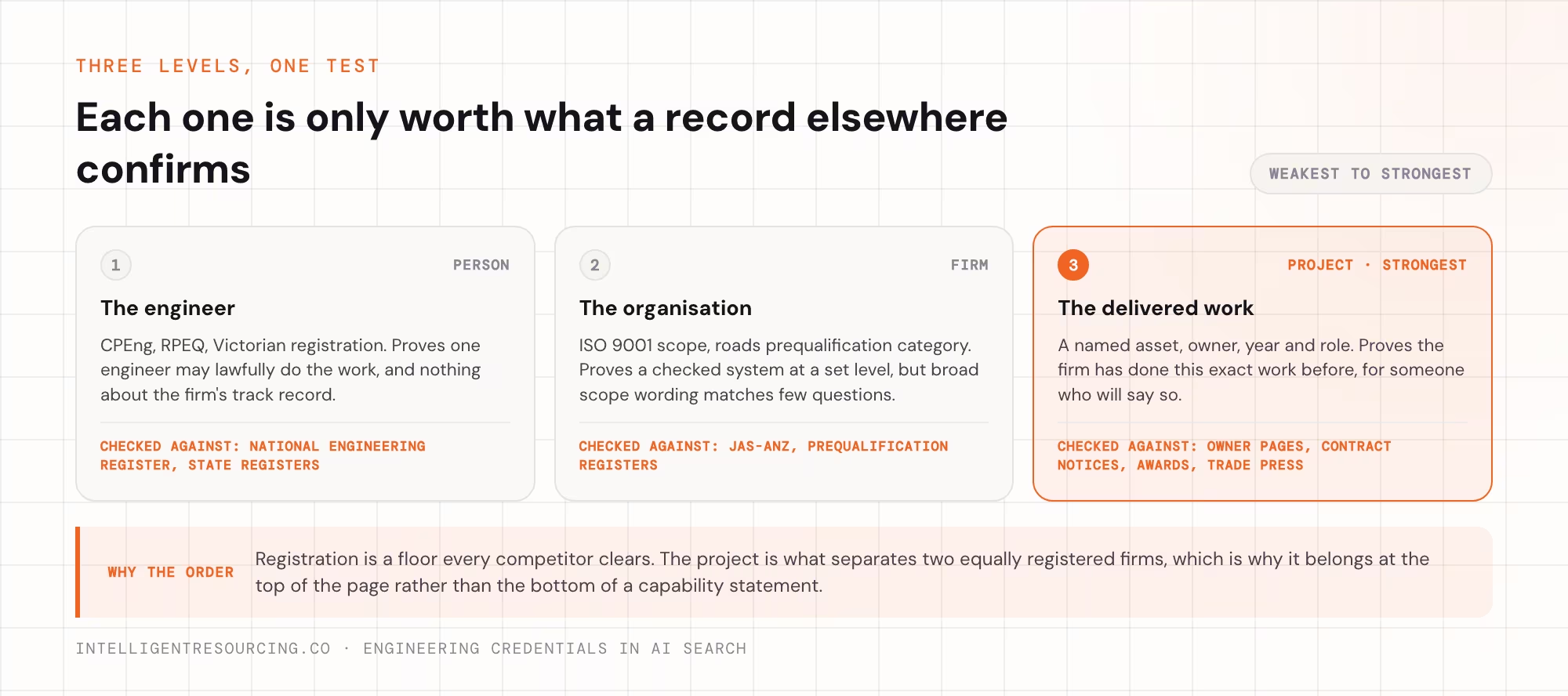
An AI engine checks whether an engineering credential appears in more than one place it trusts. "Chartered engineers on staff" on your About page is one source. That engineer's listing on the National Engineering Register is a second. Agreement between the 2 lets an engine repeat the claim.
The buyers reading those answers check them too. Technical buyers in the 2026 State of Marketing to Engineers survey, run by GlobalSpec and TREW Marketing, rated their trust in generative AI 4.7 on a 1 to 10 scale. The same question returned 6.5 in 2024 and 4.4 in 2025, so trust fell sharply and has only edged back. A named firm with a checkable credential gives that sceptical reader something to verify.
The engine needs 3 things from any credential:
- A named holder. A person or a registered company, spelled the same way everywhere.
- A named issuer. The board, register or body that granted it.
- A scope. The area of engineering, the category or the project type it covers.
Accounting firms face the same test with a different set of registers, covered in our guide to accounting firm credentials in AI search.
Which Personal Registrations Can an Engine Confirm for an Engineer?
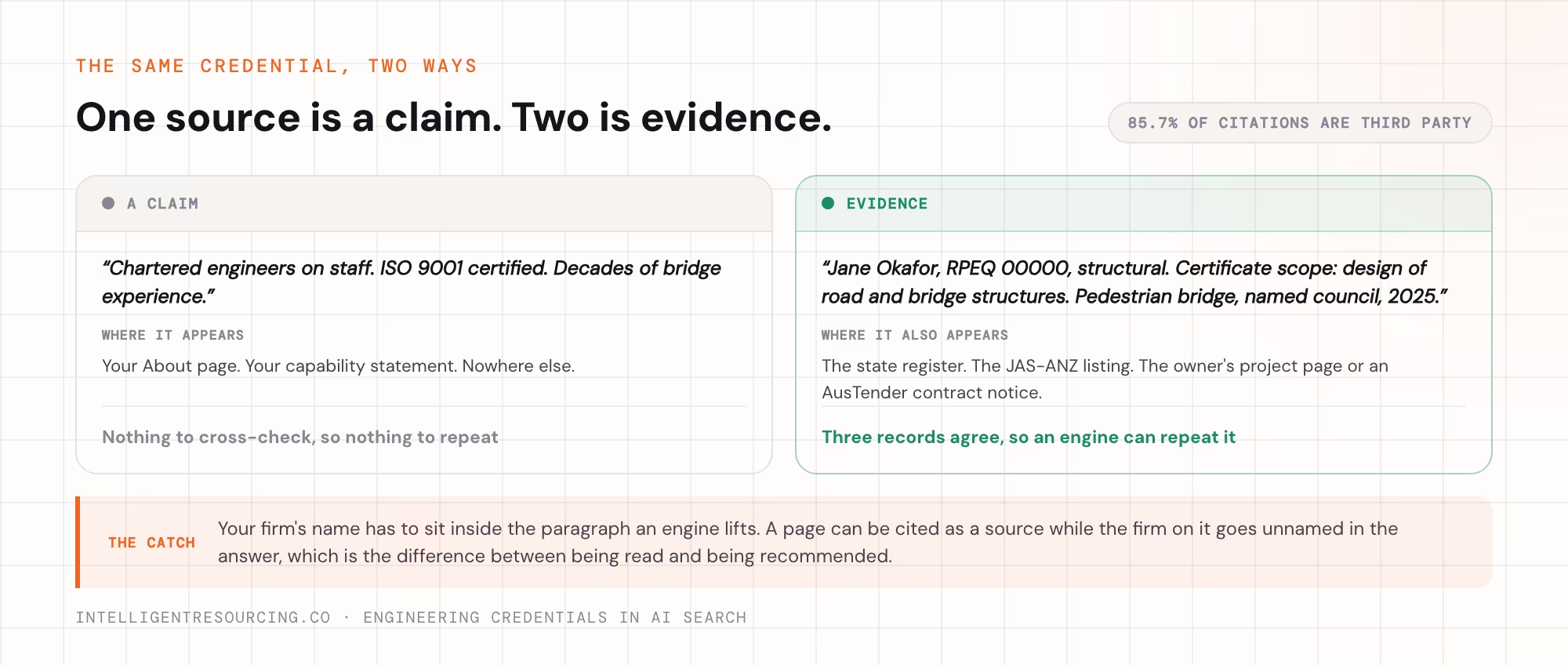
An engine can confirm a personal registration when the register is public and your page matches it. Australia has 2 layers. Engineers Australia runs national titles such as Chartered Professional Engineer (CPEng). States such as Queensland and Victoria run legal schemes that decide who may do the work.
The state layer is the stronger record, because it is the one with an offence attached. Under section 115 of Queensland's Professional Engineers Act 2002, a person who is not a practising professional engineer must not carry out professional engineering services, unless they work under the direct supervision of a practising professional engineer who is responsible for them. The same section bars a registered engineer from working outside the area of engineering they are registered in.
| Credential | Who keeps the record | What the record shows |
|---|---|---|
| CPEng | Engineers Australia, National Engineering Register | A national title and the engineer's area of engineering |
| Registered Professional Engineer of Queensland (RPEQ) | Board of Professional Engineers of Queensland | Who may provide professional engineering services in or for Queensland, and whether they are practising |
| Victorian registration | Business Licensing Authority, through Consumer Affairs Victoria | Who may practise in the 5 registered areas: civil, structural, electrical, mechanical and fire safety engineering |
Two words on that table do real work. Practising is one: the Queensland directory lists non-practising RPEQs as well, and states they are not permitted to carry out professional engineering services. Registration is the other. The Board's own guidance draws the line plainly: professional organisations such as Engineers Australia or the AusIMM are voluntary membership bodies, and those organisations have no legal framework to investigate or prosecute. Keep registration and membership on separate lines of a profile.
Named engineers are also a habit of the fastest-growing firms. The Hinge Research Institute's 2026 High Growth Study for architecture, engineering and construction (AEC) firms found high-growth firms nearly 3 times more likely to cultivate highly active subject matter experts. A registration helps the firm only when its pages name that expert.
Write each registration the way the register shows it: name, number and area of engineering. Our guide to matching credentials to registers walks through it line by line.
Do Firm Certifications and Prequalification Count as Credentials?
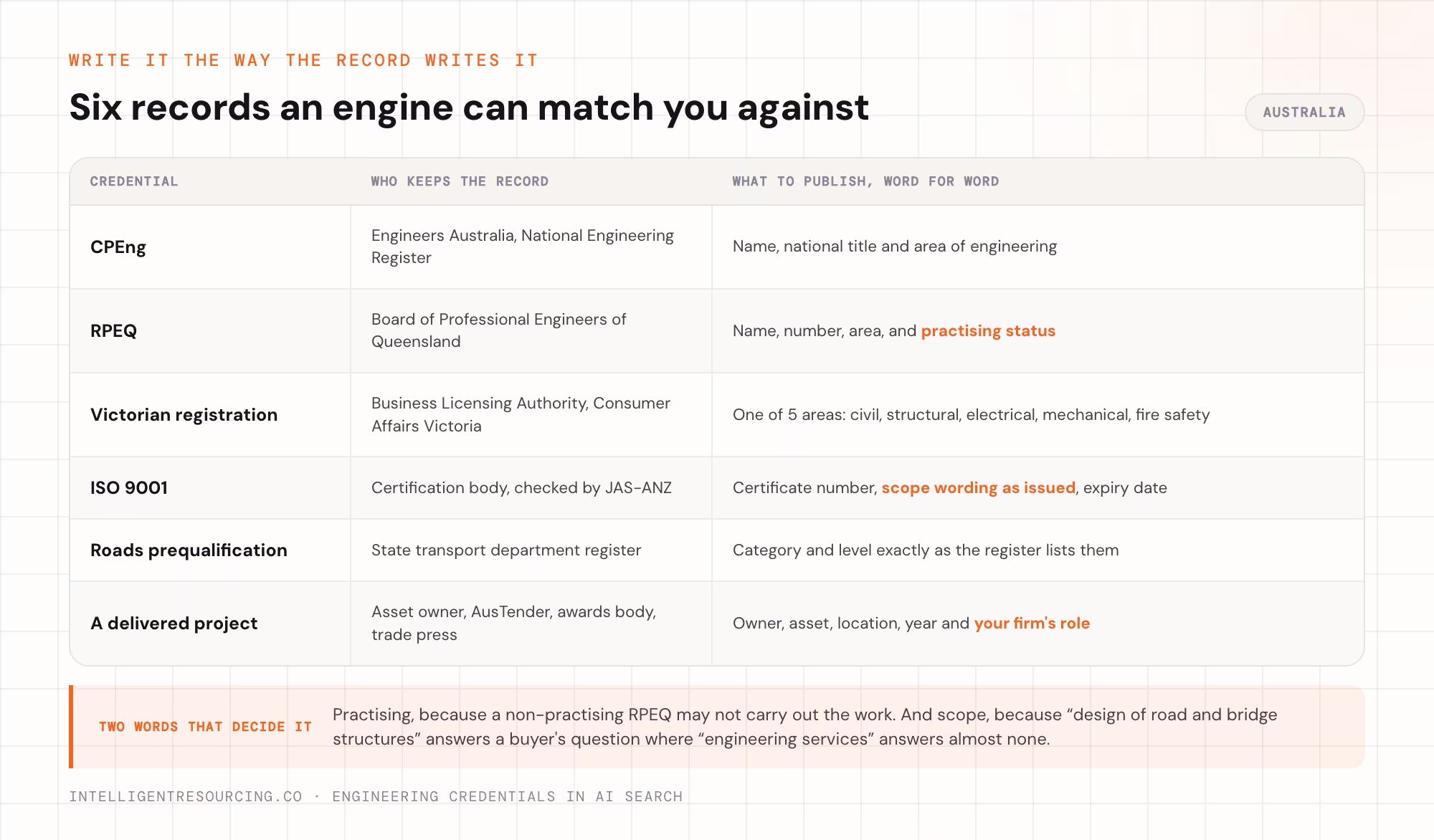
Firm certificates and prequalification count too, because each has a public list an engine can match. An ISO 9001 certificate names the firm, its scope and its end date. The Joint Accreditation System of Australia and New Zealand (JAS-ANZ) checks the bodies that issue it. A prequalification listing names the firm and the work it can bid for.
Engines lean towards records like these. A 2026 study of 13 open-weight language models found they prefer institutionally corroborated information, such as government or newspaper sources, over claims from individuals and social media. The same study found that preference can be reversed by simply repeating information from less credible sources, which is a reason to get the authoritative record right rather than to repeat yourself.
The scope line is the part an engine can use. "Design of road and bridge structures" matches a buyer's question. "Engineering services" matches almost nothing.
Prequalification sets a higher bar. Victoria's Department of Transport and Planning keeps a Roads Pre-qualification Register, and Queensland's Department of Transport and Main Roads keeps a similar list for engineering consultants. Each listed firm has shown the skills, systems, insurance and financial capacity for set types of work.
| Firm credential | Who confirms it | What to publish on your page |
|---|---|---|
| ISO 9001 quality system | Accredited certification body, JAS-ANZ register | Certificate number, scope wording as issued, expiry date |
| Roads prequalification, Victoria | Department of Transport and Planning register | Category and level exactly as listed |
| Consultant prequalification, Queensland | Department of Transport and Main Roads register | Prequalified categories exactly as listed |
Put each scope beside the service it covers. Deciding which credential sits on which page is a content strategy decision.
Why Is the Project Portfolio an Engineering Firm's Strongest Credential?
The project portfolio is the strongest engineering credential because it proves the firm has done this exact work before. A registration says an engineer may design a retaining wall. A named project says the firm designed one, for a named owner, in a named place. An engine can check that against the owner's records.
Public projects leave the clearest trail. Rule 7.18 of the Commonwealth Procurement Rules requires relevant entities to report contracts on AusTender within 42 days of entering into them, once the value reaches the reporting threshold. For non-corporate Commonwealth entities that threshold is $10,000; for prescribed corporate Commonwealth entities it is $400,000, or $7.5 million for construction services. A contract notice naming your firm confirms your project page.
Engines draw heavily on sources like these. A 2026 study of 167,551 citations behind AI answers about 128 brands, across 12 markets and 13 languages, found 85.7% pointed to sites the brand does not own, against 14.3% that it does.
Other sources an engine can check:
- The asset owner's page. A council, utility or developer that names you as engineer on its project page.
- An awards listing. A shortlist or winner entry that names the firm and the project.
- Trade press. An industry publication that reports the project and credits your role.
The firm's name has to sit inside the passage an engine lifts, not merely somewhere on the page. A page can be cited as a source while the firm on it goes unnamed in the answer, which is the difference between being read and being recommended.
Engines quote passages, so name these in one paragraph of each project write-up:
- The client or asset owner, as they name themselves.
- The asset and its location, such as a bridge in a named council area.
- The year the work was delivered.
- Your firm's role, such as design, review or certification.
Proof kept in proposals gives an engine nothing to read. Our look at why engineering consultancies go missing covers that gap.
Can a 30-Person Engineering Firm Win a Narrow Tender Question?
A 30-person engineering firm can beat a larger one on narrow, specific questions. Reputation still decides which firms an engine considers. Among those firms, the one whose credentials match the question and are confirmed elsewhere has the better case to be named.
The research points at what those pages look like. A 2026 measurement study ran 602 controlled prompts across ChatGPT, Google AI Overviews and Perplexity and analysed 21,143 citations. It found the pages that most influenced answers were longer, more structured and richer in extractable evidence: definitions, numerical facts, comparisons and procedural steps.
Outside proof is a smaller firm's route. Take a narrow question, such as "geotechnical engineer for coastal retaining walls in Queensland". To win it, the firm needs:
- A registered engineer in the right area, matched to the register word for word.
- A matching prequalification category, written exactly as the register lists it.
- 3 past projects that the clients also name, each in one self-contained paragraph.
Building this proof, one buyer question at a time, is the heart of generative engine optimisation (GEO) for an engineering firm.
How Can a Firm See Its Credentials the Way an Engine Does?
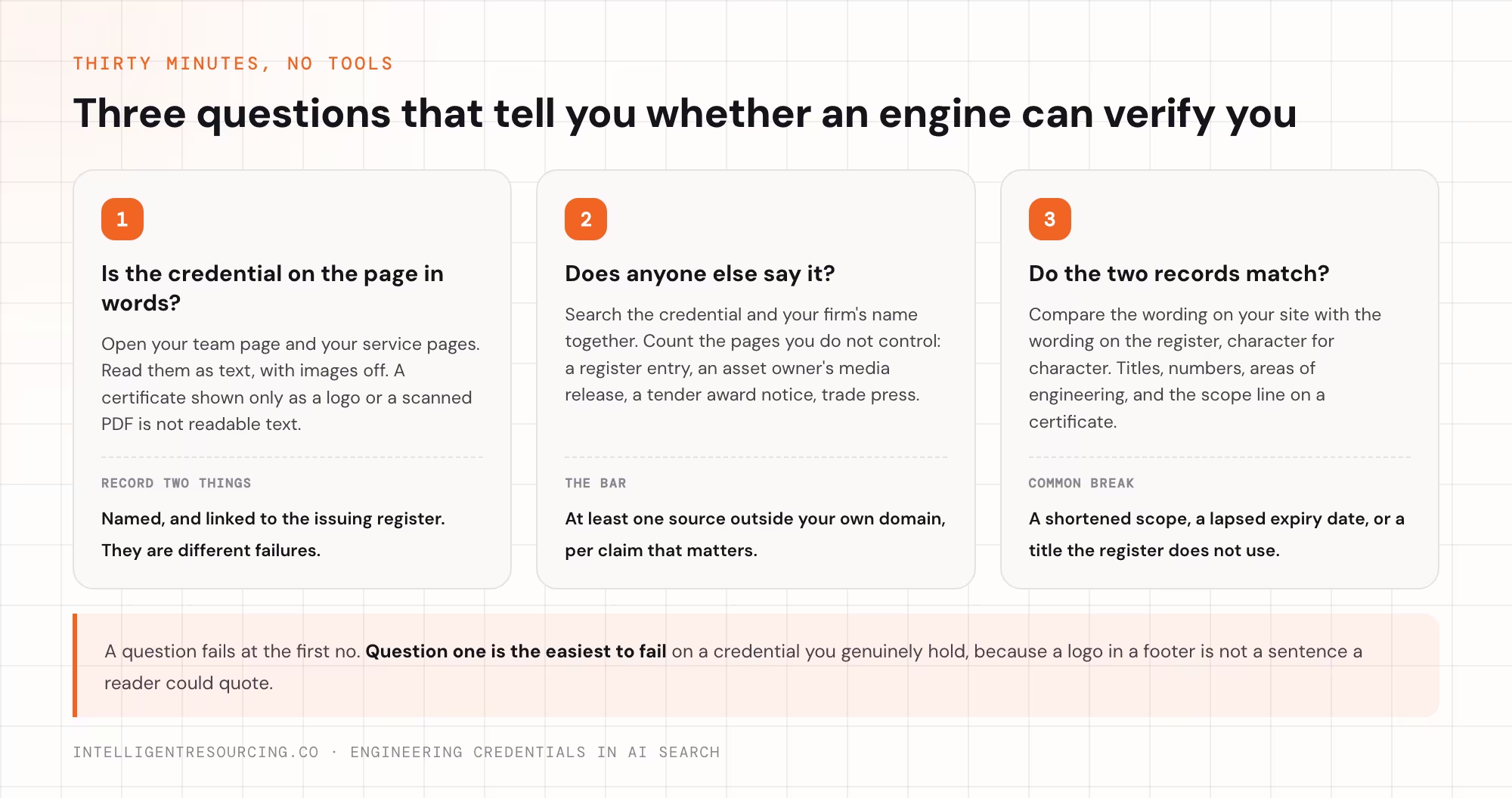
A firm sees its credentials the way an engine does by checking each one from outside its own website. The check has 3 steps: search the registers, ask the engines credential-specific questions, and record whether each answer names the firm, links to it, or both.
- Search the registers. Look up each engineer and your company, then compare every detail with your pages.
- Ask credential-specific questions. Use a buyer's wording, such as "RPEQ structural engineer for school buildings in Brisbane". Ask several versions of each.
- Record 2 outcomes for every answer. Track "named" and "linked" separately on each engine, because a firm can be linked as a source without being named as the recommendation.
Ask the engines directly, because Google rankings show a different picture. A study of 55,936 queries across 6 AI search engines and 2 traditional search engines found 37% of cited domains were unique to the AI engines. A register page that never ranks can still be cited.
If a credential earns links but no mentions, check whether it sits in the passage engines lift. Credentials that exist only on your own pages are where the work starts.
Content Creation
We will check which of your registrations, certificates and projects the main AI engines can confirm, before your next tender. You keep the findings whether or not you work with us.
FAQs
Does chartered status help an engineering firm get cited by AI engines?
Chartered status helps when the page shows the engineer's name, title and area of work the same way the national register does. A bare "CPEng" after a name gives an engine less to match. Where a state scheme applies, registration is the stronger record, because it is a legal record of who may practise.
Do AI engines treat RPEQ and Engineers Australia membership the same way?
They are different records, so write them differently. RPEQ is a legal registration kept by a state board, and that board describes professional membership organisations as voluntary bodies with no power to investigate or prosecute. List the RPEQ number, practising status and area of engineering, and list membership on its own line.
Should an engineering firm list ISO 9001 on every service page?
List it on the pages its scope covers, using the scope wording from the certificate. A certificate for "design of road and bridge structures" belongs on the bridge design page. Adding it to unrelated services stretches the claim beyond what the certificate states.
Can a confidential project still count as a credential?
A confidential project counts only as far as you can describe it without breaching the agreement. An anonymous case such as "a 40-metre pedestrian bridge for a Victorian council, 2025" still gives an engine a project type, place and year. Without a named owner, it carries less weight than a project the owner confirms.
Do engineering awards count as evidence for AI engines?
An award counts when the awarding body publishes the result and names both the firm and the project. That listing is a third-party record of the same fact your project page states. An award logo on your own site, with no public listing behind it, gives an engine nothing to cross-check.