

Why Does an Accounting Firm Get Enquiries but Not the Clients It Wants?
An accounting firm can attract plenty of interest and still miss its growth goal, because the enquiries come from the wrong kind of client. A one-off tax client is a poor match for a practice seeking ongoing advisory work, and more advertising adds more of the same enquiries.
Tax-time demand is dominated by individual returns, so a broad tax message reaches that whole pool rather than the businesses a firm wants to serve. The firm pays for reach it cannot convert.
Consider a firm serving growing construction businesses. Its website says "tax, accounting and business advice for everyone". That brings enquiries from many people, but it gives a construction business little reason to choose it for job costing, cash flow or monthly reporting.
Why Do Broad Accounting Ads Bring the Wrong Leads?
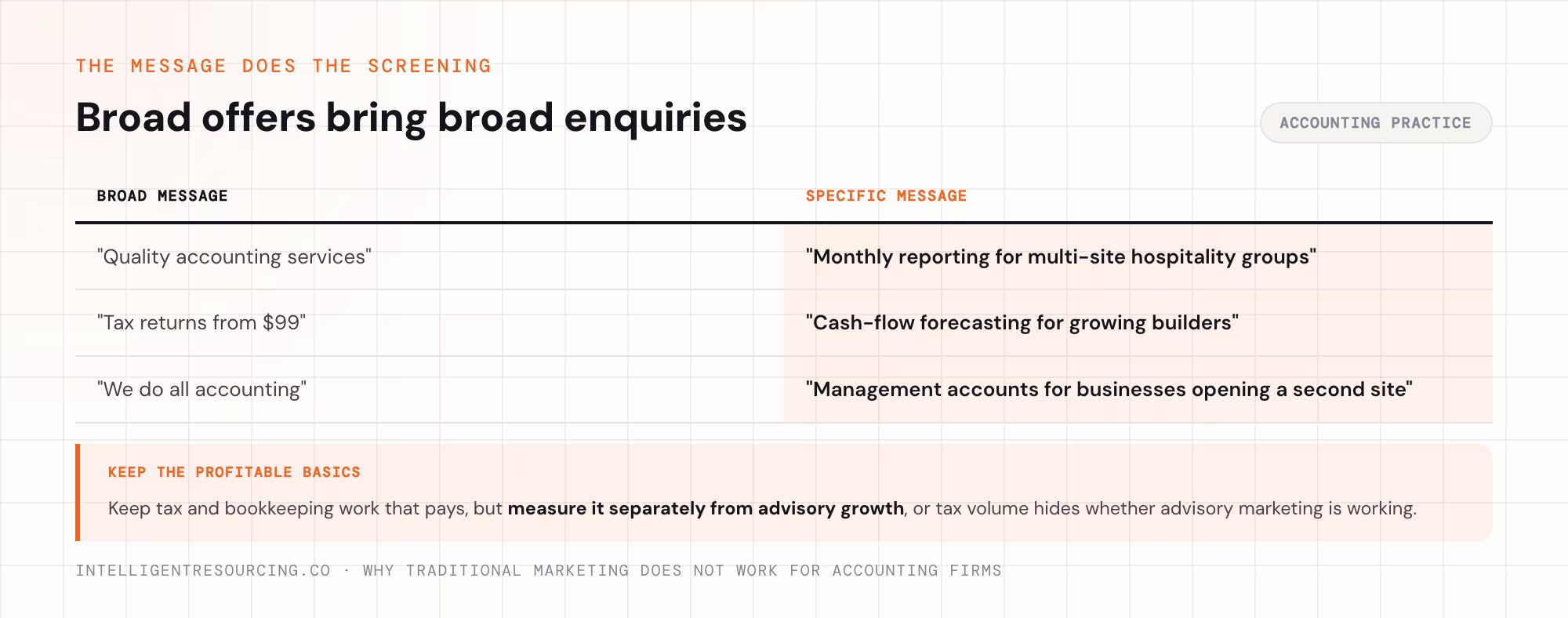
Broad ads attract buyers who want the lowest price or a one-off job, because nothing in the message screens them. A specific offer, such as monthly reporting for multi-site hospitality groups, tells the right buyer the firm knows their problem. It also screens enquiries.
Search ads can screen too. Google's help page on negative keywords says they let you exclude search terms so ads show for the keywords that matter. A firm that wants advisory clients can block searches for cheap, one-off work.
| Broad message | Specific message |
|---|---|
| "Quality accounting services" | "Monthly reporting for multi-site hospitality groups" |
| "Tax returns from $99" | "Cash-flow forecasting for growing builders" |
| "We do all accounting" | "Management accounts for businesses opening a second site" |
Keep profitable tax and bookkeeping services, and measure them separately from advisory growth.
Why Aren't Referrals Enough to Grow an Accounting Practice?
Referrals work well, but a firm cannot plan around them unless it tracks them. Partners also need to know which clients fit, or they send whoever asks.
CPA Australia's growth tips include linking clients to people and services within the firm's network. They also cover the quality of the client base and reviewing the fee base. That makes referrals worth structuring.
Make referral requests specific, and give every referrer the same short brief:
- Who fits: the type of business and the problem the firm handles well.
- What to watch for: a lawyer may know a business opening another site, and a bookkeeper may spot a client needing more advice.
- How to introduce: ask whether an introduction is welcome before passing on details.
- What gets tracked: the referral source, client need and outcome, as well as volume.
Where Do Good Accounting Enquiries Get Lost?
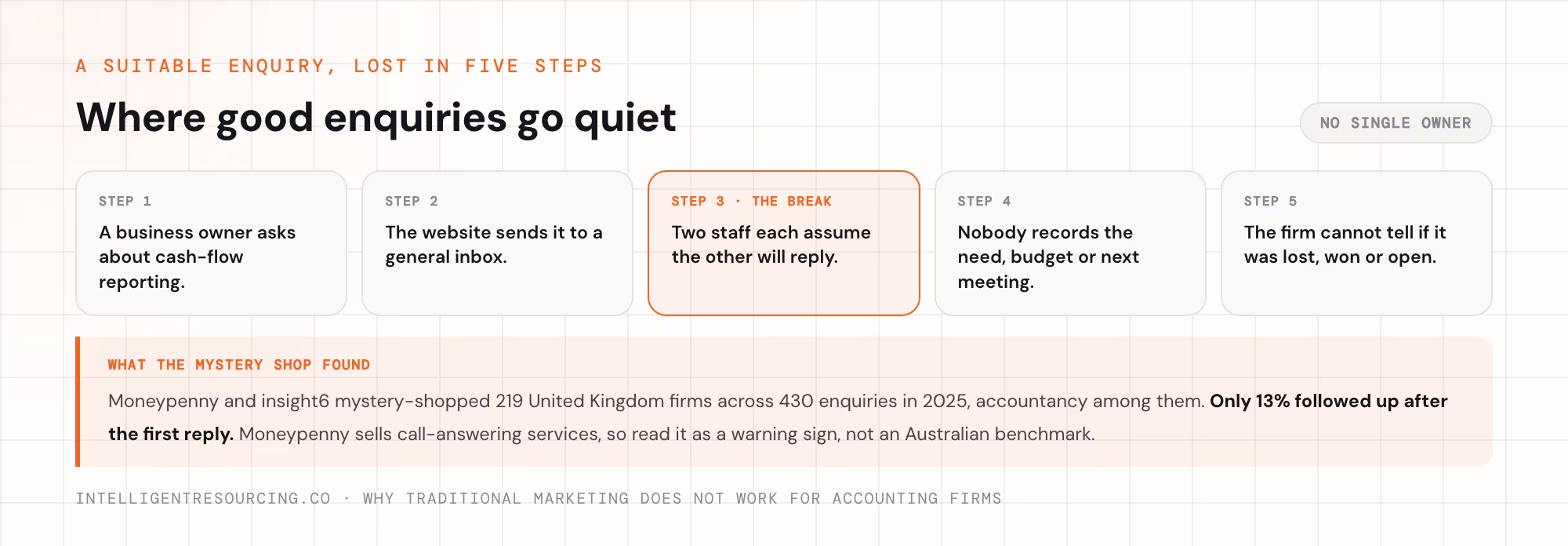
A suitable enquiry can still fail because it moves through email inboxes without 1 owner. The delay usually sits between the first question and a booked discussion, and rarely in the ad itself. Slow or unowned replies lose good enquiries before anyone judges fit.
Follow-up is where most firms fall down. In 2025, Moneypenny and insight6 mystery-shopped 219 firms in the United Kingdom, accountancy among them, across 430 enquiries. Only 13% followed up after the first reply. Moneypenny sells call-answering services, so read it as a warning sign rather than an Australian benchmark.
A lost enquiry usually runs like this:
- A business owner asks about cash-flow reporting.
- The website sends the request to a general inbox.
- Two staff members assume the other will reply.
- Nobody records the need, budget or next meeting.
- The firm cannot tell whether the lead was lost, won or still open.
Record the source and need, assign an owner and log the outcome in the customer relationship management (CRM) system. A small firm can start with a shared tracker. For larger firms, revenue operations can keep handoffs clear across service teams.
Can More Tax Blogs and Social Posts Fix the Problem?
Content helps a buyer understand an issue and trust a firm, but it works best alongside a clear service offer and a timely reply. An article about tax deadlines serves existing clients well and can miss a business that needs outsourced finance support.
Each platform reaches a different crowd. DataReportal's Digital 2026 Australia report puts LinkedIn at 18.0 million members and Facebook at 17.7 million users in Australia in late 2025. Both counts come from each platform's own ad tools. Pick the channel your target clients use, test it, and track what it brings in.
Before publishing, ask what decision the page helps the buyer make. "When do growing businesses need management accounts?" is more specific than broad tax tips.
Being visible in artificial intelligence (AI) answers is a separate problem from poor enquiry fit. Our guide explains why accounting firms go missing from AI search.
What Buyer Changes Are Worth Checking?
A business that opens a second entity or site can need new reporting, payroll or tax work. New firms start all the time. The Australian Bureau of Statistics counted 460,461 business entries in 2025-26.
A change is a reason to check fit, not proof the business wants a new accountant. Confirm the change and the service need before making an offer. The wider set of signals professional firms can track, and how to route them, is covered in our guide to marketing automation for professional services.
Which Numbers Show Whether Accounting Marketing Works?
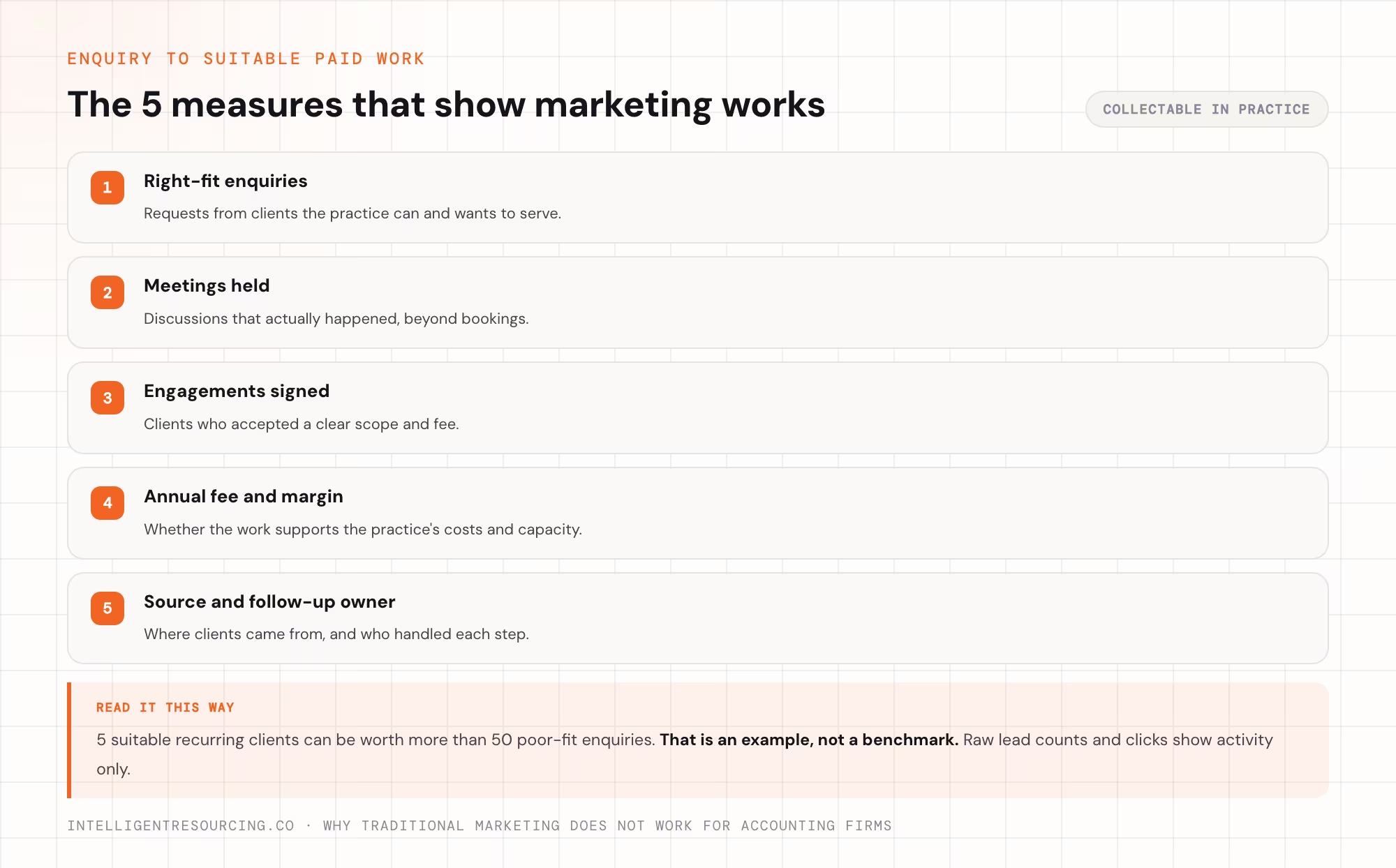
Measure the path from enquiry to suitable paid work, using information the practice can collect reliably. Count right-fit enquiries, meetings held, engagements signed, annual fee and margin, and the source and follow-up owner for each. These 5 measures show whether marketing creates profitable clients.
- Right-fit enquiries: requests from clients the practice can and wants to serve.
- Meetings held: discussions that happened, beyond bookings.
- Engagements signed: clients who accepted a clear scope and fee.
- Annual fee and margin: whether the work supports the practice's costs and capacity.
- Source and follow-up: where clients came from and who handled each step.
5 suitable recurring clients can be worth more than 50 poor-fit enquiries. That is an example, not a benchmark.
Fee and margin figures mean more against peers. The Australian Taxation Office's small business benchmarks cover 100 industries, using 2023-24 data. A firm can compare its turnover and expenses with similar businesses.
Keep activity, qualified meetings and pipeline in separate columns. Our guide to measuring lead generation returns shows how.
When Does Traditional Marketing Still Make Sense for Accountants?
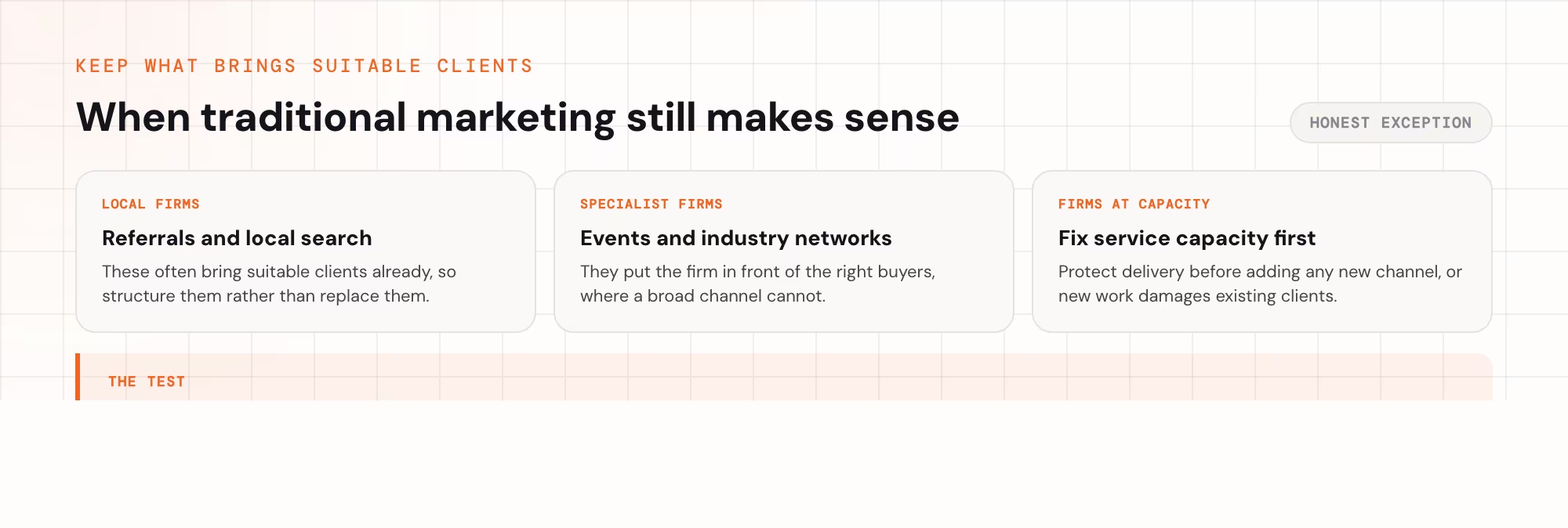
Keep the methods that bring suitable clients at a sensible cost. TaxDome surveyed 350 businesses in the United States. CPA Practice Advisor reported that 57% found their accountant through a peer referral, and only 3% through advertising. Treat that as direction for Australian firms, not a local benchmark.
- Local firms: referrals and local search often bring suitable clients.
- Specialist firms: events and industry networks put the firm in front of the right buyers.
- Firms at capacity: fix service capacity before adding any new channel.
The test is whether the firm can win and serve the right clients. If a channel brings suitable engagements at a fee the practice can sustain, keep it and measure it.
How Can Accounting Firms Connect Marketing to New Client Work?
A firm with a clear target market can connect account research, enquiry checks and partner follow-up in its existing CRM. Fix the stage where suitable enquiries stop moving before adding a campaign. Partners still decide which clients to accept, how to price work and what advice the firm can deliver. If the firm does decide to buy help, our roundup compares agencies by the gap they fill.
Intelligent Resourcing's go-to-market (GTM) work is called GTM Engineering. It builds and runs these workflows inside the firm's own CRM, on a managed retainer.
Lead Generation
To see what account research, enquiry routing and partner follow-up would look like inside your firm's existing CRM, book a GTM strategy session with Intelligent Resourcing.
FAQs
Why is accounting firm marketing not generating good leads?
The offer is often too broad, the channel attracts the wrong work or enquiries go without follow-up. Review the last 10 enquiries for fit and outcome before raising spend. Narrow the offer to a client type and a problem, give every enquiry a named owner and track which channels produce signed, profitable engagements.
Should accounting firms stop using referrals?
No. CPA Australia's growth tips centre on the firm's network and the quality of its client base. Track which partners send suitable clients, tell them which clients fit and make requests specific. Record the source, need and outcome of every referral so the firm can plan around them.
Should an accounting firm market tax returns and advisory work separately?
Yes, in most cases. Tax-time offers bring price-led, one-off enquiries, while advisory buyers look for proof the firm understands their type of business. Separate pages, offers and measures stop tax volume from hiding whether advisory marketing works.
What should an accounting firm measure from enquiry to engagement?
Measure the path from enquiry to paid work: right-fit enquiries, meetings held, engagements signed, annual fee and margin, and the source and follow-up owner. These show whether a channel creates profitable clients. Raw lead counts and clicks show activity only.
Is social media worth it for accounting firms?
It can be, when the channel fits the audience and the goal. LinkedIn and Facebook each reach millions of Australians, but not the same buyers, so pick the platform target clients use. Trial it, track enquiries and signed work, and treat it as 1 channel to test rather than the whole growth plan.