

Making Demand or Catching It: Which Job Are You Hiring For?
A demand generation agency helps more buyers want to talk to you. B2B means business-to-business: you sell to other companies. The agency then turns that interest into pipeline, which means real sales deals in the works.
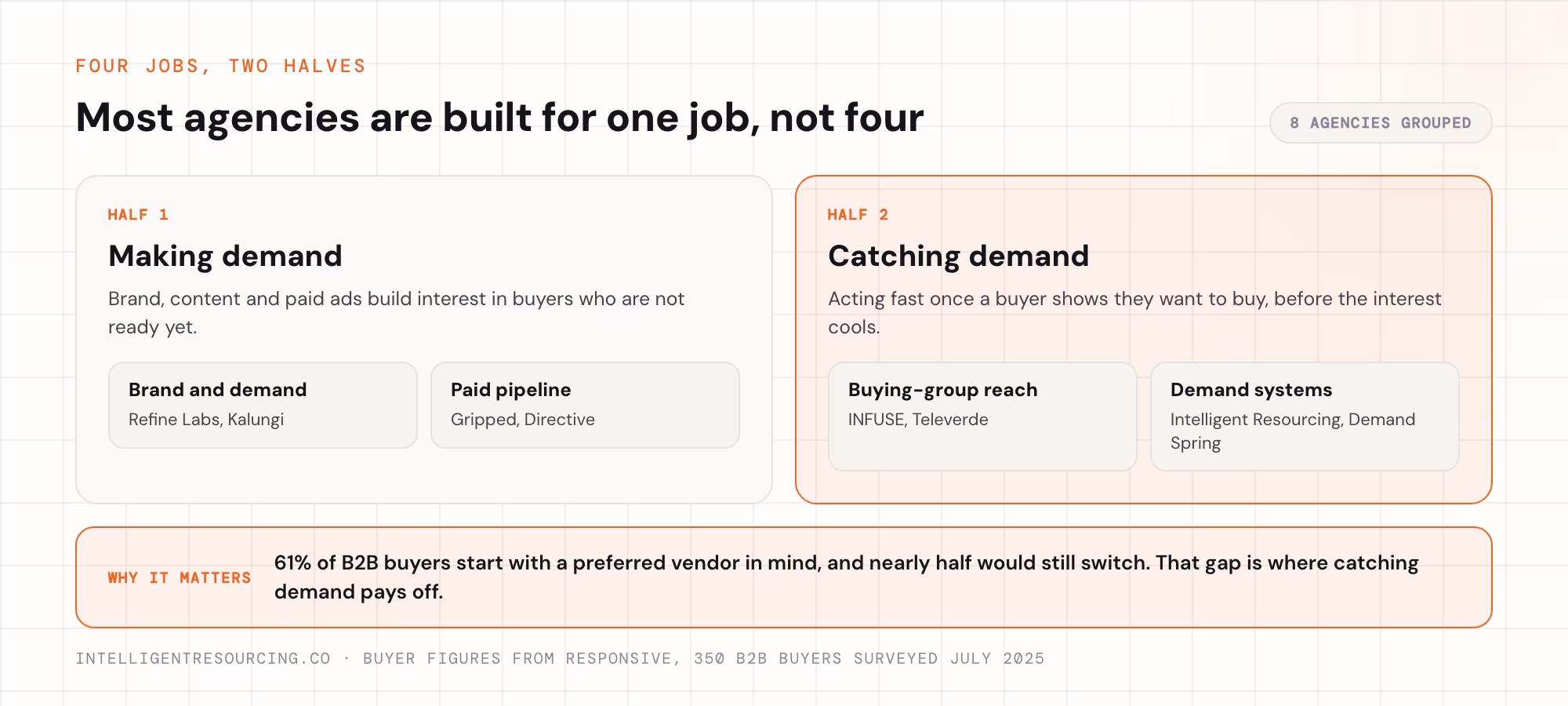
The work splits in two. Making demand uses brand, content and ads to build interest. Catching demand means acting fast once a buyer shows they want to buy.
Buyers make up their minds early. Responsive asked 350 B2B buyers and found 61% start with a preferred vendor in mind. Nearly half said they would still switch. That gap is where catching demand pays off.
| Job | Main tools | What you track |
|---|---|---|
| Making demand | Brand, content and paid ads | More target companies that know and like you |
| Catching demand | Buying signals, routing and follow-up | Faster, better-timed sales calls |
| Lead generation | Lists, outreach and booked calls | Names and meetings |
Lead generation is a third, smaller job. Our guide to demand generation versus lead generation shows where one hands off to the other.
Scorecard: 8 Agencies by Job, Price and Proof
Every agency here sells demand generation by name on its own site. We grouped each one by the job it leads with. We checked prices and named client results on each site on 2 October 2026.
The list runs from making demand to catching it. Within each job, the agency that shows a price comes first. You can check that price before you book a call. Fame played no part in the order.
There is a reason for that. Edelman and LinkedIn asked nearly 2,000 business people in 2025. 53% of decision-makers agreed that strong ideas make a vendor's fame matter less.
| Agency | Main job | Best fit | Listed price | Named pipeline result |
|---|---|---|---|---|
| Refine Labs | Brand and demand | Tech firms above US$50M yearly revenue | From US$5,000 a month | Portfolio averages, no single client |
| Kalungi | Brand and demand | Software firms at US$5M to US$50M yearly revenue | Not found on pages checked | CPGvision, US$4.7M |
| Gripped | Paid pipeline | Software, AI and tech firms | From £3,500 a month | Crownpeak, £1.3M |
| Directive | Paid pipeline | B2B brands, 420+ served | Not found on pages checked | Revenue total, no named client |
| INFUSE | Buying-group reach | Global demand teams | Per lead, per 1,000 views or fixed fee | Named case studies (DeepL, ZEISS) |
| Televerde | Buying-group reach | Large firms that sell through partners | Not found on pages checked | Broadcom, US$171M+ |
| Intelligent Resourcing | Demand systems | Australian B2B teams | From AUD$3,500 a month | None published yet |
| Demand Spring | Demand systems | Teams that use Marketo | Not found on pages checked | Net Promoter Score (NPS) 94, no named client figure |
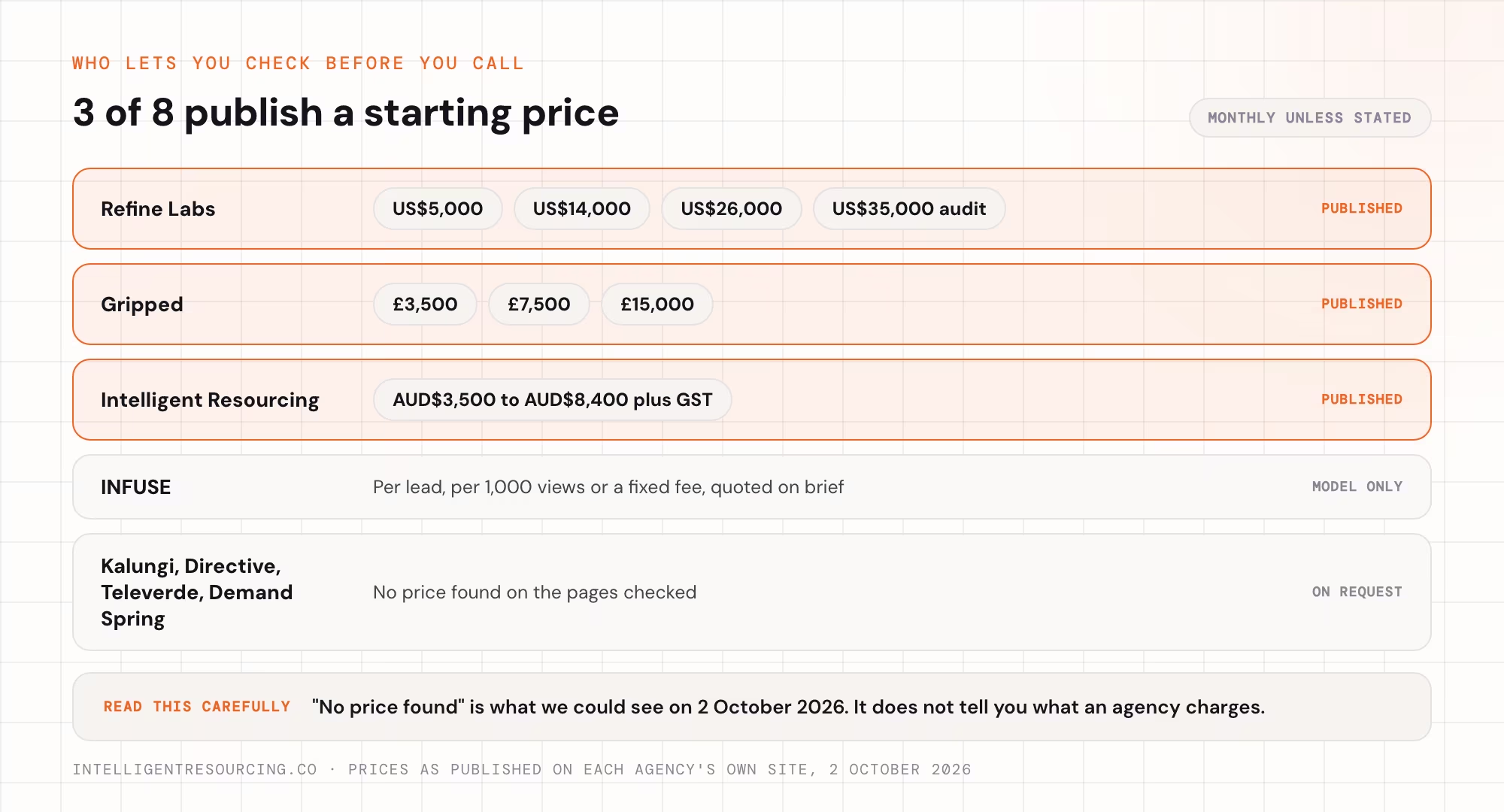
"Not found on pages checked" means we saw no price on the agency's own site on 2 October 2026. It does not tell you what they charge.
Brand and Pipeline From One Team: Refine Labs
Refine Labs runs brand, demand and customer growth as one plan for tech firms. It says it has worked with 300+ B2B tech companies since 2019. Most make more than US$50M a year.
Its big strength is being open about cost. Its public pricing page lists 4 tiers:
- Creative: from US$5,000 a month, for at least 3 months.
- Paid ads: from US$14,000 a month, for at least 6 months.
- Full plan: from US$26,000 a month, for at least 6 months.
- Audit: from US$35,000 over 6 weeks.
Proof: its homepage reports a 41% average rise in high-intent demo requests, labelled a portfolio average rather than a single client result.
Watch for: paid tiers lock you in for 6 months. If you spend less than US$14,000 a month, only the creative tier fits.
A Marketing Team on Contract for Software Firms: Kalungi
Kalungi works only with B2B software-as-a-service (SaaS) firms. It can act as your chief marketing officer (CMO). It can also run the work or coach your marketing lead.
Its full-service page targets SaaS leaders with US$5M to US$50M in yearly revenue. The work covers paid ads, search, content, branding and HubSpot. It also runs account-based marketing (ABM), which targets a set list of companies.
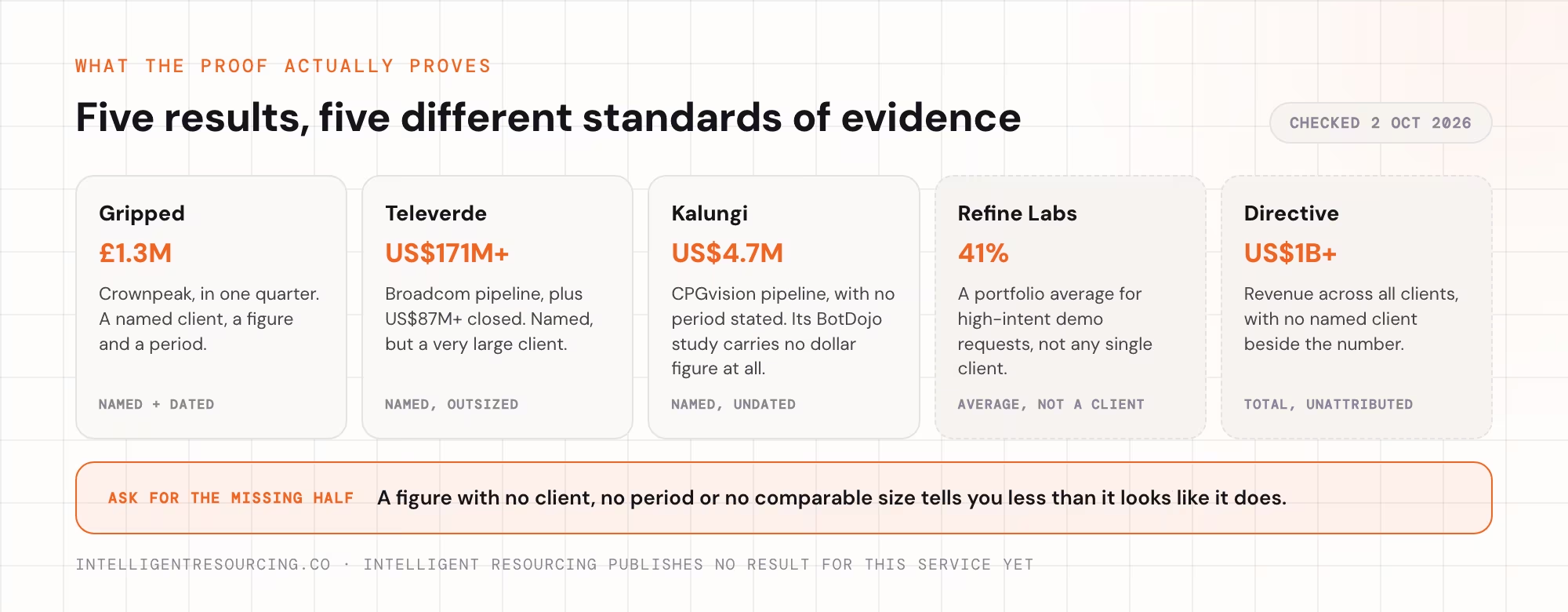
Proof: its CPGvision case study reports US$4.7M in pipeline, with no period stated. Its BotDojo case study reports 368 free trials, 20 demo calls and 3 enterprise deals in pipeline over 6 months, and carries no dollar figure.
Watch for: it only serves SaaS firms. We found no price list on the pages we checked.
Paid Ads at a Known Price: Gripped
Gripped is a London B2B agency, founded in 2017. It works only with software, AI and tech firms. It says it has served 160+ of them.
Gripped shows 3 monthly price bands on its site:
- Advice or hands-on work: from £3,500 a month, plus project fees.
- Performance: from £7,500 a month, for deep work in 1 or 2 channels.
- Scale: from £15,000 a month, for full demand generation.
Proof: its case studies report £1.3M in new pipeline for Crownpeak in one quarter. The landing page names no channels behind that figure.
Watch for: it serves a narrow set of sectors, and every price is in pounds.
Paid Ads at Scale for Bigger Brands: Directive
Directive builds B2B marketing around its own Customer Generation method. The goal is real sales deals, ahead of form fills that marketing counts as leads.
Its homepage lists 420+ brands served and 100+ marketing strategists. Its services include paid search, paid social, content, email follow-up and ad creative.
Proof: the homepage claims US$1B+ in revenue made for clients, with no named client beside that number.
Watch for: we found no service prices on the pages we checked.
Buying-Group Reach Priced Your Way: INFUSE
INFUSE runs B2B demand programmes built around buying groups. A buying group is everyone inside a company who has a say in a deal. INFUSE pairs its own data on those groups with buying signals. It also places your content on other sites, known as content syndication.
Its pricing page offers 3 ways to pay: per lead, per 1,000 views, or a fixed fee. Its own demand software comes with every programme at no extra cost.
Proof: INFUSE shows named case studies on its homepage, including DeepL and ZEISS.
Watch for: you need a clear brief on target companies, volumes and buying groups before you get a price.
Partner-Led Demand for Large Firms: Televerde
Televerde runs demand and sales programmes across inbound, outbound and partner channels. Its own teams handle the talks with buyers.
Its model page says it builds second-chance careers for women in prison and women who have left prison. Televerde says this model builds loyal teams that stay.
Proof: its Broadcom case study reports US$171M+ in pipeline and US$87M+ in closed revenue.
Watch for: we found no price list on the pages we checked. Its main proof comes from a very large client, so ask for a reference closer to your size.
Acting on Interest Before It Cools: Intelligent Resourcing
Intelligent Resourcing is a Melbourne-based B2B agency. It works on the gap between a buyer showing interest and sales getting in touch. Its Signal-Led Growth method has 3 steps:
- Watch: track buying signals, such as hiring, funding and tech changes.
- Score: rank each company by how strong and how fresh its signals are.
- Route: send the company to the right sales rep inside the Verified Buying Window. That is the short time when it is ready to talk.
Agentic signal listening runs all 3 steps inside your own CRM. Fees run from AUD$3,500 to AUD$8,400 a month, before goods and services tax (GST).
Proof: none published yet for this service, so ask for a reference before you sign.
Watch for: it runs no paid ads, brand work or content syndication. If you have no demand yet, start with one of the agencies above.
If buying signals are your main need, our signal-based agency comparison goes deeper on that market.
Follow-Up and Lead Scores for Marketo Teams: Demand Spring
Demand Spring is a marketing consultancy and a Marketo Preferred Partner. It says it has served 500+ B2B leaders since 2012.
Its services page lists lead nurturing and lead scoring as core work. Nurturing means follow-up emails over time. Scoring ranks leads by how ready they are. It also runs ABM, marketing operations and work on Marketo, Salesforce Marketing Cloud and HubSpot.
Proof: its homepage reports a Net Promoter Score (NPS) of 94, a measure of how likely clients are to recommend it.
Watch for: we found no price list on the pages we checked. If you use a different platform, check fit early.
Where Does Your Demand Break? Match the Problem to the Agency
Start with the problem you see in your pipeline today. Each problem points to a job, and each job points to 2 agencies.
| Problem in your pipeline | Job to hire for | Agencies |
|---|---|---|
| Buyers in your market do not know your name | Brand and demand | Refine Labs, Kalungi |
| Ads bring clicks but few sales deals | Paid pipeline | Gripped, Directive |
| Deals stall because too few people at the company are involved | Buying-group reach | INFUSE, Televerde |
| Interest comes in, then goes cold before sales calls | Demand systems | Intelligent Resourcing, Demand Spring |
Buying-group reach has some proof behind it. INFUSE and G2 tracked 11 cybersecurity programmes. Companies reached by both buying signals and demand programmes were 1.6x more likely to be at the decision stage, at 42.6% against 26.5%. INFUSE is on this list, so treat that as vendor research.
Before You Sign: Set Up 3 Things First
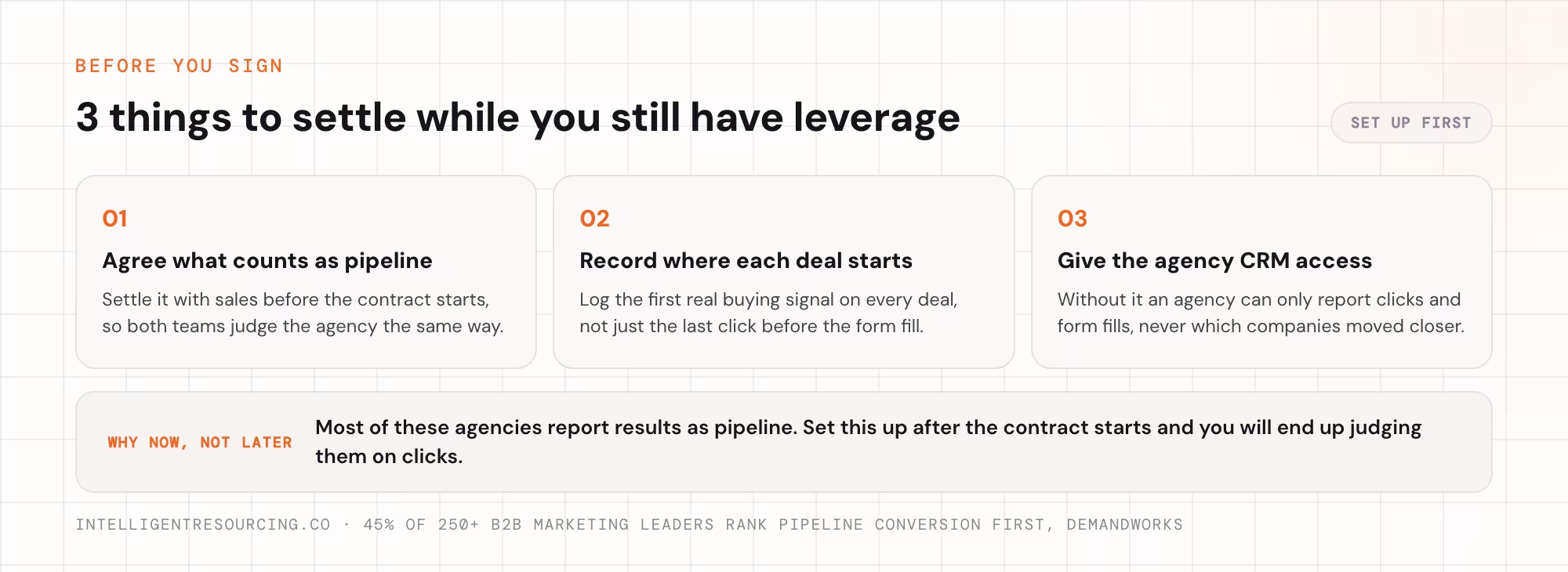
Most of these agencies report results as pipeline. So your own reports need to track pipeline too. Set this up before the contract starts. If you do not, you will end up judging the agency on clicks.
Marketers are already moving this way. DemandWorks, which also sells demand generation, asked 250+ B2B marketing leaders what makes a good lead. 45% said the chance it turns into pipeline matters most.
- Agree with sales on what counts as pipeline. Then both teams judge the agency the same way.
- Record where each deal starts. Log the first real buying signal on each deal, as well as the last click.
- Give the agency access to your customer relationship management (CRM) system. Your CRM shows which companies moved closer to a deal.
For the plan behind each job, our guide to B2B demand generation covers planning and tracking.
Your Next Step
Price is the fastest way to narrow the list. Refine Labs, Gripped and Intelligent Resourcing let you check cost before a call. For the other 5, ask for a price range and a client result at your size in the first meeting.
If interest already reaches you and then stalls, see how our GTM engineering systems are built. GTM means go-to-market. A fixed-price GTM Strategy Session maps the signals you already have and where follow-up breaks. You keep the written plan, whether you hire us or not.
Lead Generation
A fixed-price session maps the signals you already have and where follow-up breaks. You keep the written plan, whether you hire us or not.
FAQs
How is a demand generation agency different from a lead generation agency?
A lead generation agency gives you names or booked meetings. A demand generation agency helps more buyers want to talk to you. Refine Labs, Kalungi and Gripped all report results as pipeline figures.
What does a B2B demand generation agency cost per month?
Listed starting prices on this page are US$5,000 at Refine Labs, £3,500 at Gripped and AUD$3,500 at Intelligent Resourcing. Full plans cost more. Refine Labs lists US$26,000 a month, and Gripped lists £15,000. INFUSE charges per lead, per 1,000 views or a fixed fee.
How long before a demand generation agency shows pipeline?
Published examples on this list range from one quarter to 6 months. Gripped reports £1.3M for Crownpeak in one quarter. Kalungi reports 3 enterprise deals in pipeline for BotDojo over 6 months. Its US$4.7M CPGvision figure carries no stated period.
Which agency suits a large company with a long sales cycle?
INFUSE and Televerde both reach buying groups inside large companies. INFUSE suits campaigns across many regions, with flexible ways to pay. Televerde suits firms that sell through partners. Its Broadcom case study shows work at a very large scale.
Does a demand generation agency need access to your CRM?
Yes, if you want results measured as pipeline. Without CRM access, an agency can only report clicks and form fills. Intelligent Resourcing needs CRM access because its routing runs inside your CRM.