

Demand generation creates market interest before a buyer is looking, while lead generation captures interest from buyers already searching. Most B2B teams need both running across one funnel, not a choice between them. Intelligent Resourcing builds the routing between the two, so demand-gen signals become lead-gen action inside the CRM instead of two teams working from different lists. This guide sets out when to lead with each motion, how to run them together, and the KPIs that prove it is working.
What Is the Difference Between Demand Generation and Lead Generation?
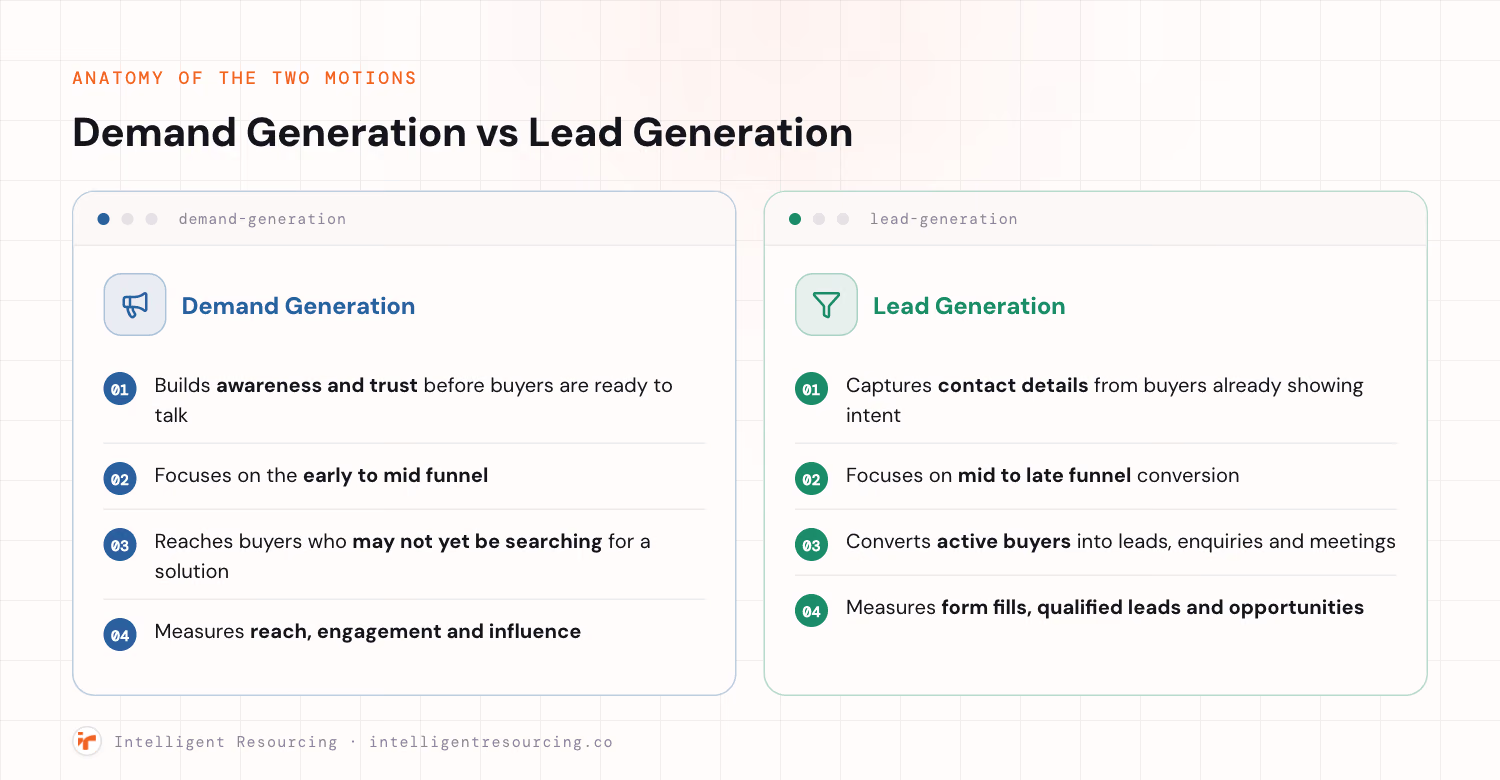
Demand generation creates and captures market interest early in the B2B sales funnel. Lead generation captures contact details from buyers who are already showing intent. The two approaches are complementary: demand generation warms the market, while lead generation converts that interest into identifiable opportunities.
| Demand generation | Lead generation |
|---|---|
| Builds awareness, trust and market interest before buyers are ready to engage. | Captures contact details from buyers who are already showing intent. |
| Focuses on early and middle funnel activity. | Focuses on middle and later funnel conversion. |
| Reaches buyers who may not yet be actively searching. | Converts active buyers into leads, enquiries and meetings. |
| Measures reach, engagement and influence. | Measures form fills, qualified leads and sales opportunities. |
Demand Generation vs Lead Generation: Which Builds B2B Pipeline?
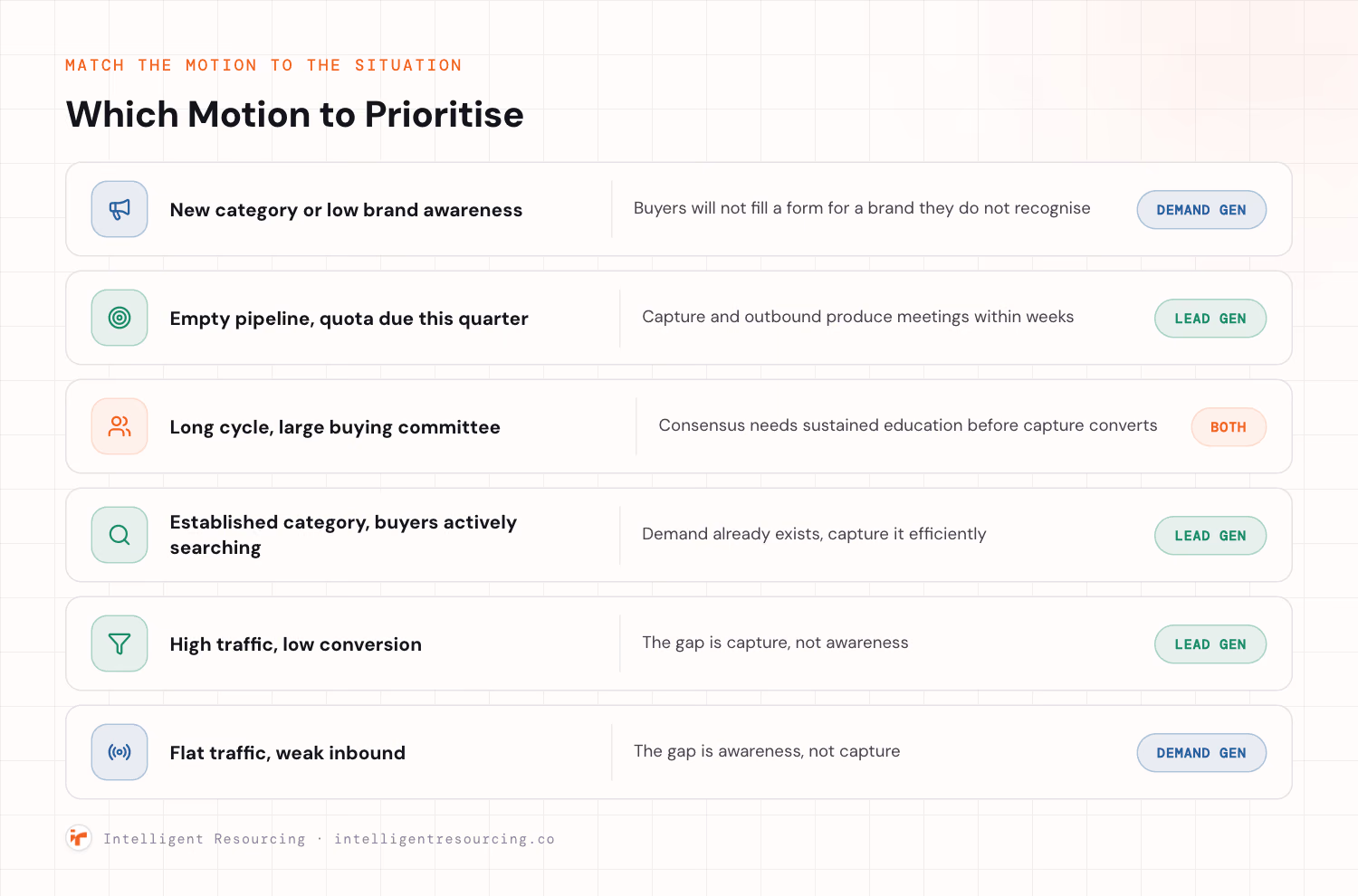
Both build pipelines, but on different timelines: lead generation can produce meetings within weeks, while demand generation compounds over months. The right choice depends on market awareness, sales pressure and growth goals.
When Autodesk integrated ON24 across its demand and lead generation stack, the team reported a 12x ROI on pipeline within six months. Warm buyers convert faster and buy bigger. The table maps common situations to the right motion.
| Your situation | Prioritise | Why |
|---|---|---|
| New category or low brand awareness | Demand generation | Buyers will not fill a form for a brand they do not recognise |
| Empty pipeline, quota due this quarter | Lead generation | Capture and outbound produce meetings in weeks |
| Long cycle, large buying committee | Demand gen weighted, lead gen active | Consensus needs sustained education before capture converts |
| Established category, buyers actively searching | Lead generation weighted | Demand already exists; capture it efficiently |
| High traffic, low conversion | Lead generation | The gap is capture, not awareness |
| Flat traffic, weak inbound | Demand generation | The gap is awareness, not capture |
When to Prioritise Demand Generation
Prioritise demand generation when awareness is the constraint. Common signals include low branded search, weak inbound demand, long buying cycles and entry into a new market or category.
When to Prioritise Lead Generation
Prioritise lead generation when demand already exists. It works best in established categories where buyers are actively searching, sales has capacity to follow up quickly and pipeline is needed this quarter.
Lead generation can produce faster results, but quality remains the main risk. Reach Marketing's 2025 data found that 91% of B2B marketers prioritise lead generation, while 58% identify lead quality as their biggest challenge. Intelligent Resourcing's B2B lead generation service is designed to close that gap.
How Does Demand Generation Affect Sales Cycle Length and Win Rates?
Demand generation shortens effective cycles and lifts win rates. It warms buyers and the committee before sales engages, so deals arrive more qualified, because the education already happened. Warm demand-gen leads convert better than cold outbound. Aligned demand and capture also grow revenue faster.
Warm buyers need less convincing, because the buying committee already understands the problem, so sales skips the education phase. That compresses the cycle and also lifts win rates. In one ZoomInfo case study, Smartsheet used intent data and form optimisation to drive an 84% increase in MQLs sent to sales and a 26% lift in opportunity rate. Intent-fed pipeline converts better because timing matches need.
The 84% increase in MQLs is useful evidence, but it reflects one case study at a particular point in time. The broader takeaway is more durable: when intent data helps sales engage buyers at the right moment, conversion tends to improve. Benchmarks change, but that principle remains.
How Do You Run Demand Generation and Lead Generation Together?
Run demand generation and lead generation in parallel rather than treating them as separate stages. Demand-generation engagement and intent signals should trigger lead-generation actions inside the CRM, so content views, webinar activity and intent spikes can create timely sales tasks automatically.
A RevOps or demand-generation lead should own the routing logic between the marketing platform and your CRM. For example, a webinar registration can create a follow-up task, while a surge in account-level intent can increase the lead score and alert the relevant salesperson to respond within hours. This is signal-based marketing applied directly to pipeline creation.
Pipeline360's October 2024 research found that 75% of fully aligned sales and marketing teams met their goals to a great or very great extent, compared with 53% overall. However, the handoff can fail when signals reach sales without enough context, while an overly gated content strategy can restrict awareness and leave the top of the funnel underdeveloped. Teams should therefore route only the signals that indicate meaningful buying activity, using Intelligent Resourcing's B2B buying signals guide to define which behaviours deserve action.
How Do You Integrate Demand Gen and Lead Gen Into One B2B Revenue Team?
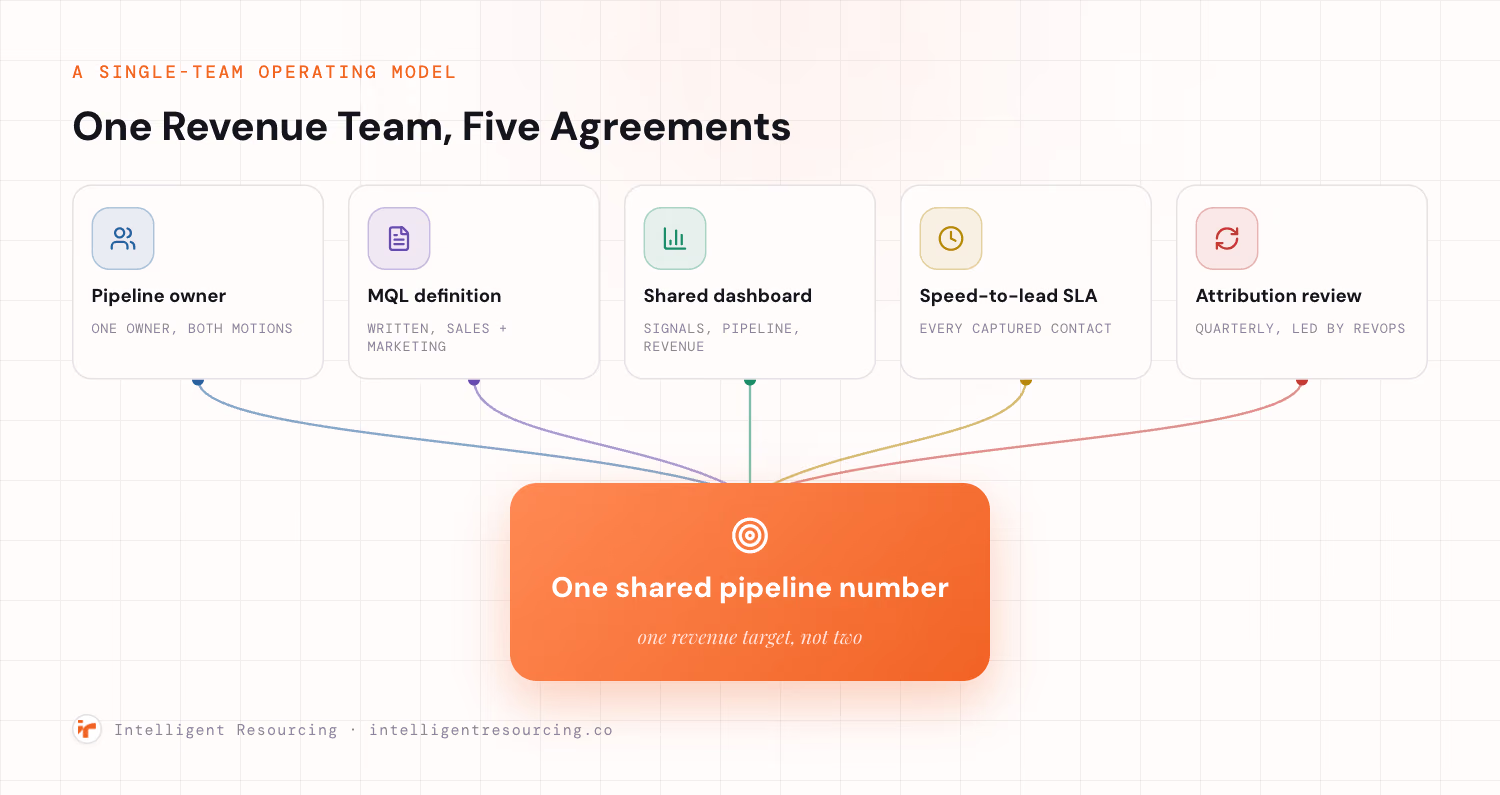
Bring both motions under one revenue leader, then align the team around a shared pipeline target, a written MQL handoff agreement and a single measurement model. Demand generation should own early indicators such as branded search, engagement and influenced pipeline, while lead generation should own capture, MQL volume and speed-to-lead. RevOps should manage attribution, routing and the shared dashboard as the system of record.
The operating model only works when ownership is clear. Give one leader responsibility for the full pipeline number, divide responsibilities by capability rather than departmental turf, and agree on one definition of a qualified lead across sales and marketing. A unified KPI model should connect early demand signals to pipeline and revenue, because no single team can credibly claim ownership of the entire buying journey.
That need becomes more obvious in long B2B sales cycles. The 6sense 2025 Buyer Experience Report puts the average purchase cycle at 10.1 months, down from 11.3 months the previous year, but still long enough for buyers to move through multiple stages, channels and stakeholders before making a decision. One revenue team therefore needs to manage the full journey, from awareness and intent through to capture, follow-up and conversion.
A practical single-team model includes:
- One pipeline owner across demand creation and demand capture.
- One written MQL definition agreed by sales and marketing.
- One shared dashboard covering early signals, pipeline and revenue.
- A speed-to-lead SLA for every captured contact.
- A quarterly attribution review led by RevOps.
A five-person team does not need a complex committee structure, but it still needs clear ownership, agreed handoffs and shared reporting.
Our GTM engineering services connect those signals, systems and operating agreements into one revenue workflow.
Build One B2B Revenue Engine, Not Two Teams
The debate between demand generation and lead generation creates a false choice, because the strongest B2B growth model brings both motions together within one revenue engine that operates against shared pipeline goals. Demand generation creates awareness and builds buyer preference, while lead generation captures active intent and converts it into sales opportunities.
Rather than staffing two competing teams, align both functions around a written MQL agreement, shared performance measures and signal-based routing that connects engagement with timely sales action. Demand generation should feed the system with informed and interested buyers, while lead generation should convert that interest into a qualified pipeline.
Ready to design an integrated demand creation and capture system? Book a call with the Intelligent Resourcing team.
Comparisons
Intelligent Resourcing builds the signal routing between demand generation and lead generation, so engagement and intent data trigger the right CRM action without two teams working from separate lists.
FAQs
Is Demand Generation Replacing Lead Generation in B2B?
No. Demand generation is not replacing lead generation. It is expanding what feeds it. The shift favours ungated reach and intent capture. Named-lead capture still converts pipeline. Buyers now recall brands before they fill forms. So demand builds preference; lead gen closes the loop.
Should You Run Demand Generation or Lead Generation First?
It depends on existing demand. If buyers already search your category, start with capture. If awareness is low, build demand first. Otherwise the forms stay empty. The one-line rule is simple: capture existing demand, create absent demand. Most teams need both within a year.
How Do You Measure Demand Generation vs Lead Generation?
They use different KPIs. Demand generation uses lagging, brand-level metrics: branded search, share of voice, influenced pipeline. Lead generation uses immediate, contact-level metrics: MQL volume, cost per lead, speed-to-lead. Pipeline contribution is the shared north star. Both motions report into one number.
What Is the 95/5 Rule, and What Does It Mean for Pipeline?
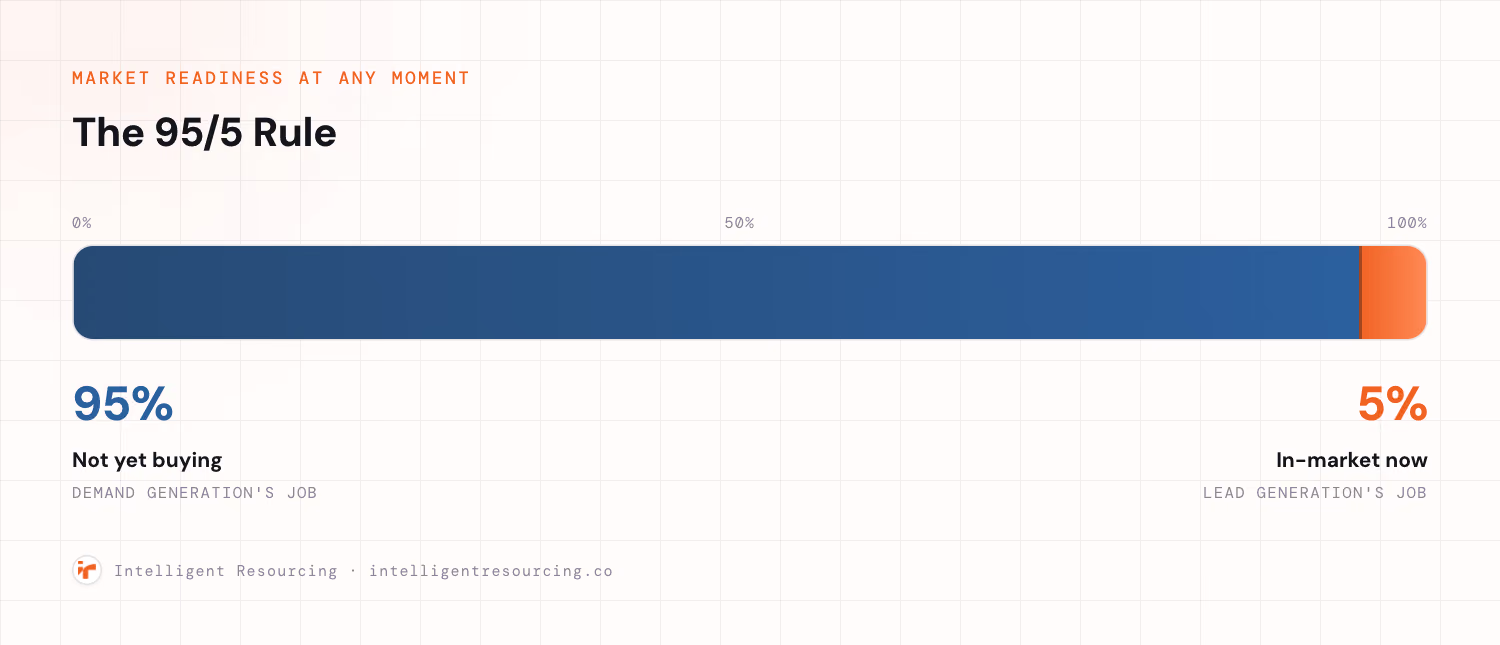
The 95/5 rule describes market readiness. Roughly 5% of your market is in-market now. The other 95% are not buying yet. Demand generation builds preference across the 95%. Lead generation captures the active 5%. Ignore the 95% and future pipeline shrinks.
What Is the Difference Between Demand Capture and Demand Creation?
Demand creation and demand capture differ. Demand creation educates buyers who don't yet feel a problem. Demand capture converts buyers already searching. Lead generation is mostly capture. Misclassifying paid search as creation underfunds real awareness work. Fund both, and label them honestly.