

What Is B2B Demand Generation?
Business-to-business (B2B) demand generation is the marketing and outbound work that makes buyers aware of a problem before they talk to sales. It spans 5 channels (content, paid media, webinars, email nurture and outbound), all run as a single programme aimed at a single audience with one shared calendar.
Coordination is what makes it demand generation, because one pain point runs through every channel in order:
- Webinar. Covers a single pain point for an audience that has not raised a hand.
- Email nurture. Follow up on the same pain point with attendees and registrants.
- Outbound. Reps use the same points as talking points, so every channel makes the same case.
The standard model ties output to headcount:
- More campaigns need more campaign managers.
- More outbound needs more sales development reps (SDRs).
- More content needs more writers.
Pipeline grows in step with the team, so it stalls whenever hiring stalls.
That is harder to fund than it was: the CMO Survey's spring 2025 edition asked 281 American marketing leaders about spending.
It found budgets grew just 3.3% over 12 months, down from 5.8% in the edition before, while digital spend growth slowed to 7.3%.
Why Does Adding Headcount Stop Growing Pipeline?
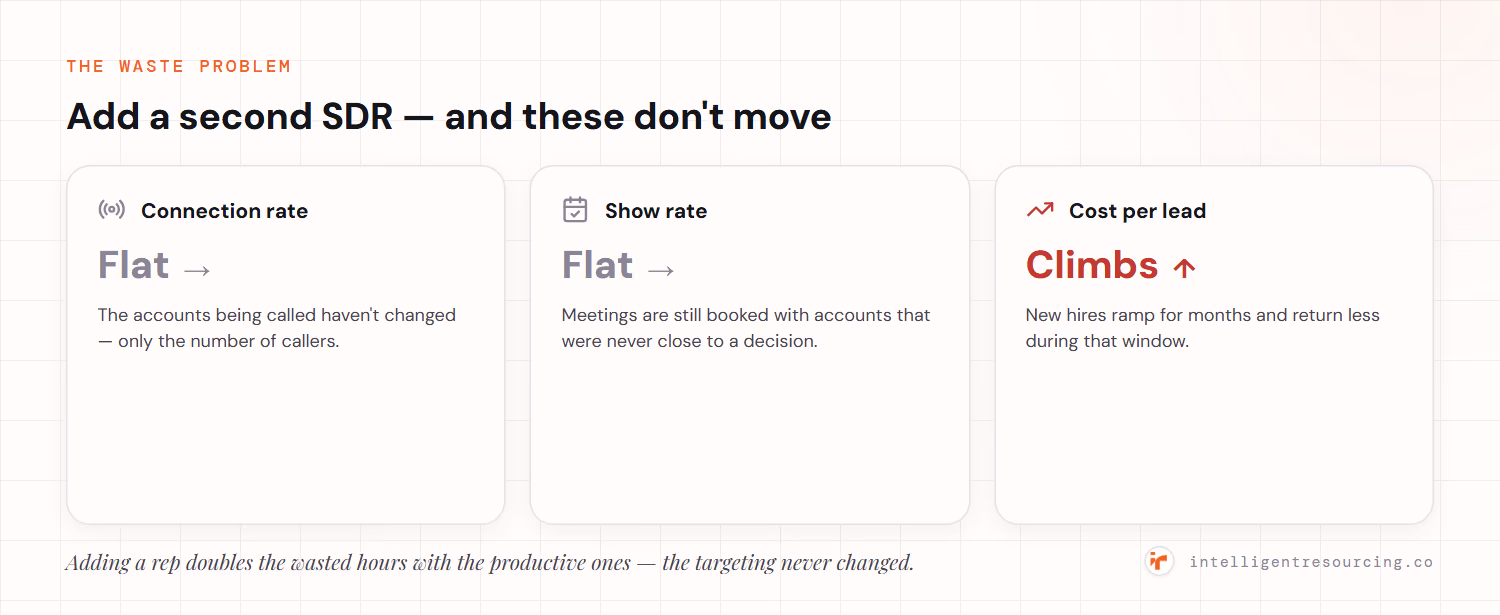
Adding headcount stops growing the pipeline because each new hire works the same account list as everyone else, so the gap is targeting. Ebsta and Pavilion's 2025 go-to-market (GTM) benchmarks found 78% of sellers missed quota in 2025, up from 69% the year before.
Every hour a new SDR spends on an account with no buying signal is an hour on an account that will not buy this quarter. A second SDR doubles the wasted hours along with the useful ones, because the targeting stays the same and only the number of people running it grows. Teams weighing outside help instead of another hire can compare 8 demand generation agencies by the job each one actually does.
The symptoms show up in 3 places:
- Connection rates stay flat. The accounts being called have not changed, only the number of callers.
- Show rates stay flat. Meetings are still booked with accounts that were never close to a decision.
- Cost per lead climbs. New hires take months to ramp and return less during that window.
These are the key performance indicators (KPIs) to watch when headcount stops paying off. Our guide to B2B marketing KPIs that predict pipeline separates them from the vanity metrics.
Kynection is a provider of unified software systems for transport, construction and mining. For years it ran demand generation this way, until a signal engine replaced its old lead vendor.
| Measure | Old vendor model | Signal engine |
|---|---|---|
| Lead fit | 80 to 90% of leads sat outside its ideal customer profile (ICP) | Every account checked against its customer relationship management (CRM) system |
| Pipeline | Stayed flat as SDRs were added | 150 net-new accounts in phase 1, 250 over 4 months |
At $150,000 to $250,000 a year per account, a bigger team was never going to close that gap.
What Should a B2B Demand Generation Strategy Include?
A B2B demand generation strategy has 5 parts, in this order: an account list, a signal set, a channel plan, routing rules and a measurement plan. Most strategies start with the channel calendar and skip the first 2, which is why content and outreach keep reaching accounts that were never close to buying. Each part becomes a short document, and we set out the 5 documents to write before any build starts.
- Account list. List the company traits that make an account a fit, such as size, industry and location. Add the red flags sales already knows about.
- Signal set. Name the events that show an account is getting ready to buy, such as a new sales leader, a funding round or a contract ending.
- Channel plan. Decide which content and outbound each buying-group role sees, and in what order.
- Routing rules. Set what happens when a signal fires: which rep gets the account, how fast and with what message.
- Measurement plan. Agree the metrics that show whether the signal layer is earning its cost before anything launches.
Parts 2 and 4 are the work of GTM engineering, which joins capture, scoring and routing into one system. A B2B software-as-a-service (SaaS) team builds its signal set on product and hiring events, while a services firm builds it on leadership changes and contract cycles.
The channel plan has to reach more than the main buyer. Edelman's 2025 B2B research notes that hidden buyers in finance, operations, legal, compliance and procurement veto up to half the shortlist of vendors, so content written only for the main buyer leaves them out.
How Does a Signal-Led Demand Generation System Work?
A signal-led system adds a layer on top of the existing team that spots buying activity and sends it to reps. It watches for hiring, funding, new tools and contracts ending. It scores each account by which signal appeared and when, then moves it into outreach once a Verified Buying Window opens.
A Verified Buying Window is a set period when a specific signal shows an account is weighing up a purchase. Reps still do the outreach and writers still produce the content, but the input list each of them works from changes.
The watching itself runs on artificial intelligence (AI) agents. Our page on agentic signal listening shows which events they track and how an account gets flagged.
Take a B2B SaaS company with 800 target accounts and 3 reps:
| Factor | Headcount-scaled model | Signal-led model |
|---|---|---|
| Accounts in active outreach | All 800, on the same outreach schedule | The 20 to 30 showing a live signal this week |
| The other accounts | Same schedule as the rest | Light-touch email until a signal appears |
| How volume grows | Add reps | Sharpen the list the same 3 reps work |
Timing is what a signal layer is built to find. Salesloft's analysis of sales calls found win rates rise up to 14% when timing comes up early.
The engine behind the Kynection result shows how hard the filter works:
| Stage | Volume |
|---|---|
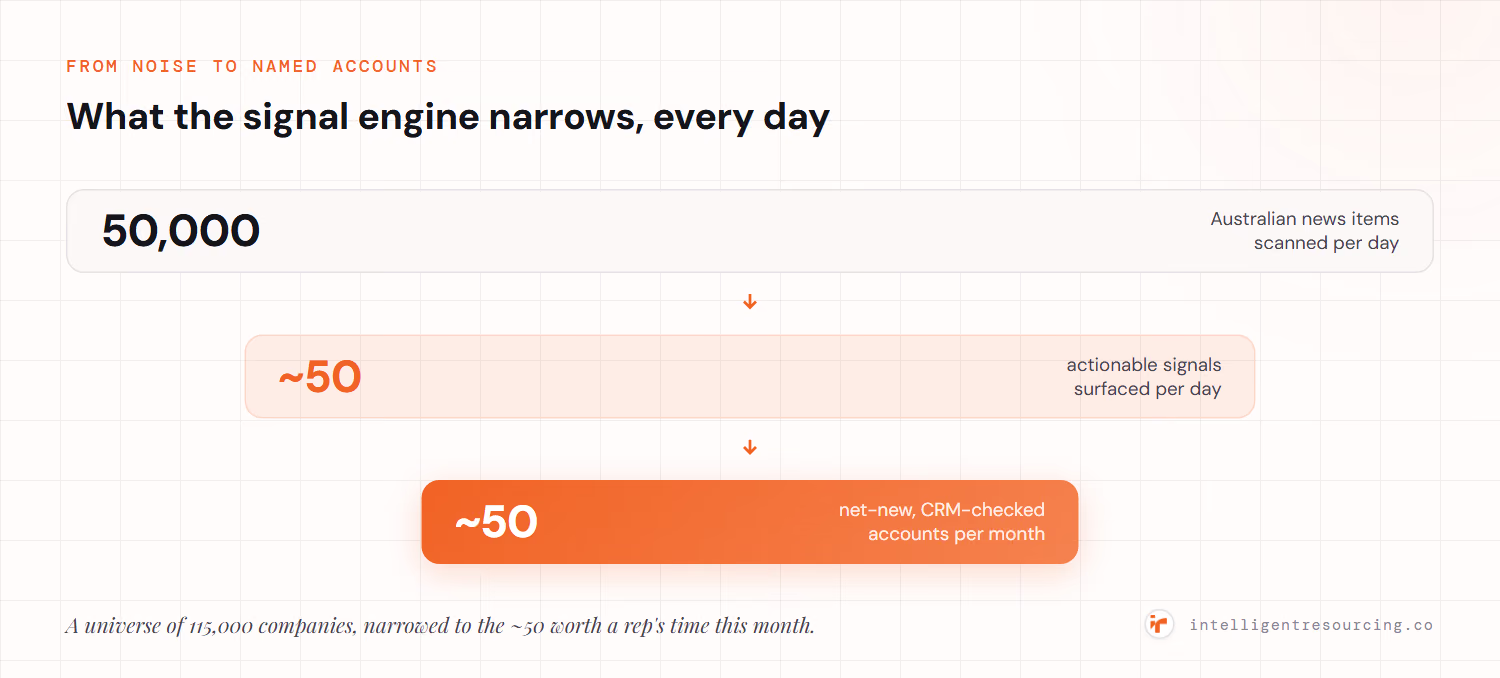
| Australian news items screened | About 50,000 a day |
| Useful signals kept | Roughly 50 |
| Companies tracked | 115,000 |
| New, CRM-checked accounts | About 50 a month |
Which Tools Make Up a Demand Generation Signal Stack?
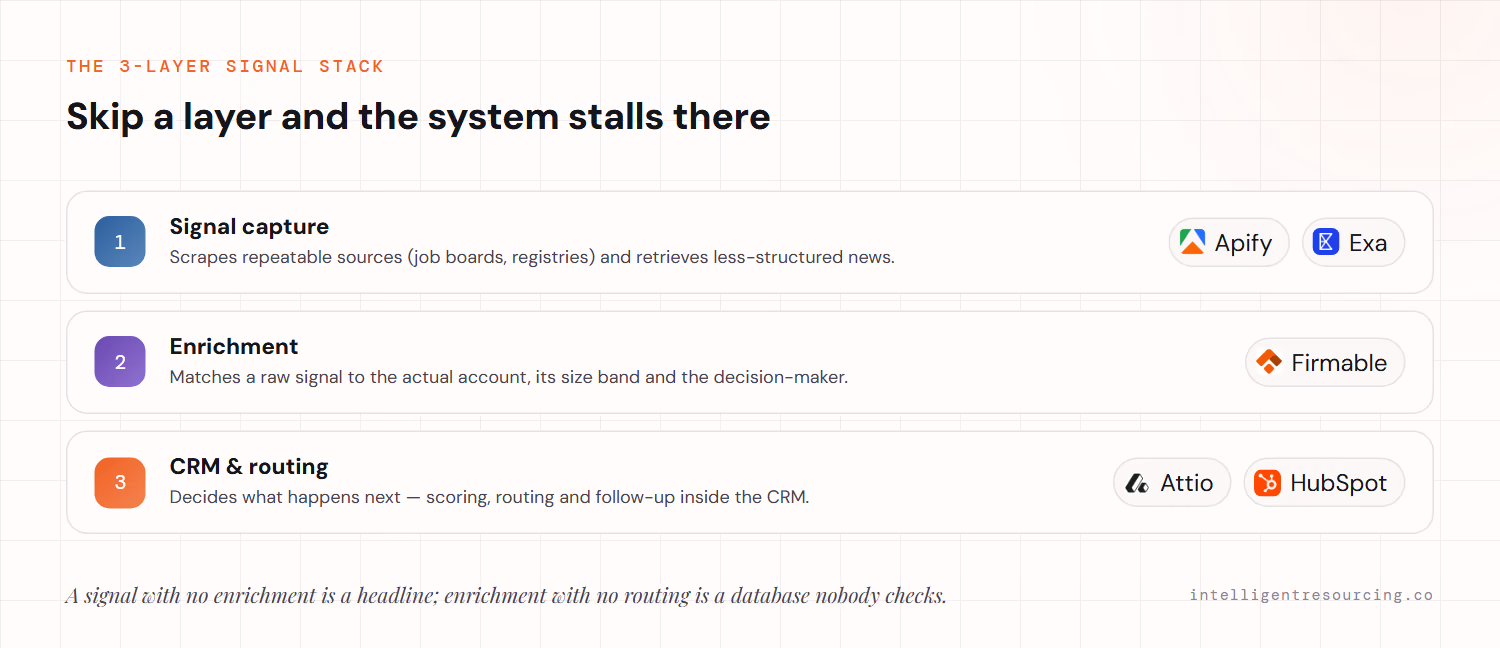
A demand gen signal stack has 3 layers. Capture finds the signal, enrichment ties it to an account and a decision-maker, and the CRM decides what happens next. Tools vary by team, but a missing layer stalls the system at that exact point, because a signal with no account attached is just a headline.
| Layer | Example tools | What it does |
|---|---|---|
| Signal capture | Apify, Exa | Apify scrapes repeatable sources such as job boards and company registries. Exa handles broader retrieval, such as news mentions and launch announcements. |
| Enrichment | Firmable | Matches a raw signal to the account, its size band and the right decision-maker. |
| CRM and routing | Attio, HubSpot | Attio suits teams that want to build their own scoring rules. HubSpot suits teams that already run their marketing emails in HubSpot. |
Signals carry different weights. Lusha's 2026 Executive Mobility report found a new chief revenue officer (CRO) reviewing their sales tools and data within 30 days, and suggests reaching them within 7 days. A funding round opens the budget, and a rival's contract expiry opens a window to replace them.
Match the stack to the market: a team selling into a narrow, well-mapped industry needs deeper capture and less enrichment, and a team with a broad ICP needs the reverse. Our guide to signal-based marketing tools prices each layer.
Where Does Demand Generation Hand Off to Lead Generation?
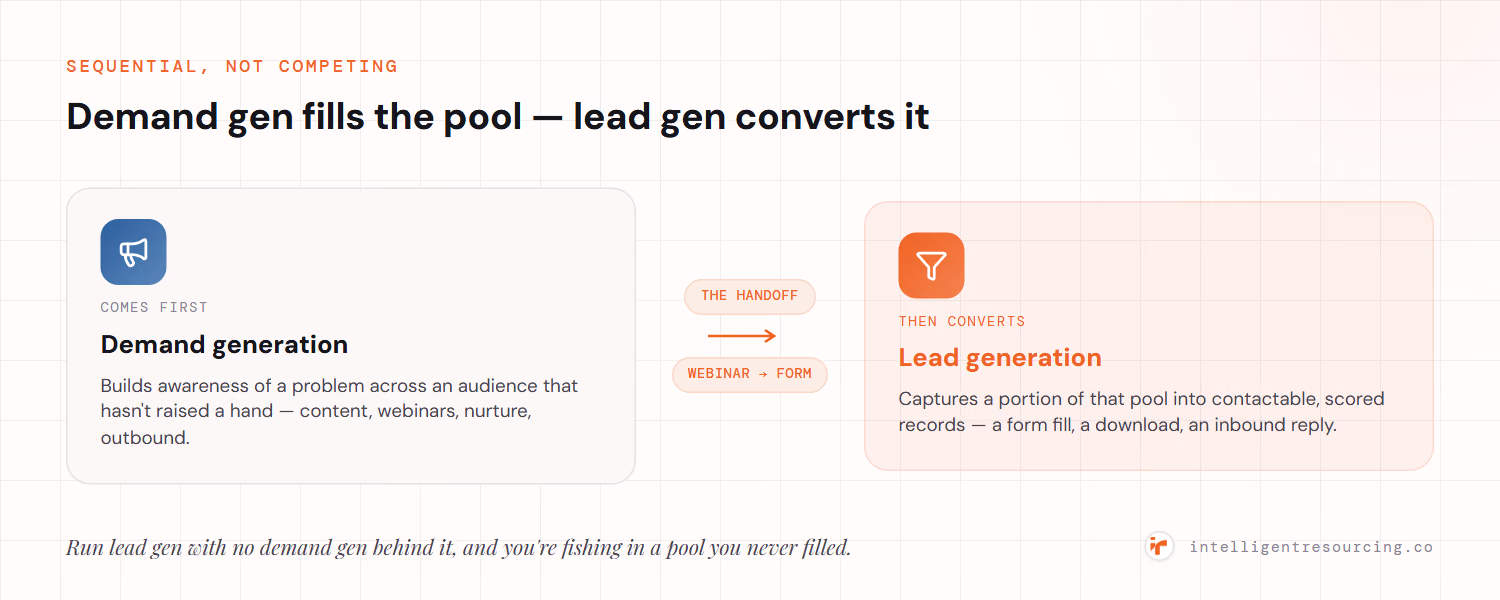
Demand generation hands off to lead generation when a buyer raises a hand, such as a form fill, a demo request or a reply. Before that point, demand generation builds awareness. Dreamdata's benchmark data puts the average B2B journey at 272 days from first touch to revenue. The hand-off is a single moment in that journey.
A webinar shows exactly where the hand-off happens:
| Step | Motion | Why |
|---|---|---|
| The webinar itself | Demand generation | It reaches people who have not raised a hand |
| The sign-up form | Lead generation | It captures a contact record |
| Follow-up to engaged attendees | Lead generation | It turns part of that audience into a scored record |
A programme that runs lead generation alone fishes in a pool nobody filled. Our demand gen vs lead gen matrix shows when to lead with each and how to run both.
What Breaks Most Signal-Led Demand Generation Programmes?
False signals and an ignored queue break most signal-led programmes. A job ad can mean growth, a backfill or nothing at all. Quartz reported Greenhouse's finding that 18 to 22% of job postings led to no hiring at all. A tool that reads job ads alone will flag accounts that are not buying.
| Failure | What it looks like | Fix |
|---|---|---|
| False signals | The queue fills with accounts that look active but are not buying | Require 2 signals, or 1 signal plus a good company fit, before an account enters outreach |
| Ignored queue | Reps keep calling the accounts they already know | Retire the old list so the queue is the only list a rep works |
| One-sided ownership | Marketing misses the red flags sales knows, or sales misses early signals | Agree and review the signal set together before launch |
A false flag costs more than a missed signal. Once enough of them reach a rep, the rep stops trusting the queue, and the layer goes unused even when the next signal is real.
How Do You Measure a Signal-Led Demand Generation Programme?
Measure a signal-led programme with the usual demand gen metrics plus 3 that test the signal layer on its own. Marketing-qualified lead (MQL) counts and cost per lead still apply, but they mix flagged accounts with the rest of the list, so on their own they hide whether the layer works.
- Pipeline created per rep. If team size stays flat and pipeline grows, the signal layer is doing the work extra headcount used to do.
- Conversion on flagged accounts versus the general list. Flagged accounts should convert at a visibly higher rate. If they do not, re-weight the signal set.
- Time to first touch on flagged accounts. A signal left for a week has missed its window, whatever the dashboard says.
The gap between flagged and general accounts should be large. When Ebsta's 2025 Sales Qualification Report studied over 655,000 B2B opportunities, it found well-qualified deals were 6.3 times more likely to close than poorly qualified ones.
Report the 2 groups separately. Review signal weighting monthly in the first quarter, then quarterly, because a signal set tuned once drifts out of step with the market. Our demand generation checklist for B2B SaaS sets out what to check weekly, monthly and quarterly, with one accountable owner for each task.
GTM Engineering
See how a signal layer would rank the accounts in your CRM before you approve another SDR hire, with no build commitment until you see the fit.
FAQs
What is B2B demand generation?
B2B demand generation is the marketing and outbound work that makes buyers aware of a problem before they speak to sales. It runs content, ads, webinars, email and outbound as a single plan for a single audience.
What should a B2B demand generation strategy include?
A strategy has 5 parts, in this order: an account list, a signal set, a channel plan, routing rules and a measurement plan. Choosing the accounts and signals first stops content and outreach going to accounts that were never going to buy.
When does demand generation hand off to lead generation?
The hand-off happens when a buyer raises a hand, through a form fill, a demo request or a reply. Demand generation builds awareness before that point, and lead generation turns the interest into a contact record sales can work.
Do we need to replace our demand gen team to go signal-led?
No. The signal layer sits on top of the existing team and changes which accounts they work first. It replaces future hires, and the people already doing the work stay in place.
How much setup does a signal-led demand gen system need?
More than hiring 1 SDR, because signal definition, capture and routing come first. The payoff is a system that keeps working as the account list grows, where added headcount runs into hiring limits.
When is a signal layer not worth building?
Skip the signal layer while your account list is small enough for a rep to rank by hand. It is also too early while you are still defining your ICP, or when you need a pipeline within 90 days.