

What Must You Decide Before You Build?
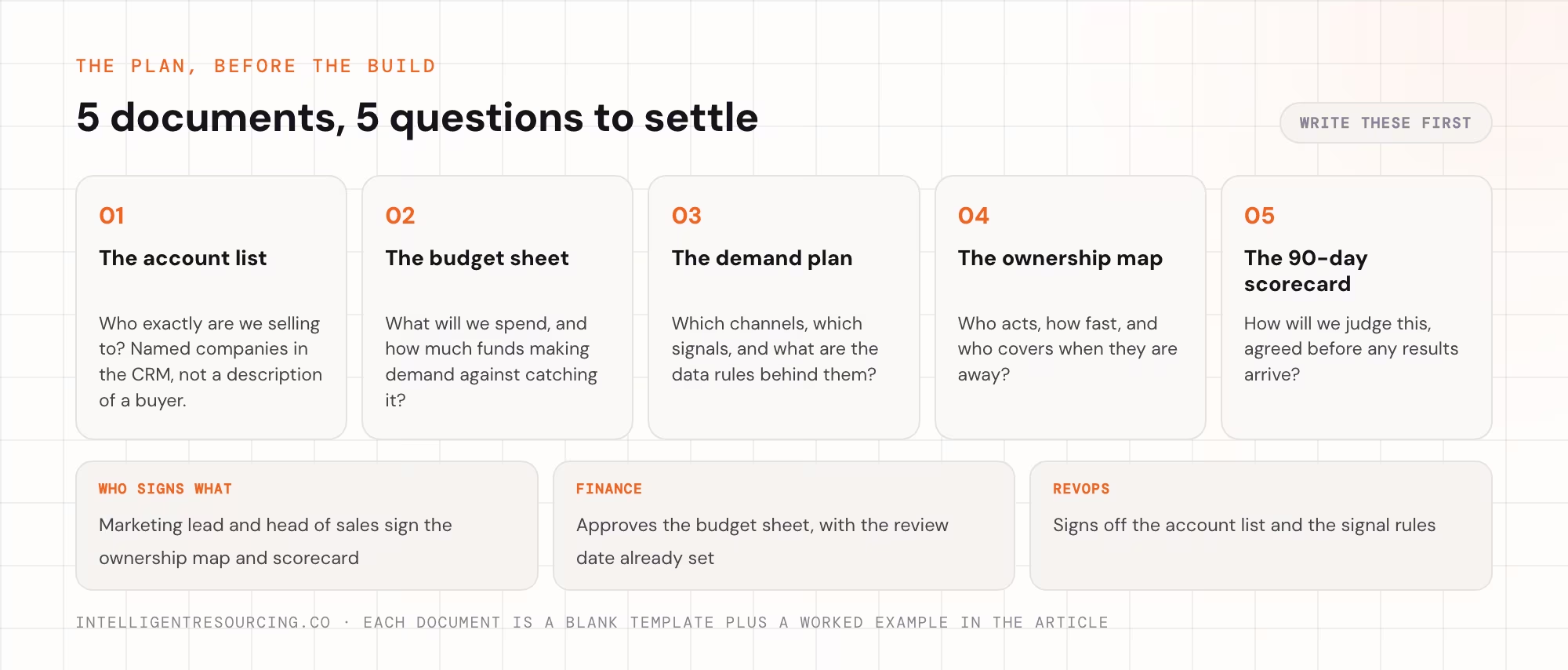
You must decide 5 things: who you are selling to, what you will spend, how you will make and catch demand, who owns each step, and how you will judge it. Each decision becomes one short document. Together they are the plan. The build comes after.
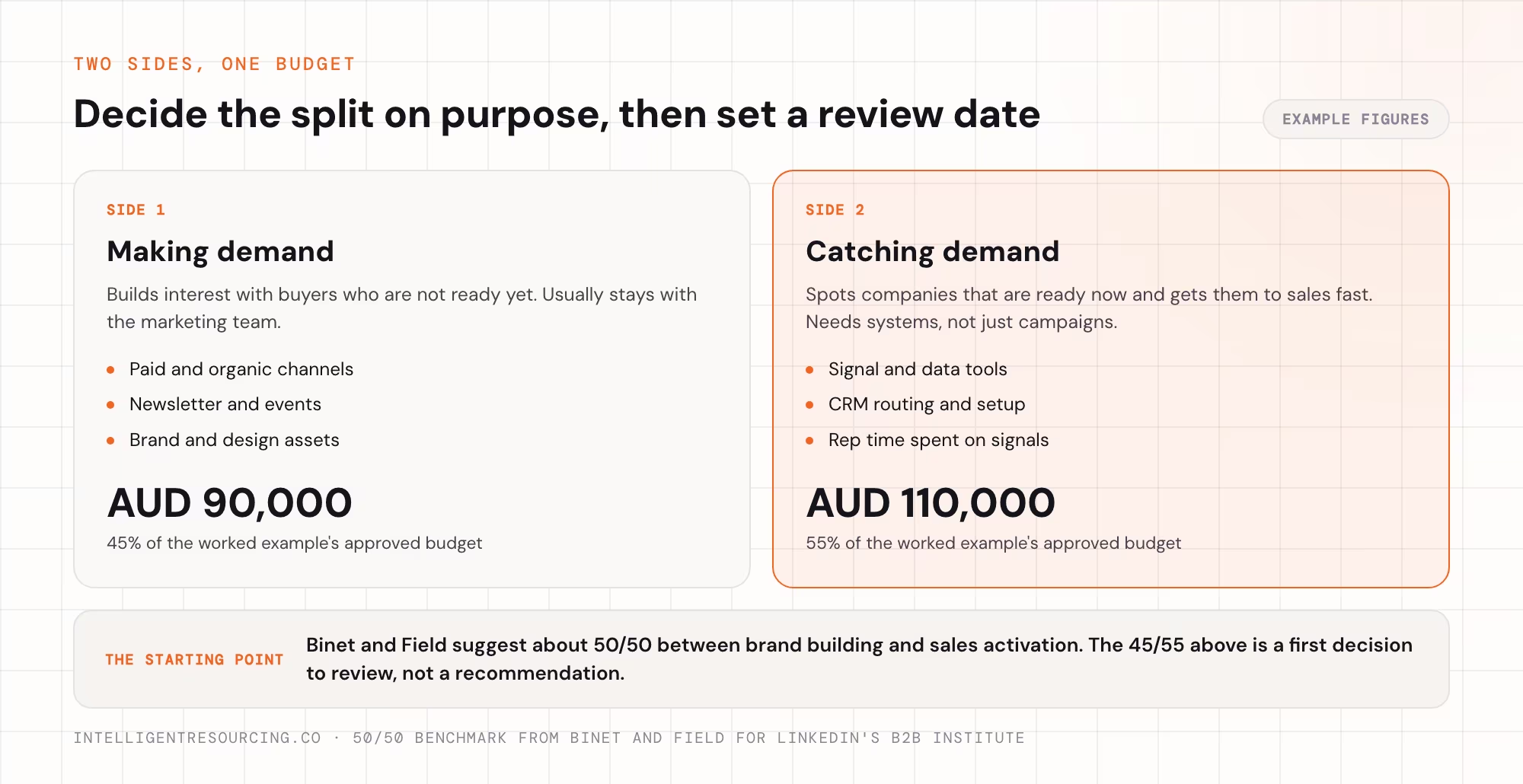
A business-to-business (B2B) demand generation engine has 2 sides. Making demand builds interest with buyers who are not ready yet. Catching demand spots companies that are ready and gets them to sales fast. Both need money, owners and measures.
LinkedIn's B2B Institute asked Les Binet and Peter Field to study what drives B2B growth. Their 5 principles of B2B growth suggest splitting budget about 50/50 between long-term brand building and short-term sales activation. Apply it to your marketing budget as a starting point. Salaries and software sit outside it.
Making demand usually stays with your marketing team. The catching side needs systems that link buying signals, account data, your customer relationship management (CRM) system and sales follow-up. That is the job of GTM engineering, where GTM means go-to-market.
Each document below comes as a blank template you can copy into a sheet or your CRM, then a filled version. The filled versions use Rosterly, an example 40-person Australian software company that sells rostering software to aged care providers. Its names and numbers, in Australian dollars (AUD), are for illustration only.
Document 1: The Account List
Purpose: name every company the engine is meant to reach. Build it as a saved list or view in your CRM.
Header
| Field | Fill in |
|---|---|
| Filters used | Industry, staff size, location, tools used |
| Data owner | Name of one person |
| Last cleaned | Date |
| Next clean-up | Date, at least every quarter |
The list
| Company | Status | Industry | Staff | State | Est. yearly value | Buying roles | Sales owner | Last checked |
|---|---|---|---|---|---|---|---|---|
| [Company name] | Customer / Open deal / Target | [Industry] | [Number] | [State] | [AUD per year] | [Job titles] | [Rep name] | [Date] |
Rosterly's version (example)
| Company | Status | Industry | Staff | State | Est. yearly value | Buying roles | Sales owner | Last checked |
|---|---|---|---|---|---|---|---|---|
| Banksia Care Group | Customer | Aged care | 320 | VIC | AUD 18,000 | Ops manager, CFO | Sam | 1 Oct |
| Wattle Lodge Homes | Open deal | Aged care | 140 | NSW | AUD 9,000 | Facility manager | Priya | 1 Oct |
| Coastal Seniors Living | Target | Aged care | 85 | QLD | AUD 6,000 | Ops manager | Unassigned | 1 Oct |
Rosterly's totals
| Status | Accounts |
|---|---|
| Customers | 38 |
| Open deals | 22 |
| Targets | 1,080 |
| Total | 1,140 |
Lists go stale fast. The Australian Bureau of Statistics reports that 13.8% of Australian businesses stopped trading during 2025-26, as others opened. Most were small firms, but it is why the list needs one owner and a set clean-up date.
The list is also the base for buying signals. Our guide to B2B demand generation shows how signals and data sit on top of it.
Sign-off checklist:
- List saved in CRM
- Filters written down
- Duplicates removed
- Data owner named
Document 2: The Budget Sheet
Purpose: show the approved budget and how it splits between making and catching demand. Every cost appears once.
The sheet
| Line item | Side | Cost type | Yearly amount | Review date |
|---|---|---|---|---|
| [Line item] | Making / Catching | People / Media / Software / Setup | [AUD] | [Date] |
Totals
| Total | Amount | Share |
|---|---|---|
| Making demand | [AUD] | [%] |
| Catching demand | [AUD] | [%] |
| Approved total | [AUD] | 100% |
Approved by: [Name], [Date]
Rosterly's version (example)
| Line item | Side | Cost type | Yearly amount | Review date |
|---|---|---|---|---|
| LinkedIn ads | Making | Media | AUD 30,000 | 1 Jan |
| 2 aged care conferences | Making | Media | AUD 40,000 | 1 Jan |
| Monthly newsletter (writer) | Making | People | AUD 15,000 | 1 Jan |
| Design and brand assets | Making | Setup | AUD 5,000 | 1 Jan |
| Share of sales rep time on signals | Catching | People | AUD 60,000 | 1 Jan |
| Signal and data tools | Catching | Software | AUD 24,000 | 1 Jan |
| CRM routing setup | Catching | Setup | AUD 20,000 | 1 Jan |
| Contact data | Catching | Software | AUD 6,000 | 1 Jan |
Rosterly's totals
| Total | Amount | Share |
|---|---|---|
| Making demand | AUD 90,000 | 45% |
| Catching demand | AUD 110,000 | 55% |
| Approved total | AUD 200,000 | 100% |
Approved by: chief executive and finance lead, 15 September
The 45/55 split is a first decision to review. It makes no claim to pay best.
Write the budget down in one place, because it comes under pressure first.
The 2026 CMO Survey, named for chief marketing officers, asked 308 marketing leaders at US companies about spending. Marketing budgets fell to 9.0% of company revenue, their lowest share in several years. When profits fell short, marketing was cut 45.4% of the time, more often than other costs. Those are US figures, so treat them as context.
Sign-off checklist:
- Every cost listed once
- Split agreed
- Review date set
- Finance approved
Document 3: The Demand Plan
Purpose: list how you will make demand and which signals you will act on. One document, 3 short tables.
Table A: Channels (making demand)
| Channel | Audience | Message | How often | Measure | Owner |
|---|---|---|---|---|---|
| [e.g. LinkedIn] | [Who you want to reach] | [One line on why they should care] | [Weekly / Monthly] | [How you will track it] | [Name] |
Table B: Signals (catching demand)
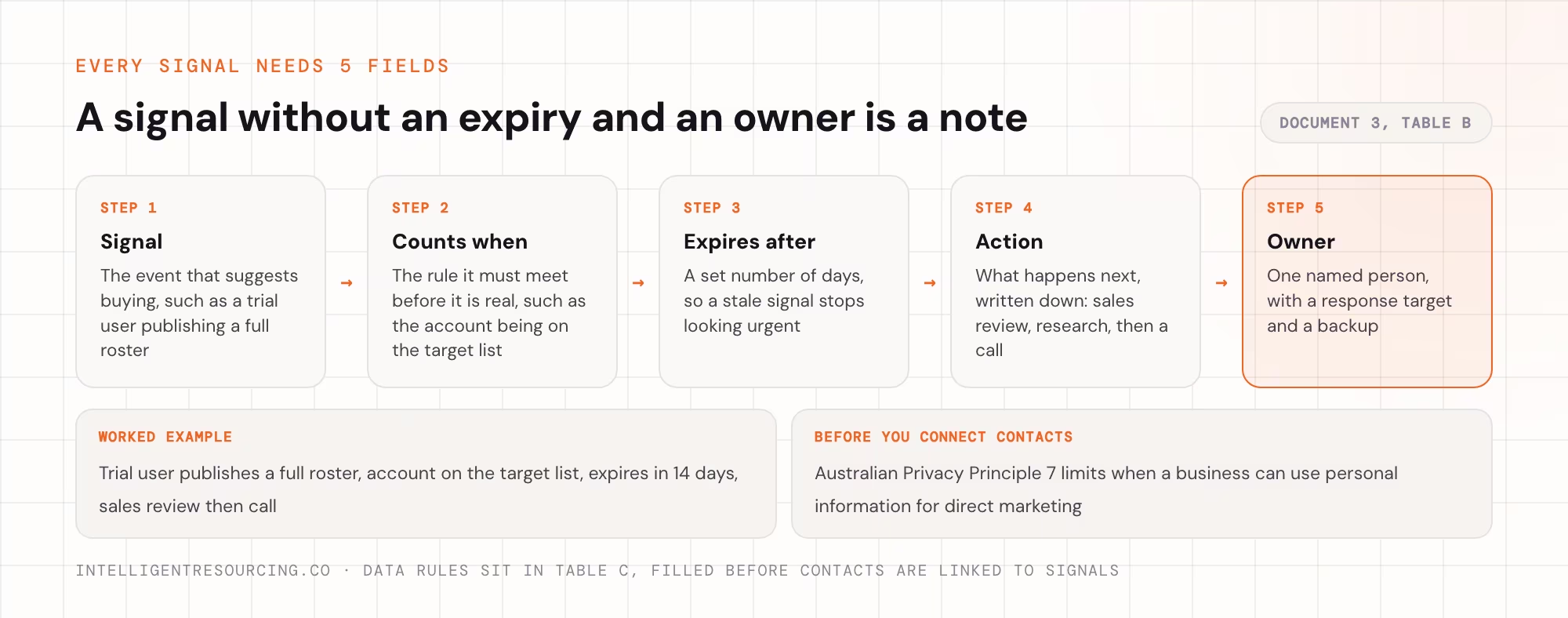
| Signal | Source | Counts when | Expires after | Action | Owner |
|---|---|---|---|---|---|
| [Event that suggests buying] | [Where the data comes from] | [Rule it must meet] | [Days] | [What happens next] | [Name] |
Table C: Data rules
| Rule | Fill in |
|---|---|
| Why we collect this data | [Purpose in one line] |
| Allowed use for marketing checked | Yes / No, and who checked |
| Who can see it | [Roles or names] |
| How long we keep it | [Months] |
| Do-not-contact list | Where it lives |
Rosterly's version (example)
| Channel | Audience | Message | How often | Measure | Owner |
|---|---|---|---|---|---|
| Ops managers at target accounts | Build a full roster in minutes | Weekly posts, ads always on | Reach among target accounts | Marketing lead | |
| Newsletter | Aged care managers | Rostering tips and award changes | Monthly | Subscribers from target accounts | Marketing lead |
| Conferences | Aged care leaders | Live demo of a full roster | 2 a year | Target accounts met | Head of sales |
| Signal | Source | Counts when | Expires after | Action | Owner |
|---|---|---|---|---|---|
| Trial user publishes a full roster | Product data | Account is on the target list | 14 days | Sales review, then call | Assigned rep |
| Hiring a rostering coordinator | Job ads | Account has 50+ staff | 30 days | Research, then outreach | Assigned rep |
| Visits pricing page twice in a week | Website data | Company is identified | 7 days | Sales review | Assigned rep |
Table B records what you will track. Our guide to building a signal-led prospecting system covers how to set up the tracking itself.
Fill in Table C before you link contact details to signals. In Australia, Australian Privacy Principle 7 limits when a business can use personal information for direct marketing.
Sign-off checklist:
- 2 or 3 channels chosen
- 5 to 10 signals listed
- Every signal has an expiry and action
- Data rules checked
Document 4: The Ownership Map
Purpose: give every step one named person, a response target and a backup. Use real people's names.
The map
| Step | Owner | Response target | Backup | Escalate to |
|---|---|---|---|---|
| [Task] | [Person's name] | [Time limit] | [Person's name] | [Manager's name] |
If something goes wrong
| If | Then |
|---|---|
| An account has no sales owner | [Who acts and how fast] |
| A signal arrives after hours | [Who acts and how fast] |
| The owner is away | [Who acts and how fast] |
| 2 records point to the same account | [Who acts and how fast] |
Rosterly's version (example)
| Step | Owner | Response target | Backup | Escalate to |
|---|---|---|---|---|
| Messages and channel report | Mia (marketing lead) | Monthly, by working day 5 | Dan (chief executive) | Dan |
| Signal rules | Leo (head of sales, covering revenue operations, or RevOps) | Reviewed each quarter | Ana (sales manager) | Dan |
| Demo request | Sam or Priya (named per request) | Within 1 business hour | Ana | Leo |
| Signal-sourced account | Assigned rep | Within 2 business days | Ana | Leo |
| If | Then |
|---|---|
| An account has no sales owner | Goes to Ana, who assigns it the same day |
| A signal arrives after hours | Waits for 9am, timer starts then |
| The owner is away | Backup takes it, owner is told on return |
| 2 records point to the same account | Leo merges them, older owner keeps it |
The tension this map solves is old. In 2006, Philip Kotler, Neil Rackham and Suj Krishnaswamy wrote about the war between sales and marketing in Harvard Business Review. They described 2 teams that undervalue each other's work. Named owners turn that friction into rules.
Once live, check missed targets every week. Our demand generation checklist for software-as-a-service (SaaS) teams sets out those weekly checks.
Sign-off checklist:
- Every step has a real name
- Every step has a backup
- "If" table filled
- Marketing lead and head of sales signed
Document 5: The 90-Day Scorecard
Purpose: agree how you will judge the engine before it starts, so nobody changes the rules once results come in.
The scorecard
| Measure | Definition | Baseline | Day 90 target | Data source | Owner | First review |
|---|---|---|---|---|---|---|
| [Metric name] | [Exactly what counts] | [Today's number] | [Goal] | [System] | [Name] | [Week or month] |
Rosterly's version (example)
| Measure | Definition | Baseline | Day 90 target | Data source | Owner | First review |
|---|---|---|---|---|---|---|
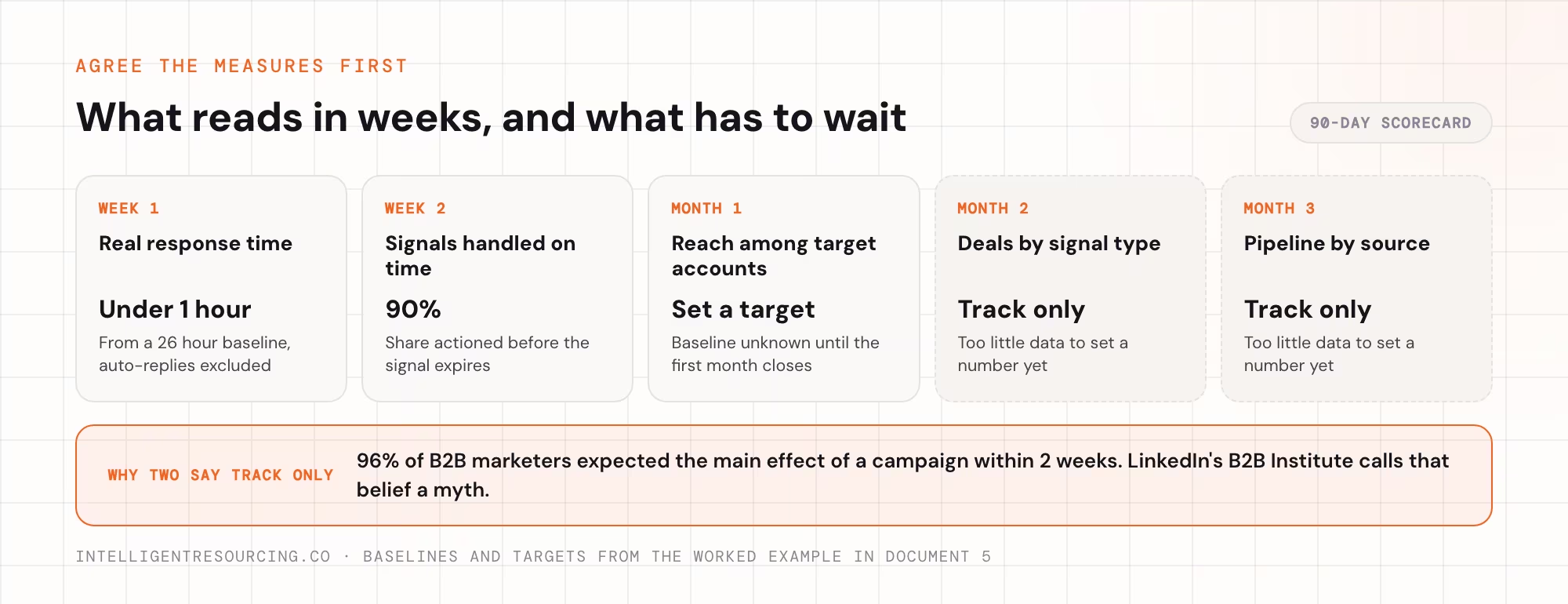
| Real response time | Time to a useful human reply (auto-replies excluded) | 26 hours | Under 1 business hour | CRM | Sam | Week 1 |
| Signals handled on time | Share of signals actioned before expiry | New | 90% | CRM | Leo | Week 2 |
| Reach among target accounts | Share of the 1,080 targets reached by channels | Unknown | Set after month 1 | LinkedIn, newsletter | Mia | Month 1 |
| Deals by signal type | Signal-sourced accounts that become deals | New | Track only | CRM | Leo | Month 2 |
| Pipeline by source | Deal value linked to each source | New | Track only | CRM | Leo | Month 3 |
Set honest timelines. LinkedIn's B2B Institute found 96% of B2B marketers expected to see the main effect of their ad campaigns within 2 weeks. The Institute calls that belief a myth. That is why the last 2 rows say "track only" for the first 90 days.
Sign-off checklist:
- Every measure defined
- Baselines recorded
- Owners named
- Review dates in calendars
GTM Engineering
Intelligent Resourcing links buying signals, account data, qualification and CRM routing, so sales can act while a buyer is ready. Find out which gaps in your plan need fixing before you scale.
FAQs
What documents does a demand generation plan need?
It needs 5: an account list, a budget sheet, a demand plan, an ownership map and a 90-day scorecard. Together they set who you target, what you spend, what you track, who acts and how you judge results.
How should a B2B company split its demand generation budget?
Binet and Field's research for LinkedIn's B2B Institute suggests about 50/50 between brand building and sales activation. Use it as a starting point. Adjust for how well known you are, how long your sales cycle runs and what you can afford.
Who should sign off a demand generation plan?
The marketing lead and the head of sales should both sign the ownership map and scorecard. Finance should approve the budget sheet. RevOps, or whoever owns your CRM, should sign off the account list and signal rules.
How often should the account list be cleaned?
Review it at least every quarter, and assign one person to own it. Australian business data shows companies open and close all the time, so a list left alone for a year will hold closed firms and miss new ones.
What should a demand generation engine measure first?
Start with real response time, signals handled on time and reach among target accounts. These show up within weeks. Leave deals and pipeline by source until month 2 or 3, when there is enough data to read them.