

Why Does Demand Generation Change After a B2B Company Raises?
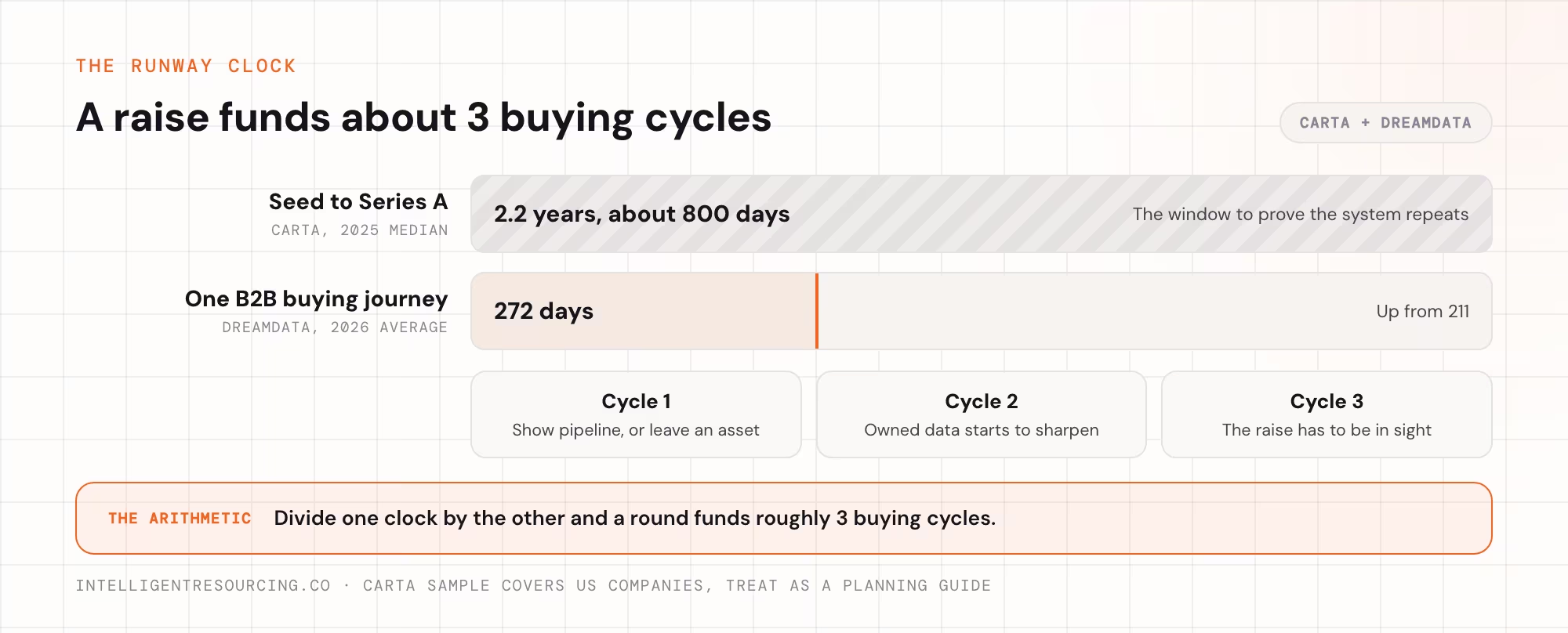
After a business-to-business (B2B) company raises money, demand generation runs on a clock. Carta's 2025 data puts the median gap from seed to Series A at 2.2 years for software companies in the United States (US). That window has to fund the pipeline and prove the system can repeat before the next round.
Carta tracks the time between venture rounds each quarter, and the gap has grown.
On the buyer side, Dreamdata's 2026 report found the average B2B journey now runs 272 days, up from 211.
| Measure | Figure | What it means for demand spend |
|---|---|---|
| Seed to Series A (Carta, 2025) | 2.2 years, about 800 days | The time you have to prove the system repeats |
| Series A to Series B (Carta, Q1 2025) | 2.8 years, the longest median interval on record | The next clock, which is longer again |
| Average B2B buying journey (Dreamdata, 2026) | 272 days, up from 211 | One full cycle of demand |
| Share of the journey marketers own (Dreamdata, 2026) | 81% | Most buying happens before a buyer talks to sales |
Divide one clock by the other and a round funds roughly 3 buying cycles. Spend that shows nothing in the first cycle needs to leave something behind for the next two.
Carta's sample covers US companies, so treat these figures as a planning guide for an Australian round.
New to the discipline? Start with our guide to running demand generation as a system.
Which Demand Generation Spend Is Rented and Which Is Owned?
Rented spend makes pipeline only while you keep paying. Think paid ads, sponsored events, bought contact lists and pay-per-meeting services. Owned spend builds something that keeps working when the budget stops, such as signal data, customer relationship management (CRM) records, your own email list and content buyers find. Most funded budgets mix both.
Les Binet and Peter Field ran an analysis of 996 advertising campaigns for the Institute of Practitioners in Advertising (IPA). They found that ads built to sell now give a short lift in sales but no lasting growth.
Their data leans towards consumer brands. The same logic applies to any B2B spend that ends when the invoice does.
| Spend line | Type | When you stop paying | What it leaves behind |
|---|---|---|---|
| LinkedIn and search ads | Rented | Clicks and form fills stop | Audience lists, if you saved them |
| Sponsored events | Rented | No new meetings after the event | Contacts, if you followed up |
| Bought contact lists | Rented | The list goes stale as people change roles | Little, unless you add the data to your CRM |
| Pay-per-meeting appointment setting | Rented | Meetings stop | Call notes, if logged in the CRM |
| Tracking and scoring buying signals | Owned | Keeps flagging accounts as signals appear | A scored history of every account |
| CRM history and enrichment | Owned | Keeps guiding routing and timing | Every past deal and touch |
| Email list and community | Owned | Still reachable with no media cost | An audience you control |
| Content and answers buyers find | Owned | Keeps getting found and quoted | Pages that rank and answers that get cited |
Owned assets still carry running costs, such as tools and the people who maintain them. The test is what remains when we pause.
Building the owned side is a systems job. Go-to-market (GTM) engineering does this work. It means connecting data, scoring and routing, so each signal reaches a salesperson in time.
When Is Rented Reach the Right Call for a Funded Startup?
Rented reach is the right call when speed matters more than what stays behind. Dreamdata's 2026 benchmarks found LinkedIn ads returned 121% of their cost for B2B companies in 2025. Google Search returned 67% and Meta 51%. Paid channels earn their place when the timing fits.
Demand Gen Report's write-up covers the 272-day journey too. The study drew on over 66 million B2B sessions. Rent reach in 3 situations:
- A board milestone lands inside 2 quarters. Owned assets need time to build up data, so they will not carry a near deadline alone.
- You are still testing which message converts. Paid gives fast feedback on 3 or 4 messages before you build content around the winner.
- Your category has no search demand yet. If buyers do not know the category exists, nobody searches for it, so paid reach gets you seen early.
Rent with one rule: every paid campaign feeds an owned asset.
- Capture engaged accounts. Log every account that clicks or replies in the CRM.
- Tag their signals. Record what each account did, so scoring can learn from it.
- Keep the audience lists. Save them, so the next campaign starts warm.
Our playbook shows how to map the raise to milestones, so you know which deadlines justify renting.

How Do Owned Demand Assets Compound Quarter to Quarter?
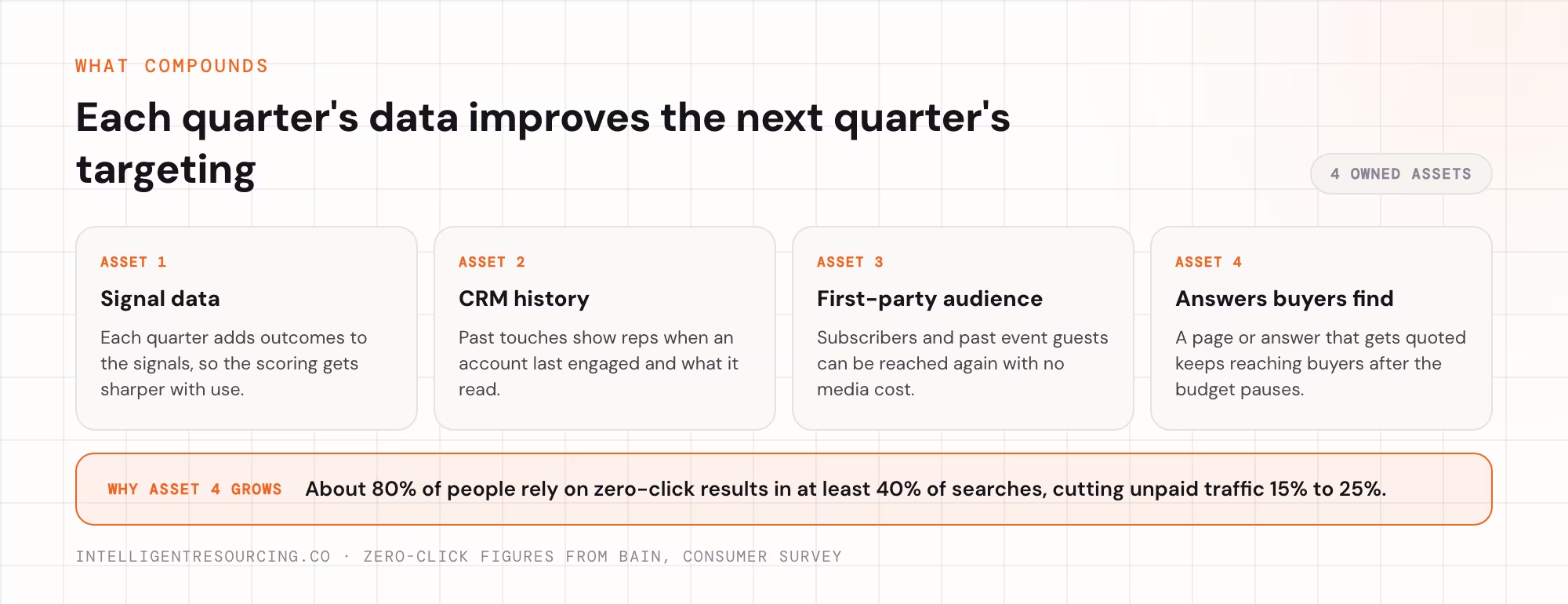
Owned assets compound because each quarter's data improves the next quarter's targeting. A signal-led system records which accounts were hiring, raising money or changing tools. It also records which of them booked meetings and which closed in HubSpot or Salesforce. After 2 or 3 quarters, the scoring reflects your own deals instead of guesses.
This is where a Verified Buying Window earns its name. A Verified Buying Window is the stretch of time when a clear signal shows an account is ready to buy.
Every closed deal tells the system which signals opened a real window and which were noise. To spot those windows across thousands of accounts, you need always-on monitoring of buying signals.
Each owned asset compounds in its own way:
- Signal data. Each quarter adds outcomes to the signals, so the scoring gets sharper with use.
- CRM history. Past touches show reps when an account last engaged and what it read.
- First-party audience. Subscribers and past event guests can be reached again with no media cost.
- Answers buyers find. A page or answer that gets quoted keeps reaching buyers after the budget pauses.
That last asset matters more each year. Bain's consumer survey found 80% of people rely on zero-click results in 40% of searches or more.
Bain estimates this cuts unpaid search traffic by 15% to 25%. Being the quoted answer now counts for more than the click.
Who Should Run Demand Generation at Each Funding Stage?
For a funded Australian B2B startup, the owner of demand generation changes with each round. The founder runs it at seed. A first marketing lead takes over after Series A, and a small team owns it by Series B. Carta's 2025 data shows seed companies now have a median team of 4 people.
Carta's startup compensation report also shows Series B teams shrank. The average fell from 53 people to 45 between 2023 and 2025. Teams are leaner at every stage, so at seed the system has to run without a dedicated team.
| Stage | Who owns demand generation | What they own | Where outside help fits |
|---|---|---|---|
| Seed | Founder, with 1 operator or contractor | Target accounts, message tests and the first signal list | The system build, so the founder stays out of data work |
| Series A | First marketing lead | Channel mix, owned audience and board reporting | Building the data and systems |
| Series B | A small demand team | The full programme across channels | Specialist builds and audits |
Whether to hire or outsource each role is a separate decision, with its own costs and risks. Our guide to building your first revenue team covers that choice by round size.
How Do You Show the Board Demand Generation Is Compounding?
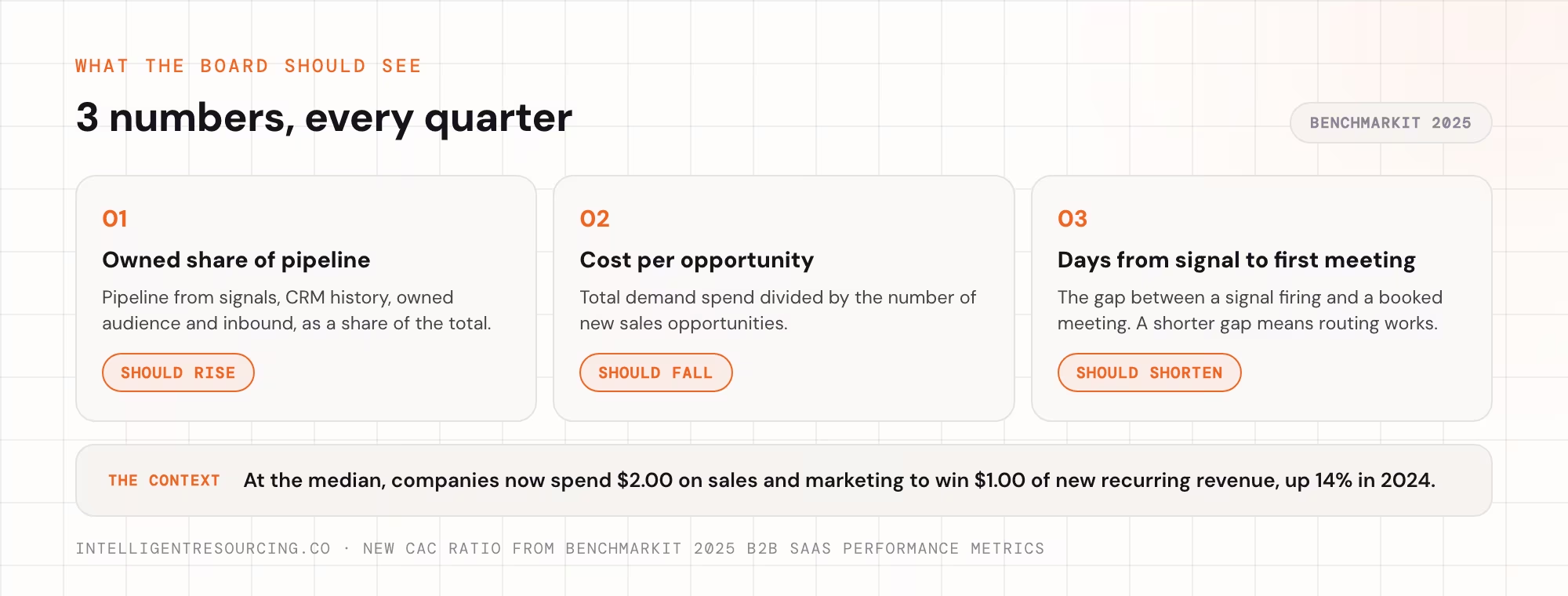
Show the board 3 numbers each quarter: owned share of pipeline, cost per opportunity, and days from signal to first meeting. Benchmarkit's 2025 survey of B2B software companies sets the context. At the median, companies spend $2.00 on sales and marketing to win $1.00 of new annual recurring revenue (ARR).
Benchmarkit's median cost to win new revenue rose 14% in 2024. With acquisition costs rising, these 3 numbers show whether the owned side is working:
- Owned share of pipeline. Pipeline from signals, CRM history, owned audience and inbound, as a share of the total. It should rise each quarter.
- Cost per opportunity. Total demand spend divided by the number of new sales opportunities. It should fall as the owned share of the pipeline grows.
- Days from signal to first meeting. The gap between a signal firing and a booked meeting. A shorter gap means routing works.
Is most of your demand budget still rented? Spend the next quarter building assets that survive a cut. Do it before the board asks where the pipeline went.
GTM Engineering
Map your demand spend with us before you decide what to build.
FAQs
How much of a seed round should go to demand generation?
No single share fits every company, because it depends on how long your buying cycle runs. Fund rented reach only for milestones inside 2 quarters, and put the rest into owned assets that survive a cut. Review the split each quarter against cost per opportunity.
Is paid advertising a waste of money for funded B2B startups?
No. Dreamdata's 2026 benchmarks found LinkedIn ads returned 121% of their cost for B2B companies in 2025. Paid reach works best when every campaign feeds something you own, such as accounts saved in your CRM and audience lists you keep.
How long before owned demand generation produces a pipeline?
It depends on your buying cycle. Dreamdata's 2026 data shows the average B2B journey lasts 272 days. Owned assets need at least 1 full cycle to show their whole effect. Faster signal-to-meeting times are the first sign the system is working.
Should a funded startup hire a demand generation marketer or use a partner?
At seed, most teams are too small for a dedicated hire, since Carta puts the median seed team at 4 people. A founder plus a systems partner covers the build. After Series A, hire a first marketing lead to own the programme.
What do investors want to see from demand generation after a raise?
Show proof that pipeline repeats without spending rising at the same rate. Report the owned share of pipeline, cost per opportunity and days from signal to meeting each quarter. Benchmarkit's 2025 median of $2.00 spent per $1.00 of new recurring revenue gives a reference point.