

Why Do Some Funded Startups Stall After Raising?
Some funded startups stall because they spend faster than their sales process can keep up. New reps, new markets and more campaigns can expose weak spots. Those weak spots were easy to hide when the founder ran most deals. The big risk is scaling a way of selling before you know it can be repeated.
A raise gives you more capacity. It does not prove the founder's way of selling will keep working at a bigger size. The same goes for your best-fit customer and your channels.
Harvard Business School professor Tom Eisenmann looked at why startups fail in a 2021 Harvard Business Review analysis. He found failure rarely comes down to the idea alone or the founder alone. He also notes that more than 2 in 3 startups never give investors a positive return.
That is general startup research. It does not measure failure after funding, and it does not prove these 4 mistakes cause it.
Our post-funding growth playbook covers the bigger picture. It shows how to turn a raise into a revenue system and work out your return. It also shows where growth plans break. This guide goes one level down, into the 4 mistakes that show up in the sales process itself.
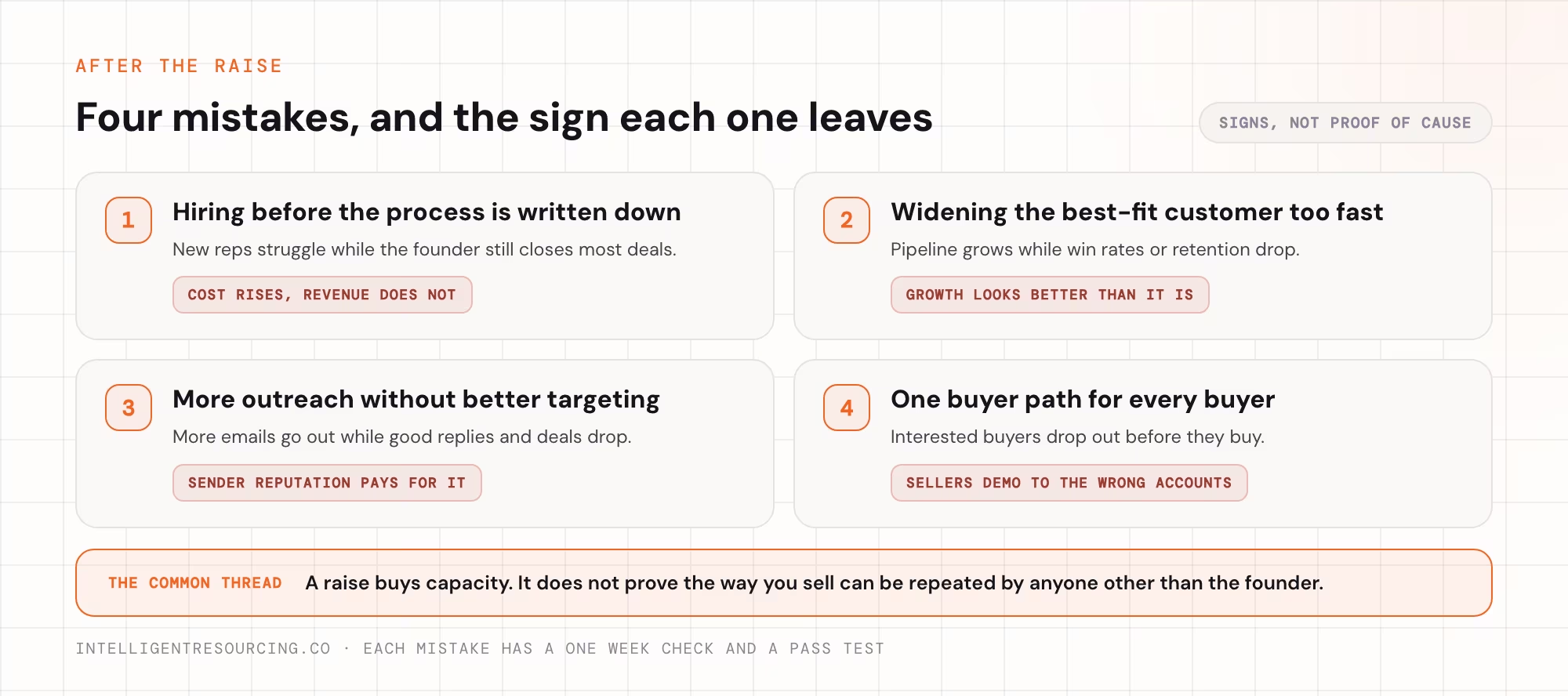
| What you see | Likely mistake | What to check |
|---|---|---|
| New reps struggle while the founder still closes most deals | Hiring before the sales process is written down | Qualification rules, training, handovers and deals reps win alone |
| Pipeline grows while win rates or retention drop | Widening the best-fit customer too fast | Win rates, costs and retention by segment |
| More emails go out while good replies and deals drop | Sending more without better targeting | Delivery, qualification, timing and consent |
| Interested buyers drop out before they buy | Forcing every buyer into a sales demo | Trial access, friction and conversion by path |
These signs are a starting point. They do not prove the cause on their own.
Each section below follows the same steps: what it looks like, why it happens, what it costs, the fix, then check this week.
Why Can Hiring Sales Reps Before Documenting the Process Be Costly?
Hiring reps before you write down how you sell can raise costs without raising revenue. The founder knows which accounts to chase, which objections matter and when to walk away. New reps need that knowledge turned into written rules, training and clear deal stages. Without it, you cannot judge their work fairly.
What it looks like. The founder keeps winning the big deals, while new reps struggle to move deals on their own. New sales development reps (SDRs) book meetings with the wrong prospects. Account executives (AEs) struggle to qualify or negotiate without help. The founder gets pulled back into sales calls, away from product, hiring and running the company.
Why it happens. The fundraising plan sets new revenue targets and sales hires. Hiring starts before anyone writes down how good deals are found, qualified and closed. That creates 2 problems:
- SDRs do not have clear rules on who to target, how to qualify or when to hand over a meeting.
- AEs do not have a repeatable way to run discovery, guide the buyer and close.
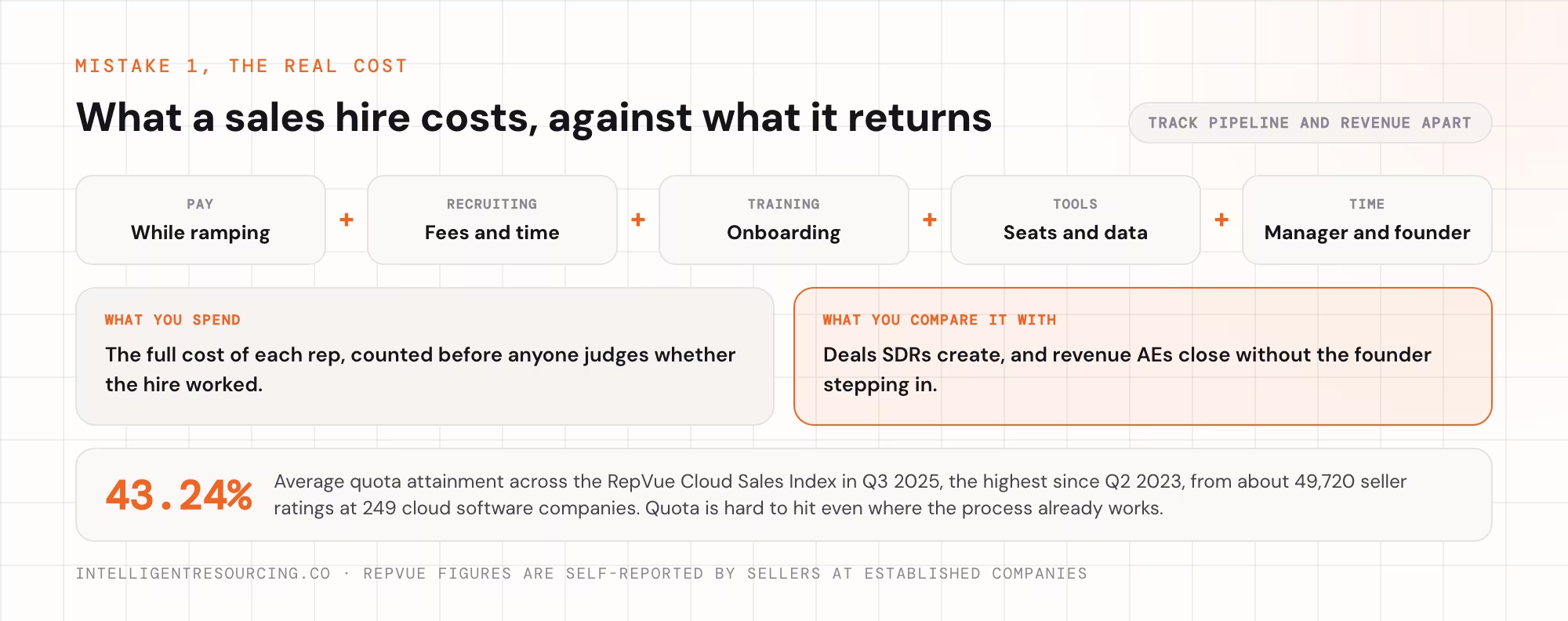
What it costs. Hiring reps before the process works raises hiring, training and running costs, with no promise of more revenue. You can end up paying for reps who miss their numbers while the founder still props up deals. Weigh the full cost of each rep against the deals they create and the revenue they close on their own.
Quota is hard to hit even with a working process. RepVue's Cloud Sales Index for Q3 2025 drew on about 49,720 ratings from sellers at 249 cloud software companies. Average quota attainment was 43.24%, the highest the index had shown since Q2 2023.
Those figures are self-reported by sellers at established companies. They do not show whether new hires at your company can match the founder's results.
To work out what you have at stake, add up the pay while ramping, recruiting, training, tools, and manager and founder time. That total is your sales hiring cost. Compare it with the deals SDRs create and the revenue AEs close on their own. Track pipeline and closed revenue separately, so you can see whether new hires are paying off.
The fix. Before you grow the team, write down how the founder sells:
- Name the accounts. Look at recent wins. Note what those customers have in common, such as size, industry, problem and buying situation.
- Write the qualification rules. List the signals that justify a conversation and what makes a deal worth chasing.
- Map how deals move forward. Record the questions, proof and decisions that move a deal to the next stage.
- Say when to walk away. Explain when to stop chasing an account because the need, fit, timing or terms are wrong.
- Test it on someone else. Have a rep follow the written process, then check their results over a fair ramp and sales cycle.
Judge SDRs on good meetings and clean handovers. Judge AEs on how deals move, win rates, sales cycle length and how often they win without the founder stepping in.
Then decide whether to hire in-house or get outside help. Our guide to your first revenue team after funding compares 3 options by round size. It covers hiring in Australia, outsourcing and a mix of both.
Check this week. Ask the founder to walk through the last 5 deals you won and explain why each one closed. Compare those reasons with your customer relationship management (CRM) notes, qualification rules and training material. The check passes when the rules are written down and someone else can use them the same way on real deals.
When Does Widening Your Ideal Customer Profile to Hit Bigger Targets Backfire?
Widening your ideal customer profile (ICP) backfires when you add new kinds of customers too soon. You need proof they will buy and stay at a fair cost. A bigger market can make the pipeline look bigger, but it does not guarantee more revenue. Test each new segment on its own against your current customers before you make it part of the plan.
What it looks like. After the raise, the company starts chasing new industries, company sizes or buyer roles. The number of deals goes up. But some new segments take longer to close, win less often or need more set-up. The product team also gets mixed feature requests from very different customers. These are signs to look into. They do not prove every new segment is wrong.
Why it happens. The new revenue target is bigger than your current customer base can deliver. So the team loosens its rules instead of finding more demand inside the proven ICP. Deals that would have been turned away now count in the forecast. That can make growth look better than it really is.
What it costs. CB Insights' March 2026 analysis looked at 431 venture-backed companies that shut down from 2023 onwards. Running out of money was cited in 70% of cases, poor product-market fit in 43% and unsustainable unit economics in 19%. These numbers describe companies that failed. They are not odds for all funded startups, and they do not prove that widening the ICP caused the shutdowns.
You can measure the real effect of your targeting by segment:
| Measure | Core ICP | New segment |
|---|---|---|
| Lead-to-deal conversion | Record the actual rate | Record the actual rate |
| Win rate | Record the actual rate | Record the actual rate |
| Average contract value | Record the actual value | Record the actual value |
| Cost to win a customer | Work it out the same way | Work it out the same way |
| Sales cycle length | Record the median | Record the median |
| Retention or early churn | Compare cohorts of the same age | Compare cohorts of the same age |
The fix. Keep your current ICP as the benchmark while you test new segments carefully.
- Count what is left in your core market. Count the good-fit accounts, current customers, open deals and prospects you have not reached yet.
- Change one thing at a time. Test a new industry, company size or use case on its own. Do not widen everything at once.
- Set the test rules first. Before you start, write down the accounts, the time window, the deals you need and the numbers you will judge.
- Compare the economics. Look at conversion, cost to win, contract value, set-up effort and retention as data comes in.
- Report them apart. Keep core and test segments separate in your CRM dashboards and forecasts.
This work depends on the account selection, data and routing set up through GTM Engineering.
Check this week. Split your recent wins into core and non-core customers. Then compare contract value, sales cycle, cost to win and conversion to spot any gaps worth a closer look. The check passes when the team knows which segments are proven and which are still tests. It also knows what proof it needs before it spends more.
When Can Increasing Outbound Volume Harm Pipeline?
Sending more outbound email can hurt your pipeline when it reaches the wrong people, draws complaints or damages your sender reputation. More activity does not always mean more buying interest. Fix who you target, whether you have permission and when you send before you send more. Then watch both delivery and the deals it creates.
What it looks like. A newly funded sales team sends more emails to hit a bigger pipeline target. Reply rates fall, negative replies go up and some real prospects say they never got the email. The team adds more contacts, more sequences or more sends without checking who they are targeting.
Why it happens. Outbound volume is easy to measure and easy to change. But the team may not have enough buying signals to know which accounts actually need the product. Activity starts to replace qualification, and sender reputation gets less attention.
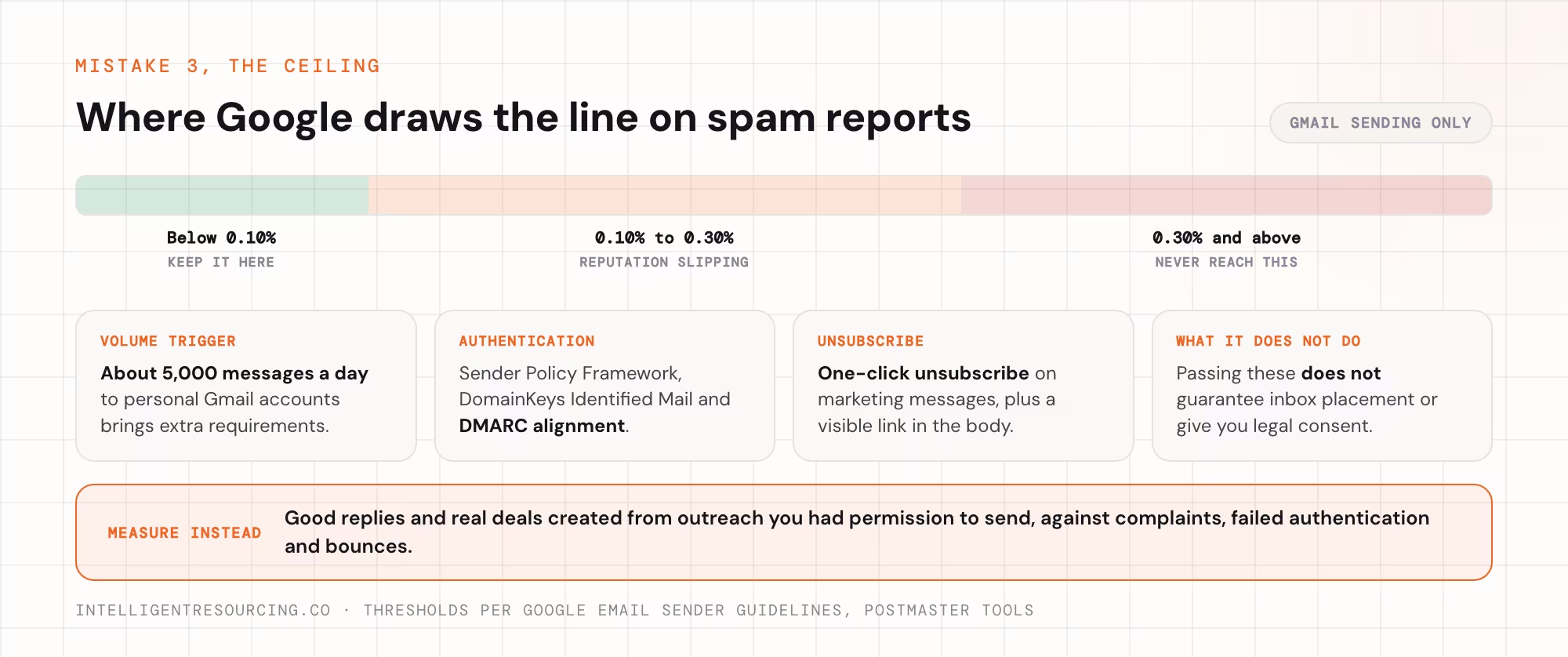
What it costs. Google's email sender guidelines say to keep user-reported spam rates below 0.1% and never let them reach 0.3%. Bulk senders who send about 5,000 or more messages a day to personal Gmail accounts must meet extra rules. These include Sender Policy Framework (SPF), DomainKeys Identified Mail (DKIM) and Domain-based Message Authentication, Reporting and Conformance (DMARC) authentication, plus one-click unsubscribe for marketing messages.
These rules apply to sending to Gmail. They do not guarantee inbox placement or give legal permission to contact anyone.
Measure the commercial effect with:
- Good replies. Useful positive replies compared with the number of emails sent.
- Real deals. Deals created from outbound you had permission to send.
- Delivery problems. Spam complaints, failed authentication, bounces and other delivery warnings.
- Running costs. Contact data, software, sending tools and sales time.
- Lost deals. Good prospects you missed because emails did not arrive or follow-up failed.
Sending more emails while creating fewer real deals is not progress.
The fix. Swap blind volume for better targeting and sending that follows the rules.
- Check account fit. Use your agreed ICP to remove poor-fit companies before they enter a sequence.
- Check buying context. Look for real triggers, such as relevant company changes, intent data you are allowed to use or inbound enquiries.
- Check permission. Confirm the law allows the email marketing you plan to send.
- Check your sending set-up. Review authentication, domain set-up, suppression lists, complaints and unsubscribes.
- Measure deal quality. Compare good replies and real deals, not just how many emails went out.
A signal-led outbound system links account fit, buying context and action. Our guide to automated lead scoring shows how to build a scoring model in 7 steps. It then shows how to send accounts that pass to reps in Salesforce or HubSpot.
Enrichment, scoring and CRM routing should work together. Outreach should only start when the account qualifies and you have permission to contact the person.
Check this week. Review Google Postmaster Tools, your authentication reports, complaint trends and your latest outbound sequences. Compare real deals with email volume, and check that your permission and suppression processes are written down. The check passes when the team sends within the rules and watches the right numbers. It can also link outbound activity to real deals.
Why Is Forcing Every Buyer Through a Sales Demo Risky?
Making every buyer book a demo adds friction when some buyers would rather use a free trial or a proof of concept. Still, not every product can offer self-service access safely. The right path depends on the product and the buyer. Think about how complex it is, security needs and how much help it takes to show value.
What it looks like. A startup hires enterprise sellers and starts sending most buyers to a standard demo. The trial becomes hard to find, and early buyers must talk to sales before they can try the product. Some buyers give up, and sellers spend time demoing to accounts that are not ready to buy.
Why it happens. A demo gives every deal a clear owner and makes forecasting easier. Enterprise sellers are also used to running discovery, demos and procurement. The problem starts when the same process is used for every buyer, whatever they need.
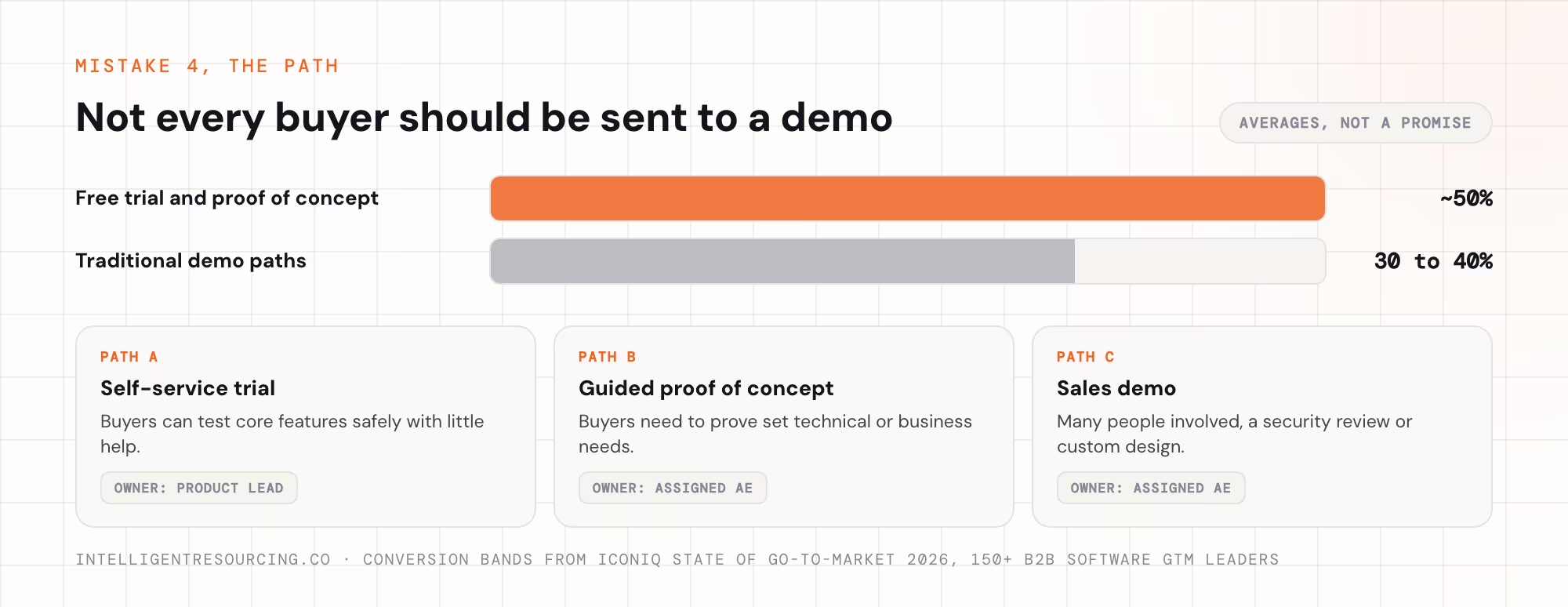
What it costs. ICONIQ's 2026 State of Go-to-Market research drew on more than 150 business-to-business (B2B) software GTM leaders. It found free trial and proof of concept paths converted at about 50%, compared with about 30% to 40% for traditional demo paths. These are averages across many companies and buyers. They do not prove that adding a trial will lift conversion for every startup.
For your own company, measure:
| Measure | What it shows |
|---|---|
| Evaluation starts | How many good-fit buyers start each path |
| Value reached | Whether buyers reach a real value moment |
| Drop-off | Where buyers leave before they finish |
| Deal conversion | Whether good evaluations turn into deals |
| Sales and support time | How much effort each path takes |
| Paid conversion | Which paths turn into paying customers |
Product and sales leaders should choose which paths suit their buyers. GTM Engineering can support the handovers between paths. It links product and account signals to qualification rules, CRM records and sales owners. For example, a key trial action can trigger a sales review at the right time. No trial user has to book a demo first.
The fix. Offer the right ways to try the product where your product and pricing allow.
| Buyer path | When it fits | Owner |
|---|---|---|
| Self-service trial | Buyers can test core features safely with little help | Product lead |
| Guided proof of concept | Buyers need to prove set technical or business needs | Assigned AE |
| Sales demo | Buyers need many people involved, a security review or custom design | Assigned AE |
Each path needs a clear success test. A trial needs a key action that shows value. A proof of concept needs agreed technical success criteria. A demo should answer a specific question, not just add to the meeting count.
Usage signals can show when a buyer might need help. They should not trigger outreach on their own without context and the right permission.
Check this week. Review last month's trial sign-ups, demo bookings, proof of concept requests and drop-offs. Find the buyers who had to book a demo when another path would have suited them. The check passes when each path has an owner, clear entry rules, a success test and a regular review of drop-off and conversion.
GTM Engineering
Intelligent Resourcing helps funded B2B teams link buying signals, enrichment, lead scoring and CRM workflows, so sales can act on the right deals. Find the targeting, data and routing gaps to fix before you send more outreach.
FAQs
Which GTM mistakes should funded startups check after raising?
Check for 4: hiring too early, chasing new customer types too soon, more outreach without better targeting, and the wrong path for buyers. Which matters most depends on your company. Review sales results, customer economics, email delivery and conversion by path to find out.
How soon after raising should a startup hire its first sales reps?
Hire when you have proof the sales process can be repeated, and that depends on the role. SDRs need clear rules on targeting, qualification and handover. AEs need a written way to move and close deals. Review ramp costs, manager time and real results before you add people, since no single timetable fits every startup.
Should a funded startup widen its ideal customer profile to hit new targets?
Only after you test it. Keep your proven ICP in view and test new segments on their own. Judge them on conversion, cost to win, contract value, sales cycle and retention. Spend more when the numbers support it, because a bigger market does not mean better deals.
Why does sending more cold email not necessarily fix a pipeline gap?
More email can bring fewer good deals when targeting is weak, people complain or delivery drops. Google says to keep spam rates below 0.1% and stay well clear of 0.3%. You also need consent, clear sender details and a working unsubscribe. Measure real deals and clean delivery, not just how much you send.
Should a funded startup keep its free trial after hiring enterprise sellers?
Keep the trial when buyers can test the product safely without much help, and offer other paths when the deal needs them. ICONIQ's 2026 research found trial and proof of concept paths converted better than demos. That does not prove the trial caused it. Compare activation, conversion and support costs for each type of buyer.