

What Should a SaaS Demand Generation Checklist Cover?
A SaaS demand generation checklist should cover two connected jobs: creating awareness among future buyers, and capturing demand from accounts evaluating solutions right now. Each needs different measures, owners and review frequencies. Running both against a single lead-volume target makes it hard to tell whether a problem started in market awareness, in buying signals or in conversion.
Most potential B2B buyers are not buying at any given moment. LinkedIn's B2B Institute explains this through its 95-5 rule, developed with research from the Ehrenberg-Bass Institute. The model estimates that roughly 95% of potential buyers sit outside an active buying window today, and will be in one at some future point.
Treat it as a general B2B planning principle, not a measured ratio for your market. LinkedIn's own supporting data makes the point: 75% of companies buy computers once every 4 years and 80% change banking services once every 5 years, so buying frequency depends on category, contract length, replacement cycle and customer need.
For SaaS teams, that creates two jobs that run in parallel:
- Demand creation: build familiarity, explain the problem the product solves and reach relevant buyers before they start evaluating anything.
- Demand capture: spot accounts showing buying behaviour, read their signals in context and route the suitable ones to sales.
Demand creation stays with the marketing function, which builds awareness through positioning, content and audience engagement. GTM Engineering covers the other half: identifying buying signals, qualifying the accounts behind them and wiring those signals into CRM workflows and timely sales action. Intelligent Resourcing builds that half through go-to-market engineering.
A system built around signal-led demand generation connects the two without assuming every piece of engagement means someone is ready to buy. A campaign calendar tells the team what to launch. A cadence-based checklist tells them what to check while those campaigns are running.
How to Use This Checklist
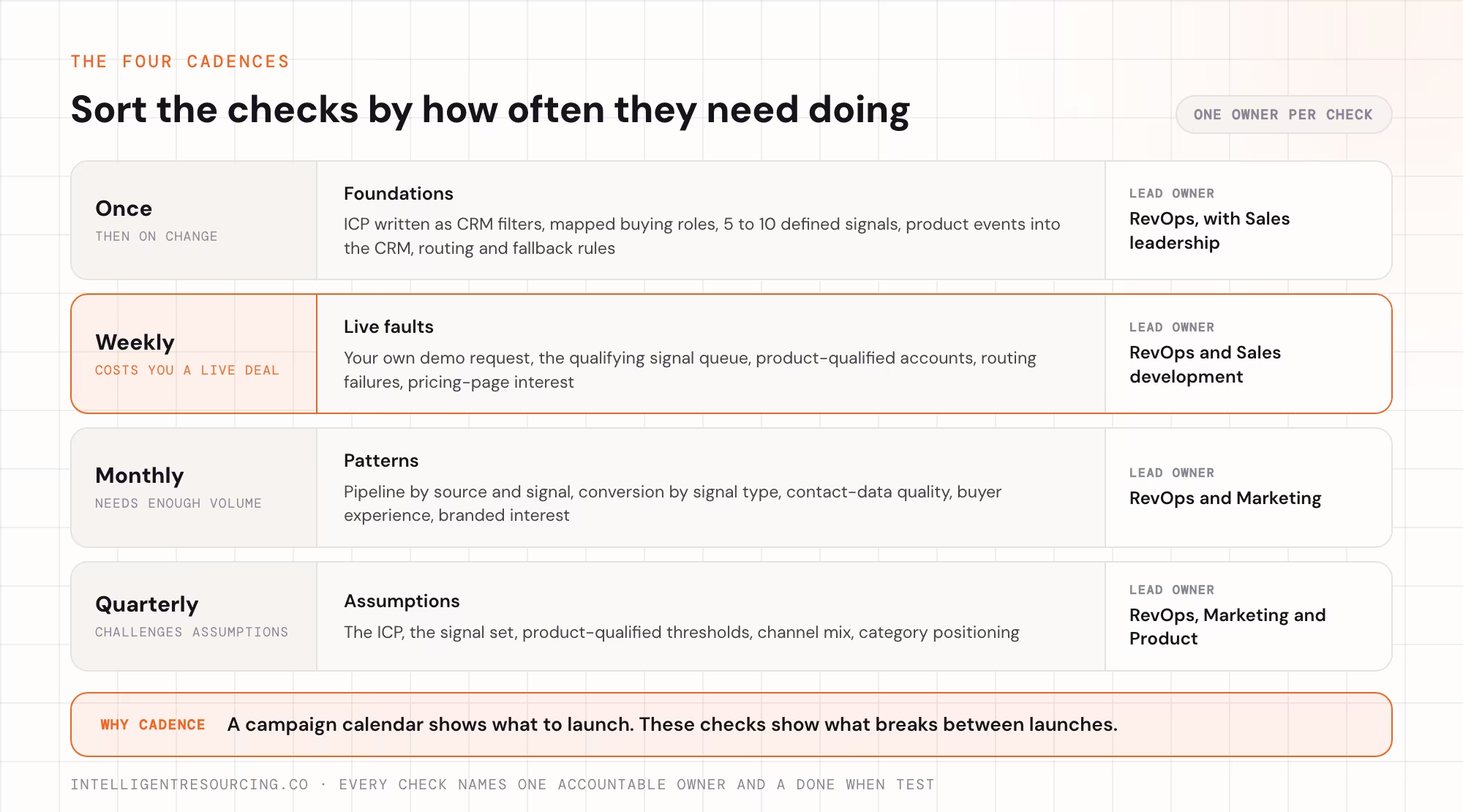
The work is organised into four frequencies:
- Once: set the foundations before scaling campaigns, then revisit when requirements change.
- Weekly: catch operational faults that delay a response or lose a live opportunity.
- Monthly: assess conversion, audience reach and the experience a prospective buyer actually gets.
- Quarterly: revisit the assumptions, signals, positioning and channel bets that shape the programme.
Every item names one accountable owner and a Done when condition. Other teams contribute, but responsibility for finishing the check stays with one person.
What Must Be in Place Before the First Campaign?
A SaaS team should set five demand capture foundations before scaling campaigns: a defined ideal customer profile, buying group roles, measurable intent signals, accessible product events and written routing rules.
Demand creation needs three of its own: a consistent category message, the right reach channels and an initial audience-reach baseline. Together these make every later performance check mean something.
B2B Buying Rarely Involves One Person
Dreamdata's 2026 LinkedIn Ads benchmarks, built on aggregated customer data across more than 66 million sessions and 3.5 million customer journeys, reported averages of 10 stakeholders, 88 touchpoints and 4 channels in the journeys analysed. All three rose year on year, from 6.8 stakeholders, 76 touchpoints and 3.7 channels.
These are observations from Dreamdata's own customer dataset, not universal SaaS buying benchmarks. They do illustrate why tracking a single named contact gives an incomplete picture of a buying group.
Demand Capture Foundations
Write the ideal customer profile as filters. Owner: RevOps. Done when: target accounts can be pulled using customer relationship management (CRM) criteria such as company size, industry, technology environment and relevant buying characteristics, rather than described in a slide.
Map the buying group. Owner: Sales leadership. Done when: each priority account segment has defined buying roles, including the economic buyer, technical evaluator, operational user and any other decision-maker who matters.
Define 5 to 10 buying signals. Owner: RevOps. Done when: each signal has a documented source, qualification threshold, expiry period and action. Start with the most reliable signals before widening the list.
Send relevant product events to the CRM. Owner: RevOps. Supporting team: Product. Done when: authorised trial activity, activation milestones and account-level usage events are visible in the CRM and readable by the sales team responsible.
Write routing and response rules. Owner: RevOps. Done when: every qualifying signal has an assigned destination, a response target and a fallback owner, with failed assignments logged for review.
What Does a Starting SaaS Buying Signal List Look Like?
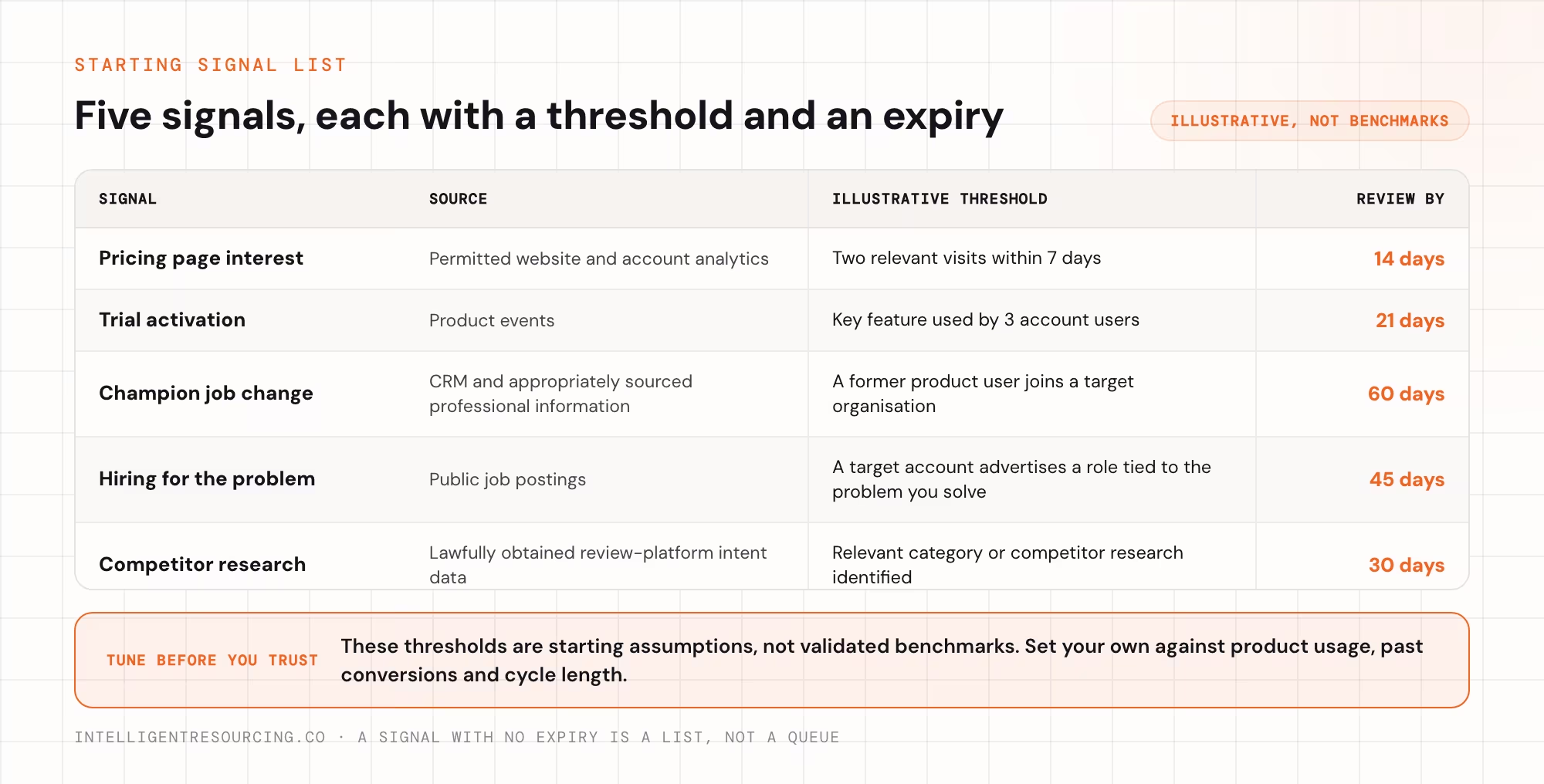
A useful starting list ties an observable behaviour to a defined action and an expiry period.
The thresholds below are illustrative starting assumptions, not validated benchmarks for every SaaS business. Tune them against your own product usage, past conversions, buying-cycle length and what data you can actually collect.
| Signal | Source | Illustrative threshold | Initial review or expiry |
|---|---|---|---|
| Pricing page interest | Permitted website and account analytics | Two relevant visits within 7 days | Review after 14 days |
| Trial activation | Product events | Key feature used by 3 account users | Review after 21 days |
| Champion job change | CRM and appropriately sourced professional information | A former product user joins a target organisation | Review after 60 days |
| Hiring for a relevant problem | Public job postings | A target account advertises a role tied to the problem your product solves | Review after 45 days |
| Competitor research | Lawfully obtained review-platform intent data | Relevant category or competitor research is identified | Review after 30 days |
Buying signals should also take in external change: funding announcements, technology adoption, expansion and relevant hiring. When credible signals line up, verify fit against the ICP, enrich the account record and route the qualified ones to sales with the context that explains why the account is worth attention now.
Not every signal should trigger outreach on its own. Sales should weigh account fit, signal reliability, context and whether contact is appropriate at all.
Two pricing page visits, for example, do not establish intent. They might be an existing customer, a student, a competitor or someone doing general research.
Privacy and compliance safeguard: before collecting, matching or acting on behavioural and contact data, confirm the privacy, consent and electronic marketing rules that apply in the markets you serve. Business-related personal data is not automatically exempt from data protection duties. Document your lawful basis for processing, your access controls and your contact preferences.
Demand Creation Foundations
Demand creation rests on three foundations: a clear category story, the right audience channels and a measurable reach baseline. A B2B SaaS team needs to explain the problem its product solves, work out where potential buyers spend their time, and track whether the message reaches the right accounts. Each foundation needs one accountable owner and a clear completion test.
How Do You Establish a Clear Category Story?
A clear category story explains the customer problem, the product category and why a buyer should consider the solution. Marketing should carry those points consistently across the website, campaigns and sales material, so a prospective customer meets a coherent message well before an active buying process starts.
Owner: Marketing. Supporting team: Product. Done when: the problem, the category and the reason to consider the product can be explained consistently in three sentences across the website, campaigns and sales material.
How Should SaaS Teams Choose Demand Creation Channels?
A SaaS team should pick two or three channels that consistently reach its intended buyers, rather than spreading budget across every available platform. Each channel needs a defined audience, a clear role in building familiarity and a measurement approach suited to demand creation rather than immediate lead capture.
Owner: Marketing. Done when: each chosen channel has a documented target audience, a defined role in building familiarity and a measurement plan that fits that role.
How Do You Establish a Qualified-Reach Baseline?
A qualified-reach baseline measures how well demand creation reaches relevant accounts or buyer segments before more money goes in. Marketing should record the available reach and frequency estimates, where they came from and what they cannot tell you. That gives a starting point for comparing audience coverage over time without mistaking exposure for awareness or intent.
Owner: Marketing. Done when: reach and frequency estimates for the relevant accounts or buyer segments are recorded, along with their sources and limitations.
Reach estimates show potential exposure, not confirmed awareness or buying readiness. Use the baseline to judge whether demand creation is landing on the intended audience, and where the targeting needs work.
What Should a SaaS Team Check Every Week?
Every week, a SaaS team should review demo-request responses, live buying signals, product-qualified accounts and routing failures. These are the checks where a delay costs a current opportunity. Demand creation gets a weekly look too, but through content delivery, qualified audience reach and emerging buyer questions rather than lead counts alone.
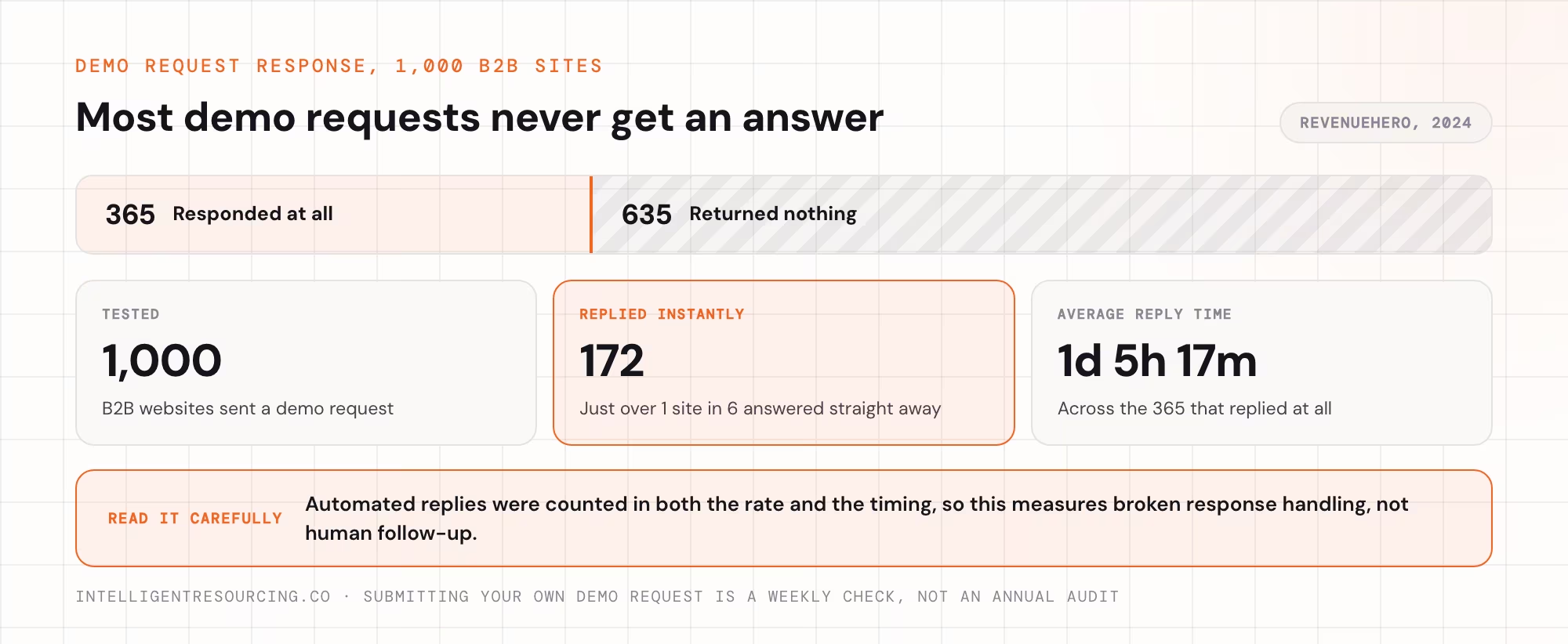
Response time deserves its own attention. In RevenueHero's 2024 demo-request study, researchers submitted demo requests to 1,000 B2B websites and received 365 responses, with an average response time of 1 day, 5 hours and 17 minutes. Only 172 of the 1,000 replied instantly.
The study counted automated responses in both the response rate and the timing. Read it as evidence of broken response handling, not as the share of companies giving a meaningful human follow-up.
Weekly Demand Capture Checks
- Submit your own demo request. Owner: RevOps. Done when: the submission reaches the right team, the expected acknowledgement or booking experience works, meaningful follow-up lands inside the agreed target, and both times are recorded separately.
- Clear the qualifying signal queue. Owner: Sales development lead. Done when: every signal raised in the previous 7 days has been reviewed, actioned, rejected or deliberately deferred, with no overdue signal left without an owner.
- Review product-qualified accounts. Owner: Sales leadership. Supporting team: Product. Done when: accounts meeting the agreed product-qualified threshold have a named owner, a qualification status and a next action.
- Check routing failures. Owner: RevOps. Done when: unassigned leads, failed integrations and missed handoffs have been investigated, corrected or escalated to the documented fallback owner.
- Review pricing-page interest from relevant accounts. Owner: Sales development lead. Done when: reliable, properly collected account signals have been read in context and either matched to an existing opportunity or sent for further qualification.
Weekly Demand Creation Checks
- Publish the planned audience content. Owner: Marketing. Done when: scheduled content has gone out through the chosen channels, with its intended audience and purpose recorded.
- Record buyer questions and objections. Owner: Marketing. Supporting team: Sales. Done when: questions, objections and category misconceptions from customer conversations have been added to a shared research log.
- Check qualified audience reach. Owner: Marketing. Done when: available reach and frequency indicators have been compared against the intended audience, and any material delivery or targeting problem is recorded.
A campaign reaching more people is not necessarily reaching more buyers. Where the targeting data allows, check whether the exposure is landing on the intended accounts, industries or job roles.
Automating detection and routing for approved signals is one use of agentic signal listening. The point is to cut manual monitoring while keeping the qualification and response rules explicit.
What Should a SaaS Team Review Every Month?
Every month, a SaaS team should review pipeline contribution, conversion by signal type, buyer experience and how demand creation is performing. A month gives more observations than a week, though teams with long sales cycles or low volumes may need longer before reading conversion patterns with any confidence.
Software buyers evaluate a smaller set of products than most vendors assume. The 2026 TrustRadius B2B Buying Disconnect Report, based on 1,862 technology buyers and 444 technology vendors, found 83% shortlisted 3 or fewer products.
Transparent pricing has also been buyers' number one wish-list item for vendors for four years running, since TrustRadius started asking in 2023. Both findings point the same way: make the product and its commercial terms easy to evaluate before anyone has to contact sales.
Monthly Demand Capture Reviews
- Report pipeline by source and signal. Owner: RevOps. Done when: opportunities are grouped by acquisition source and signal type, with conversion rates and reporting limitations written down. Where several interactions influenced a deal, resist naming one source as the whole explanation.
- Evaluate signal conversion. Owner: RevOps. Done when: each signal category shows qualifying accounts, opportunities created and whatever conversion outcomes exist, with small samples flagged as small.
- Check contact-data quality. Owner: RevOps. Done when: outdated roles, invalid contact details and duplicate records have been reviewed, then corrected or pulled out of active workflows.
- Review lost signal-sourced opportunities. Owner: Sales leadership. Done when: recurring objections and loss reasons are documented, with attention to whether the signal was weak, mistimed or simply misread.
Monthly Demand Creation Reviews
- Ask how new opportunities heard about you. Owner: Sales leadership. Done when: a free-text discovery question runs in the relevant sales conversations and answers are captured without forcing buyers into one attribution bucket.
- Review pricing-page clarity. Owner: Marketing. Done when: the page gives prices, indicative ranges or a clear account of how a quotation is worked out, alongside the features and commercial conditions a buyer needs.
- Check product shortlist visibility. Owner: Marketing. Done when: the relevant software comparison pages, directories and category resources have been checked for factual accuracy and brand presence.
- Assess message recognition. Owner: Marketing. Done when: feedback from interviews, surveys or customer conversations has been reviewed to see whether buyers recognise the category problem and connect your brand to a possible answer.
- Monitor branded and category interest. Owner: Marketing. Done when: branded search trends, category searches, direct enquiries and relevant audience engagement have been compared with previous periods and read with their limitations in mind.
Demand creation should not be judged purely on what it contributed to this month's pipeline.
Some buyers meet a brand long before they need it. A monthly review should separate shorter-term activity from the indicators that only move across a longer buying cycle.
A closer diagnostic of signals, data quality and handoffs sits in the B2B lead generation checklist.
What Should a SaaS Team Reset Every Quarter?
Every quarter, a SaaS team should revisit its ICP, buying signals, product-qualified thresholds, channel mix and category positioning. The job is to find the assumptions that no longer match how buyers behave. Do not retire a signal or a channel purely because one quarter produced little measurable pipeline, especially where volumes are low or cycles are long.
Product-led businesses have one more input to review: product-qualified accounts.
ProductLed's benchmark report, covering more than 600 SaaS businesses, found roughly 24% to 25% of product-led companies reported using product-qualified leads (PQLs).
The same benchmark reported free-to-paid conversion roughly 3 times higher among companies using PQLs. That is an observed association, not proof that adopting PQLs caused the lift. Product type, customer value, activation definitions and sales model all affect the comparison.
Quarterly Demand Capture Resets
- Review signals that produced no opportunities. Owner: RevOps. Done when: weak signals have been assessed for sample size, account fit, data quality, expiry assumptions and cycle length before being kept, revised or retired.
- Recalibrate product-qualified thresholds. Owner: Product. Supporting team: RevOps. Done when: usage milestones have been compared with account activation and paid-conversion outcomes, and any threshold change is documented.
- Refresh the ideal customer profile. Owner: RevOps. Supporting team: Sales leadership. Done when: recent customers, lost opportunities and existing account segments have been compared with the current profile and material changes recorded.
- Review routing and response targets. Owner: RevOps. Done when: weekly response records have been checked against agreed service levels, recurring failures identified, and corrective actions given owners and deadlines.
A signal with no opportunities in one quarter is not automatically a bad signal. A manufacturing-focused SaaS product with a long procurement cycle needs a longer observation window than a low-cost self-service tool.
Quarterly Demand Creation Resets
- Review qualified reach by channel. Owner: Marketing. Done when: each channel has been judged on audience fit, frequency, reach, cost and longer-term contribution before any decision to continue, change or stop.
- Refresh the category story. Owner: Marketing. Supporting team: Product. Done when: positioning reflects current product capability, the customer problems that matter now and the language showing up in recent buyer research.
- Review awareness-to-pipeline indicators. Owner: RevOps. Supporting team: Marketing. Done when: self-reported discovery, branded interest and opportunity history have been examined for longer-term patterns, without claiming any single interaction caused a purchase.
- Update the buyer-question library. Owner: Marketing. Done when: recurring questions from prospects, customers, product and sales calls have been reviewed and folded into future content and messaging.
These quarterly checks should shape the next campaign plan without forcing a change of channel or message every three months.
Demand creation depends on repeated exposure and consistent positioning. Change it on evidence of poor audience fit, thin value or a real shift in what customers need.
Where Should a SaaS Team Start in Its First 30 Days?
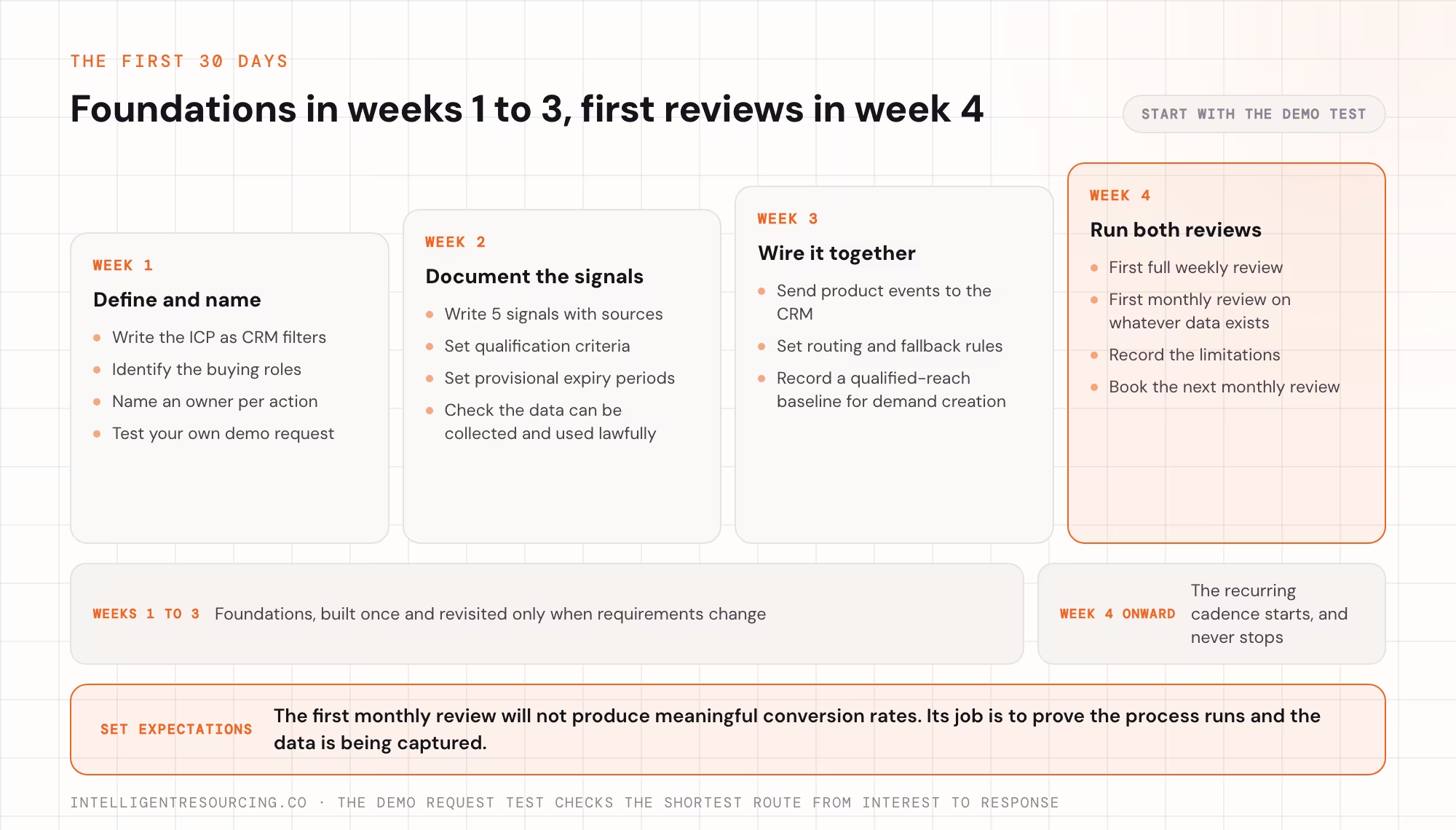
A team starting from nothing should set the five demand capture foundations, name one accountable owner per action, and start the weekly checks before building out detailed reporting. Demand creation runs alongside that, with a clear category message and a small number of relevant reach channels.
A workable first month:
- Week 1: define the ICP as CRM filters, identify buying roles, name accountable owners and test the demo-request process.
- Week 2: document 5 buying signals with sources, qualification criteria and provisional expiry periods. Check that the data behind each one can be collected and used lawfully.
- Week 3: connect product events to the CRM, set routing and fallback rules, and record an initial qualified-reach baseline for demand creation.
- Week 4: run the first full weekly review, then the first monthly review on whatever data exists, record the limitations and book the next monthly review for four weeks out.
The first monthly review will probably not hold enough opportunities to produce meaningful conversion rates. Its job is narrower: confirm the operating process works and that the information needed for later comparisons is being collected.
The demo-request test is the best single starting point, because it checks the shortest route between a buyer expressing interest and your team doing something about it.
GTM Engineering
If your SaaS business runs a sales-assisted growth model, see how Intelligent Resourcing connects buying-signal detection, account enrichment and CRM routing so your team can act on qualified opportunities.
FAQs
What should a demand generation checklist for B2B SaaS include?
A B2B SaaS demand generation checklist should include one-off foundations, weekly operational checks, monthly performance reviews and quarterly strategic resets. It should cover demand creation and demand capture. Every action needs one accountable owner, a set review frequency and an observable completion test.
How often should a SaaS team review its demand generation?
Review response times, buying signals and routing weekly; pipeline conversion, buyer experience and audience reach monthly; and targeting, signal definitions and channel investment quarterly. Teams with long sales cycles or low opportunity volumes need longer observation periods before making big decisions.
What is a product-qualified lead in demand generation?
A product-qualified lead is an account or user whose product behaviour suggests real value or buying readiness, measured against defined activation criteria. ProductLed's benchmark associated PQL usage with higher free-to-paid conversion, but the result does not establish that adopting PQLs alone causes the lift.
Who should own the demand generation checklist?
Accountability is assigned per task. RevOps usually owns signal definitions, routing and reporting; sales leadership owns follow-up and opportunity reviews; product owns activation thresholds; marketing owns positioning, audience reach and content. Other teams contribute, but each check has one accountable owner.
Should SaaS companies publish pricing for demand generation?
Clear pricing or useful indicative ranges help buyers evaluate a product before contacting sales. TrustRadius found transparent pricing was technology buyers' most requested improvement for four years running. Where fixed prices are impractical, explain the pricing model, the key variables and the quotation process.