

What Changes When Investor Money Pays for Your GTM Partner?
Once investors are paying, choosing a GTM partner is a funding decision. The spend sits in your investor plan, the board reviews it each quarter, and the result shapes your next raise. A partner hired on a monthly budget before the raise can be the wrong fit once a board expects a pipeline.
| What changes | Before the raise | After the raise |
|---|---|---|
| Who signs off the spend | The founder | The founder, then the board |
| How often it is reviewed | When cash is tight | Every board meeting |
| What counts as success | More meetings this month | Pipeline the board can trace and trust |
| Time horizon | The next quarter | The next raise |
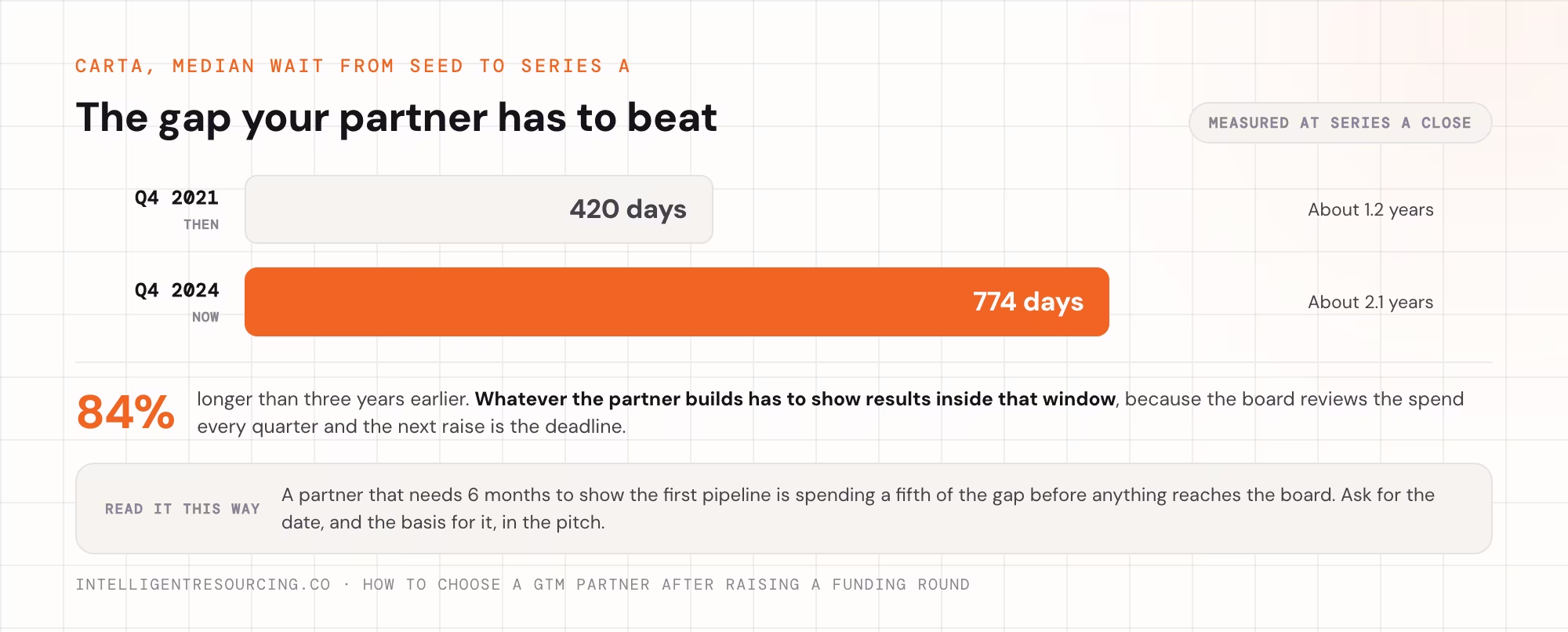
The clock is real. Carta’s data shows the median wait between a seed round and a Series A reached 774 days in Q4 2024, 84% longer than in Q4 2021. Whatever the partner builds has to show results before the next raise.
After the round closes, that pressure becomes 2 board questions:
- What is the money building?
- Can we see it working?
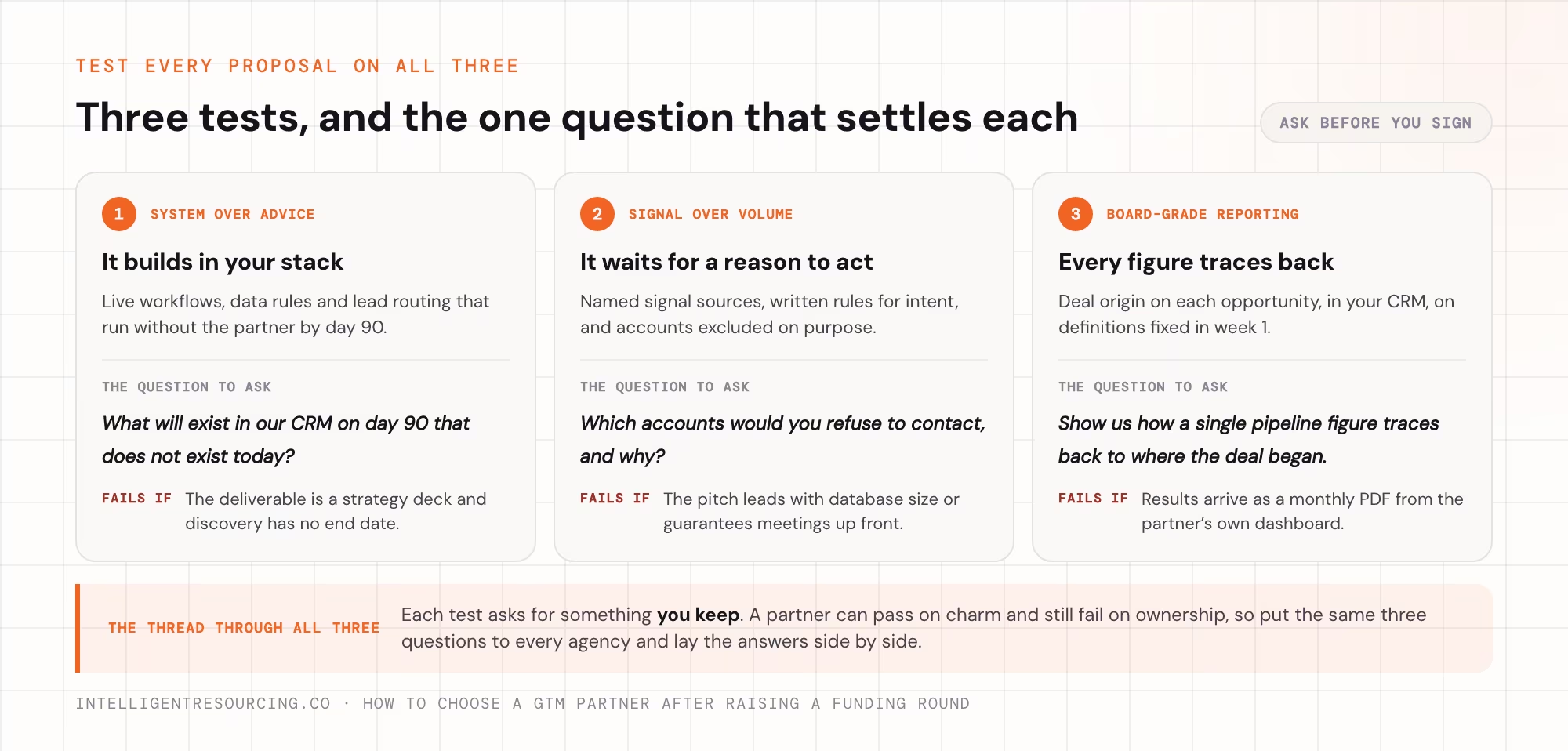
This guide assumes you have decided to hire a partner. It tests that partner on 3 demands:
- System over advice.
- Signal over spray.
- Reporting that holds up in a board meeting.
Does the Partner Build a System, or Only Give Advice?
A real GTM partner leaves working systems in your CRM, not slides in a shared drive. By day 90 you should see live workflows, data rules and lead routing that run without the partner. Zylo’s 2026 research shows many software licences go unused, so advice that adds tools without building on them adds cost.
What to look for
A strong proposal names what gets built and when:
- What goes live in weeks 1 to 4.
- Which CRM fields and workflows change.
- Who documents each build, and where.
Consultants advise. A revenue systems architect builds the tools and data flows your pipeline runs on.
Unused software is the warning sign. Zylo tracks software-as-a-service (SaaS) spending, and its 2026 SaaS Management Index analysed more than 40 million licences. On average, companies left 36% of them unused.
A partner who recommends 3 new tools and builds nothing on them makes that number worse. The fix is a partner that builds inside your stack and documents the work.
Red flags
- The main deliverable is a strategy deck or a playbook PDF.
- The “discovery phase” has no end date and no build attached.
- Workflows are built in the partner’s own accounts, so you rent them back.
- Nobody can say who on their team writes the automations.
The question to ask
“What will exist in our CRM on day 90 that does not exist today?”
Our ranking of GTM agencies for funded startups treats system ownership as 1 of 3 core tests. This question tests it in 1 line.
Does the Partner Wait for Buying Signals or Chase Volume?
A partner worth funding starts from buying signals, not list size. It watches for events such as a new hire, a funding round or a tech change, then acts while the buyer is ready. A partner that leads with volume spends your runway on accounts with no reason to buy yet.
What to look for
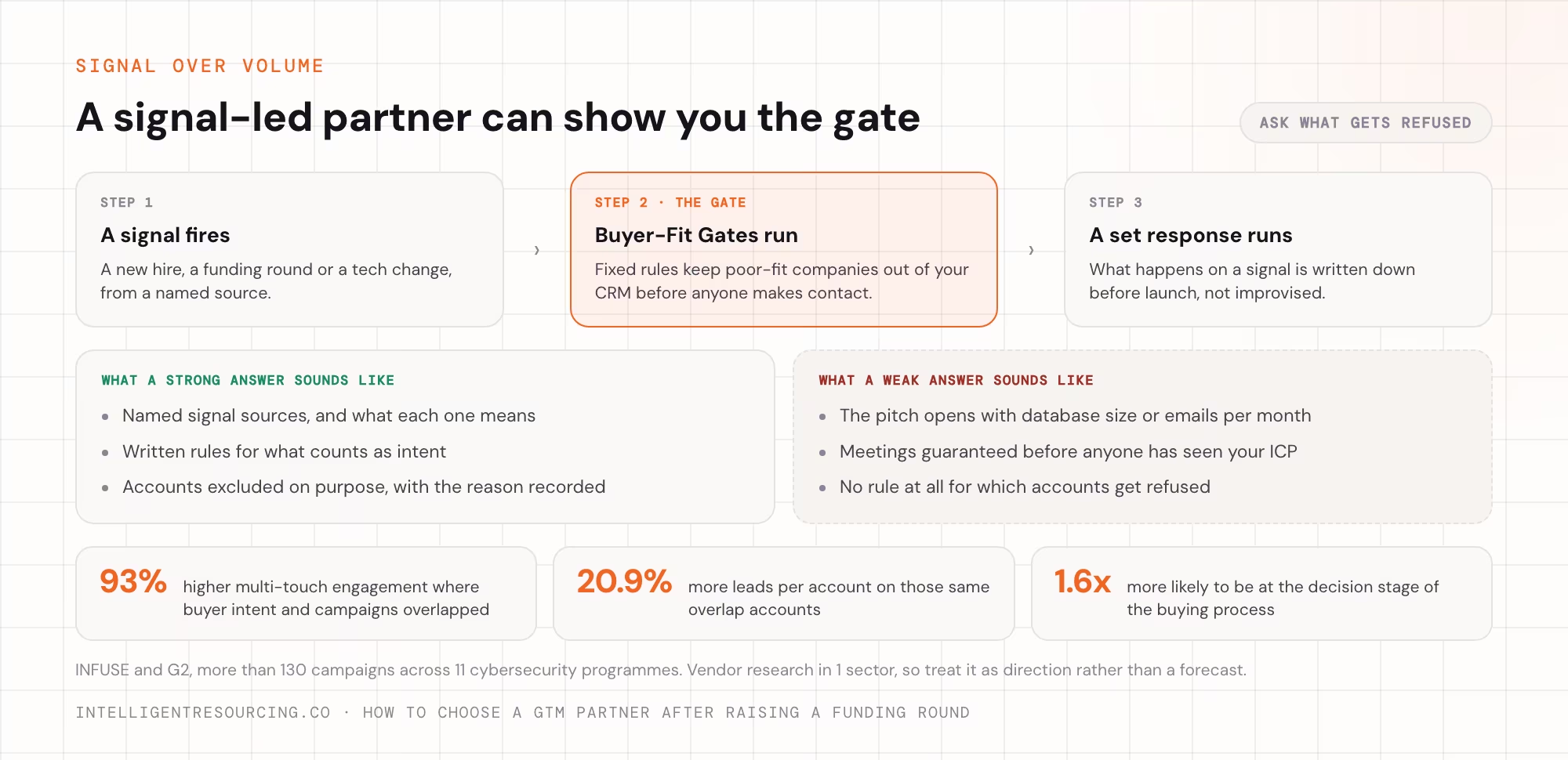
- Named signal sources, such as hiring, funding and tech changes.
- Clear rules for what counts as intent.
- Accounts excluded on purpose, with the reason written down.
- A set response for what happens when a signal fires.
A signal-led partner can explain how it monitors accounts for buying signals. Intelligent Resourcing calls the time when a buyer is clearly ready a Verified Buying Window.
A joint benchmark study by INFUSE and G2 tracked more than 130 campaigns across 11 cybersecurity programmes. Where buyers were already researching and also saw a campaign, multi-touch engagement was 93% higher. Those buyers engaged more often, across more channels.
| Accounts with G2 buyer intent, also reached by campaigns | Result against campaigns alone |
|---|---|
| Multi-touch engagement | 93% higher |
| Leads per account | 20.9% more |
| Likelihood of being at the decision stage | 1.6 times |
This is vendor research in 1 sector: treat it as direction, not a forecast.
Red flags
- The proposal leads with database size or emails sent per month.
- Meetings are guaranteed before anyone has looked at your ideal customer profile (ICP).
- The partner has no rule for which accounts it will refuse to contact.
The question to ask
“Which accounts would you refuse to contact, and why?”
A strong partner answers with Buyer-Fit Gates. These are fixed rules that keep poor-fit companies out of your CRM before anyone contacts them.
Will the Partner’s Reporting Hold Up in a Board Meeting?
Board-grade reporting means you can trace every pipeline number back to where the deal began, using terms agreed before launch. The data lives in your CRM, where your board or a future investor can audit it. Activity reports fail this test, because emails sent and meetings booked say nothing about revenue.
What to look for
| Measure | Activity report | Board-grade report |
|---|---|---|
| Where the data lives | The partner’s dashboard | Your CRM |
| Definitions | Set by the partner, open to change | Agreed in week 1, then fixed |
| What each deal shows | Channel and touch count | Deal origin: the signal or channel that started it |
| Headline numbers | Emails sent, meetings booked | How fast deals move, and what each real sales opportunity costs |
Those last 2 measures are what a revenue scoreboard should make visible.
Trust in the numbers is the real issue. Validity’s State of CRM Data Management in 2026 research surveyed 500 marketers across 5 countries, including Australia. It found:
- 67% of C-suite respondents admit campaign data is sometimes changed to make results look better to leaders.
- 62% of organisations lose revenue because of poor CRM data.
Red flags
- Results arrive as a monthly PDF built from the partner’s own dashboard.
- The partner changes how it counts results halfway through.
- The partner cannot show a pipeline figure from your CRM on request.
The question to ask
“Show us how a single pipeline figure traces back to where the deal began.”
Who Owns the Data, Workflows and Accounts When You Part Ways?
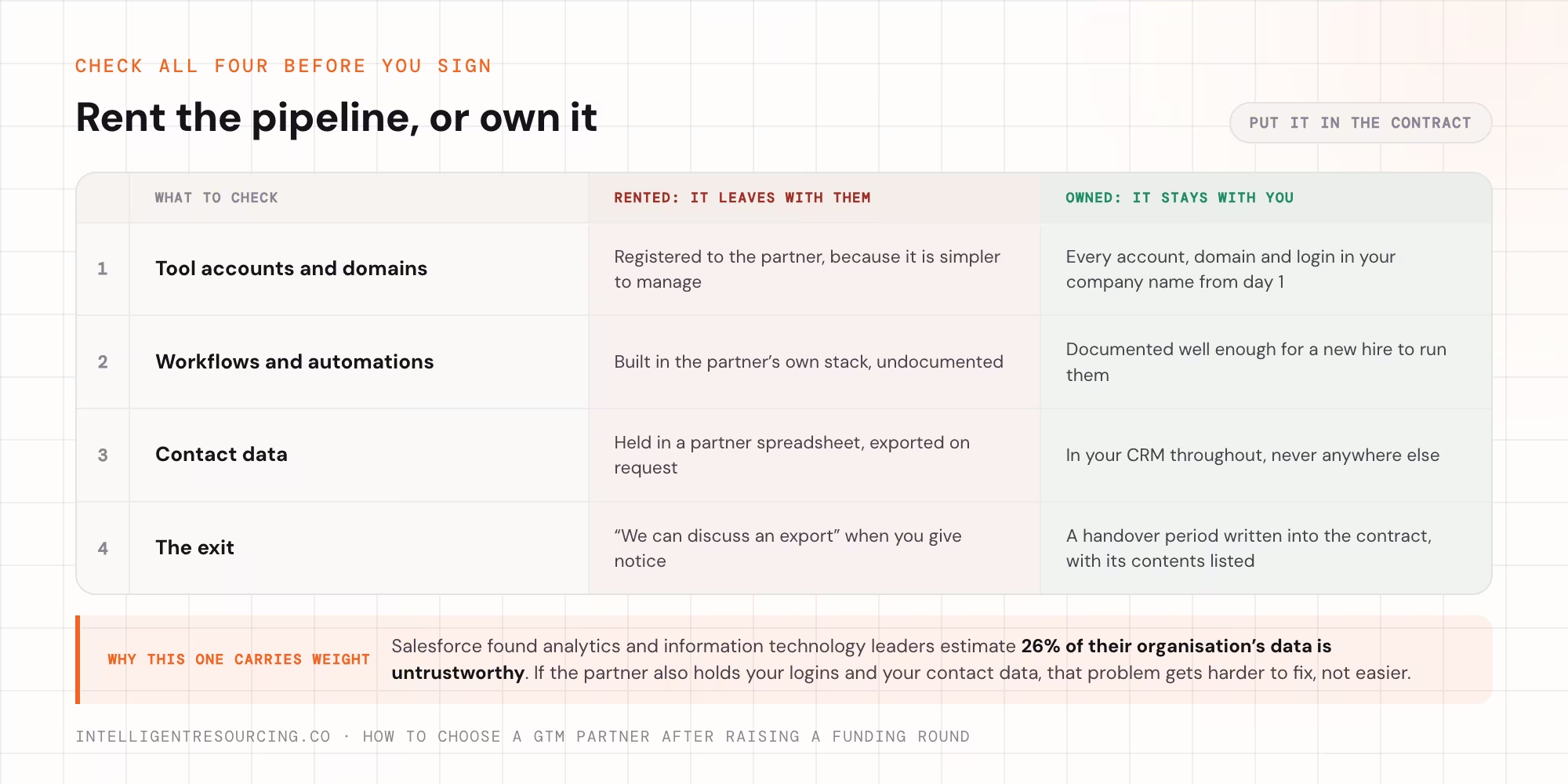
You should own everything the partner builds, including tool logins, workflows, data rules and contact lists. Put it in the contract and check it before signing. If the system lives in the partner’s accounts, you rent your pipeline, and it leaves the day the retainer stops.
Most companies already struggle to trust their data. Salesforce’s State of Data and Analytics report surveyed 3,800 analytics and information technology (IT) decision makers across 18 countries in 2025. They estimated that 26% of their organisation’s data is untrustworthy.
If a partner also holds your data and logins, that problem gets harder to fix.
Check 4 things before you sign:
- Every tool account, domain and login is registered to your company.
- Workflows are documented well enough for a new hire to run them.
- Contact data stays in your CRM, not a partner spreadsheet.
- The contract sets a handover period and what it includes.
Private equity (PE) backed companies face this test before a sale, when the buyer asks who owns the sales system. Our shortlist of GTM partners for PE-backed companies lists partners used to that level of checking.
Which Questions Expose a Weak GTM Partner in the Pitch?
The best pitch questions ask for proof inside your own stack, not claims about past clients. Use these 7 in every partner meeting and compare the answers side by side. A weak partner answers with process words; a strong one answers with dates, names and things you can check.
| Question | Strong answer | Weak answer |
|---|---|---|
| What exists in our CRM at day 90 that is not there today? | Named workflows, fields and routing rules, with dates | “A full strategy and roadmap” |
| Which accounts would you exclude, and why? | Fixed fit rules tied to your closed-won deals | “We cast a wide net, then refine” |
| Who on your team does the build work? | Named people and their roles | “Our team handles it” |
| Whose name are the tool accounts in? | Yours, from day 1 | “Ours, it is simpler to manage” |
| When do you expect the first pipeline, and on what basis? | A date tied to signal volume in your market | A meeting count promised before any data is seen |
| What happens to our data if we stop at month 6? | It stays in your CRM, plus a written handover | “We can discuss an export” |
| What does your board-ready report look like? | A live CRM view with deal origin on each opportunity | A monthly slide of activity counts |
Benchmark the timing answer against hiring. The Bridge Group’s 2025 report drew on 351 business-to-business (B2B) companies, 78% of them based in North America, and puts the average SDR ramp at 3.0 months.
A partner that needs longer than a new hire to show the first pipeline has to explain why.
When Should You Hire Strategy Before a GTM Partner?
Hire strategy first when you cannot yet name who buys, why they buy and what triggers the purchase. A GTM partner builds around your ideal customer. If you have not proven who that is, you get a fast, well-built system aimed at the wrong buyers. Fix positioning first, then fund the build.
Signs you need strategy first
- Founder-led deals close for different reasons each time.
- Win rates swing between segments with no pattern.
- The team cannot agree on a single sentence that describes the ideal customer.
What to do instead
- Bring in a fractional CMO or strategy adviser as the first spend. Our guide to fractional CMO services in Australia compares the options.
- Set a fixed end date for the strategy phase.
- Move to the build once you know which deals you win, and why.
Adding people or tools before that pattern exists scales the same problem.
Keep that phase short. Carta’s head of insights, Peter Walker, presented data on nearly 500,000 simple agreements for future equity (SAFEs) and notes signed since 2018 at Sierra Ventures’ pre-seed summit. Sierra Ventures’ March 2026 write-up of the talk reports that 14% to 17% of seed companies reached Series A at the 24-month mark. A long strategy phase eats the runway the build needs.
GTM Engineering
Bring your CRM to a working session and see what a signal-led system would build in your stack. You keep the plan whether or not you work with us.
FAQs
What should a funded startup look for in a GTM partner?
Look for 3 things: a system built in your CRM, targeting driven by buying signals, and reporting your board can audit. Ask what will exist in your CRM at day 90 that does not exist today. A partner that cannot answer in specifics is selling advice, not a system.
How soon after a round should a GTM partner start?
Bring one in once your ICP is proven and the board has approved the use-of-funds plan. Agree a start date that leaves time to show the pipeline before the next board review. If you cannot describe who buys and why, hire strategy first and set a fixed end date.
Which warning signs should rule out a GTM agency?
The clearest warning signs are meeting guarantees made before any data is reviewed and tools held in the agency’s own accounts. Reports built from activity counts are another. So is a discovery phase with no end date. Each one means you pay for effort you cannot keep or check.
Should a GTM partner work in our tools or theirs?
A GTM partner should work in your tools, with every account registered to your company. The workflows, data and history then stay with you when the engagement ends. You also keep control of your contact data.
Is a fractional CMO or a GTM partner better after a seed round?
A fractional CMO is better when your positioning and ICP are unproven. A GTM partner is better once you know which deals you win and why, and need a pipeline you can repeat. You can use both in sequence: strategy first, then the build.