

The Short Answer
In Marketing We Trust maps consumer discovery across 12 surfaces to plan content and channel spend, with AI search optimisation as one line inside a wider agency. Intelligent Resourcing runs a dedicated GEO Engine that engineers content to be cited by AI engines and tracks those citations by engine and by prompt. Both work on AI visibility, but they sell different things.
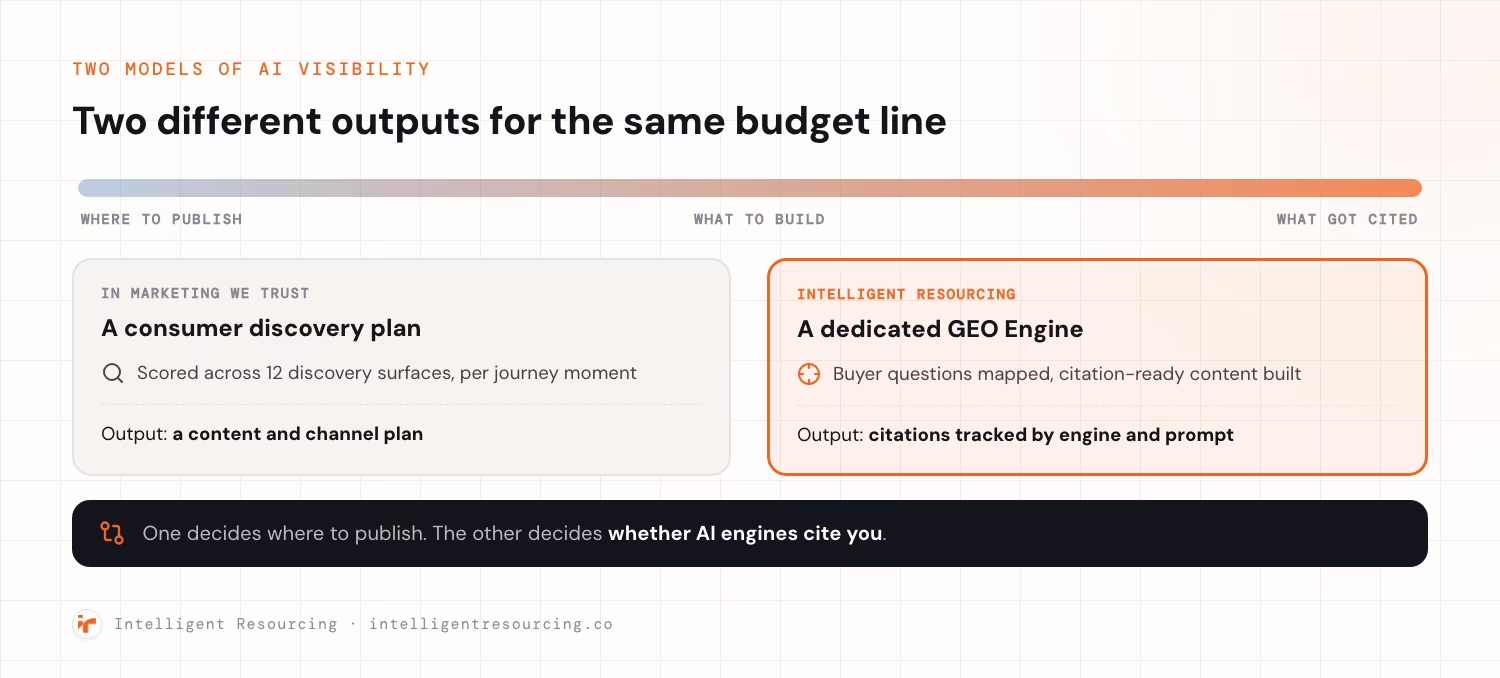
Same budget line, two different outputs: one decides where to publish content, the other measures whether AI engines cite it.
The channel split follows the same pattern. In Marketing We Trust is SEO-first, with AEO/GEO as one line item. Intelligent Resourcing builds content through the AEO/GEO lens specifically, with citation tracking as the reported metric.
If your gap is knowing where to invest content across a fragmented discovery landscape, that is In Marketing We Trust's model. If your gap is knowing whether AI engines cite you, and on which buyer questions, that is Intelligent Resourcing's.
The Key Differences at a Glance
- The core output differs: In Marketing We Trust's Discovery360 produces a content and channel plan, scored across 12 surfaces. Intelligent Resourcing's GEO Engine produces citation-ready content and a citation record, split by engine and prompt.
- Channel emphasis differs too: In Marketing We Trust is SEO-first, with AEO/GEO as one line item. Intelligent Resourcing builds content through the AEO/GEO lens as the primary approach.
- Pricing: In Marketing We Trust publishes nothing on-site; Clutch lists a $10,000+ minimum project and $150 to $199 per hour. Intelligent Resourcing publishes its GEO pricing: an AUD $2,500 one-off Strategic Blueprint, then retainers from AUD $3,200 to $3,700 a month.
- Reviews: In Marketing We Trust holds Verified status on Clutch but has zero logged reviews there as of August 2026, despite 16 years trading.
What Does In Marketing We Trust Actually Sell?
| Service line | What it covers | Where AEO sits |
|---|---|---|
| Data and Analytics | Governance, tag management, business intelligence, data science | Not connected to AEO |
| SEO | Enterprise, technical, content, local, link building | Feeds into AEO indirectly |
| Paid Media | Search, display, shopping, social ads | Separate line |
| AI and Agentic | AI Discovery, AI Production, AI Operations, AI Search Optimisation | The AEO/GEO product lives here |
AI Search Optimisation is the fifth line item here, not a standalone practice. Their own process page lists five steps: an audit, prompt research, technical SEO work, content production, and tracking. The service page also names a dedicated AEO training course, aimed at "Senior SEO professionals, Heads of Digital, content strategists and technical marketers."
In Marketing We Trust also lists a separate "Solutions" layer: Discovery360, ScaleWriter, a training program, SEO migration, GA migration, in-housing support, and their own tool, ScalePath.ai.
Discovery360 is the one worth stopping on: a proprietary methodology mapping customer discovery across 12 surfaces, covered in full below. It is not a migration tool like the rest of this list.
In Marketing We Trust's Real Strengths
- 16 years trading in Australia, with an enterprise client roster naming Skyscanner, Coca-Cola, Canva, Salesforce and OCBC.
- Top 1% Google Partner status in Australia.
- A team spanning 12 countries and 20 languages, by their own account.
- A named AEO training product. Most agencies in this space do not offer one at all.
Some businesses already have an internal SEO or content team and do not want it replaced, just upskilled. That is a real strength, not a gap to talk around.
In Marketing We Trust already appears, unlinked, in Intelligent Resourcing's own roundup of the best GEO and AEO agencies in Australia. This is the dedicated comparison that roundup pointed to.
What Does In Marketing We Trust Mean by "Signal"?
Their homepage headline is "From Search to Signal to Discovery." Discovery360 gives that real substance.
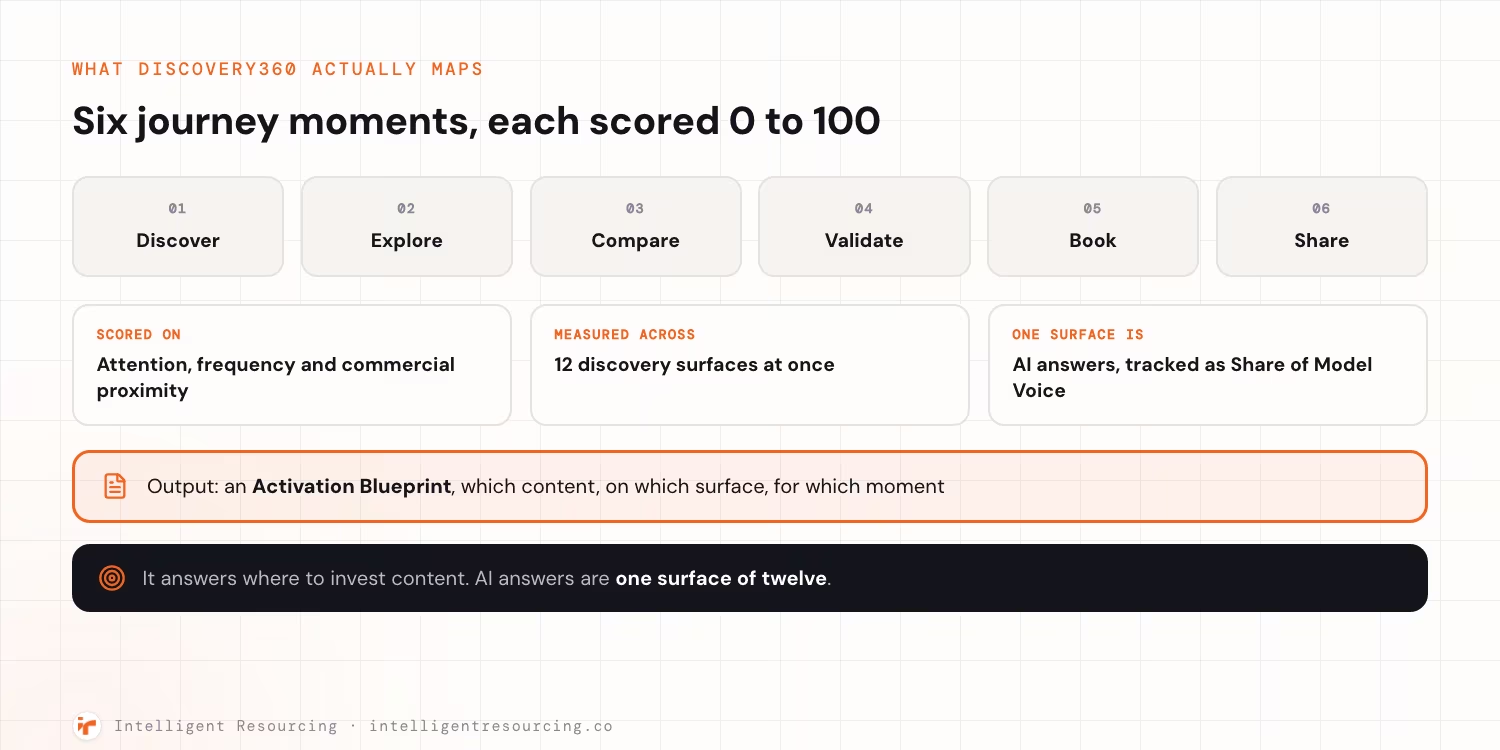
The signal in that model is a consumer discovery signal:
- Scored per "moment" in a customer journey (Discover, Explore, Compare, Validate, Book, Share) using the Moment Priority Index, a 0 to 100 score for attention, frequency, and commercial proximity.
- Measured across 12 discovery surfaces at once.
- Output as an Activation Blueprint: which content, on which surface, for which moment.
- One of the 12 surfaces is AI answers themselves, tracked as Share of Model Voice.
This is a genuinely resourced methodology, answering a different question to Intelligent Resourcing's citation tracking. It tells a brand where to invest content across a fragmented discovery landscape. AI answers are one of its twelve surfaces, tracked as Share of Model Voice, rather than the whole job.
What Intelligent Resourcing Does Instead
Intelligent Resourcing runs a dedicated GEO Engine. The job is narrower than Discovery360's: get the brand cited when buyers ask AI engines about its category, then prove it.
- Buyer questions are mapped from the client's own CRM and Search Console data, not from a market-wide moment model.
- Content is built citation-ready: direct answers, schema and entity signals on the pages that answer those questions.
- Citations are tracked across five engines, split by branded versus non-branded terms, service line and engine.
- Every reading carries its run count, prompt count and date, so a claim and the work behind it travel together.
That is a smaller unit of work than Discovery360's moment map: winning specific AI answers, not planning a content calendar across twelve surfaces.
The tracker also shows that engines behave differently:
| Engine | How it tends to behave |
|---|---|
| ChatGPT | Names and cites a brand together, but pulls from few pages |
| Google AI Overview | Cites heavily, but rarely names a brand at all |
Unlike Discovery360, where AI answers are one surface among twelve, this citation record is the main reported metric, not an input to a wider channel plan.
Does Each Business Put the Same Weight on SEO and GEO/AEO?
No. In Marketing We Trust's SEO line runs seven sub-disciplines deep: enterprise, ecommerce, technical, content, international, local, link building. AEO sits as one line inside a separate "AI and Agentic" service.
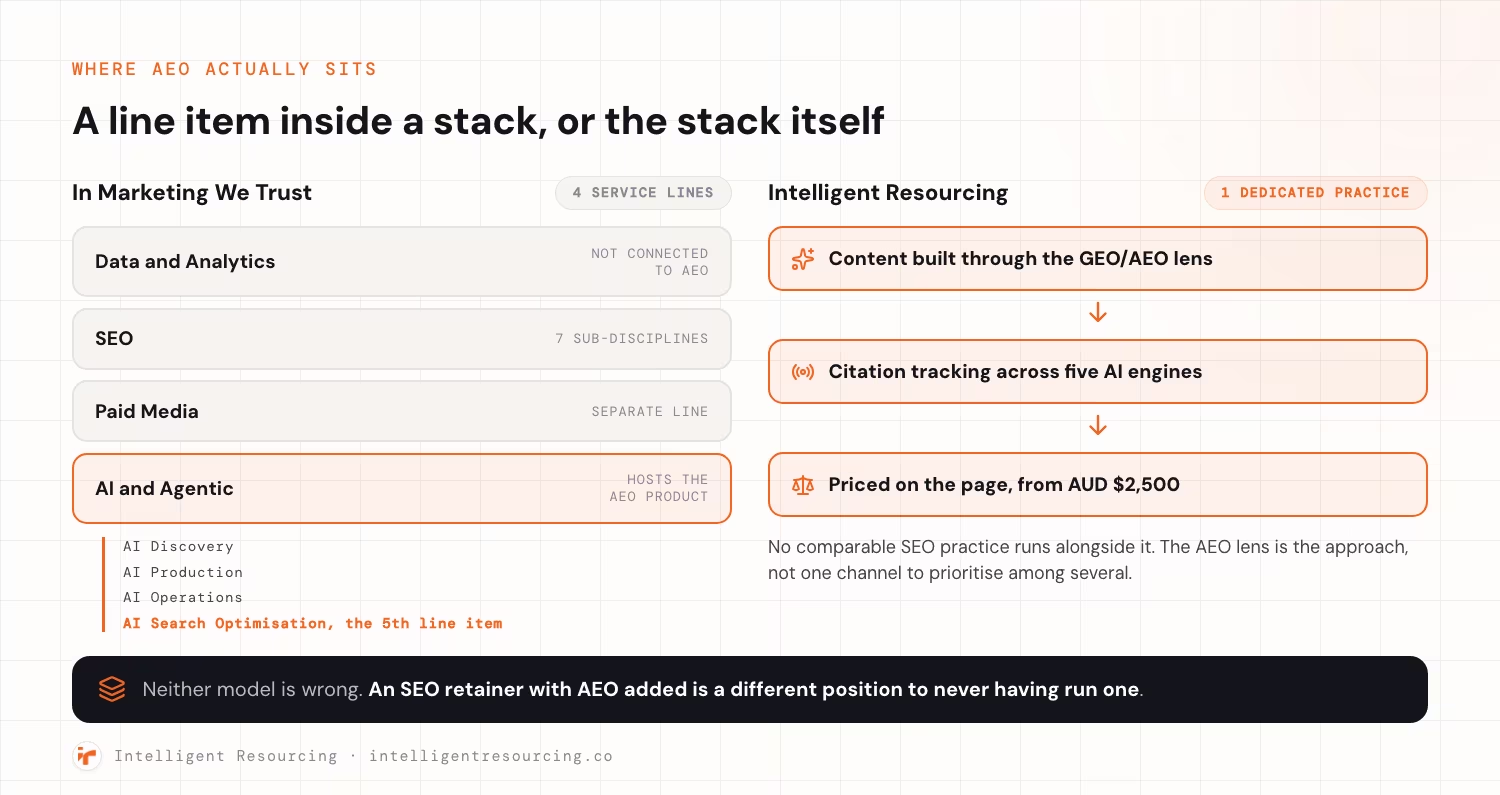
Intelligent Resourcing runs no comparable SEO practice. Its content work is built through the GEO/AEO lens specifically, measured by the citation tracker above, not offered as one channel to prioritise among several.
Neither model is wrong. Starting from an SEO retainer with AEO added is a different position to never having run one at all.
Only One Vendor Publishes Its Price
Intelligent Resourcing prices its GEO work in published tiers: an AUD $2,500 Strategic Blueprint audit, then Cited-Core from AUD $3,200 a month and Cited-Scale from AUD $3,700 a month, on a six-month minimum.
In Marketing We Trust's AEO work is scoped per engagement, which is why the only public number comes from Clutch's bucketed estimate, not a rate card. Training varies by team size and tooling, so a single published number would misstate a small or a large engagement either way.
Does Domain Authority Decide Who Gets Cited by AI?
In Marketing We Trust's Domain Rating is 51. Intelligent Resourcing's is 29 (Ahrefs, both checked 19 August 2026). It is tempting to read that 22-point gap as a proxy for who wins more AI citations. It should not be: across 4,654 tracked runs in Intelligent Resourcing's own citation category, the two most-cited agency domains sit one citation apart despite 64 points of domain authority separating them, at DR 5 and DR 69.
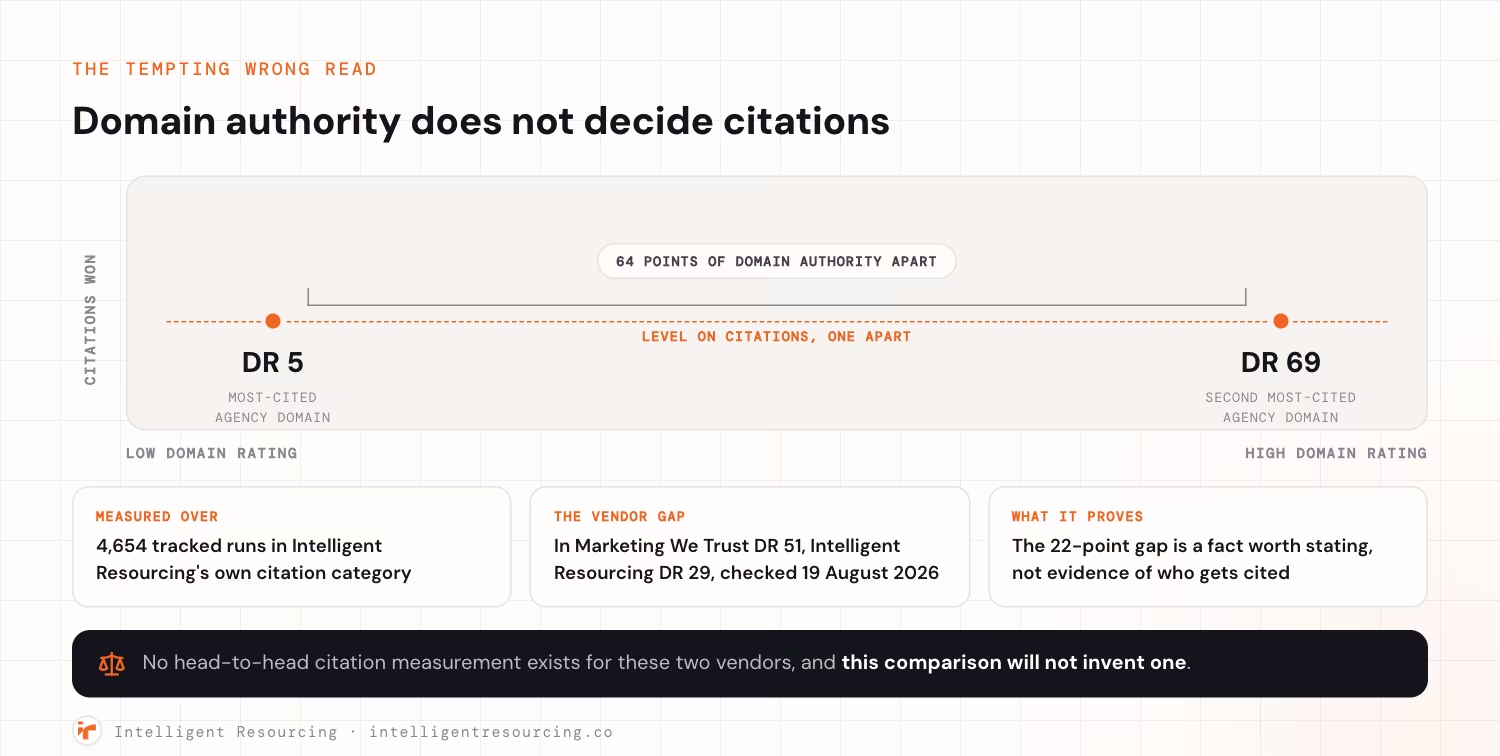
This article has no head-to-head citation measurement between these two specific vendors, and will not invent one. The DR gap is a fact worth stating. It is not proof of who gets cited more.
The Proof Gap Between a Testimonial and a Sourced Number
In Marketing We Trust publishes six client testimonials on its homepage, each naming a real person. That is a genuine trust signal, but a testimonial is one sentence of praise, it does not show what changed or by how much.
Intelligent Resourcing's citation tracker reports figures with an engine and a date attached instead, a different kind of evidence to check. The same discipline applies to any AI-generated recommendation: treat it as a shortlist to verify, not a verdict.
When Would Neither Model Actually Help?
Neither is the right first spend when the site itself cannot be crawled, or when a result is needed inside about 90 days. Paid media carries the short-term number while GEO work compounds. Both take weeks to show a measurable result, not days, because both depend on AI engines re-crawling content before a citation pattern shifts.
In Marketing We Trust vs Intelligent Resourcing, Side by Side
| Criteria | In Marketing We Trust | Intelligent Resourcing |
|---|---|---|
| Core product | Discovery360: consumer discovery scored across 12 surfaces | GEO Engine: citation-ready content for AI answers |
| Main output | Content and channel plan | Citation record by engine and prompt |
| Channel weight | SEO-first, 7 sub-disciplines; AEO/GEO is one line item | GEO/AEO-first, citations as the reported metric |
| Model | Training and implementation, the fifth line item inside a broader SEO, data and paid media agency | Dedicated GEO practice: audit, map, build, monitor and optimise |
| Published pricing | None on-site; Clutch lists a $10,000+ minimum project and $150 to $199 per hour | Published: AUD $2,500 one-off Strategic Blueprint; retainers from AUD $3,200 to $3,700 a month, six-month minimum |
| Reviews and proof | 0 reviews on Clutch (Verified status, none logged); six homepage testimonials | Tracker-based: 5 engines, thousands of sampled runs, reported by engine |
Every fact here carries a source. Where none was available, this article says so, rather than guessing.
This article does not credit In Marketing We Trust with capabilities it has not claimed on its own site, and it does not assume Intelligent Resourcing suits every buyer either.
The Verdict
In Marketing We Trust has the stronger track record on paper: 16 years trading, a global team, enterprise logos, and a named AEO training product. Discovery360 is genuinely resourced too, built to plan content across a fragmented discovery landscape.
Intelligent Resourcing has no comparable training product or review trail. What it has is a narrower job run as its own practice: AI citations engineered, tracked by engine and priced on the page, the model behind its GEO Engine.
Pick based on the output you need. A content plan across a fragmented discovery landscape favours In Marketing We Trust. A measured citation record in AI answers favours Intelligent Resourcing.
Not sure which applies? Get a free GEO audit to see where AI engines cite you today.
How the GEO Engine Works
Rather than adding AEO to an SEO retainer, Intelligent Resourcing runs GEO as the whole practice, from buyer-question mapping to cross-engine citation tracking. See Generative Engine Optimisation for how each phase works.
Comparisons
One of these vendors tells you where to publish. The other tells you whether AI engines cite you. Get your free GEO audit first and see which gap you actually have before you sign either engagement.
FAQs
Do In Marketing We Trust and Intelligent Resourcing sell the same thing?
No. In Marketing We Trust's Discovery360 scores consumer discovery across 12 surfaces to plan content, with AI search optimisation as one service line. Intelligent Resourcing runs a dedicated GEO Engine that engineers AI citations and tracks them by engine and prompt.
How much does In Marketing We Trust cost?
No pricing sits on their own site. Clutch lists a minimum project size of $10,000+ and an hourly rate of $150 to $199.
Does In Marketing We Trust have verified client reviews?
They hold Verified status on Clutch, confirming they are a registered, financially sound business. As of August 2026, they have zero logged reviews on the platform.
How does each vendor track AI answers?
Discovery360 tracks AI answers as one of its 12 surfaces, reported as Share of Model Voice. Intelligent Resourcing reports citations as its main metric, split by engine, prompt and date.
Which is the better fit for an enterprise brand with its own SEO team?
Want content and channel strategy mapped across a fragmented discovery landscape? In Marketing We Trust fits. Want AI citations engineered and tracked as their own metric? Intelligent Resourcing fits.