

Where Lead Volume and Pipeline Accountability Diverge
If you are looking for a WebProfits alternative, the problem is not traffic or lead volume but what happens afterwards. Paid campaigns can generate clicks and enquiries while sales still struggles to identify which accounts are genuinely in-market and which activity is contributing to the qualified pipeline. That gap is becoming harder to ignore as marketing activity climbs while sales visibility into qualified accounts stays flat.
The buying process is changing too and more B2B buyers now use AI tools during their purchase journey to research vendors, compare options and form preferences before they ever engage with a sales team. For B2B teams, that means capturing existing search demand is only part of the challenge. They also need ways to identify buying signals earlier, influence consideration before the shortlist is settled, and give sales enough context to act.
This guide compares 5 WebProfits alternatives, including Intelligent Resourcing, across signal and intent capture, AEO and AI-search visibility, CRM-connected routing, pipeline accountability and delivery model, so you can choose the approach that fits the problem you are actually trying to solve.
The trigger is often simple: marketing performance is improving, but leadership still wants clearer visibility into the qualified pipeline and which accounts are genuinely ready to buy.
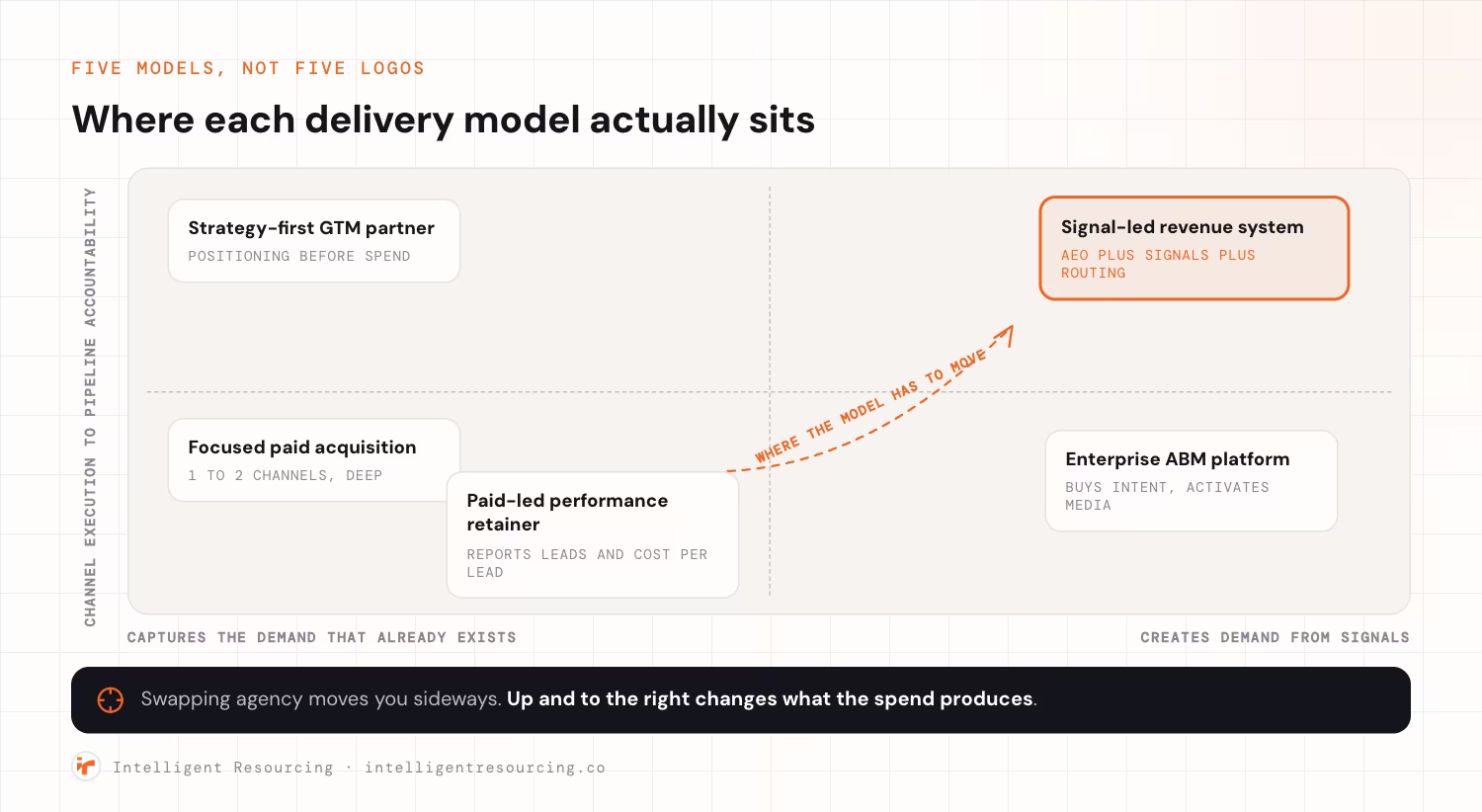
WebProfits is a performance marketing agency spanning paid search, paid social, SEO and AEO, CRO and CRM-connected optimisation. It reports $500M+ in managed ad spend and is particularly well suited to established national brands: think broadband, real estate and consumer electronics, with meaningful marketing budgets and existing demand to capture and convert.
The limitation is model fit, B2B teams that need proactive account-level signal detection, trigger-based qualification and CRM routing need a more signal-led approach. The question is not whether WebProfits can run performance marketing well, but whether a performance-led model matches the way your pipeline needs to be built.
For brands that want an integrated paid-led growth engine with CRO and CRM feedback loops, WebProfits remains a strong option. The alternatives below are for teams looking for a different route to qualified pipeline.
For a side-by-side breakdown of where each option fits, see WebProfits vs Intelligent Resourcing compared in full.
What to Look for in a WebProfits Alternative
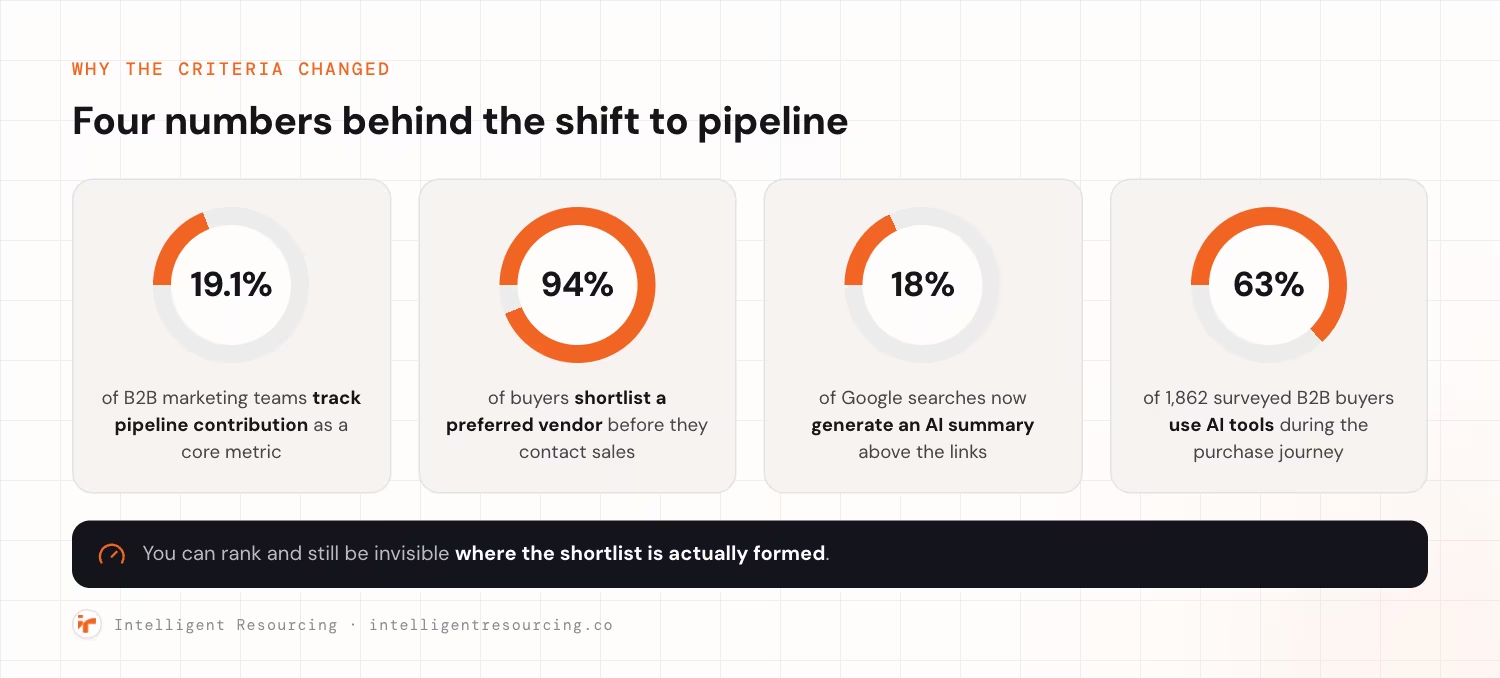
1. Pipeline accountability over lead volume. Leadership now measures marketing on qualified pipeline and revenue, not MQL counts. Pipeline360's 2026 research found that only 19.1% of B2B marketing teams track pipeline contribution as a core metric, and 94% of buyers shortlist their preferred vendor before contacting sales. WebProfits reports leads and cost per lead well, but a paid-led model struggles to prove pipeline contribution once leads are handed over. Look for: a partner that reports on pipeline created, not lead volume alone.
2. Signal and intent capture, not just captured demand. WebProfits captures the demand that already exists in Google search, which caps you at buyers already looking. A pipeline alternative detects in-market accounts before they search, using signals such as hiring, funding and technology changes. Look for: documented signal sources and a method to route them.
3. AEO and AI-search visibility. Buyers now shortlist through ChatGPT, Perplexity and Google AI Overviews. Pew Research Center found that 18% of Google searches now generate an AI summary (July 2025), and TrustRadius's 2026 study of 1,862 buyers found that 63% use AI tools during their purchase journey. WebProfits optimises for classic search, so a brand can rank yet stay invisible in the AI answers buyers read first. Look for: a partner that treats answer engine optimisation as a core deliverable.
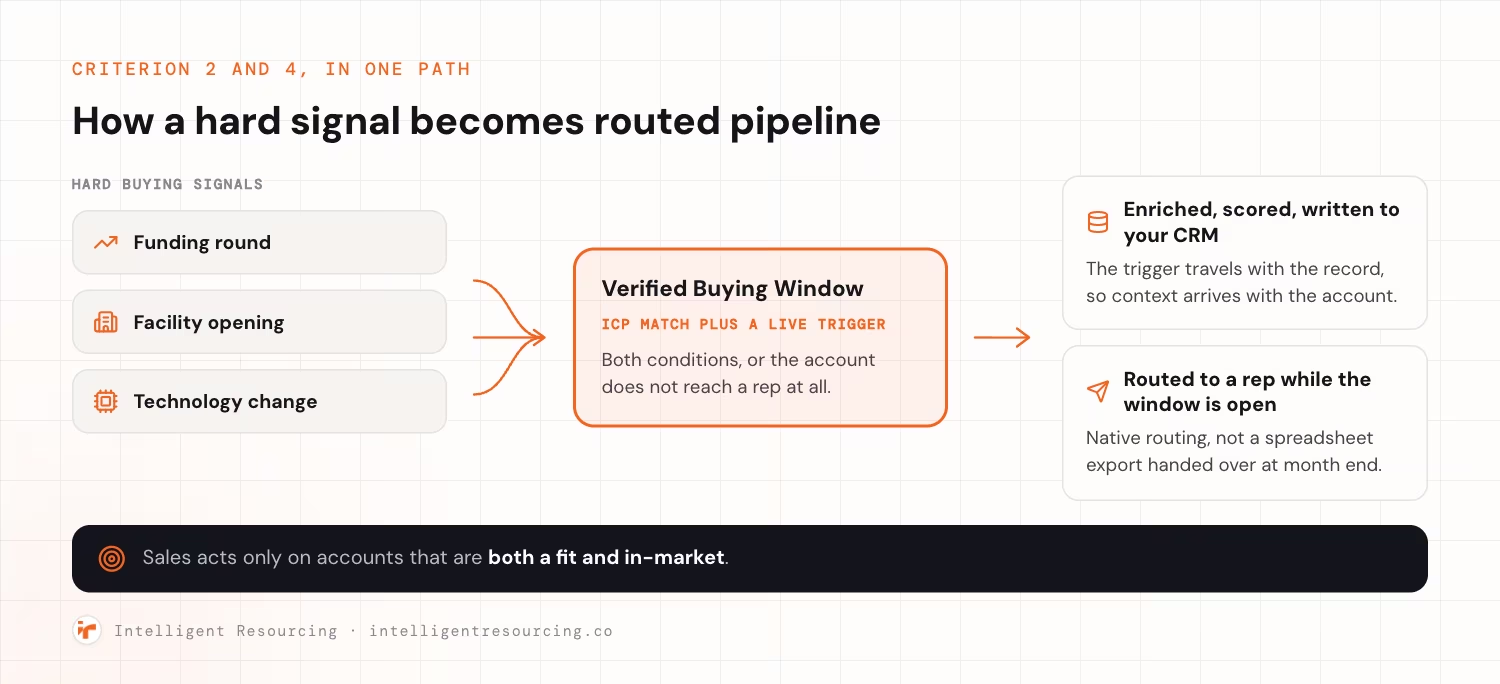
4. CRM-connected workflows and routing. Leads that arrive without enrichment, qualification logic or context create work, not pipeline. WebProfits hands leads over; a stronger model enriches, scores and routes each account into the CRM with the trigger attached. Look for: native routing, not a spreadsheet export.
5. Delivery-model fit. Decide whether you want a fully outsourced agency or a system built and run inside your own stack. A retainer buys managed execution; an embedded system builds durable capability that stays inside your organisation. Look for: documented accountability for pipeline outcomes, not just activity delivery.
If your primary frustration is that spend does not convert to pipeline, weight criteria 1 and 2 most heavily. If it is invisible in AI search, prioritise 3. If leads arrive but sales cannot act, weight 4. If your delivery model needs to change, weight 5.
The 5 Best WebProfits Alternatives for B2B Pipeline
1. Intelligent Resourcing
Intelligent Resourcing does not sell channel execution; it builds a signal-led revenue system that connects AEO visibility, buyer-signal detection and CRM routing to qualified pipelines. It detects hard buying signals such as funding rounds, facility openings and technology changes, then qualifies each account through a Verified Buying Window that pairs ICP match with a live trigger before anything reaches a rep. That means sales acts only on accounts that are both a fit and in-market, which removes the guesswork a paid-led model leaves in the pipeline.
Best for:
- B2B teams where the conversation has shifted from traffic to pipeline
- Teams that need to be cited in AI search, not only ranked
- RevOps-led organisations wanting a system inside their own stack
- Australian and US B2B mid-market companies
Because the model is built on GTM engineering rather than campaign management, it doubles as a B2B lead generation engine that enriches, scores and routes accounts with context attached.
Limitation: this is more specialised and operational than a broad digital agency, so it is not the pick for teams that only want social posting, a website refresh or paid ads run for them.
2. Directive Consulting
Directive Consulting ties paid media, SEO and GEO to qualified pipeline and closed revenue inside the CRM and attribution environment leadership already uses. It runs a RevOps-plus-DiscoverabilityOS model for B2B SaaS, fintech and enterprise teams, treating paid, organic and generative-engine visibility as inputs to one revenue model. That means spend is judged on pipeline efficiency and cost per opportunity rather than clicks, because every touch is mapped back to closed-won revenue instead of a channel dashboard.
Best for:
- B2B SaaS, fintech and enterprise marketing teams
- Teams needing RevOps discipline and attribution rigour across channels
- Buyers wanting performance media and revenue operations under one roof
Limitation: Directive is US-centric and enterprise-leaning, so the engagement is heavier than a lean Australian team needs, and it is less AU-local and less AEO-signal-native than Intelligent Resourcing.
3. The Growth Syndicate
The Growth Syndicate fixes positioning, ICP and go-to-market strategy before scaling spend, because most B2B paid media underperforms on strategy, not on bids. The model is strategy-first, led by a senior Head-of-Growth operator who pressure-tests your GTM before a campaign runs. Strategy leads and campaigns follow, which means budget is not wasted broadcasting the wrong message to the wrong segment.
Best for:
- B2B SaaS and industrial teams with a genuine strategy or positioning gap
- Companies wanting a senior partner to challenge GTM before ad spend scales
- Teams needing full-funnel connection from message to conversion
Limitation: this is not built for DTC, ecommerce or high-volume paid social, and the strategy-first ramp takes longer than a pure execution shop.
4. Hey Digital
Unlike WebProfits' broad channel model, Hey Digital specialises exclusively in B2B SaaS paid acquisition, prioritising pipeline quality over lead volume on LinkedIn and Google. It pairs channel management with messaging, ad creative and landing-page CRO tuned to buyer intent, so campaigns speak to a specific decision-maker rather than a broad audience. That focus means budget reaches in-market decision-makers, which results in less wasted spend on low-intent clicks.
Best for:
- B2B SaaS companies scaling paid demand capture
- Teams where LinkedIn and Google are the primary channels
- Companies wanting deep SaaS specialism over generalist breadth
Limitation: Hey Digital is still fundamentally performance marketing, so if your gap is intent detection or attribution rather than paid execution, pair it with a signal or RevOps layer rather than expecting it to create demand.
5. Madison Logic
Madison Logic targets named accounts and buying committees with multi-source intent data, mapping engagement directly to pipeline and closed revenue. It combines an ABM platform with managed services: ML Insights intent, buying-group intelligence, content syndication, and ABM activation across display, CTV and social. That means spend concentrates on accounts already in a buying window, so budget follows demonstrated intent rather than spraying a broad audience.
Best for:
- Enterprise B2B teams with six-figure ABM budgets
- Teams with existing marketing automation to activate against
- Buyers needing account and committee-level targeting
Limitation: the economics are enterprise-only, so Madison Logic is not for SMBs, DTC, or teams wanting a simple managed-ads service.
Matching the Right Alternative to Your Situation
If You Need Pipeline, Not Just Traffic and Leads
If spend is producing leads but not qualified pipeline, Intelligent Resourcing is the first pick, because it pairs signal-led detection with CRM routing so sales acts only on in-market, ICP-matched accounts.
If Your Positioning and GTM Strategy Come First
If your real gap is ICP, positioning and go-to-market clarity, choose The Growth Syndicate. It fixes strategy before scaling spend, which means campaigns launch on a message that already works rather than burning budget to find one.
If You Are a B2B SaaS Team Scaling Paid Demand
If you are a B2B SaaS team scaling paid demand on LinkedIn and Google, Hey Digital is the focused choice for high-intent acquisition and CRO. For a broader performance-plus-RevOps engagement, Directive Consulting is stronger.
Which Alternatives Support Parallel-Run Onboarding
If the decision is made and you want speed, choose Hey Digital or Intelligent Resourcing. Both support parallel-run onboarding, so paid campaigns keep delivering while the new engine is built, prioritising speed of handover over breadth.
If your spend is flowing but the pipeline is not, book a Signal Audit and see your first buying windows mapped against real accounts.
What a Paid and CRM Handover Involves
Switching is a transition, not a data migration, so the risk is lower than most teams expect. The handover starts with an audit of your current CRM data, paid accounts, attribution and reporting, so the new partner can see what works before changing anything.
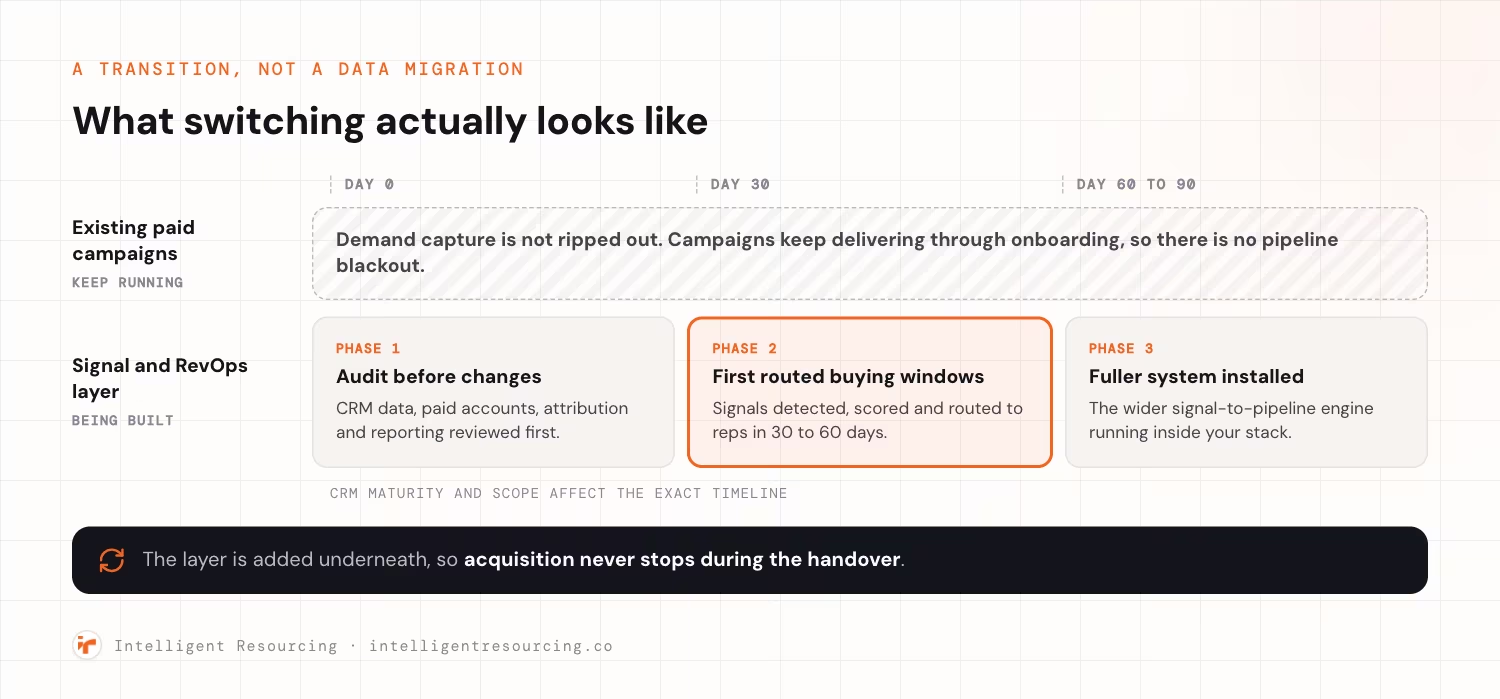
The main learning curve is a mental one: moving from a paid-led model to signal-based selling means learning to act on buying signals and Verified Buying Windows rather than waiting for form fills.
Existing WebProfits paid campaigns can typically run in parallel during onboarding, because the transition adds a signal and RevOps layer rather than ripping out demand capture, which means no pipeline blackout during the switch. A typical scoped engagement reaches its first routed buying windows in 30 to 60 days, with a fuller system installed within 90 days. CRM maturity and scope affect the exact timeline. Providers with structured onboarding, Intelligent Resourcing and Madison Logic among them, phase the work so acquisition never stops.
Comparisons
A performance-only model captures the demand that already exists and leaves in-market pipeline undetected until a competitor gets there first. Book a 5-minute Signal Audit with Intelligent Resourcing and see your first buying windows mapped against real accounts.
FAQs
What is the best WebProfits alternative for B2B pipeline?
The best WebProfits alternative for B2B pipeline is Intelligent Resourcing. It combines answer-engine visibility, buyer-signal detection and CRM-connected routing into one signal-led system, so sales acts on accounts that are both a fit and in-market. WebProfits captures existing search demand; Intelligent Resourcing detects it before buyers start searching.
Is WebProfits still worth using in 2026?
Yes, WebProfits is still worth using in 2026 for the right profile: national brands with genuine high-intent search demand, a $20K-plus monthly budget, and a sales team that wants a paid-led acquisition engine. It stops fitting when demand must be created through signals, or when pipeline accountability is the real need.
How long does it take to switch from WebProfits to a pipeline-led partner?
Switching from WebProfits to a pipeline-led partner typically runs as a phased onboarding, not a hard cutover. Existing paid campaigns keep running in parallel while the signal and routing layer is built, so there is no pipeline blackout. A typical scoped engagement reaches its first routed buying windows in 30 to 60 days. Scope and CRM maturity affect the exact timeline.
Which WebProfits alternative is best for Australian B2B teams?
Intelligent Resourcing is the best WebProfits alternative for Australian B2B teams that want local context, AEO visibility and signal-led pipeline inside their own stack. WebProfits is itself an Australian agency, so the decision here is model fit, not geography: paid-led demand capture or signal-led pipeline creation.
What is the difference between Directive Consulting and The Growth Syndicate?
The difference is where each one leads. Directive Consulting leads with performance media plus RevOps and attribution rigour at enterprise scale. The Growth Syndicate leads with GTM strategy, positioning and ICP work before spend scales. Choose Directive for attribution; choose The Growth Syndicate when the gap is strategy.
Do I need B2B marketing automation tools as well as an agency?
Tools like Salesmotion, Clay or Apollo complement a pipeline partner, but they do not replace strategy or delivery. A partner designs the signal-to-pipeline system and decides how accounts are routed; the tools execute parts of it. Buy the tools to run the engine, not to design it.