

Why Does Any of This Matter More Now?
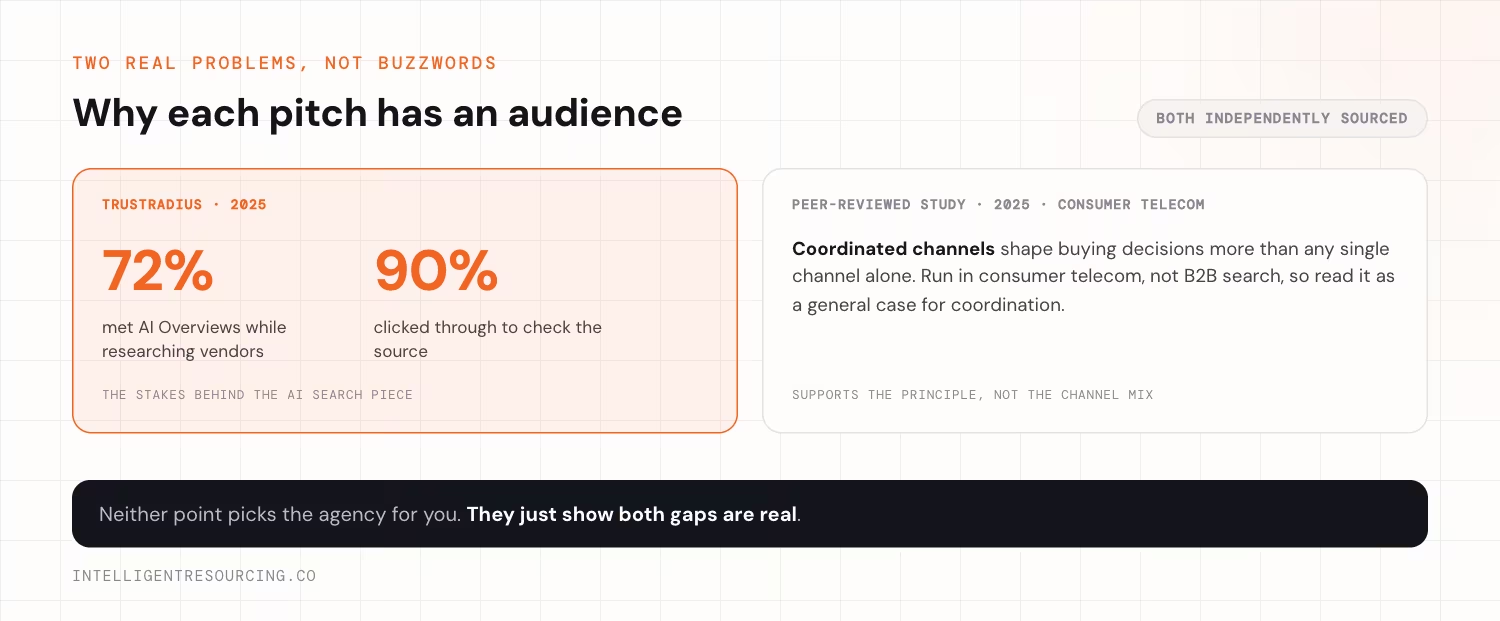
Two things are true at once, and they explain why each agency's pitch has an audience.
- About 72% of B2B buyers have run into AI Overviews while researching vendors, and about 90% of them clicked through to check the source rather than trusting the summary alone (TrustRadius, 2025). That's the real stakes behind the AI search piece both agencies touch.
- The wider principle has academic support, though not from search specifically. A 2025 peer-reviewed study of integrated marketing communications found that coordinated channels shape buying decisions more than any single channel alone. It was run in consumer telecom, not B2B search, so read it as a general case for coordination rather than direct evidence about SEO and paid search.
Neither point tells you which agency to pick. They just show that "channels working together" and "AI search visibility" are both real problems worth solving, not buzzwords invented for this comparison.
Case Study Results, Side by Side
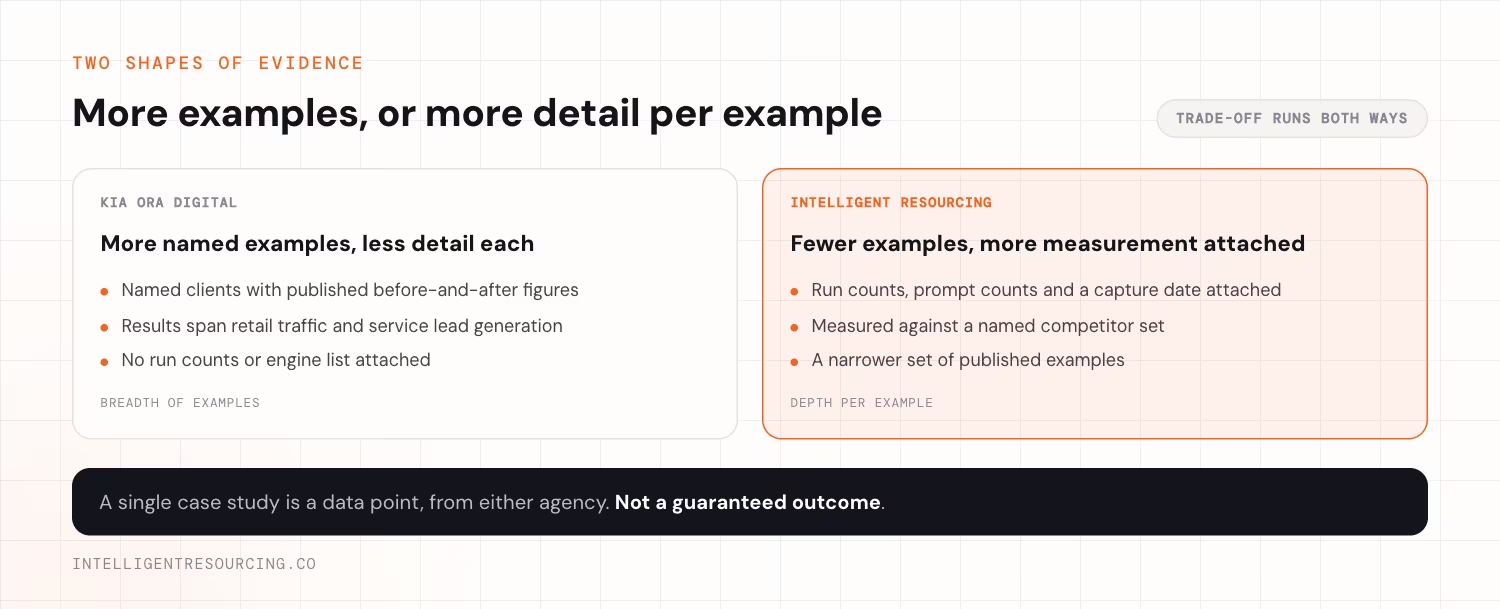
Kia Ora Digital publishes named case studies with real, dated figures rather than vague success claims. That's worth crediting directly, since plenty of agencies skip naming a client at all.
| Client | Result type | Figures |
|---|---|---|
| Bondi Vet | Traffic and revenue | +335% organic traffic, +120% organic revenue |
| Workspace 365 | Lead generation | +71% leads, +66% page-1 keywords |
Each row is a single, named example, not an average across every client. A 335% jump for one business doesn't tell you what any other business will see. That caveat applies to any agency's case studies, not just Kia Ora Digital's, and it's worth applying it here too.
The two results are framed differently on purpose. One is a traffic-and-revenue story, which suits an eCommerce or retail business. The other is a lead-generation story, which suits a business selling a service rather than a product. That range suggests the agency's method isn't built for just one industry, even from a small published sample.
Real industry recognition sits alongside these numbers too. The agency won a 2026 APAC Search Award for Best Use of AI in Search, and won Best Global Start-up Agency at the Global Search Awards in 2024. Two different awards bodies naming the same agency is a stronger signal than one win alone. It rules out the chance that a single judging panel just liked one campaign.
Intelligent Resourcing's Published Results
Intelligent Resourcing publishes its Kynection result in full, with the measurement detail attached rather than a headline number on its own.
| Client | Metric | Result |
|---|---|---|
| Kynection | AI share of voice | 22.88%, first of 40 tracked competitors in its category, about 3.6x the nearest global rival (measured by our own tracker, 26 August 2026, 8,891 runs across 393 prompts) |
| Kynection | Mention rate | Named in 31.6% of tracked AI answers, at an average mention rank of 1.62 |
What sits behind those numbers is measurement most agencies never publish at all: the run count, the prompt count, and the date the figures were captured. That makes the result checkable against a stated method rather than taken on trust.
The trade-off is real on both sides. Kia Ora Digital's named examples come with less measurement detail attached, no run counts or capture date, just a before-and-after number. Intelligent Resourcing's published result carries more of that detail across a narrower set of examples.
What "Blended Search" and "Content Strategy" Actually Integrate
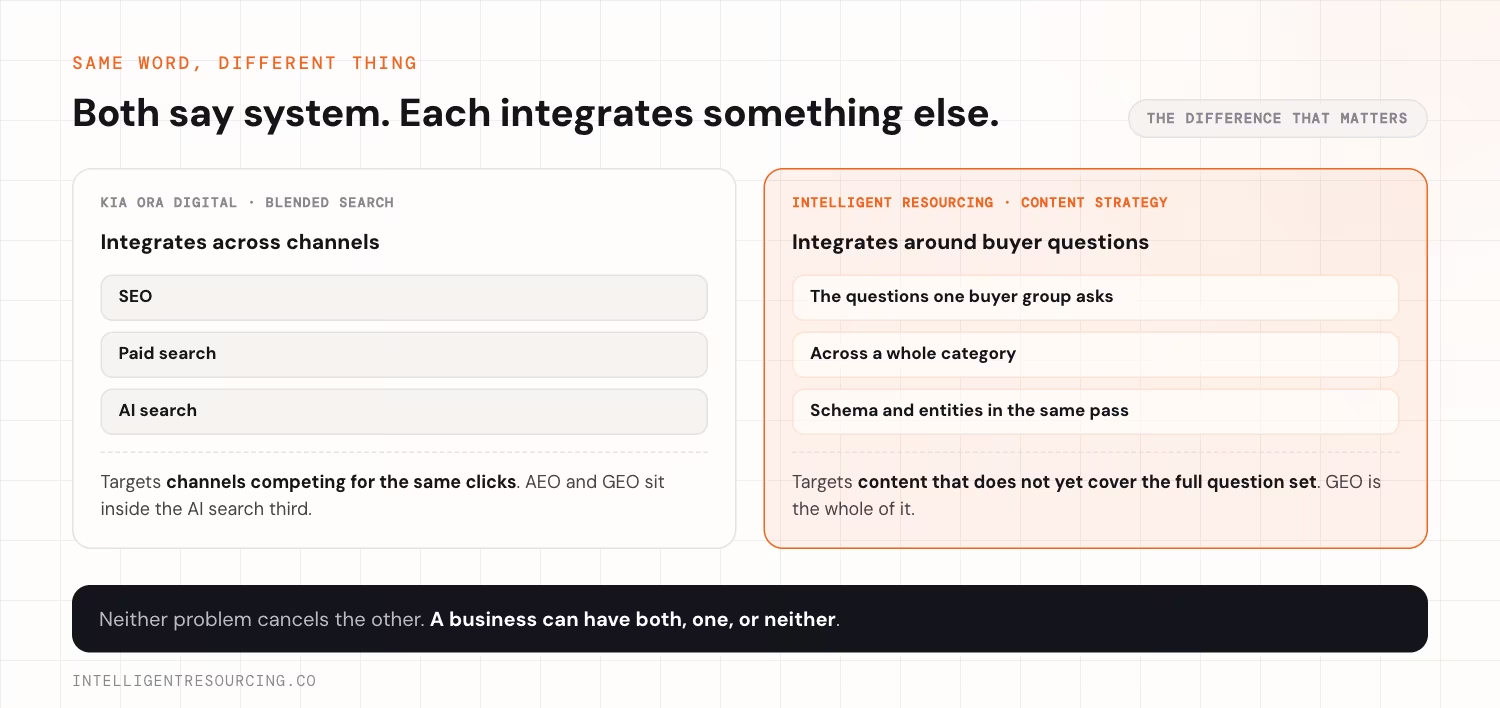
Both agencies use the word "system." What each one actually pulls together is different, and that difference matters more than the shared word.
| What gets integrated | Kia Ora Digital | Intelligent Resourcing |
|---|---|---|
| Main focus | Channels: SEO, paid search, AI search | Buyer questions across a category |
| Problem it targets | Channels competing with each other for the same clicks | Content that doesn't yet cover a buyer's full set of category questions |
| Where GEO/AEO sits | One channel among three, inside "AI search" | The whole of Content Strategy, not a separate channel |
Kia Ora Digital's Blended Search method treats channel overlap as the main problem worth solving. That framing only matters if the overlap it targets is real, not a reason invented to bundle three services together.
It is real. Channel cannibalisation happens when SEO and paid search target the same keywords without any coordination, so a business ends up paying for clicks it might have earned for free. An Ahrefs study of 2.3 million keywords found real overlap between paid and organic listings across many industries. That's a common gap between teams, not a rare edge case.
Intelligent Resourcing isn't solving that problem at all. It assumes the channel question is already sorted, and focuses on something else entirely: whether the content, as one system, covers the full range of questions a specific buyer group actually asks.
Does the AI Search Piece Actually Overlap Between the Two?
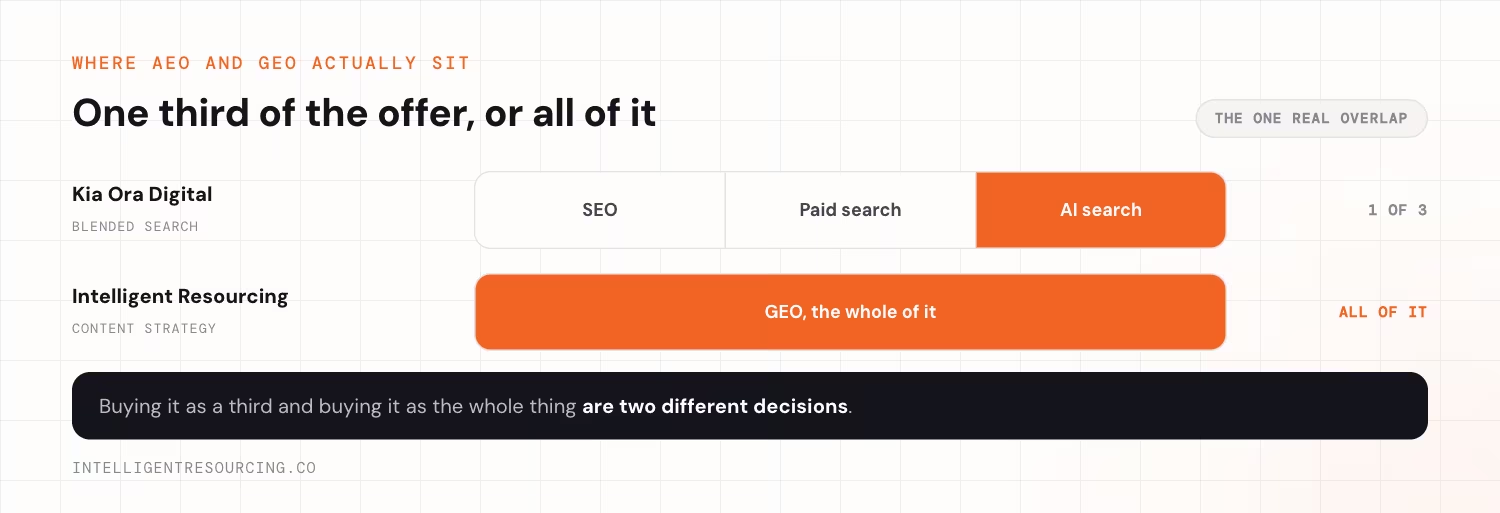
AEO and GEO are the one place these two agencies' work truly overlaps. Kia Ora Digital treats AI search as one channel inside Blended Search, alongside SEO and paid search. Intelligent Resourcing treats GEO as the whole of Content Strategy, not one channel among several.
Google's own guidance on structured content backs the same idea both approaches rely on: content built for machines to read matters, no matter which system or agency builds it. Neither agency invented that idea. What differs is how much of the business each one wraps around it.
For a business whose only real gap is AI search visibility, that's a real choice to make. Buying it as one-third of Blended Search and buying it as the whole of Content Strategy are two different decisions.
They aren't just two vendors saying the same thing in different words. One spreads a team's attention across three channels. The other puts all of it on one.
Pricing and Risk: Forecast vs Published Rate
| Kia Ora Digital | Intelligent Resourcing | |
|---|---|---|
| Contract terms | No lock-in | Six-month minimum on retainers |
| Pre-sale transparency | Free revenue forecast before signing | Published pricing, no forecast tool |
| What you see before paying | An estimate of revenue opportunity | A fixed price: AUD $2,500 + GST for the first Strategic Blueprint, then $3,200 or $3,700 a month depending on scope |
Kia Ora Digital's Revenue Forecast tool shows an estimated revenue opportunity from SEO and AI search before any money changes hands. That's genuinely useful during a sales conversation, not just a gimmick tacked on.
The honest limit runs both ways. A pre-sale forecast is built to win the deal, so treat any number shown before signing as a starting guess worth testing, not a fixed promise. A published, fixed price has the opposite trade-off: no forecast tool to test against, but a six-month minimum on either retainer tier, longer than Kia Ora Digital's no-lock-in stance.
Both approaches beat the more common pattern of hiding pricing and projections until after a contract is signed. Neither one removes the need to check the actual work against your own situation before you commit to either agency.
Running paid and organic search side by side also raises its own timing questions, worth understanding before you commit to either model.
Our how to choose an AEO agency guide covers more questions worth asking either vendor before you sign anything.
Who Fits Which Model?
The four rows below cover the two most common cases, but the real test is simpler than the table makes it look. Ask which specific problem is actually costing you money or visibility right now, not which agency has the better pitch.
| Your situation | Better fit |
|---|---|
| SEO, paid search, and AI search are run by separate teams, actively competing for the same clicks | Kia Ora Digital |
| You want a revenue estimate before any money changes hands | Kia Ora Digital |
| Your content already avoids channel conflict, but still isn't built around your buyers' full set of category questions | Intelligent Resourcing |
| AEO or GEO needs to work across every category your buyers ask about, not just one page | Intelligent Resourcing |
Neither agency is the wrong choice in the abstract. They're built for two different gaps, and the table above only helps once you know which gap is actually yours.
If the difference between AEO, GEO, and adjacent terms is still unclear, our AEO, GEO, and LLMO explained breakdown covers where they overlap and where they don't.
Book a discovery call to see whether channel coordination or buyer-specific content is the actual gap in your search strategy.
Comparisons
Work out whether channel coordination or buyer-specific content is the actual gap in your search strategy. Book a discovery call with Intelligent Resourcing.
FAQs
Are Kia Ora Digital's case study results typical, or exceptional?
They're single, named examples, not an average across every client. Treat any one case study, from any agency, as a data point worth checking, not a guaranteed outcome.
What is Blended Search, and does it actually work?
It's Kia Ora Digital's method for running SEO, paid search, and AI search as one system instead of three separate, competing efforts. The problem it targets, channels working against each other, is real and well documented.
Is Kia Ora Digital's free revenue forecast worth trusting?
It's a genuinely useful starting estimate, built from keyword and ranking data, not an audited guarantee. Treat it as a number worth testing against real results over time.
What's the real difference between Kia Ora Digital and Intelligent Resourcing?
Kia Ora Digital integrates across channels, coordinating SEO, paid search, and AI search under one system. Intelligent Resourcing's Content Strategy service integrates around buyer questions instead, building GEO into content mapped to a specific type of buyer from the start.
Who should choose Intelligent Resourcing over Kia Ora Digital?
A B2B team whose AEO or GEO content needs to work across every category its buyers ask about, where the real problem isn't channel coordination but content still not built as one system around that full question set.
Does Kia Ora Digital offer white-label SEO services?
Yes, according to its own site. That's worth asking about directly if a direct relationship with the team actually doing the work matters to you.