

What Is a Buying Signal for an Accounting Firm?
A buying signal is a public business event showing a company has crossed a threshold that creates work an accountant does. For accounting firms the clearest signals are not search queries or ad clicks. They are government records: company registrations, Australian Business Number (ABN) applications, and compliance dates anyone can look up.
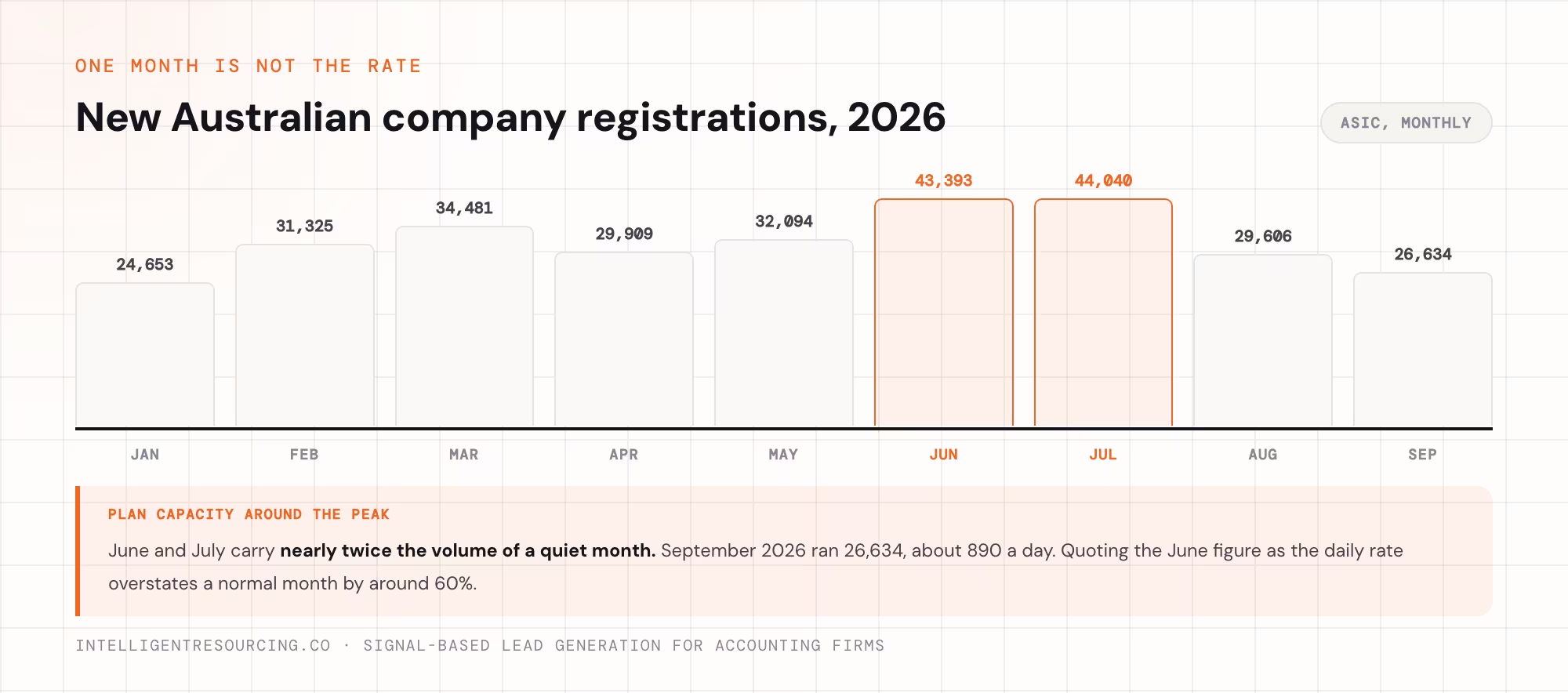
The Australian Securities and Investments Commission (ASIC) publishes new company registrations every month. In September 2026 there were 26,634, about 890 a day.
The monthly figure is not steady. It ran from 24,653 in January 2026 to 43,393 in June and 44,040 in July. The end and start of the financial year carry nearly twice the volume of a quiet month.
A registration says a business now exists. It does not say the owner has chosen an accountant, or that they are looking. Treat it as a reason to check, not as a qualified lead. The same timing logic sits behind signal-based marketing campaigns in other sectors.
Which Signals Show a Business Needs an Accountant?
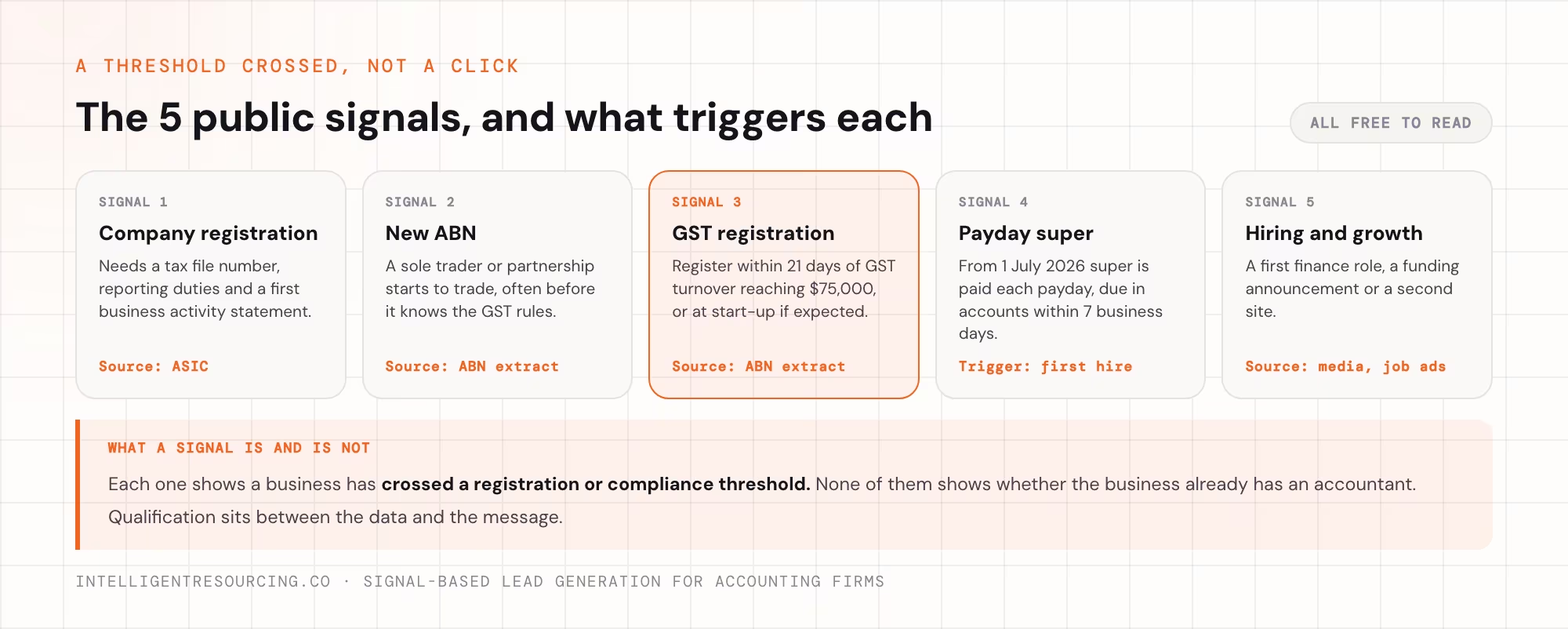
Five public signals cover most of what an accounting firm can see from outside. Each is triggered by a business crossing a registration or compliance threshold, not by intent data or browsing behaviour.
Company registration
A new company needs a tax file number, a way to meet its reporting duties, and a process for its first business activity statement (BAS). Registration is the earliest of the five signals, and the point at which the choice of accountant may not have been made yet.
ABN registration
A new ABN shows a sole trader or partnership starting to trade. Many do not know they will need to register for goods and services tax (GST) or lodge a BAS until turnover approaches the threshold.
GST registration
The Australian Taxation Office (ATO) requires a business to register for GST within 21 days of its GST turnover reaching $75,000. The rule also applies at start-up, if the owner expects to reach that figure in the first year. GST turnover is total income, not profit. It is measured over the current month plus the previous 11, or the current month plus the next 11.
Payday super
From 1 July 2026 employers pay the super guarantee for each payday rather than quarterly. Contributions are due in employees' super accounts within 7 business days after payday, unless longer applies, such as for new employees. A business about to hire its first employee walks into this rule.
Hiring and growth
A first job posting for a finance or admin role, a funding announcement or a second site each suggests a business has outgrown its current arrangements. These come from media and job boards rather than a register, so they need a different check.
Where Does This Data Actually Live?
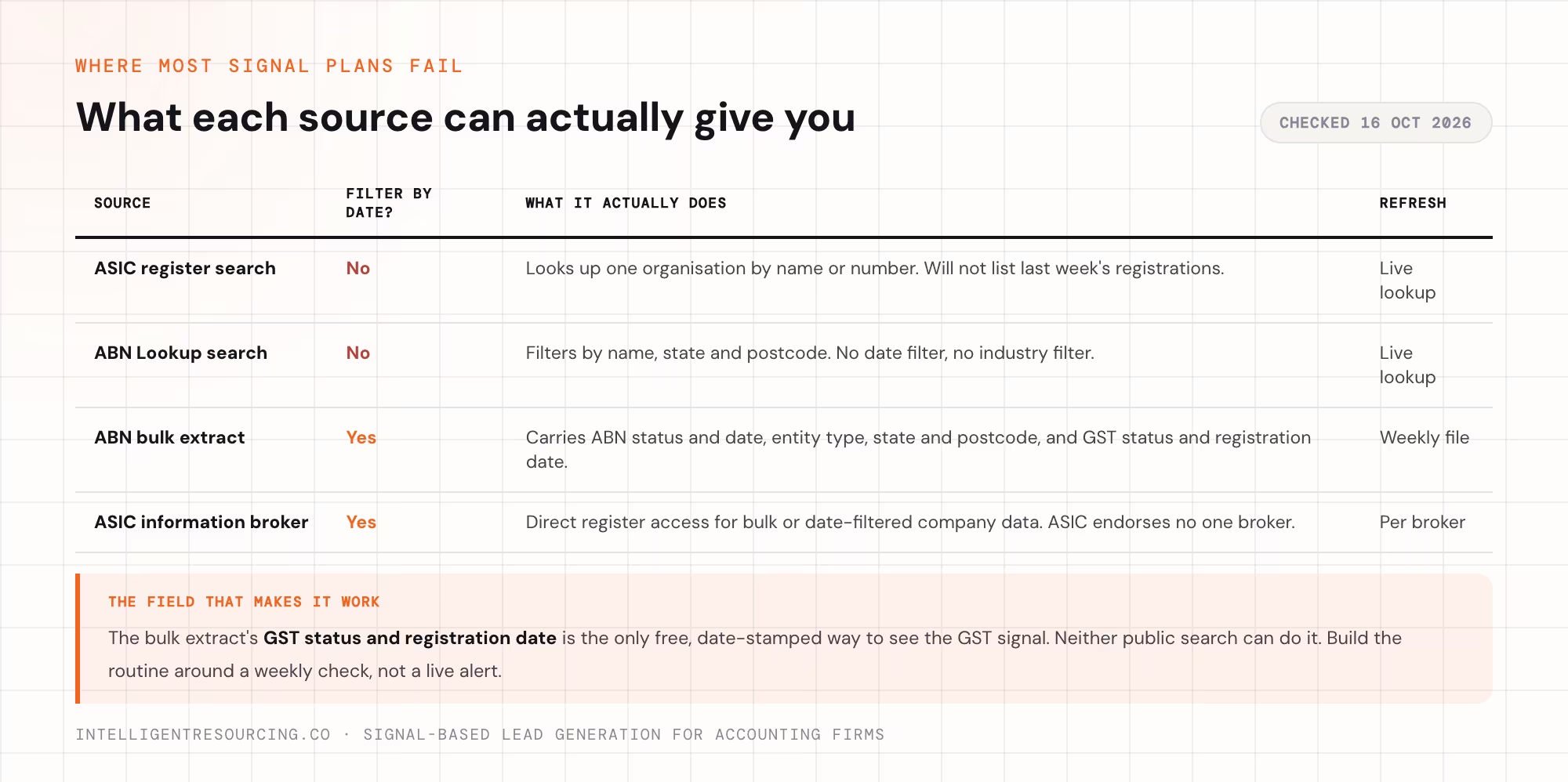
This is where most signal plans fail, because the free search tools do not do what people expect. Neither public search filters by registration date.
What the free searches miss
The ASIC register search looks up an organisation by name or number. It will not return a list of companies registered last week. ABN Lookup's advanced search filters by name, state and postcode, plus charity and deductible gift recipient status. It has no date filter and no industry filter.
Where the dates are
Two routes give the dates:
- The ABN bulk extract. It is published weekly as a file anyone can download. It carries ABN status and date, entity type, legal and business names, and the state and postcode of the main site. It also carries GST status and registration date, which is what makes the GST signal workable at all.
- ASIC information brokers. ASIC lists approved brokers with direct register access. That is the route for bulk or date-filtered company data. ASIC does not endorse any one broker.
Neither source is live. The ABN extract is weekly and the ASIC statistics are monthly, so build the routine around a weekly check rather than a real-time alert.
Intelligent Resourcing runs this as a managed service for firms that would rather not do the data work. It pairs register data with signal monitoring of media and job ads.
What Should the First Message Say?
A first message works when it carries one specific fact about the business and one question tied to a need that fact creates. The fact shows the work was done. The question invites a reply without asking for a meeting the owner is not ready to take.
Timing changes the angle. These windows are a working rule for pacing outreach, not a measured finding:
| Window | Signal type | Message angle |
|---|---|---|
| 0 to 30 days | Company registration, new ABN | The business is still setting up. Ask one question about how they plan to handle reporting. |
| 31 to 90 days | GST threshold reached, payday super trigger | The business has hit a compliance point. Say what that usually means at their stage, then ask one question. |
| Over 90 days | Signal has gone stale | Archive it, or wait for a fresh trigger. |
Before any of this goes out, check the rules. The Australian Communications and Media Authority (ACMA) says a sender must first have consent. The message must also carry the sender's contact details and a way to say stop.
Consent can be express. It can also be inferred from an existing relationship, which ACMA calls less common and less reliable. The timing model behind the approach is covered in our signal-based lead generation guide.
How Long Does a Weekly Routine Take?
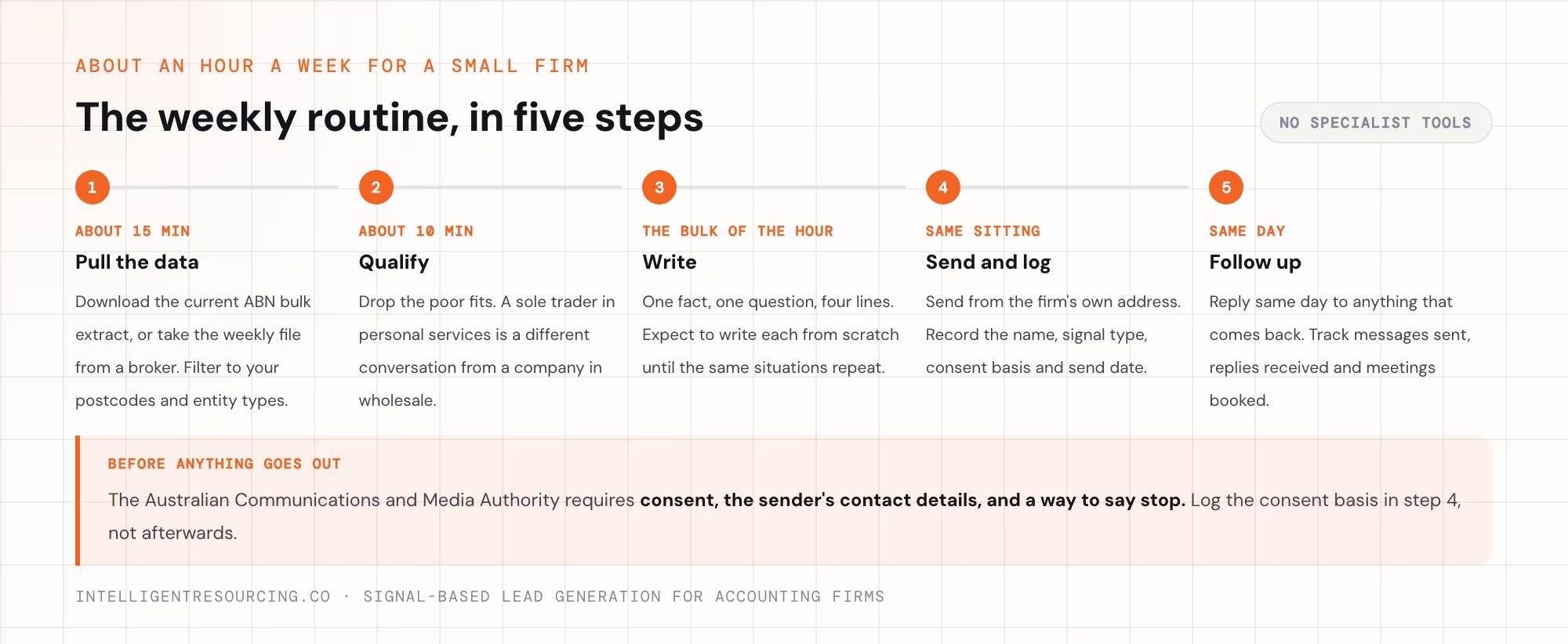
Budget about an hour a week for a small firm, and three to four hours for a firm covering several sectors or sending more messages. The routine has five steps and needs no specialist tools.
- Pull the data. Download the current ABN bulk extract, or take the weekly file from a broker. Filter to the postcodes and entity types the firm serves. About 15 minutes once the filter is saved.
- Qualify. Not every new registration is worth contacting. A sole trader in personal services is a different conversation from a company in manufacturing or wholesale. Spend 10 minutes dropping poor fits.
- Write. One fact, one question, four lines. Expect to write each from scratch at first, and to build a small set of patterns as the same situations repeat.
- Send and log. Send from the firm's own address, not a bulk tool. Record the name, the signal type, the consent basis and the send date.
- Follow up. Reply the same day to anything that comes back. Track three numbers a month: messages sent, replies received, meetings booked.
As volume grows, the data pull and the logging are the parts worth automating first. Our guide to building a signal-led prospecting system covers that build.
When Does This Not Work?
Signal-based outreach is a poor fit for three situations.
Big audit tenders
A business with 50 or more staff changing audit firm will not reply to a message triggered by a register entry. That work runs on introductions, sector standing and a long relationship. Signal outreach finds a business at a moment. A deal that size needs far longer.
A service nobody knows about
If the firm sells something most businesses do not know exists, a triggered message arrives before the owner knows they have a problem. Build awareness through content or referrals first, then add signal outreach.
Pipeline needed inside 90 days
This channel takes months to mature while the routine settles and the messages improve. A firm that needs revenue this quarter should push referrals or a paid channel instead, and treat signal outreach as the thing that pays off later.
Lead Generation
To see what a weekly signal routine would look like for your firm's postcodes and service lines, book a GTM strategy session with Intelligent Resourcing.
FAQs
What is signal-based lead generation for accounting firms?
It means contacting a business because a public event happened. That might be a company registration, a new ABN or a GST registration. The trigger is what makes the timing useful, not a purchased list.
How much does it cost to run?
The ABN bulk extract is a free download and the ATO guidance is free to read. Date-filtered ASIC company data is bought from an information broker, so that is the main cost. An email account and a spreadsheet cover the rest.
Can a sole trader accountant use this approach?
Yes. One person with an hour a week can filter the ABN extract to a few postcodes, write three to five messages and send them from a normal email account. The routine is built to start at that scale.
What if the business already has an accountant?
Most will, or will soon. That is why qualification sits between the data pull and the message, and why a signal older than 90 days is worth archiving rather than chasing.
Is this the same as buying a lead list?
No. A purchased list is a static file with no event attached. This approach uses current public data to find businesses at the point a specific need is created, and the sender still needs a lawful basis to make contact.