

What Should a SaaS Company Expect From an Answer Engine Optimisation (AEO) Agency?
A software-as-a-service (SaaS) company should expect an AEO agency to find the questions buyers ask. It should measure how the brand shows up in artificial intelligence (AI) answers now. It should then say how its work will change that.
Reports should keep three things apart: brand mentions, source citations and sales results. Google rankings still matter. They do not show whether AI answers name you.
A useful first report covers three things:
- Which buyer questions name your brand today.
- Which sources AI engines cite instead of you.
- Which of your pages should change first.
Category data shows why one prompt is not enough. Semrush worked with Kevin Indig of Growth Memo to track 1,094 United States categories. It found that 15.2% had a clear owner.
To count as one, a brand had to show up in at least four of five related prompts. It also had to lead the next brand by 5 points. Another 31.2% had a rising leader, and the rest, 53.7%, had no steady leader at all.
The study covered ChatGPT in one market, so it does not prove the same pattern in Australia. It does show why a SaaS company should track groups of related buyer questions, not a single prompt.
How This Shortlist Was Built
We reviewed each agency's public pages on 1 October 2026 and rechecked prices and case studies on 9 October 2026. Each agency had to meet three tests:
- It sells AEO or generative engine optimisation (GEO). The agency describes AI-search work on its own site.
- It has SaaS experience or a clear method. It shows software clients, sells a service for software companies, or publishes an AEO method a buyer can judge.
- Its claims can be checked. It publishes client results, a written process, prices or other detail a buyer can test.
The five agencies do not have equal SaaS experience or equal AI-search proof. Each profile says what kind of proof it has.
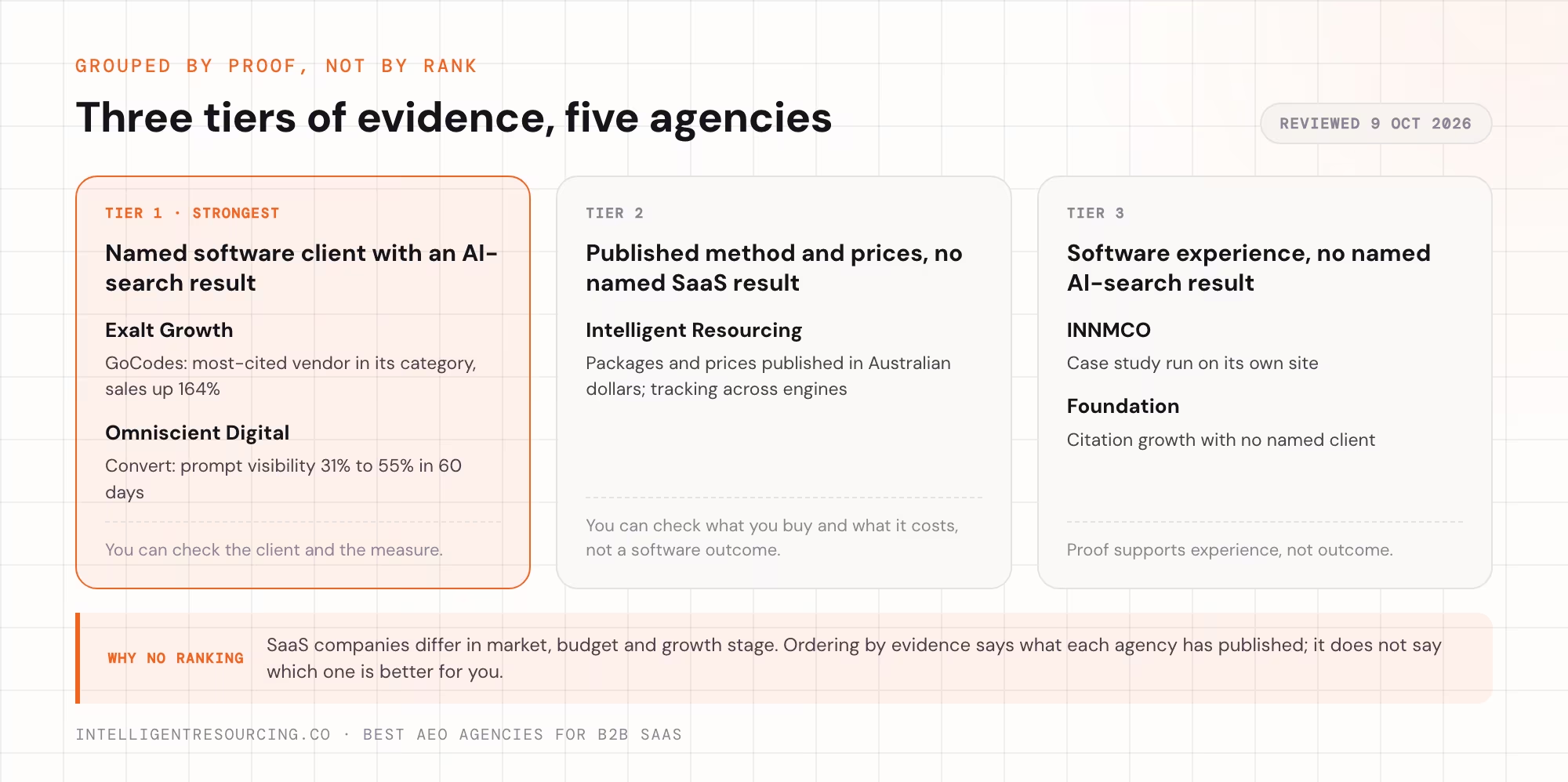
Why is there no single ranking? SaaS companies differ in market, budget and growth stage. So this article groups agencies by the kind of proof they publish, from a named SaaS result down to software experience without one.
That ordering is about evidence, not quality. It is why Intelligent Resourcing sits in the middle group rather than at the top. For the wider market, see our guide to Australian GEO and AEO agencies.
Why Is Monthly Article Volume the Wrong Thing to Buy?
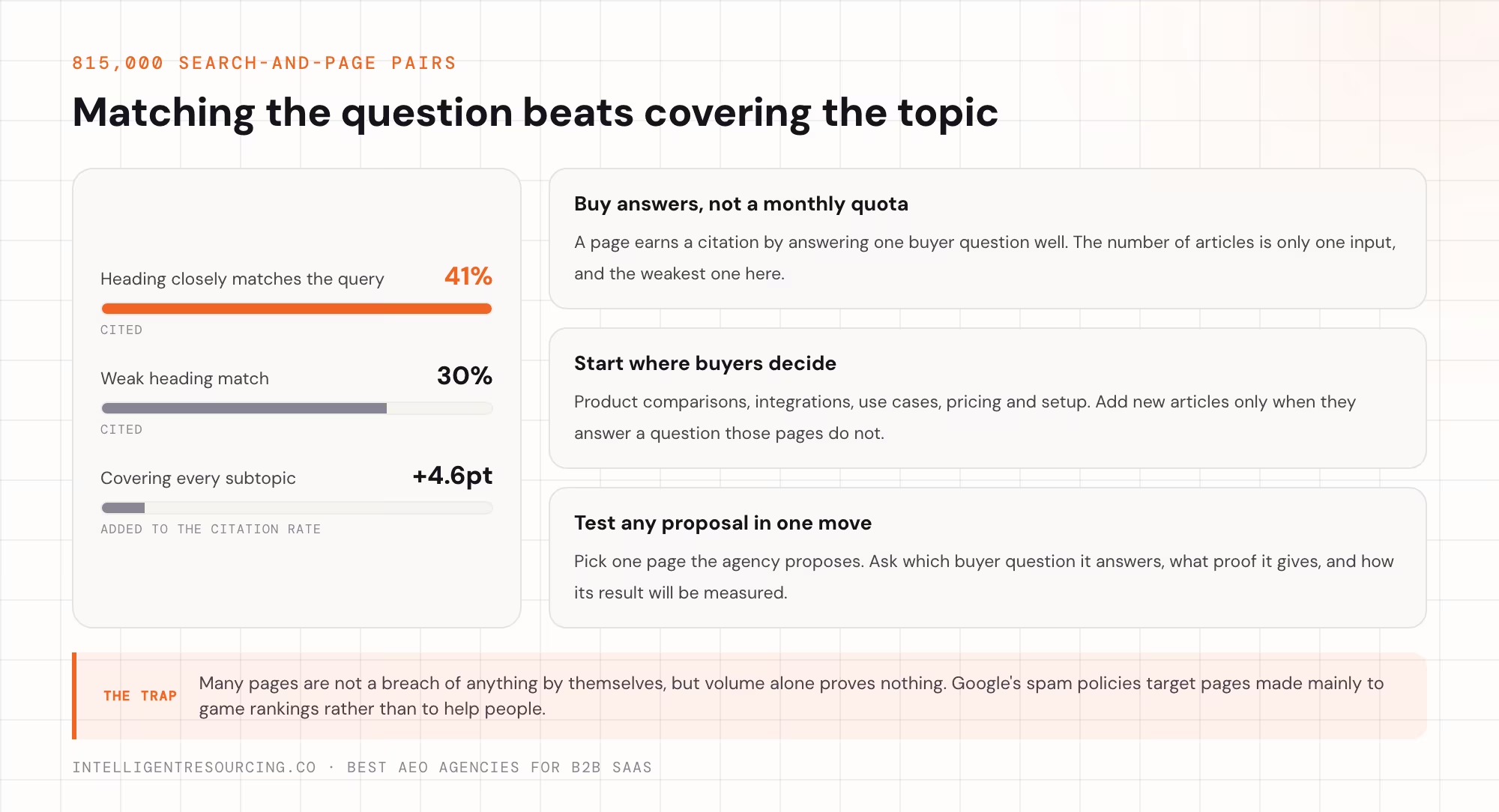
More articles do not mean more AI citations. A SaaS company needs pages that answer real business-to-business (B2B) buyer questions. Those pages must be readable by AI engines, and they must carry proof. The number of articles is only one input.
Kevin Indig's analysis of ChatGPT citations used AirOps data covering 815,000 search-and-page pairs. It is a search engine optimisation (SEO) dataset, not an AI-only one. Covering every subtopic added only 4.6 percentage points to citation rates. Pages whose headings closely matched the question were cited 41% of the time, against 30% for weak matches.
Search rank mattered even more. So focus and fit beat volume. That does not mean every short page wins, or that new pages are never needed.
For SaaS, start with the pages buyers use to decide: product comparisons, integrations, use cases, pricing and setup. Our checklist for SaaS comparison pages covers what those pages need. Add new articles only when they answer a question those pages do not.
Try this in every pitch. Pick one page the agency proposes. Ask three things: which buyer question it answers, what proof it gives, and how its results will be measured. A good agency can explain each page without pointing to a monthly quota.
Which Agencies Publish a Named SaaS Result?
Exalt Growth and Omniscient Digital both publish case studies that name a software client and report an AI-search result. Exalt's GoCodes case study pairs AI citations with sales growth. Omniscient's Convert case study reports how often AI answers showed and cited the brand.
Exalt Growth
An agency that works only with B2B SaaS companies, with a published GEO method and named software case studies.
Its site says, "We work exclusively with B2B SaaS companies from Seed through Series C." Its footer lists two offices: Sydney and San Francisco. Its about page names founder Jack Boutchard as the former SEO Lead at Cascade and Dovetail. It calls both Sydney SaaS companies, and says he built SEO engines there that grew organic traffic 10 times over.
Its GEO services page describes a baseline of 100 to 250 test prompts. Those run across ChatGPT, Perplexity, Google AI Overviews and Claude. The method then maps the product as a clear entity, structures content, adds proof and keeps tracking.
Best for: Seed to Series C SaaS companies that want an agency built only around software.
Watch for: No GEO price was published on the service page we reviewed on 9 October 2026. Ask for a written scope that covers what is delivered, how often you get reports and what it costs.
Published evidence: GoCodes is an asset-tracking software company in Minnesota. Exalt's GoCodes case study says the work began in September 2025. At the start, only 9 of 50 buyer questions produced an answer naming GoCodes.
Exalt reports that GoCodes became the most-cited asset-tracking vendor in AI answers within six months. It reports new customer sales up 164% in the first half of 2026, against the same period in 2025. The listed services also included technical SEO, transactional SEO, content and off-site work, so the sales growth is not from GEO alone.
Omniscient Digital
An organic growth agency for B2B software companies. It lists offices across the United States, and names AI-search results by client.
Omniscient Digital works with software companies on SEO, GEO and content. Its approach combines search basics, mapping buyer questions, building third-party mentions and tracking AI answers.
Convert is an A/B testing platform. In its Convert case study, Omniscient reports that prompt visibility rose from 31% to 55% of tracked queries in 60 days. Citation share rose from 15% to 35%. The work covered prompt tracking, a brand-mention outreach list and owned content on three topics.
Best for: B2B software companies that want named SaaS GEO results and a mix of content and outside mentions.
Watch for: Its offices are listed in the United States, so Australian clients should confirm meeting times and local-market research. Its site lists a $10,000 monthly starting price for full-service work; confirm the currency and what that price includes.
Published evidence: The case study names the client, describes the method and reports changes across the tracked prompts. These are one client's results, reported by the agency, not a promise for your company.
Which Agencies Publish Their Method and Prices but No Named SaaS Result?
Intelligent Resourcing publishes its method, what it delivers, and its prices in Australian dollars. It does not yet publish a named SaaS AI-search result. A buyer can check what it will do and what it costs. They cannot yet check a software outcome.
Intelligent Resourcing
A Melbourne AEO and GEO practice with published prices and tracking across AI engines.
Intelligent Resourcing works with B2B organisations in Australia. Its generative engine optimisation service works on a firm's existing site. That means how content is written, marked up and shown to AI crawlers.
It finds the questions where rivals get cited instead. It then rebuilds pages to answer them and tracks results in ChatGPT, Gemini and Google's AI Overviews.
Its published prices give a clear starting point:
- Strategic Blueprint: $2,500 one-off, in Australian dollars plus GST.
- Cited-Core: From $3,200 per month, covering citation-ready assets and ongoing tracking.
- Cited-Scale: From $3,700 per month, with more assets each month.
The Strategic Blueprint is the first diagnostic step before ongoing work.
Best for: Australian B2B SaaS teams that want a set AEO programme. It comes with published prices, a defined first step and tracking across engines.
Watch for: Intelligent Resourcing is not a SaaS-only agency. It works across several B2B sectors, and we found no named SaaS AEO result in the evidence we reviewed.
Published evidence: Its service and pricing pages set out the method, deliverables and reporting. These show what you buy and what it costs, not proven SaaS results.
Which Agencies Show Software Experience Without a Named AI-Search Result?
INNMCO and Foundation both show work with software companies. Neither ties a measured AI-search result to a named outside client in the material we reviewed. Their proof supports experience, not outcome.
INNMCO
A Sydney digital marketing agency focused on SaaS companies, with SEO, AEO and GEO in its service list.
INNMCO says it helps SaaS companies win trials and qualified pipeline. Its services cover SEO, paid search, content and SaaS demand generation, with AI-search work folded into its search programme.
Its AEO and GEO case study describes a six-month programme of SEO, AI-search work, landing pages and blogs. It aimed at Google AI Overviews, Google AI Mode, ChatGPT and Microsoft Copilot.
Best for: Australian SaaS companies that want AI-search work inside a wider demand programme, tied to demos, trials and pipeline targets.
Watch for: The case study lists INNMCO itself as the client. So it shows the agency's method used on its own marketing, not a software client's result. We found no fixed price on the pages we reviewed. Ask for a named SaaS reference and a written scope.
Published evidence: The case study reports 85% more impressions and 50% more website clicks. Qualified lead growth appears twice on the same page: 198% in the summary figures and 200% in the written results. Nothing published reconciles the two. These are search and lead results, not AI citation results.
Foundation
An AI visibility agency for B2B technology and SaaS firms that works on both the site and outside sources.
Foundation describes its AI visibility service as technical fixes, content and wider distribution. It also works on Reddit, YouTube, earned media and other outside sources that shape how software brands are found.
Foundation names Paychex, Bitly and Buildxact among brands it has supported. That list does not show that each brand got the same GEO result.
Best for: B2B software teams that want an international agency. It works on communities, outside sites and citations, not just the website.
Watch for: On the page we reviewed on 9 October 2026, we found no fixed price and no Australian delivery details. No named client sits behind the headline citation figure. Ask for all three.
Published evidence: Foundation reports a rise of more than 200% in client citations. That covers Perplexity, Claude, Gemini and ChatGPT. The agency reports the figure itself. On that page it is not tied to a named client or a stated method.
How Do the Five Agencies Compare on SaaS Evidence?
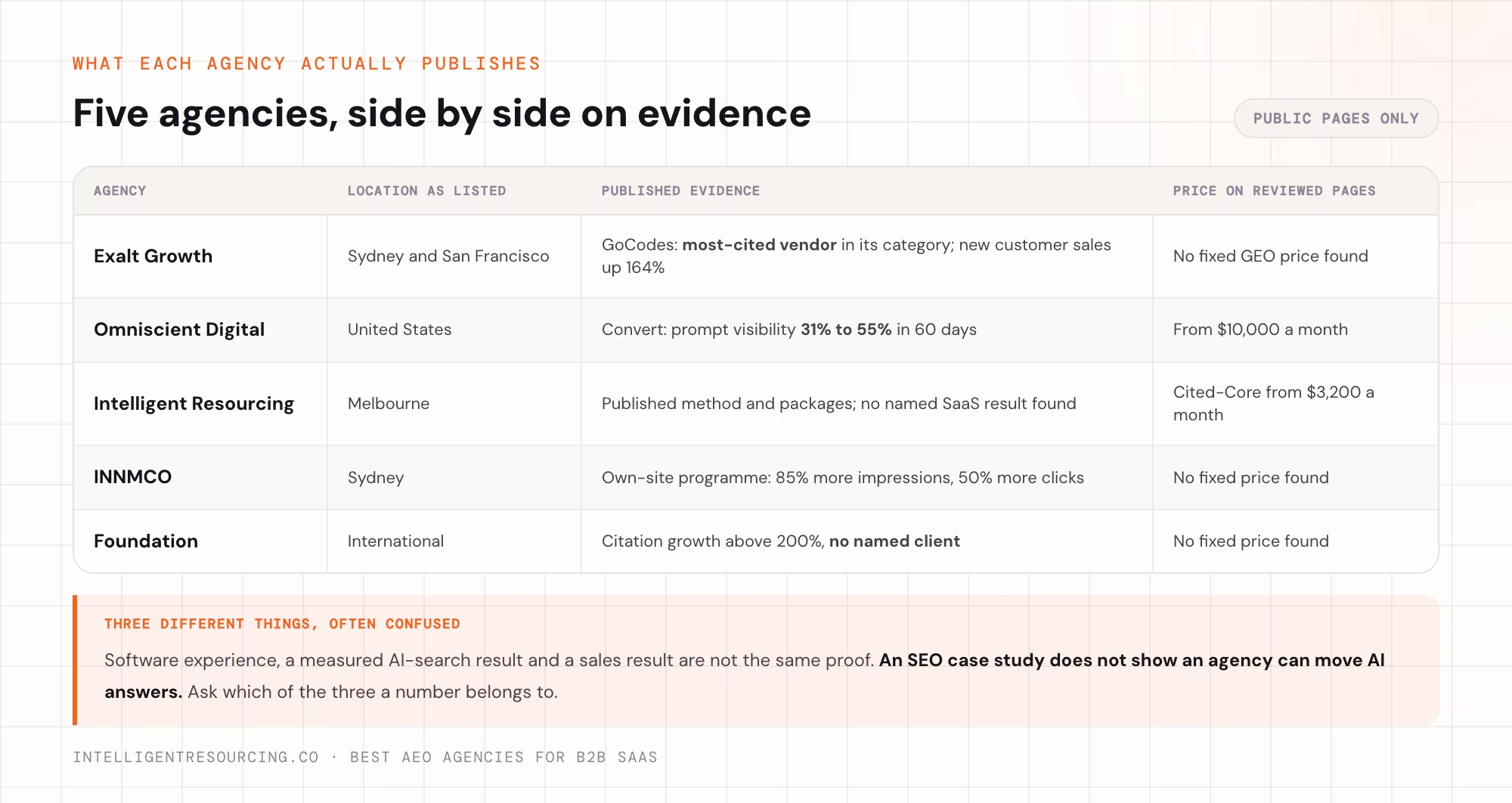
The five agencies publish different kinds of proof. Exalt Growth and Omniscient Digital name software clients with AI-search results. Intelligent Resourcing publishes its method and prices.
INNMCO reports search and lead growth for work on its own site. Foundation reports citation growth without naming the client.
| Agency | Location as listed | SaaS focus | Published evidence | Price on reviewed pages |
|---|---|---|---|---|
| Exalt Growth | Sydney and San Francisco | B2B SaaS only, Seed to Series C | GoCodes: most-cited vendor in its category in AI answers; new customer sales up 164% | No fixed GEO price found |
| Omniscient Digital | United States | B2B software | Convert: tracked prompt visibility 31% to 55% in 60 days | From $10,000 a month, full-service |
| Intelligent Resourcing | Melbourne | Multi-industry B2B | Published AEO method and packages; no named SaaS AEO result found | Cited-Core from $3,200 per month |
| INNMCO | Sydney | SaaS-focused | Own-site programme: 85% more impressions, 50% more clicks; no AI-citation measure | No fixed price found |
| Foundation | International; confirm Australian coverage | B2B technology and SaaS | Citation growth above 200%, no named client tied to it | No fixed price found |
Search results and AI-search results are not the same thing. Take Exalt's Dovetail case study. It reports an 878% rise in monthly organic traffic and a threefold rise in monthly recurring revenue.
Those are strong results. They do not measure AI citations.
So compare proof in three groups: software experience, measured AI-search results and sales results. Do not let one stand in for another.
How to use the table:
- You need proof that an agency has moved AI answers for software. Start with the first two rows.
- You need a set budget before the first call. Start with the two agencies that publish prices.
- You want AI search inside a wider demand plan. Look at the agencies that tie their work to leads and pipeline.
Then put the questions in the next section to each one.
Which SaaS-Specific Questions Belong in the First Meeting?
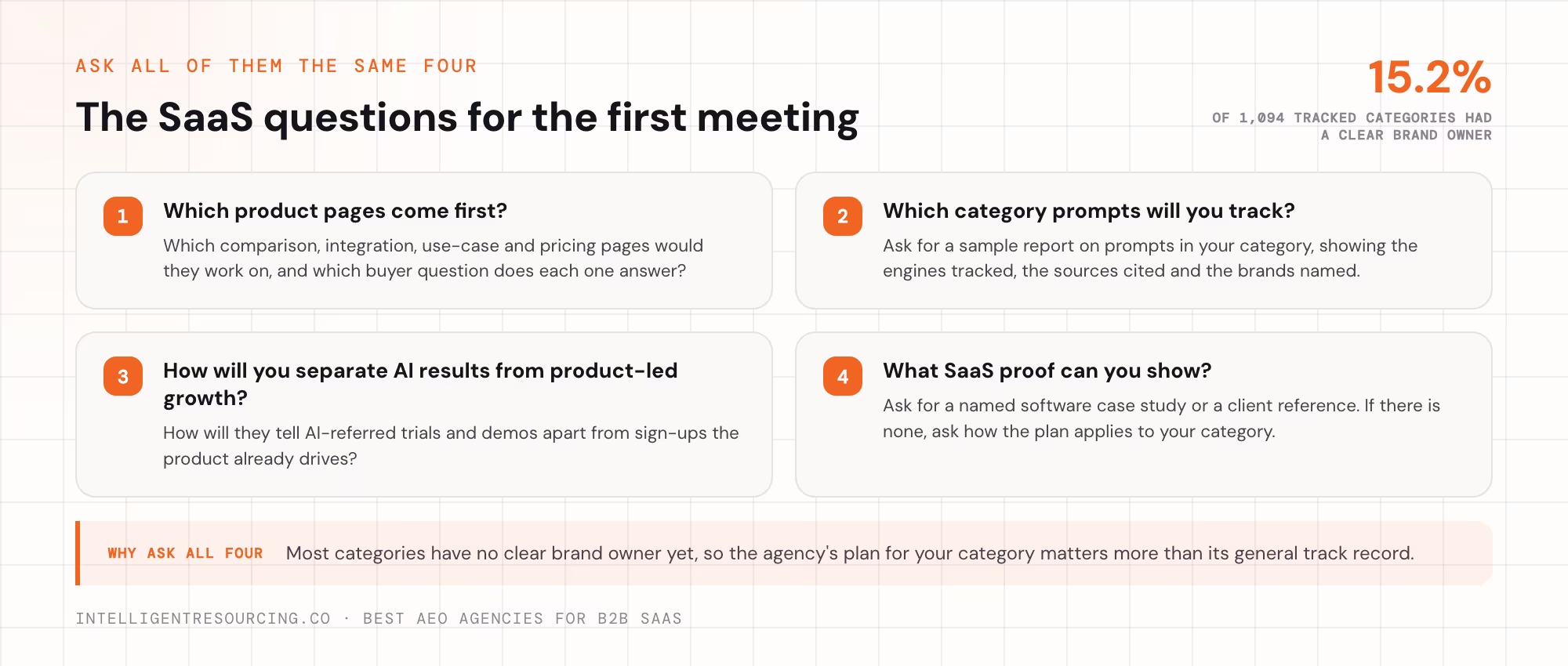
Ask every shortlisted agency the same SaaS questions. Then you can compare the answers side by side. General questions, such as contract terms and warning signs, sit in our guide on how to choose an AEO agency.
Volume needs context too. Google's spam policies describe scaled content abuse as producing many pages mainly to game rankings rather than to help people. Many pages are not a breach in themselves, but volume alone proves nothing.
Ask these four questions in the first meeting:
- Which product pages come first? Ask which comparison, integration, use-case and pricing pages the agency would work on, and which buyer question each one answers.
- Which category prompts will you track? Ask for a sample report on prompts in your software category. It should show the AI engines tracked, the sources cited and the brands named.
- How will you separate AI-search results from product-led growth? Ask how the agency will tell AI-referred trials and demos apart from sign-ups your product already drives.
- What SaaS proof can you show? Ask for a named software case study or client reference. If there is none, ask how the plan applies to your product and category.
These questions will not guarantee a good result. They do give you a fair way to compare agencies before you sign.
Content Creation
Find out where your SaaS product appears in AI answers, which buyer questions bring up rivals instead, and what your site needs to change.
FAQs
Which AEO agencies for SaaS publish their prices?
Two of the five agencies here publish starting prices. Intelligent Resourcing lists a Strategic Blueprint at $2,500 one-off, and Cited-Core retainers from $3,200 per month. Both are in Australian dollars plus GST.
Omniscient Digital lists a $10,000 monthly starting price for full-service work. The others quote after an enquiry, so ask for a written scope.
Is a SaaS-only agency like Exalt Growth better than a multi-industry one?
It depends on what your brief needs. Exalt Growth works only with B2B SaaS companies and publishes named SaaS results. Intelligent Resourcing and INNMCO work more broadly but publish prices or demand results. Compare them on proof, method, scope and price, not on the SaaS label alone.
Which SaaS pages should an AEO agency work on first?
Start with the pages buyers use to decide: product comparisons, integrations, use cases, pricing and setup. These answer the specific questions people ask AI engines while choosing software. Add new articles when they answer a buyer question none of those pages covers.
Is an SEO case study proof that an agency can do AEO?
No. An SEO case study shows organic traffic or revenue growth, not whether AI engines name or cite the client. Exalt Growth's Dovetail case study, for example, reports strong organic and revenue growth but no AI citation measure. Ask for proof that reports AI-search results directly.
Which agencies on this list measure AI answers directly?
Exalt Growth and Omniscient Digital publish AI-answer measures for named clients. Exalt ran prompt tests for GoCodes. Omniscient tracked visibility and citation share for Convert.
Intelligent Resourcing describes tracking in ChatGPT, Gemini and Google's AI Overviews. INNMCO's case study reports clicks and leads, and Foundation's citation figure has no named client.