

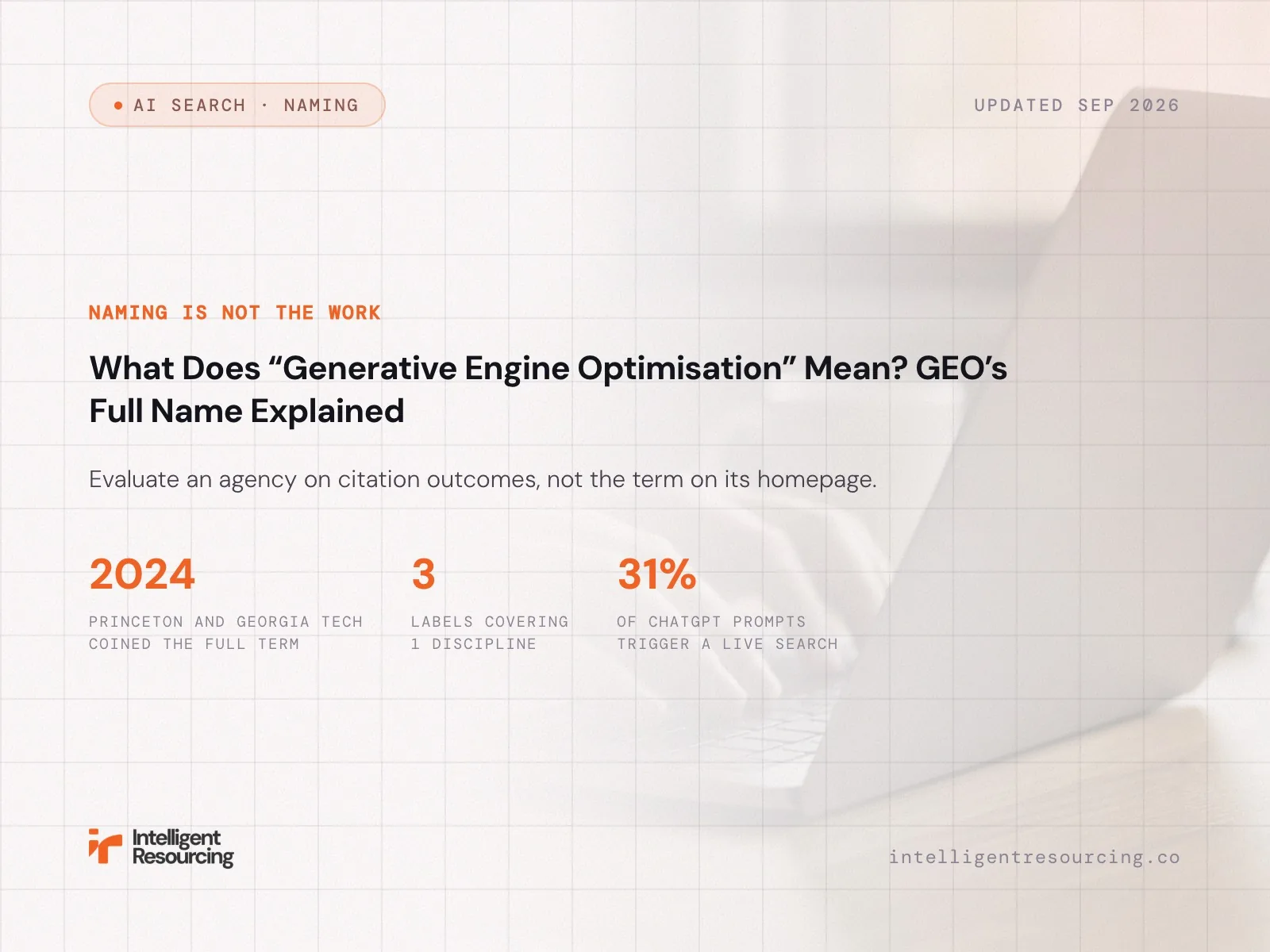
Where Did the Term "Generative Engine Optimisation" Come From?
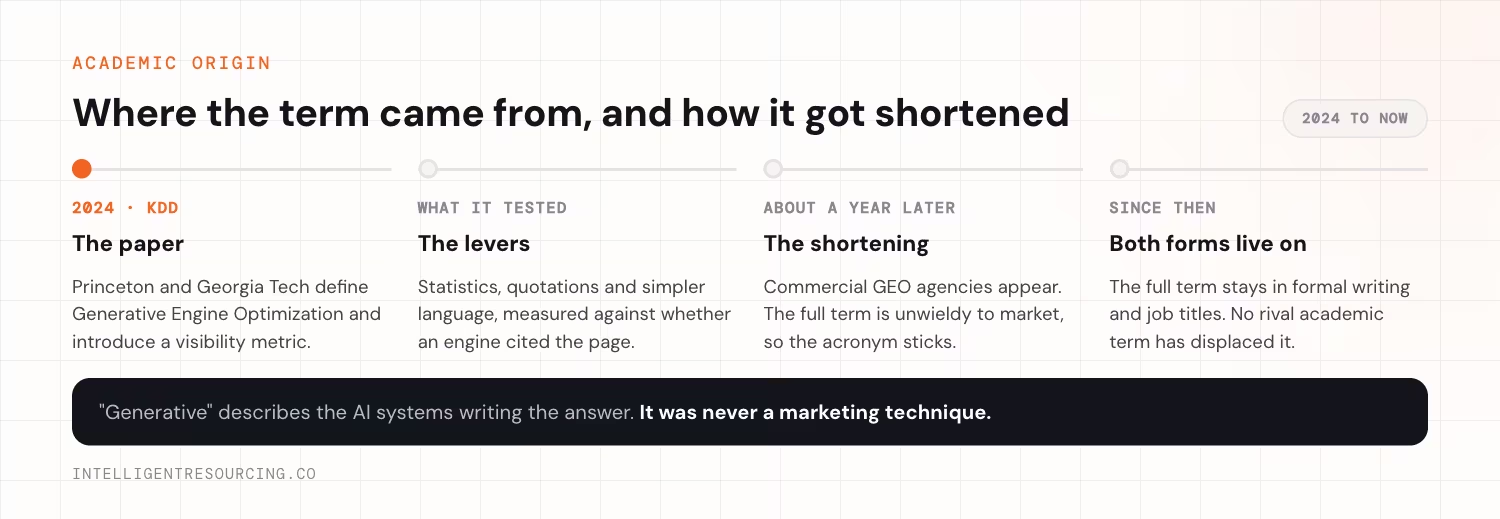
Researchers at Princeton and Georgia Tech introduced the term Generative Engine Optimization. They published it in a 2024 paper at KDD, a major computer science and data-mining conference. The paper defined GEO as adjusting content to increase visibility in AI-generated responses. Marketing agencies adopted the term afterwards. The word "generative" refers to the AI systems generating the answer, not to a marketing technique.
- 2024, KDD conference: Princeton and Georgia Tech publish the original paper. It defines GEO and introduces a scoring metric called visibility: the share of a generated answer's words that come from a given source.
- What the paper tested: specific elements, statistics, quotations, simpler language, and whether each one changed if a generative engine cited a page.
- Roughly a year later: commercial GEO agencies start appearing. Agencies shorten the full term to the acronym because "generative engine optimisation" is unwieldy to say and market at length.
- Since then: the full term still appears in formal writing, job titles and some vendor names. That's why a reader can encounter both forms describing identical work. No competing academic term has displaced it.
This article covers naming, not mechanics. For the mechanics, see how a live AI search works.
Buyer confusion comes from marketing usage, not research. Vendors coined adjacent labels, such as "AI SEO" and "answer engine optimisation," for overlapping or identical services. The dispute sits in branding, not in what the original research term means.
Why Does This Naming Confusion Keep Happening?
No governing body has standardised AI-search terminology. Google's own documentation names both "AEO" and "GEO" without endorsing either. It states that optimising for generative AI search is simply optimising for the search experience, still SEO. That is the same conclusion behind Intelligent Resourcing's own generative engine optimisation work: build for the discipline, not the label.
- No official body governs it. SEO had 3 decades to consolidate around shared terminology. The AI-citation space is roughly 2 years old and has no equivalent standards group.
- Google itself won't pick a side. Google's Search Central guidance names both AEO and GEO. It treats optimising for either as ordinary SEO, and doesn't endorse 1 label over the other.
- A new label doubles as a differentiator. Coining or preferring a specific term lets an agency sound distinct from competitors selling the identical service.
Buyers should expect the vocabulary to keep shifting for as long as the underlying technology does. Evaluate a vendor on outcomes, not on the term in its pitch deck.
Is "Generative Engine Optimisation" the Same as GEO, AEO, or AI SEO?
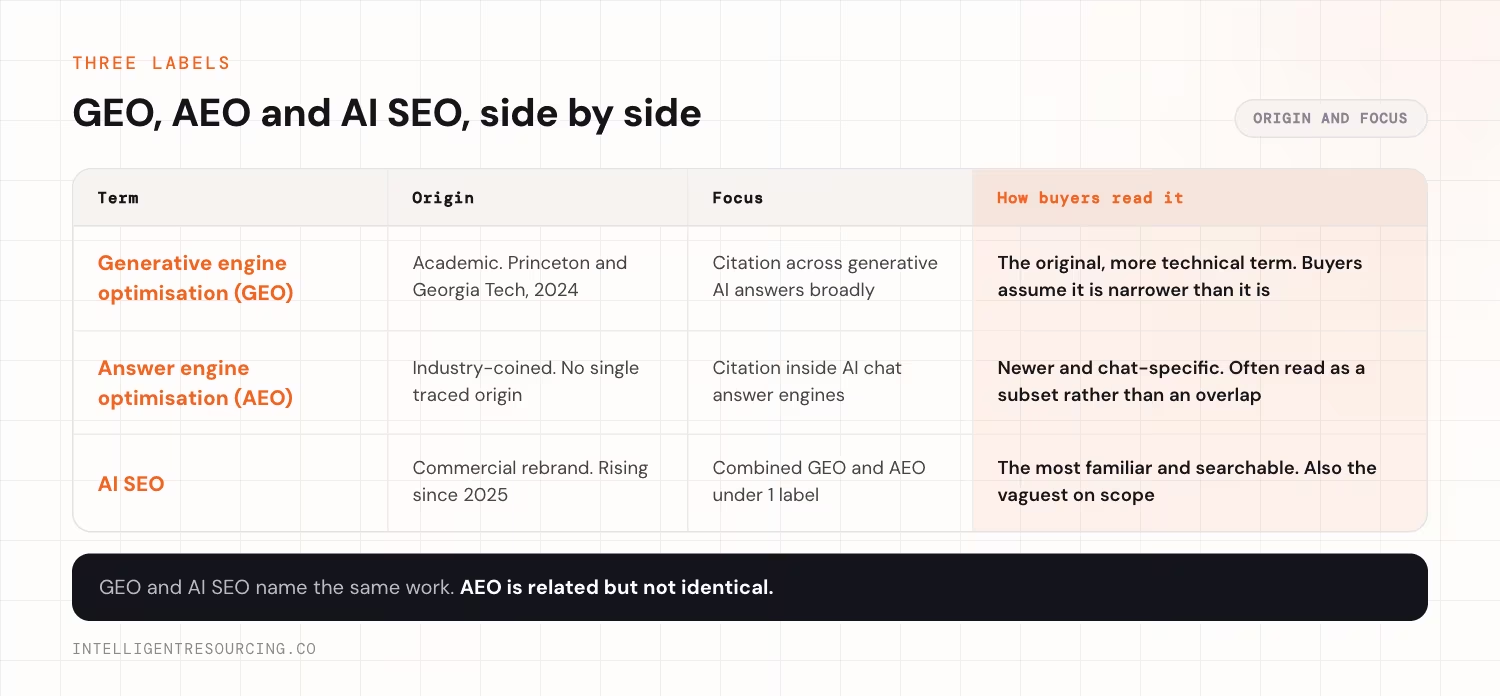
Generative engine optimisation and GEO name the identical discipline: the full term and its acronym. Answer engine optimisation (AEO) is a related but distinct discipline. It focuses specifically on citation inside AI chat answers, not generative search overall. The AEO, GEO and LLMO guide breaks all 3 terms down side by side. AI SEO is a newer commercial label some agencies use for the same combined GEO and AEO work.
| Term | Origin | Focus | How Buyers Read It |
|---|---|---|---|
| Generative engine optimisation (GEO) | Academic, Princeton and Georgia Tech, 2024 | Citation across generative AI answers broadly | Read as the original, more technical term; buyers often assume it covers a narrower job than it actually does |
| Answer engine optimisation (AEO) | Industry-coined, no single traced academic origin | Citation specifically inside AI chat answer engines | Read as newer and chat-specific; some buyers treat it as a subset of GEO rather than an overlapping discipline |
| AI SEO | Commercial rebrand, rising in search volume since 2025 | Combined GEO and AEO positioning under 1 marketing label | Read as the most familiar, easiest term to search for; also the vaguest on what scope of work it actually covers |
As of 15 September 2026, "ai seo" carried roughly 1,400 monthly Australian searches against roughly 700 for "generative engine optimisation" and roughly 900 for "ai seo agency" (Ahrefs, AU). That spread shows demand sitting with the shorter commercial phrase even as the formal research term stays "generative engine optimisation."
Search Engine Journal's coverage confirms this. Google treats AEO and GEO as different names for the same work, not as separate disciplines.
Readers wanting the AEO side of this specifically can see the history of answer engines from before AI chat took over.
Does "GEO" Already Mean Something Else in Marketing?
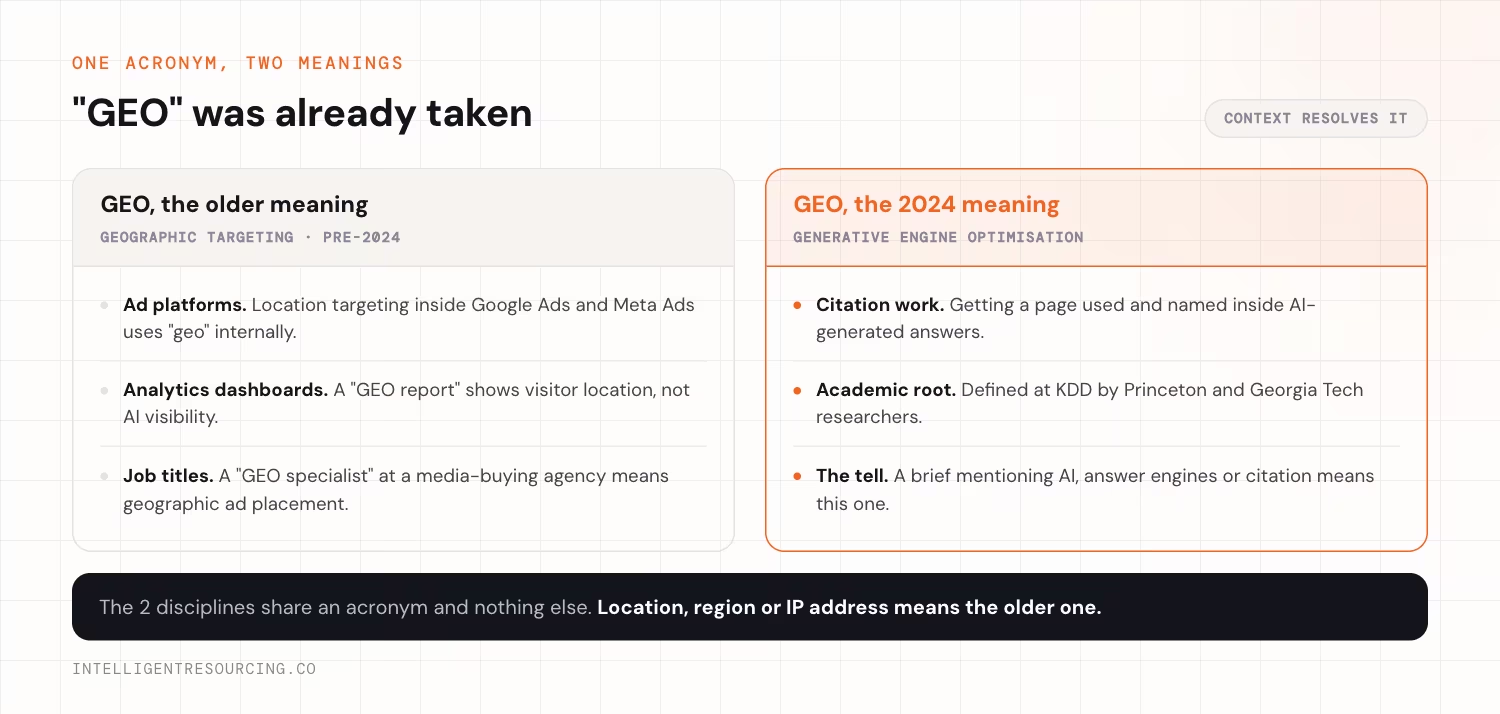
Yes. "GEO" meant geographic targeting in digital marketing long before 2024, reaching customers based on physical location, well before generative engine optimisation existed. Buyers searching "GEO" can land on geo-targeting tools instead of generative engine optimisation content. The 2 disciplines share an acronym, nothing else.
The collision surfaces in a few places:
- Ad platforms. Location-based targeting settings inside Google Ads and Meta Ads use "geo" internally, unrelated to AI citation.
- Analytics dashboards. A "GEO report" in most analytics tools shows visitor location, not AI visibility.
- Job titles and briefs. A "GEO specialist" role posted by a media-buying agency likely means geographic ad placement, not generative engine optimisation.
One AEO platform's reasoning for avoiding the term GEO entirely: it already conflicts with geography, geology and geo-targeting in search marketing. Context resolves it quickly in practice. A brief mentioning AI, answer engines or citation is using the newer meaning. One mentioning location, region or IP address is using the older one.
Does the Name You Use Change What You Should Actually Do?
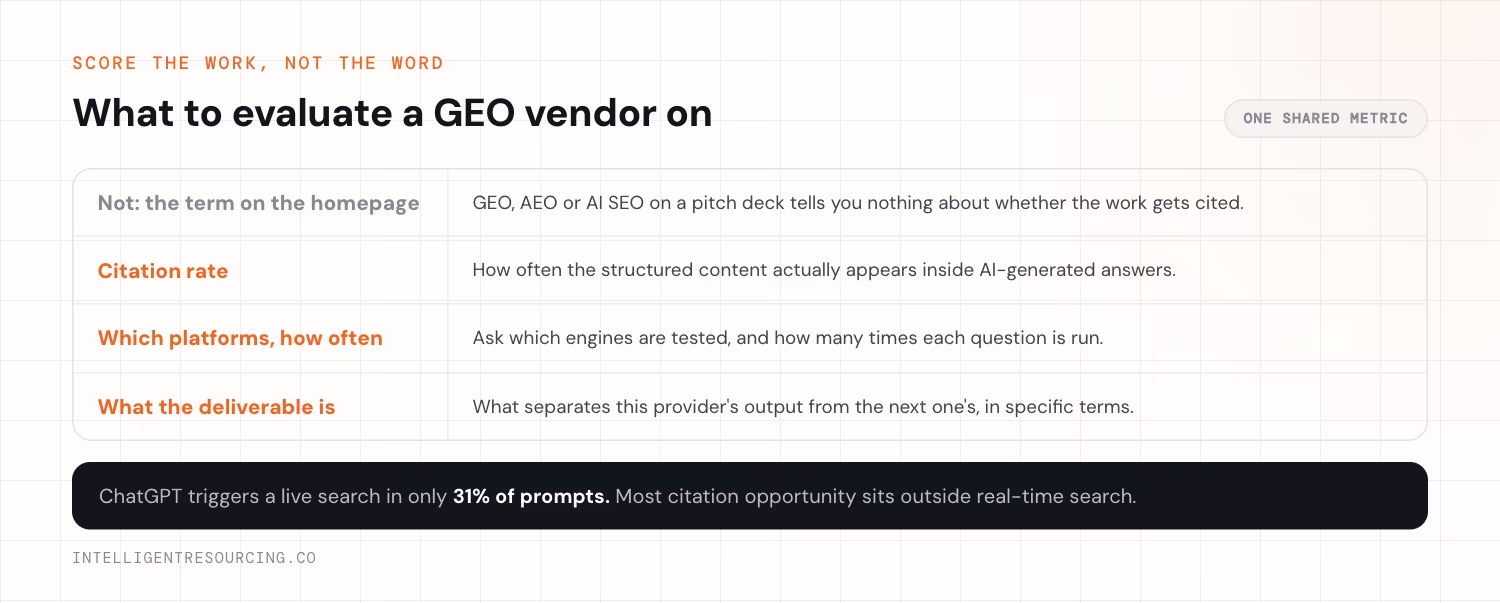
No. The label on an agency's homepage does not change whether its content gets cited. Buyers should evaluate GEO, AEO or AI SEO vendors against 1 shared metric. That metric is how often their structured content appears inside AI-generated answers, not which term the vendor prefers.
Nectiv's AI Tracker data found ChatGPT triggers a live search in only 31% of prompts, across over 8,500 prompts and 9 industries. Most citation opportunity sits outside real-time search entirely.
That is a structural fact about how these engines work, and no vendor's chosen label changes it. For a checklist on how to check a vendor's claims, see the LLM SEO vs AEO breakdown. It covers which platforms to ask about, how many times they test each question, and what actually separates one provider's deliverable from another's.
Naming confusion costs nothing. A page that is not structured for AI extraction costs pipeline. Intelligent Resourcing's Content Strategy work builds for citation first, through the answer engine optimisation service.
Content Creation
The term on an agency's homepage tells you nothing about whether AI engines actually cite you. Intelligent Resourcing measures citation rate against a fixed set of buyer prompts, so you are judging the work rather than the vocabulary.
FAQs
Is "generative engine optimisation" the same thing as GEO?
Yes. GEO is just the acronym. Princeton and Georgia Tech coined the full term in 2024, and the industry shortened it to GEO afterwards.
Why do some agencies call this "AI SEO" instead?
It's a newer, more familiar-sounding label. Australian search volume for "ai seo" runs roughly twice that of "generative engine optimisation," but the work itself hasn't changed.
Who coined the term generative engine optimization?
Researchers at Princeton and Georgia Tech, in a 2024 paper. They defined it as adjusting content to increase visibility in AI-generated responses.
Does Intelligent Resourcing use "GEO" or "generative engine optimisation" in its own work?
Both, depending on context. Intelligent Resourcing targets the underlying discipline, not one label over another.
Should I use the acronym or the full term in my own content?
Use whichever term your buyers actually search. Check a tool such as Ahrefs for the split in your market; don't assume one term dominates everywhere.