

What Should a B2B Company Do First After Closing a Series A?
A B2B company should spend the first 90 days after a Series A finding buyers, not adding headcount. The sequence runs in three 30-day blocks: target, build, run. Each block ends with something the board can check, so the round buys a system rather than a burst of activity.
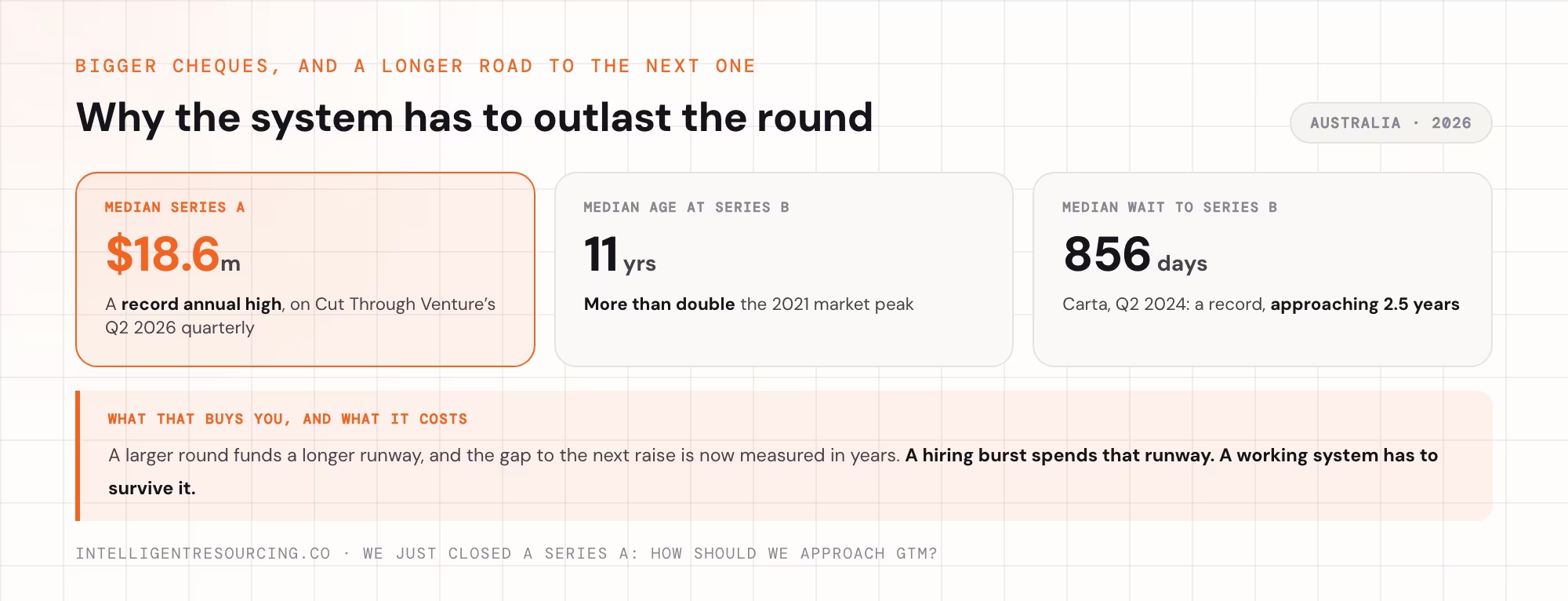
The stakes have risen in Australia. Cut Through Venture's Q2 2026 quarterly, reported by Forbes Australia, puts the median Series A at a record annual high of $18.6 million. The same data puts the median company raising a Series B at 11 years old, which it says has more than doubled from the 2021 market peak. A bigger cheque and a longer road mean the go-to-market (GTM) system has to last.
| Days | Focus | Done when |
|---|---|---|
| 1 to 30 | Target: customer profile, board metric, customer relationship management (CRM) baseline | A scored target list and one agreed board number exist |
| 31 to 60 | Build: signal detection, enrichment, routing | Signals reach the right owner without manual work |
| 61 to 90 | Run: signal-led outreach and reporting | The board sees a full month of cost per qualified meeting |
The order matters more than the speed. Most of the common post-raise GTM mistakes come from running step 3 before step 1 is done. This sequence puts the target and the measure in place before any money goes to reach or headcount.
What Should Days 1 to 30 After the Raise Lock In?
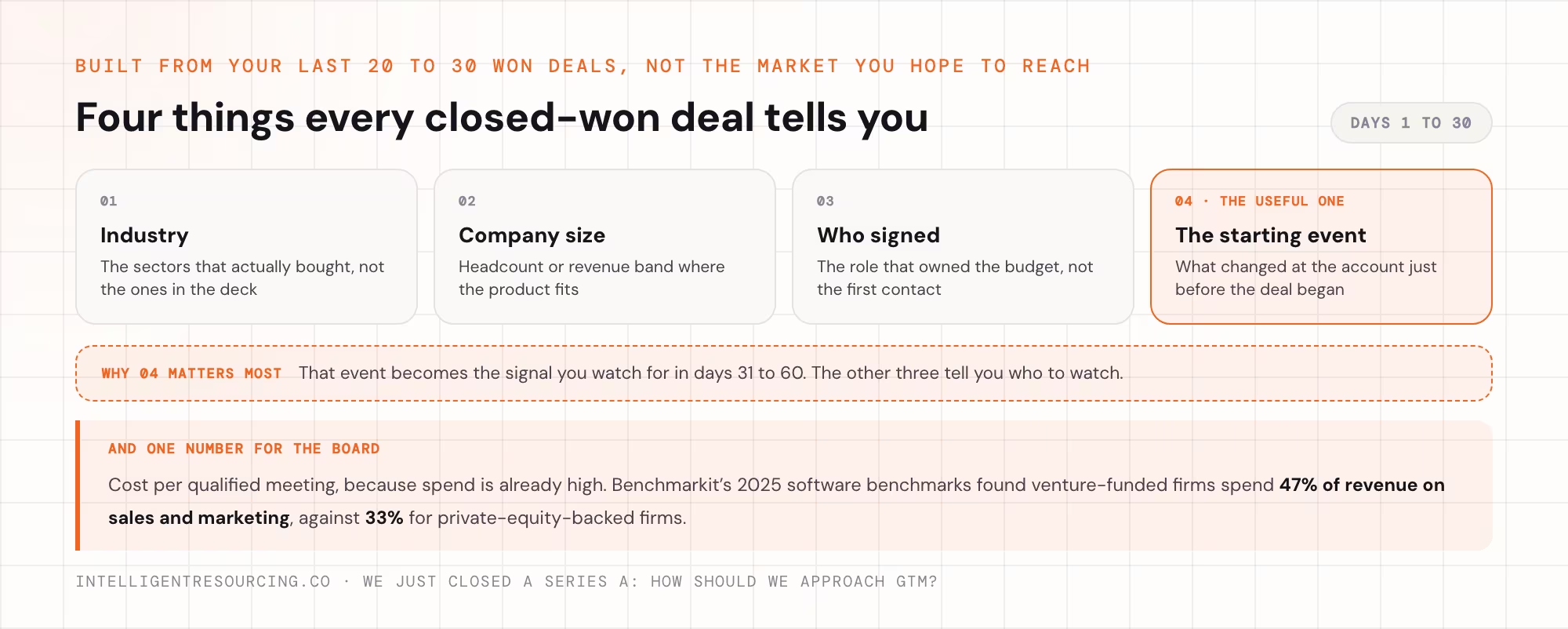
Days 1 to 30 should lock three things: the ideal customer profile (ICP), one board metric and a clean CRM baseline. These choices shape every dollar spent afterwards. Skipping them sends the new budget to accounts with no reason to buy, which is the most expensive error a funded company can make.
Write the ideal customer profile from closed-won deals
Start with your last 20 to 30 won deals, not the market you hope to reach. List what they shared:
- Industry
- Company size
- Who signed
- The event that started the deal
That last line is the most useful one, because it becomes the signal you watch for in days 31 to 60.
Pick one number for the board
Choose cost per qualified meeting as the headline metric, because spend is already high at this stage. Benchmarkit's 2025 software benchmarks found that software firms with venture funding spend 47% of revenue on sales and marketing. Firms backed by private equity spend 33%. A tighter target list makes that spend go further.
Count what the CRM holds today
Count how many CRM records have:
- A current owner
- A correct industry
- A live contact
That count becomes your "before" figure, so the board can see what the system changed by day 90.
What Gets Built Between Day 31 and Day 60?
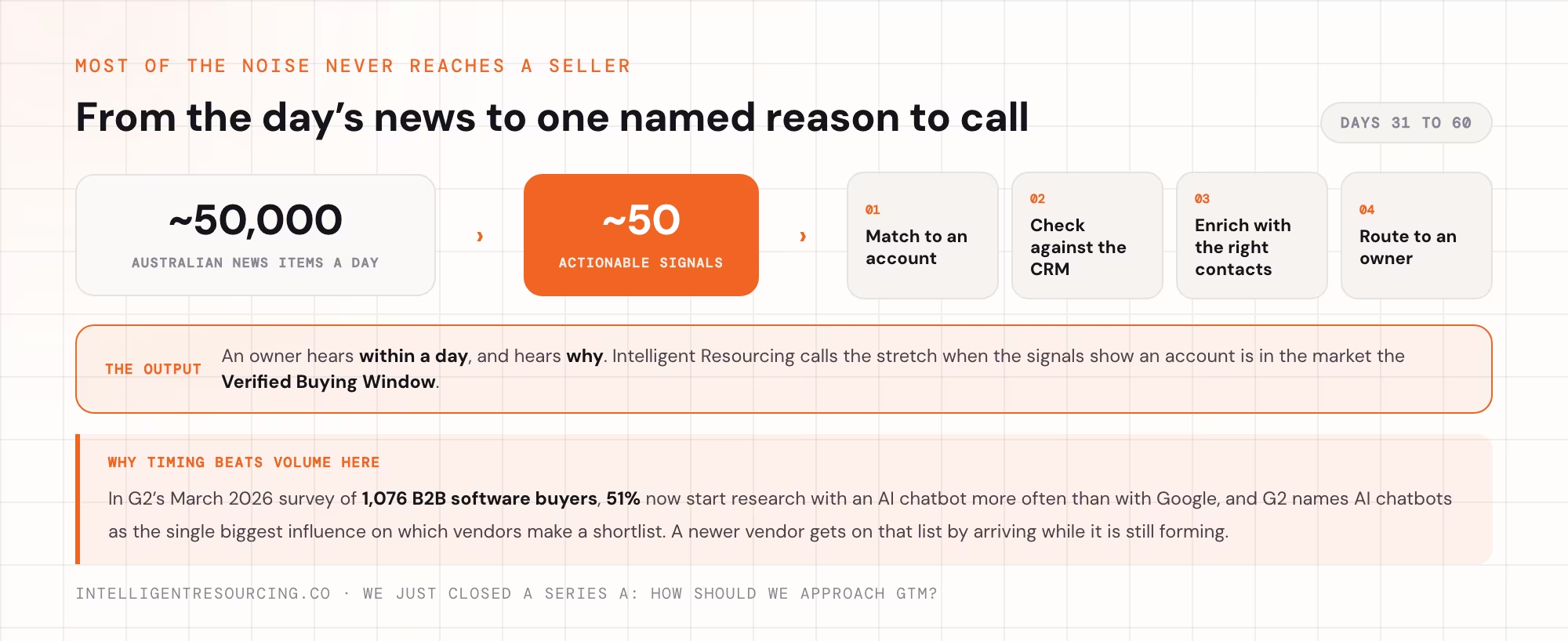
Days 31 to 60 build the system that finds buyers at the right time. It has three parts: signal detection, enrichment and routing into the CRM. The goal is simple. When an account in your profile shows a buying trigger, the right person hears within a day, and hears why.
Timing matters because buyers form shortlists early and often without a seller. In G2's March 2026 survey of 1,076 B2B software buyers, 51% now start their research with an artificial intelligence (AI) chatbot more often than with Google. G2 also names AI chatbots as the single biggest influence on which vendors make a buyer's shortlist. A newer vendor gets onto that list by reaching the account while it is still forming.
Signal detection
Signals are public events that suggest an account is preparing to buy. Examples include:
- A funding round
- A new executive
- Job ads for a role your product supports
- A new tool install
Intelligent Resourcing's signal engine screens about 50,000 Australian news items a day into roughly 50 actionable signals. Most of the noise never reaches a seller.
Enrichment and routing
Each signal moves through four steps:
- Match to an account
- Check against the CRM
- Enrich with the right contacts
- Route to an owner with a reason to reach out now
Intelligent Resourcing calls this the Verified Buying Window: the stretch when signals show an account is in the market. The CRM enrichment step checks each account against existing records before anyone reaches out.
What Happens Between Day 61 and Day 90?
Days 61 to 90 run the signal system and report on it. Sellers contact accounts in a buying window, and the board sees cost per qualified meeting for the first full month. It also sees how many target accounts sit in a window right now. That shows how much pipeline the system can feed next quarter.
Run signal-led outreach
Signal-led outreach runs on a few habits:
- Name the trigger in every message, such as the new hire or the funding round
- Have founders join the first calls, because early buyers want to meet them
- Review signals each week and drop the ones that never turn into meetings
A named reason is what separates timed outreach from a cold list.
Report the signal system to the board
Boards watch this closely, because the road to the next round is long. Carta's Q2 2024 data reports that companies raising a Series B that quarter had waited a record median of 856 days, approaching 2.5 years. Spend has to show efficiency every quarter along the way.
| Signal metric | What it shows | Why it beats the usual report |
|---|---|---|
| Cost per qualified meeting | The efficiency of the whole system | Activity counts reward volume, not results |
| Accounts in a buying window | Pipeline the team can work next quarter | Raw lead counts mix in accounts that will never buy |
| Signal-to-meeting rate | Which triggers predict real interest | Shows what to tune before adding headcount |
The same test applies if a partner builds the system for you. Board-grade reporting is one check in vetting a GTM partner after raising. A partner who cannot show these three figures by day 90 is selling activity, not a system.
What Runs After Day 90 When the System Is Live?
After day 90, the system keeps running and the team grows into it. Signals keep flowing, the target list refreshes itself, and new hires inherit live accounts rather than a blank spreadsheet. This is Signal-Led Growth: headcount follows proven signal-to-meeting rates, not a hiring plan written on the day the round closed.
Current data backs the account-first approach
Demand Gen Report's 2026 benchmark survey of account-based programs found 52% of B2B marketers say their account-based programs meet expectations. A further 33% say results are exceeding or greatly exceeding them.
Works beyond software
A national waste-management company replaced a vendor whose leads mostly sat outside its ICP. A signal engine brought in 150 net-new accounts in phase one and 250 over four months, each checked against the existing base. The engine adds about 50 net-new, CRM-checked accounts a month, so the list keeps growing without manual research.
Who Can Build a Series A GTM System With You?
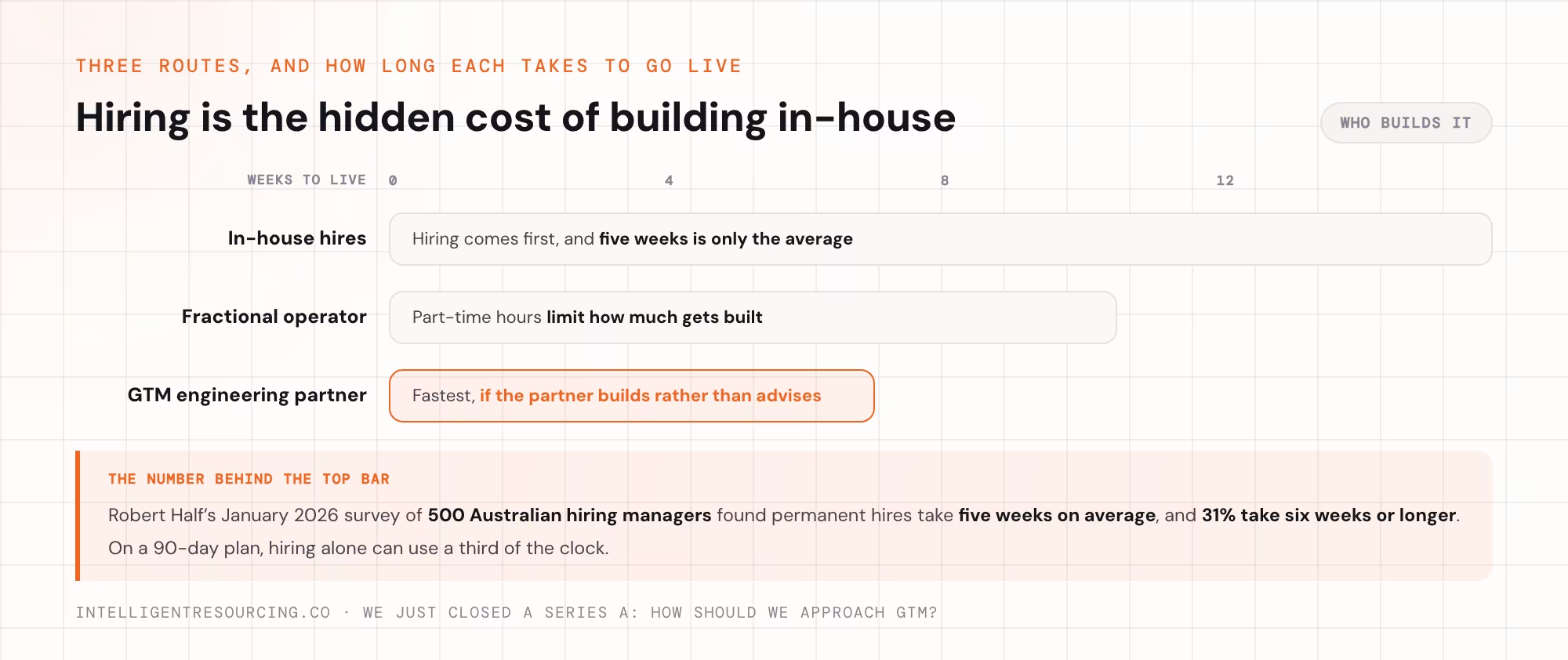
Three routes can build a post-Series A GTM system: an in-house team, a fractional operator, or a GTM engineering partner. The right one depends on how fast you need it live and who will run it afterwards. Whichever you choose, agree in writing who runs the system once the build is done.
| Route | Speed to a live system | Who runs it after | Watch for |
|---|---|---|---|
| In-house hires | Slowest, because hiring comes first | Your own team | Hiring alone can use a third of the 90 days |
| Fractional operator | Medium | Your team, if the work is documented | Part-time hours limit how much gets built |
| GTM engineering partner | Fastest, if the partner builds rather than advises | Whoever the contract names | Workflows left on the partner's own accounts |
Hiring time is the hidden cost of the in-house route. Robert Half's January 2026 survey of 500 Australian hiring managers found permanent hires take five weeks on average, and 31% take six weeks or longer.
If you choose a partner, compare firms on deployment speed, profile fit and who runs the system afterwards. Our roundup of GTM agencies for funded startups scores Australian options on those tests. Intelligent Resourcing is one of them, a Melbourne GTM engineering firm that builds and manages this system inside the client's own stack.
GTM Engineering
See how Intelligent Resourcing scores accounts and flags the ones inside a Verified Buying Window, then book a strategy session.
FAQs
How long after a Series A should a new pipeline appear?
In this 90-day plan, signal-led outreach starts once detection and routing are live, around day 45 to 60. A new sales hire takes longer, because hiring and ramp come first. Allow a full month of outreach data before you judge cost per qualified meeting.
Should founders keep selling after a Series A?
Yes. Founders should stay in early deals while the system is built, because they hold the clearest view of why customers buy. The system takes over finding and timing accounts. That frees founder hours for closing and for teaching the first hires how deals are won.
Is the 90-day plan different for an Australian company?
The steps are the same, but the pressure is higher. The median Australian Series A hit a record annual high of $18.6 million in the Q2 2026 quarterly, and the median company raising a Series B was 11 years old. Bigger rounds and longer gaps make a lasting system worth more than a fast hire.
Which signal metrics belong in a Series A board update?
Lead with cost per qualified meeting and the number of target accounts in a buying window. Add the signal-to-meeting rate to show which triggers work. Move activity counts, such as emails sent, to the appendix, because they measure effort rather than efficiency.
Does a 90-day GTM plan work outside software companies?
Yes. Any B2B company with a definable set of target accounts can run it. Signals such as funding, leadership changes and hiring apply across industries, from software to industrial services. The profile and the triggers change by industry, but the 30-day blocks stay the same.