

What Does an Artificial Intelligence (AI) Engine Check Before It Names a Lawyer?
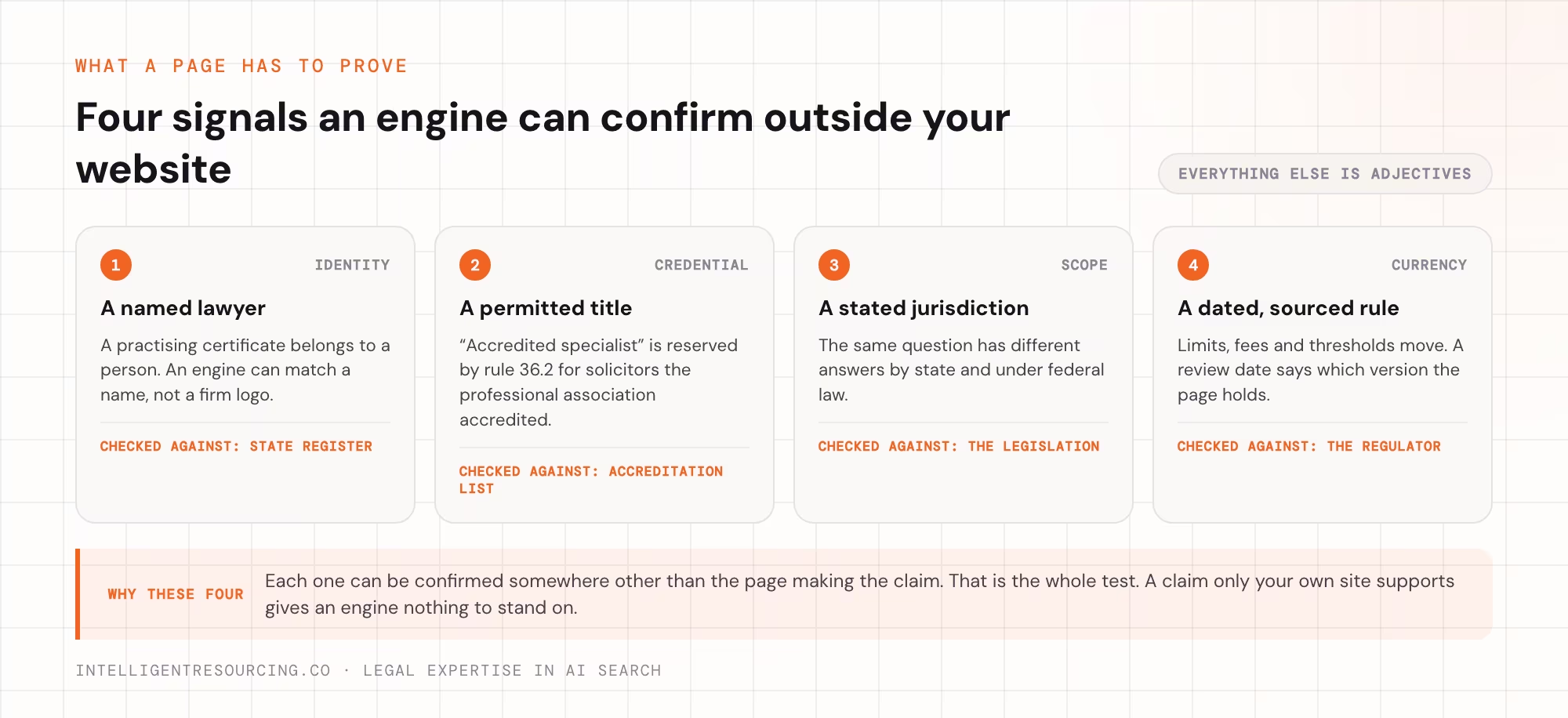
An engine checks whether a page gives it facts it can trust and repeat. On a legal page, that means a named lawyer, a credential the profession grants, a stated place and a rule linked to its source. Legal content raises the stakes. A wrong answer can cost a reader money, time or a legal right.
The same principles sit behind generative engine optimisation (GEO) for law firms as for any other business. Law adds a sharper problem. Language models are unreliable on legal detail when they answer from memory. A page that states the rule and shows its source gives an engine firmer ground than its own recall.
The research on this is blunt. "Large Legal Fictions", published in the Journal of Legal Analysis in 2024, asked models specific, verifiable questions about random United States federal court cases. Hallucination rates ran from 58% with ChatGPT 4 to 88% with Llama 2. The same study found models often fail to correct a user's incorrect legal assumption when the question contains one.
That finding cuts two ways for a law firm:
- The risk: without good sources, an engine can describe the law wrongly, or describe your firm wrongly.
- The opening: a page that states the rule, names its jurisdiction and links the source reduces that risk.
How Would an Engine Read Three Firm Pages on the Same Question?
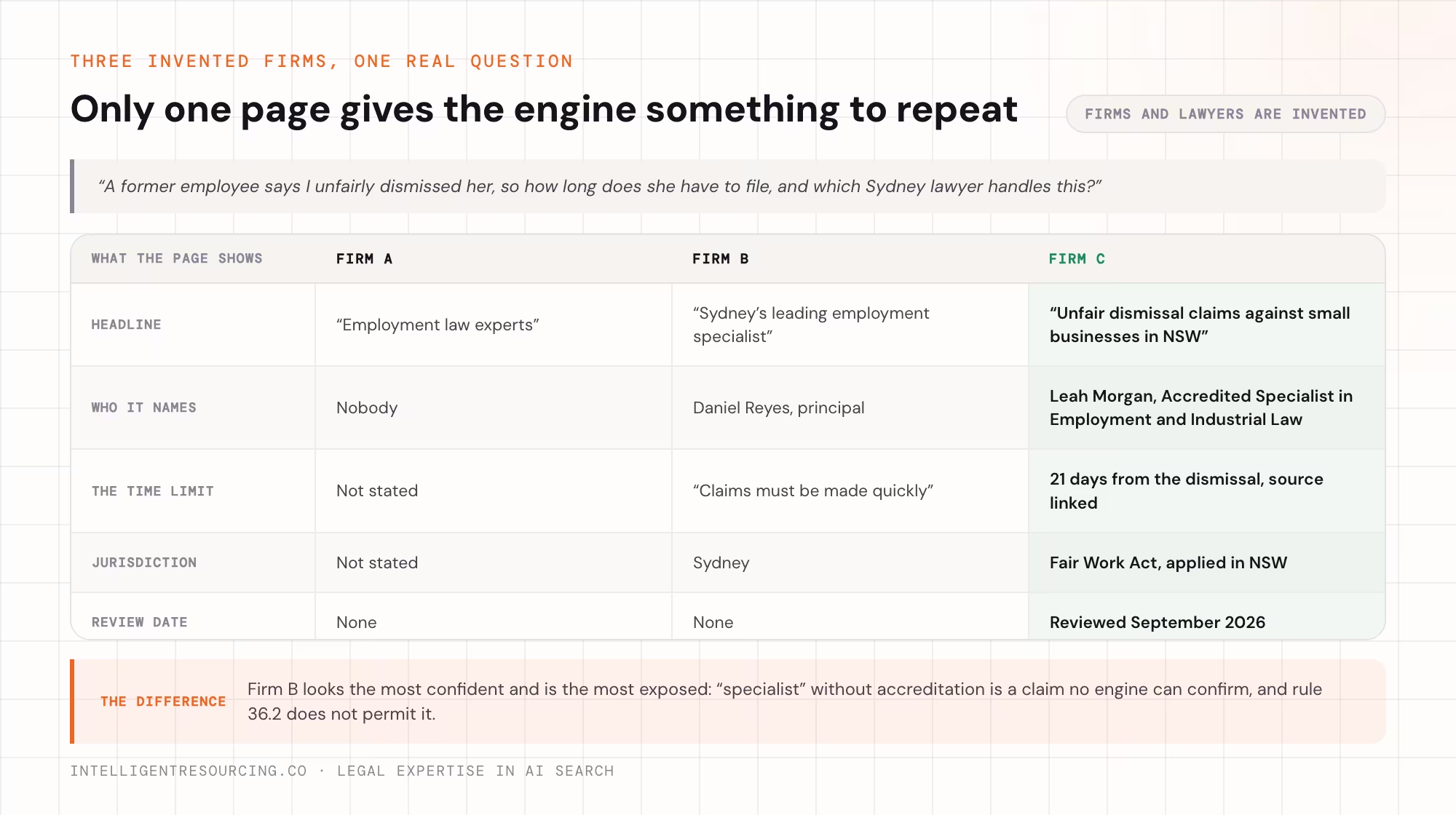
Take one question and three pages. A cafe owner in Sydney, New South Wales (NSW), asks an AI engine: "A former employee says I unfairly dismissed her, so how long does she have to file, and which Sydney lawyer handles this?" The engine has to answer the law and recommend a lawyer. Each page gives it different material to work with.
The three firms below are invented for this article, along with the lawyers named in them. Their pages differ in exactly the ways real firm pages do.
| What the page shows | Firm A | Firm B | Firm C |
|---|---|---|---|
| Headline | "Employment law experts" | "Sydney's leading employment specialist" | "Unfair dismissal claims against small businesses in NSW" |
| Who it names | Nobody | Daniel Reyes, principal | Leah Morgan, Accredited Specialist in Employment and Industrial Law |
| The time limit | Not stated | "Claims must be made quickly" | 21 days from the dismissal, with the source linked |
| Jurisdiction | Not stated | Sydney | National system under the Fair Work Act, applied in NSW |
| Review date | None | None | Reviewed September 2026 |
Firm A gives the engine nothing to repeat and nobody to recommend. Firm B gives it a name, but the word "specialist" with no accreditation behind it is a claim the engine cannot confirm. Firm B also leaves the one fact the owner needs, the deadline, vague.
Firm C gives the engine a quotable rule, a named lawyer and a title it can check. Its 21-day limit comes from the Fair Work Ombudsman's unfair dismissal guidance, which tells workers to apply to the Fair Work Commission within 21 days of their dismissal. The sections below take Firm C's page apart, one signal at a time.
Why Does the Word "Specialist" Carry So Much Weight?
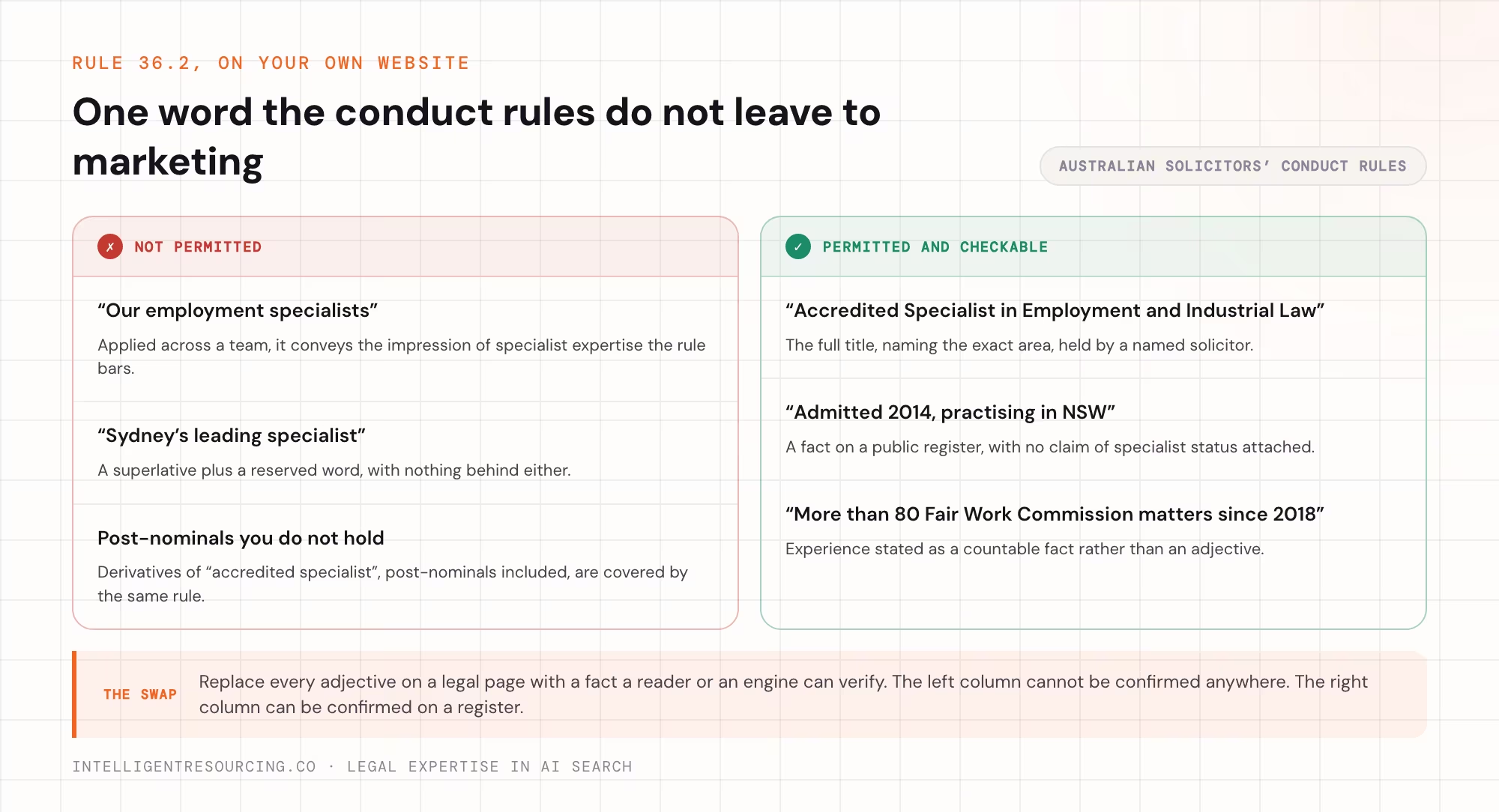
"Specialist" carries weight because in Australian law it is regulated. Rule 36.2 of the Legal Profession Uniform Law Australian Solicitors' Conduct Rules 2015 bars a solicitor from conveying a false, misleading or deceptive impression of specialist expertise. It also keeps the words "accredited specialist", and derivatives of them including post-nominals, for solicitors accredited by the relevant professional association. That turns the title into a checkable fact.
The Law Society of NSW's guidance on advertising legal services sets out rule 36 in full, including the separate ban on advertising that is false, misleading or deceptive. For a law firm's website, that creates 3 practical rules:
- Use the full, exact title. "Accredited Specialist in Employment and Industrial Law" names the exact area the title covers. A bare "specialist" names nothing.
- Never borrow the word for unaccredited lawyers. "Our employment specialists" across a whole team is the false impression the rule bars.
- Describe experience in plain facts instead. "Has acted in more than 80 Fair Work Commission matters since 2018" is checkable and permitted, where "leading specialist" is neither.
The point holds for every adjective on a legal page: replace it with a fact a reader or an engine can verify. Our law firm GEO checklist turns these rules into a site audit.
Why Must a Legal Page State Its Jurisdiction and Date?
A legal page must state its jurisdiction and date because the same question has different answers in different places and years. An engine matching a reader in Sydney to a rule needs to know which law the page covers: federal, NSW or another state. It also needs to know whether the rule is still current.
Firm C's deadline works because it is specific, sourced and tied to the Fair Work Act. A page that states the rule and links the regulator gives an engine a fact it can quote, and gives the reader somewhere to check it.
Apply the same pattern to every legal page:
- Name the jurisdiction in the first paragraph. "Under the Fair Work Act, which covers most private sector employees in NSW" tells an engine where the rule applies.
- Link the primary source. Use the legislation, the regulator or the court, never another firm's summary.
- Show the review date beside the rule. Fees, thresholds and time limits change, so a dated page tells the engine which version it holds.
- Answer the obvious follow-up. A reader told the limit is 21 days will immediately ask when the clock starts. Say so on the page and you settle the next question too.
Most law firms already hold this knowledge. Directories are a large part of why law firms are invisible in AI search, even when the firm knows the answer cold.
Can Outside Records Confirm Each Lawyer?
Outside records can confirm a lawyer when the firm's page and the public record use the same name, practice and credential. Each state keeps a public list of lawyers allowed to practise. Search platforms also let each lawyer hold their own listing. Each matching record is a second source that agrees with the firm's page.
In Victoria, the register of lawyers run by the Victorian Legal Services Board and Commissioner lets anyone check whether a lawyer or law practice is registered. It can be searched by practice area, language and accredited specialisation, so the accreditation on a profile is checkable against the register itself. Other states keep their own records, so check each lawyer against the register for the state where they practise.
Search platforms add a second layer. Google's Business Profile guidelines let a practitioner hold their own profile alongside the firm's. For a firm like Firm C, that means Leah Morgan can hold a practitioner profile that matches her page on the firm's site.
The test is simple: the firm's page, the register and the practitioner profile should show the same name, practice and accreditation.
What Markup Fits a Law Firm Page?
Markup is the last layer, not the first. Schema.org's LegalService type describes a law business, and Person markup can describe the lawyer and their title. It should restate what Firm C's page already shows, never add to it.
Do not expect markup to do the work on its own. An Ahrefs matched test of 1,885 pages that added schema found no citation lift, and 4.6% fewer Google AI Overview citations than the control pages. Every page in that study was already heavily cited, so it says nothing about a page no engine quotes yet, but it does rule out schema as a shortcut. For a law firm, the rule that matters more is to change the page and the markup in the same edit when a lawyer leaves or a practising certificate lapses.
What Should a Law Firm Change First?
Start with the practice area clients search for most, and rebuild that page the way Firm C built hers. Name the lawyer, state any accreditation exactly, give the jurisdiction and the key rule with its source, and add a review date. Then confirm the lawyer's register entry and practitioner profile match.
If nobody in that area holds accreditation, say what they do hold: admission, years in the area and matters run. The Law Society of NSW accreditation program is a structured peer assessment, and its entry bar is high: a current practising certificate, at least 5 years in full-time practice, and at least 25% of practice spent in the accreditation area in each of the 3 years before applying. That makes it a longer-term step, not a website fix.
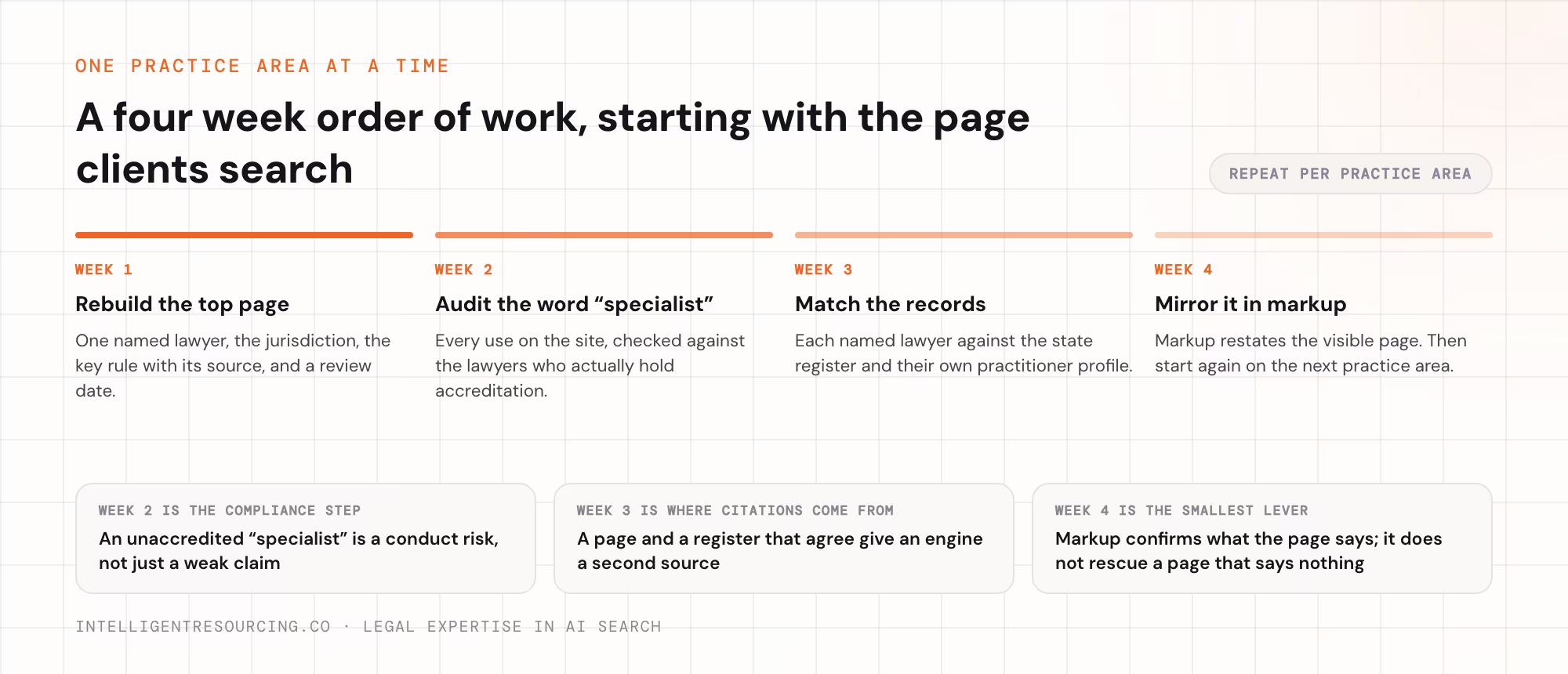
A realistic order of work:
- Week 1: rewrite the top practice-area page around one named lawyer, with jurisdiction, rule, source and date.
- Week 2: audit every use of "specialist" on the site against the lawyers who hold accreditation.
- Week 3: match each named lawyer to the register and their practitioner profile, using our register-matching method.
- Week 4: add markup that mirrors the visible page, then repeat the process for the next practice area.
Content Creation
Intelligent Resourcing reviews practice pages and lawyer profiles against what AI engines can check, then names the fixes in order.
FAQs
Does an AI engine check whether a lawyer's accreditation is current?
It can only confirm what a public record shows. A state register or the law society's list of accredited specialists shows whether a title is current today. Keep the page, the register and any practitioner profile in step, and update all 3 when an accreditation lapses.
Does a law firm need a separate page for each lawyer?
Yes, for every lawyer who leads matters the firm wants to be found for. A practising certificate is issued to a person, so a named lawyer gives an engine someone to match. Each profile should carry the lawyer's admission, any accreditation and the practice areas they lead.
Why should legal content name its jurisdiction?
Because the same legal question can have different answers in each state and under federal law. Naming the jurisdiction in the first paragraph tells readers and engines where the rule applies. A page without it forces the engine to guess, or to choose a page that says.
Do AI hallucinations about law affect how firms get cited?
They raise the value of sourced pages. A 2024 study in the Journal of Legal Analysis found models got specific, verifiable court-case questions wrong 58% to 88% of the time when answering from memory. Pages that state the rule, name the jurisdiction and link the source give an engine firmer material to work from.
Should law firms date their legal guides?
Yes. Time limits, fees and thresholds change, and a review date beside the rule shows which version the page describes. Review rule-heavy pages at least once a year, and straight away when the law or a regulator's guidance changes.