

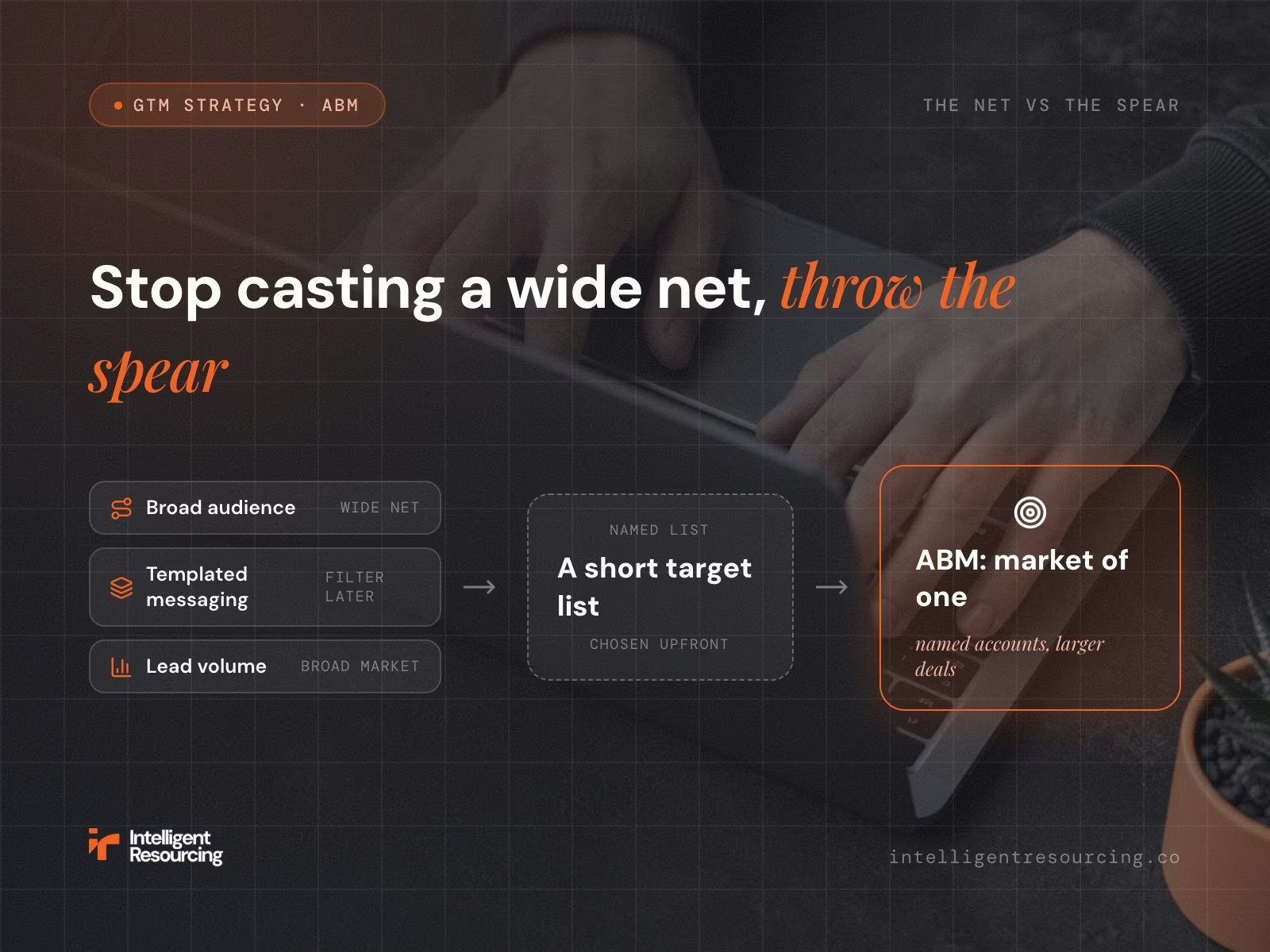
How Does ABM Differ From Traditional Marketing?
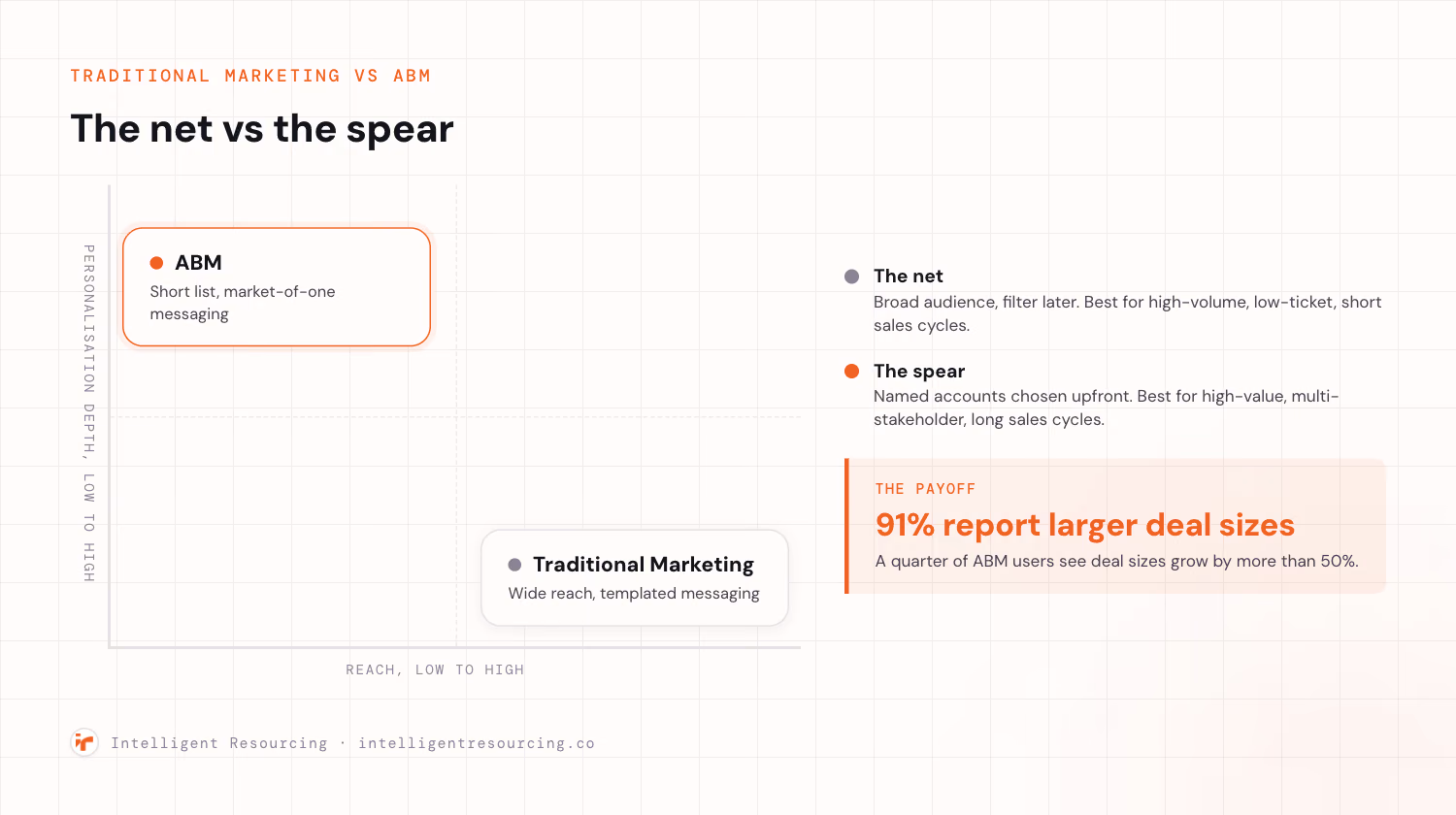
Traditional demand generation casts a wide net to capture as many leads as possible; ABM throws a spear at named, high-value accounts. Demand generation asks how many buyers you can reach. ABM asks which specific organisations deserve disproportionate attention. It inverts the logic of scale, trading reach for depth on the accounts that matter most.
That inversion is what DemandScience frames as a break from the logic of scale: instead of maximising reach, you concentrate resources on a chosen few. The payoff shows up in deal economics. 91% of marketers using ABM report larger deal sizes, with a quarter seeing them grow by more than 50%, based on SiriusDecisions data cited by Cognism. None of this makes traditional marketing wrong. For high-volume, low-ticket, short-cycle products, casting a wide net is the lower-cost, better-fit motion, because you need reach, not bespoke attention. ABM earns its keep when deals are large, buying committees are complex, and sales cycles run long.
| Factor | Traditional Marketing (The Net) | Account-Based Marketing (The Spear) |
|---|---|---|
| Primary goal | Lead volume across a broad market | Revenue from named high-value accounts |
| Targeting | Wide audience, filter later | Short target list, chosen upfront |
| Personalisation | Templated, segment-level | Account-level, "market of one" |
| Sales and marketing | Handoff model | Shared accountability from day one |
| Best used for | High-volume, low-ticket, short-cycle sales | High-value, multi-stakeholder, long-cycle deals |
What Are the Key Components of Account-Based Marketing?
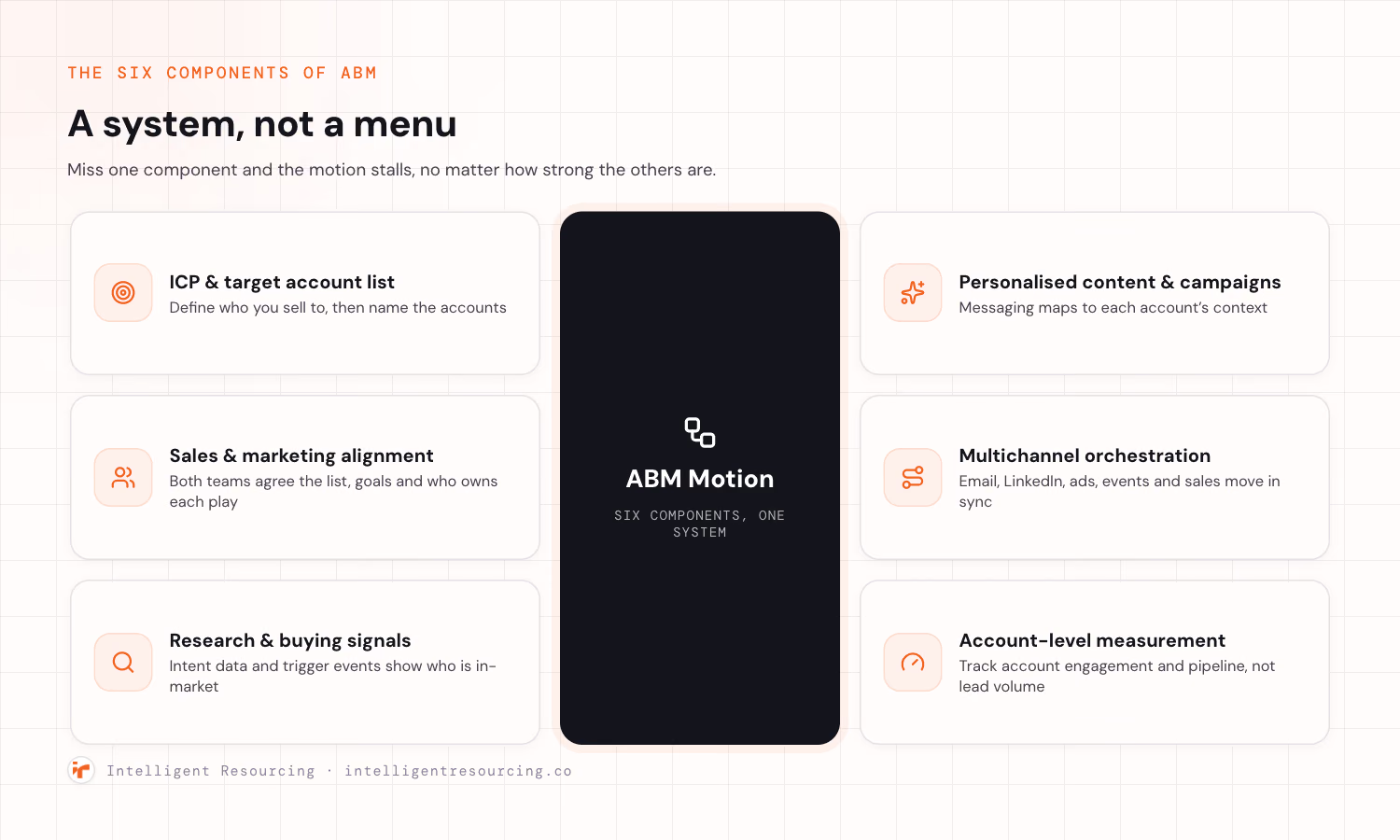
ABM runs on six connected parts: an ideal customer profile and target account list, sales and marketing alignment, account research and buying signals, personalised content and campaigns, multichannel orchestration, and account-level measurement. Miss one and the motion stalls. Together they turn a list of target companies into coordinated, revenue-focused engagement.
- Ideal customer profile and target account list: define who you sell to, then name the specific accounts that fit.
- Sales and marketing alignment: both teams agree on the list, the goals, and who owns each play.
- Account research and buying signals: intent data and trigger events tell you which accounts are in-market now.
- Personalised content and campaigns: messaging maps to the account's context. 73% of B2B buyers now expect a consumer-like, personalised experience, Deloitte Digital's research finds.
- Multichannel orchestration: email, LinkedIn, ads, events and sales outreach move in sync, not in silos.
- Account-level measurement: you track account engagement and pipeline, not raw lead volume.
Treat these as a system, not a menu. The research and signals feed the personalisation; the personalisation only lands because sales and marketing agreed on the account in the first place.
How Does Account-Based Marketing Work in Practice?
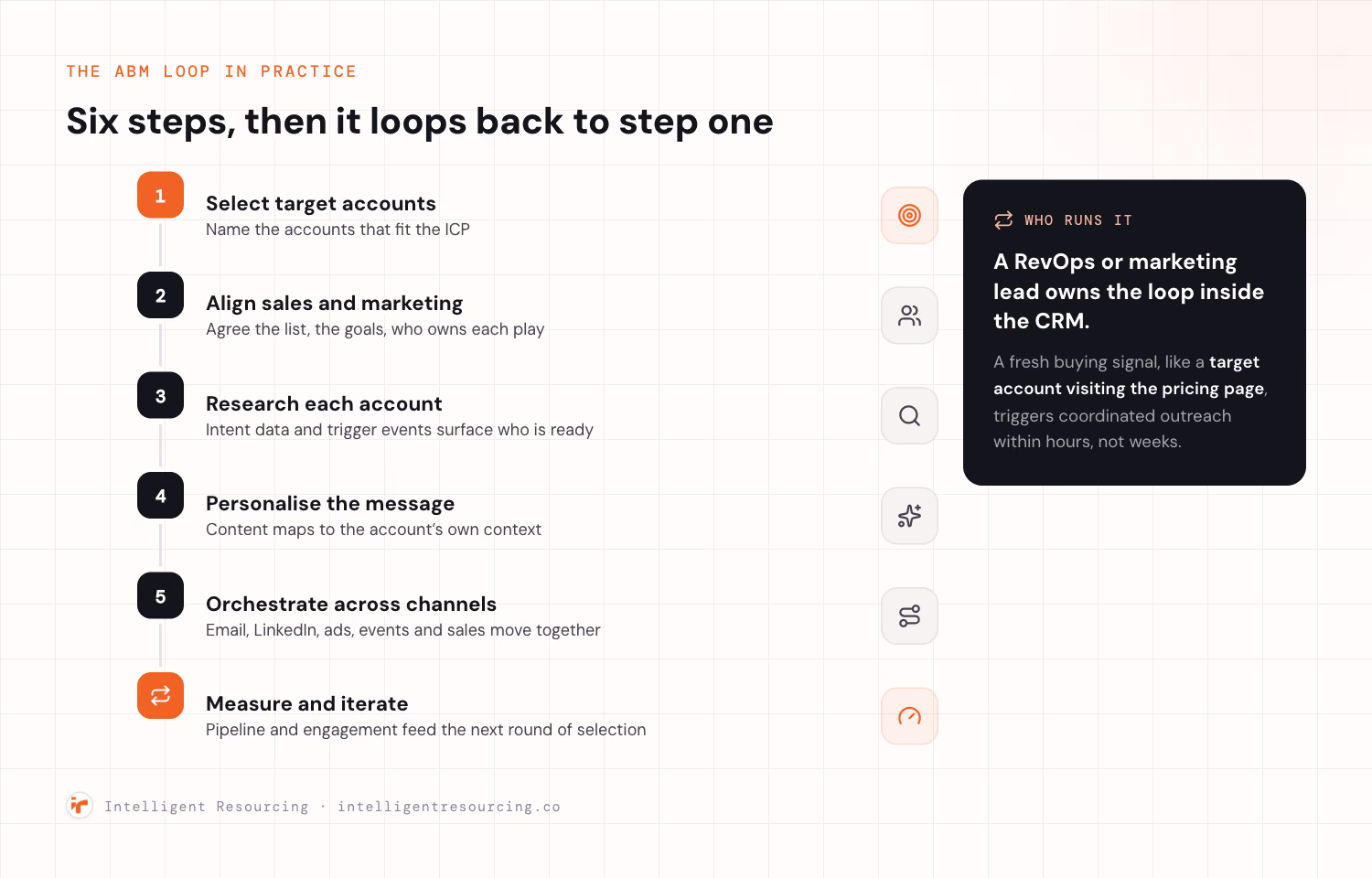
In practice, ABM runs as a loop: select target accounts, align sales and marketing, research each account, personalise the message, orchestrate across channels, then measure and iterate. A marketing or RevOps lead usually owns the loop inside your CRM, where a fresh buying signal can trigger coordinated outreach within hours.
Here is the loop with the moving parts named. A RevOps or marketing lead works from your CRM, where the target account list, activity history and intent data all live. When a signal fires, say a target account visits your pricing page or a decision-maker changes role, that trigger routes the account into a coordinated play: a sales email, a matched ad, a personalised follow-up. The results can be striking when the personalisation is genuine: Cognism ran a 1:1 gifting campaign and recorded an 80% response rate against a 20% target. The risk sits in alignment. When sales and marketing work from different account lists, effort splits, signals get missed, and the pipeline you thought you were building never appears. Getting the account-based GTM motion right is mostly an operating-model problem, not a tooling one.
What Are the Three Types of ABM (1:1, 1:Few, 1:Many)?
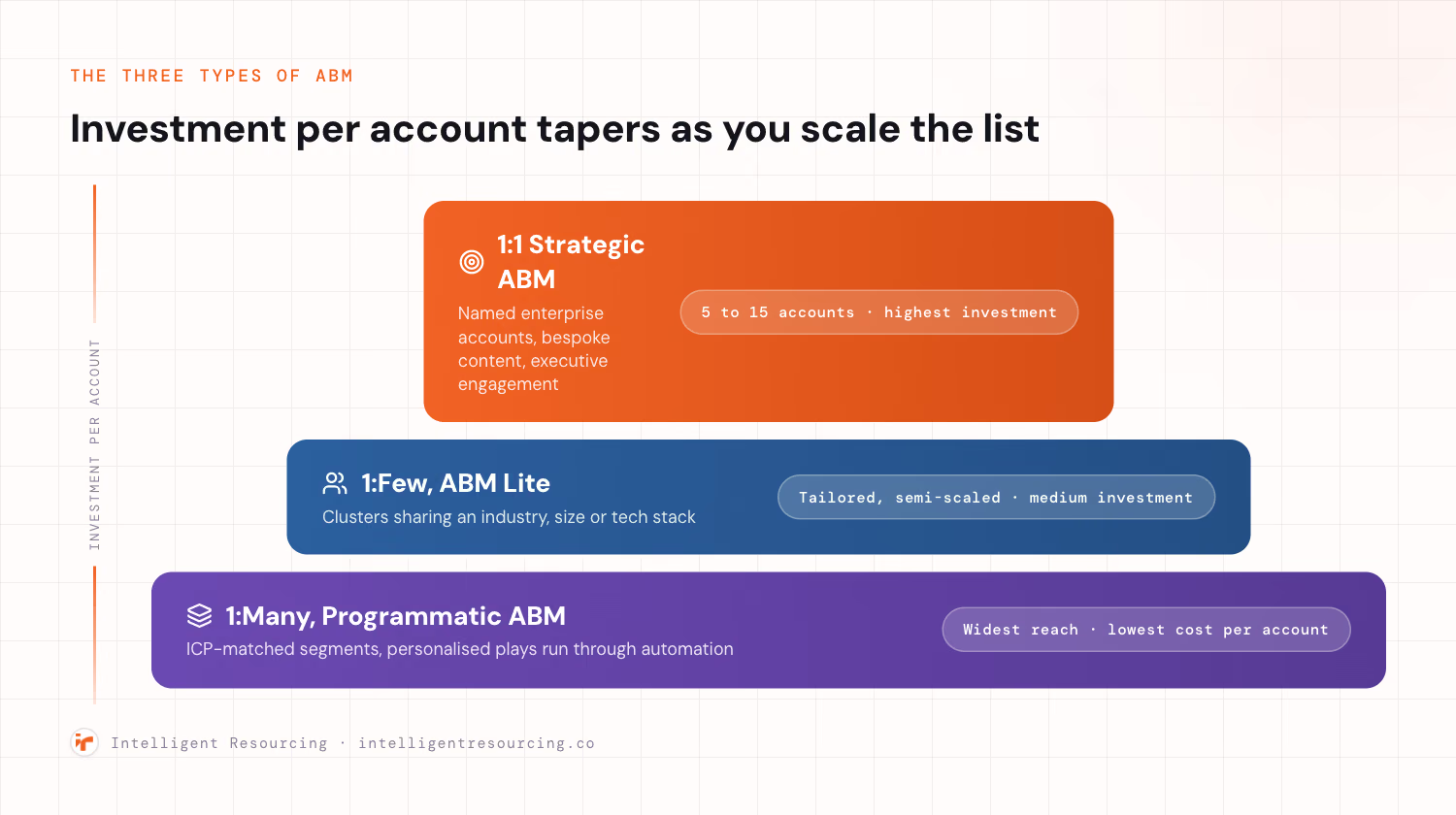
ABM comes in three tiers that trade depth for reach. 1:1 (strategic ABM) builds fully bespoke programs for a handful of named accounts. 1:Few (ABM Lite) tailors shared programs to small clusters of similar accounts. 1:Many (programmatic ABM) personalises automated plays across broader ICP-matched segments. Your resources decide how deep you can go.
1:1, strategic ABM: Named enterprise accounts get bespoke content and executive engagement. It is resource-heavy, so most mid-market teams can sustain only 5 to 15 accounts at this tier before engagement quality degrades, according to DemandScience.
1:Few, ABM Lite: Clusters of accounts that share a trait, such as industry, size or tech stack, get tailored but semi-scaled programs.
1:Many, programmatic ABM: ICP-matched segments are engaged with personalised plays run through automation.
Tiering is the discipline of saying no. Budgets are finite, so most teams mix tiers rather than treating every account as strategic.
| Type | Scope | Typical Investment |
|---|---|---|
| 1:1 (Strategic) | ~5 to 15 named accounts | Highest: bespoke content, exec engagement |
| 1:Few (Lite) | Clusters sharing traits | Medium: tailored, semi-scaled programs |
| 1:Many (Programmatic) | ICP-matched segments | Lower per account: automated, personalised at scale |
When Is ABM the Wrong Choice?
ABM is the wrong choice when the fundamentals are missing: it underperforms when sales and marketing never agree on one shared account list, when a business lacks enough high-value accounts to justify the effort, or when leadership expects fast ROI from a long-cycle motion. In those conditions, broad demand generation is usually the better bet.
Each failure mode has the same root: a mismatch between the model and the maths. Pick the wrong accounts and you burn a quarter: DemandScience describes a poor account choice as effectively a wasted quarter of pipeline. If your product is high-volume, low-ticket and short-cycle, ABM's bespoke attention is overhead you do not need. Broad demand generation reaches more buyers per dollar, and that is the point, because you want volume, not a market of one.
This is comparative qualification, not hedging: ABM wins on high-value, multi-stakeholder, long-cycle deals and loses on the opposite. Choose the motion that matches how you actually sell.
Putting Account-Based Marketing to Work
Understanding ABM is step one, the results come from the harder work: building the target account list, aligning sales and marketing behind it, and wiring up signal-driven orchestration so the right account gets the right message at the right time. That is an operating-model build, not a campaign.
If you want help designing an account-based GTM motion, book a call with our team. We can map your target accounts, your alignment gaps, and where signals should trigger outreach, then connect it to your broader B2B lead generation engine.
GTM Engineering
Intelligent Resourcing maps your target accounts and buying signals, then builds and runs the coordinated outreach that turns focus into pipeline, on your own stack.
FAQs
What Is Account-Based Marketing in Simple Terms?
ABM focuses a B2B team's sales and marketing on a short list of high-value companies, treating each as its own market rather than chasing volume. You set out to win named accounts instead of collecting leads.
What Is the Difference Between ABM and Traditional Marketing?
Traditional marketing casts a wide net for many leads across a broad audience. ABM aims a spear at named accounts with personalised, coordinated engagement from sales and marketing together.
What Are the Main Types of Account-Based Marketing?
There are three: 1:1 (bespoke programs for a few named accounts), 1:Few (tailored programs for clusters of similar accounts), and 1:Many (automated, personalised plays across ICP-matched segments). Scope and cost per account fall as you move from 1:1 to 1:Many.
Does ABM Replace Lead Generation?
No. ABM complements lead generation rather than replacing it, a point Salesforce stresses in its own guidance. Many teams run both: ABM for their highest-value accounts, demand generation for reach.
How Do B2B Teams Measure ABM Success?
With account-level metrics, not raw lead volume: account engagement, pipeline influenced, deal velocity, win rate, and average deal size. The question is whether target accounts are moving toward revenue.
Is ABM Worth It for Small B2B Teams?
It can be, on a condition. Lean teams that have enough high-value accounts and can align sales and marketing can run ABM effectively, often at the 1:Few or 1:Many tier. It is a poor fit for high-volume, low-value sales.