

Defining RevOps Automation in Plain Terms
RevOps automation is the practice of connecting the systems behind marketing, sales and customer success. Data and actions move between them without someone doing it by hand. It covers lead routing, data enrichment, pipeline handoffs and renewal alerts, whenever those tasks would otherwise need a person to notice and act.
The starting point is revenue operations (RevOps) itself. HubSpot's guide to revenue operations strategy defines it as the business function that aligns sales, marketing and customer success around shared data, processes and goals to drive predictable, scalable revenue growth. Automation is the layer that makes those shared processes run without a person carrying them by hand between systems.
That distinction matters more than it sounds. RevOps is the function. RevOps automation is the mechanism that makes the function work at scale, rather than depending on someone's discipline every single day.
What RevOps Automation Actually Connects
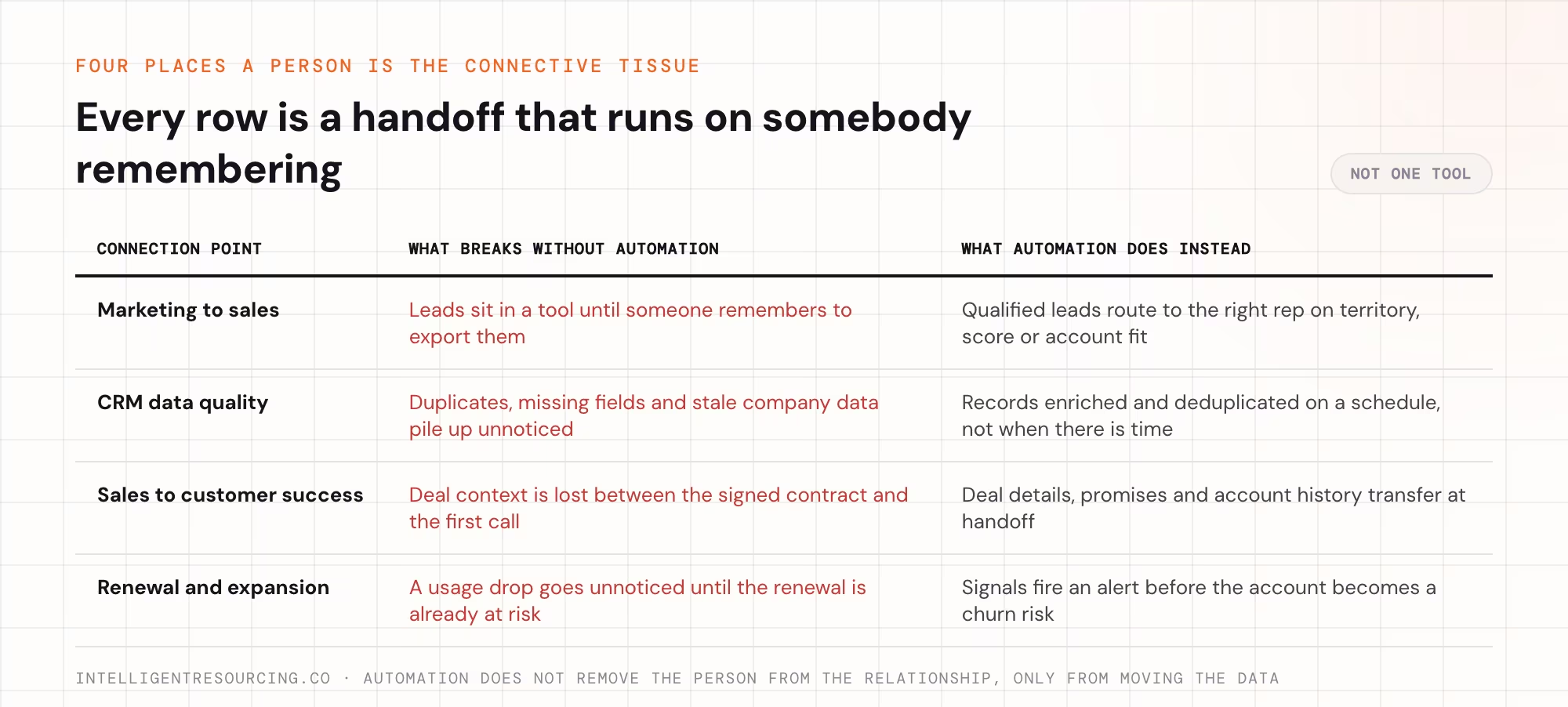
RevOps automation is not one tool doing one job. It is a set of connections between systems that were never designed to talk to each other, each solving a specific handoff.
| Connection point | What breaks without automation | What automation does instead |
|---|---|---|
| Marketing to sales | Leads sit in a spreadsheet or a marketing tool until someone remembers to export them | Qualified leads route to the right rep automatically, based on territory, score, or account fit |
| CRM data quality | Duplicate contacts, missing fields and stale company data pile up unnoticed | Records are enriched and deduplicated on a schedule, not when someone finally has time |
| Sales to customer success | The context from a closed deal gets lost between the signed contract and the first onboarding call | Deal details, promises made and account history transfer automatically at handoff |
| Renewal and expansion signals | A usage drop or a support ticket spike goes unnoticed until the renewal is already at risk | Signals trigger an alert or a workflow before the account becomes a churn risk |
Each row in that table is a place where a person used to be the connective tissue. Automation does not remove the person from the relationship with the customer. It removes them from being the thing that has to remember to move the data.
This matters most for CRM data specifically. Business-to-business (B2B) contact data decays at 22.5% a year. That benchmark comes from MarketingSherpa, which measured decay at 2.1% per month, and is published in HubSpot's database decay research. A record that is accurate today is wrong by next quarter without something automatically refreshing it.
RevOps Automation Compared With Adjacent Terms
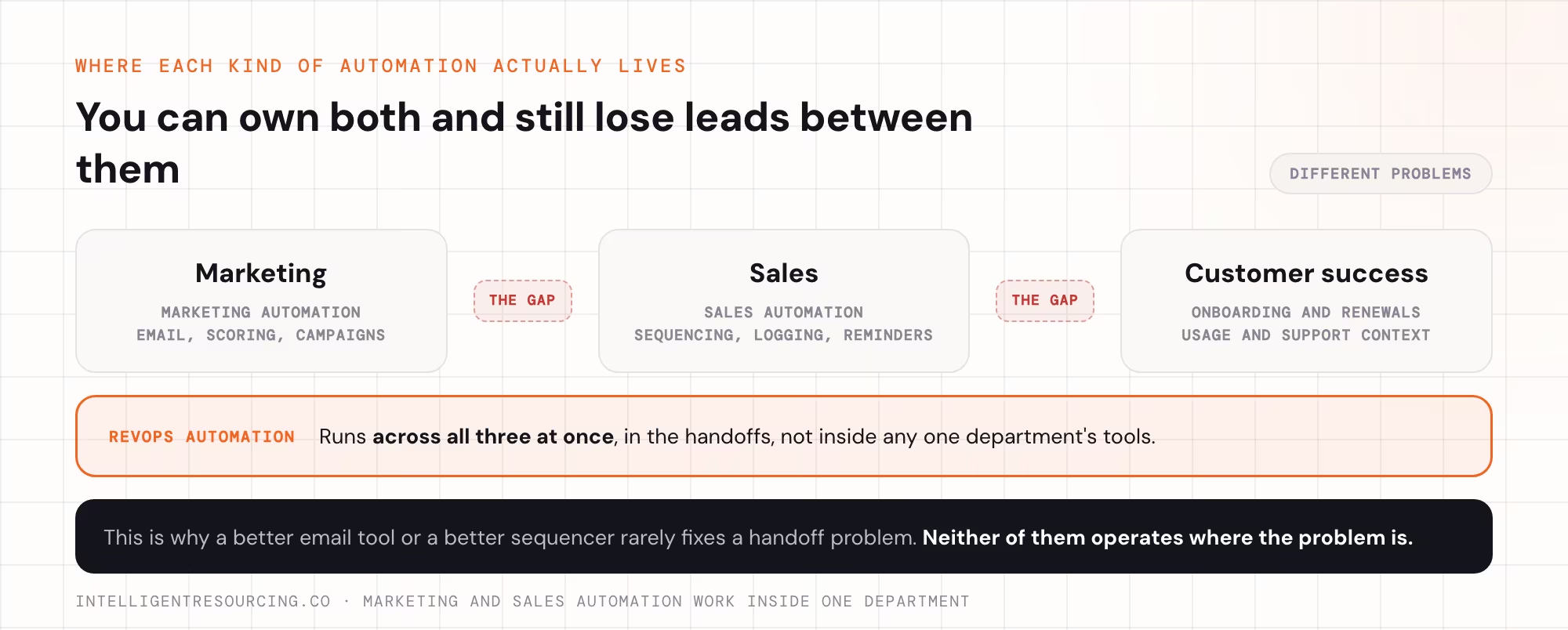
RevOps automation gets confused with marketing automation and sales automation constantly, and the confusion causes real budget mistakes. Each of these solves a different problem, and buying one does not give you the others.
| Term | What it automates | Where it lives |
|---|---|---|
| Marketing automation | Email sequences, lead scoring, campaign triggers | Inside the marketing team's own tools |
| Sales automation | Sequencing, call logging, deal reminders | Inside the sales team's own tools |
| CRM cleanup or enrichment | Fixing and updating existing contact and company records | A single database, usually the CRM |
| RevOps automation | The handoffs and shared data between marketing, sales and customer success | Across all three functions at once, not inside any one of them |
A company can have excellent marketing automation and excellent sales automation and still lose leads in the gap between the two. That gap is precisely the problem RevOps automation is built to close. It is why buying a better email tool or a better sales sequencer rarely fixes a handoff problem on its own.
What This Looks Like for One Lead, Start to Finish
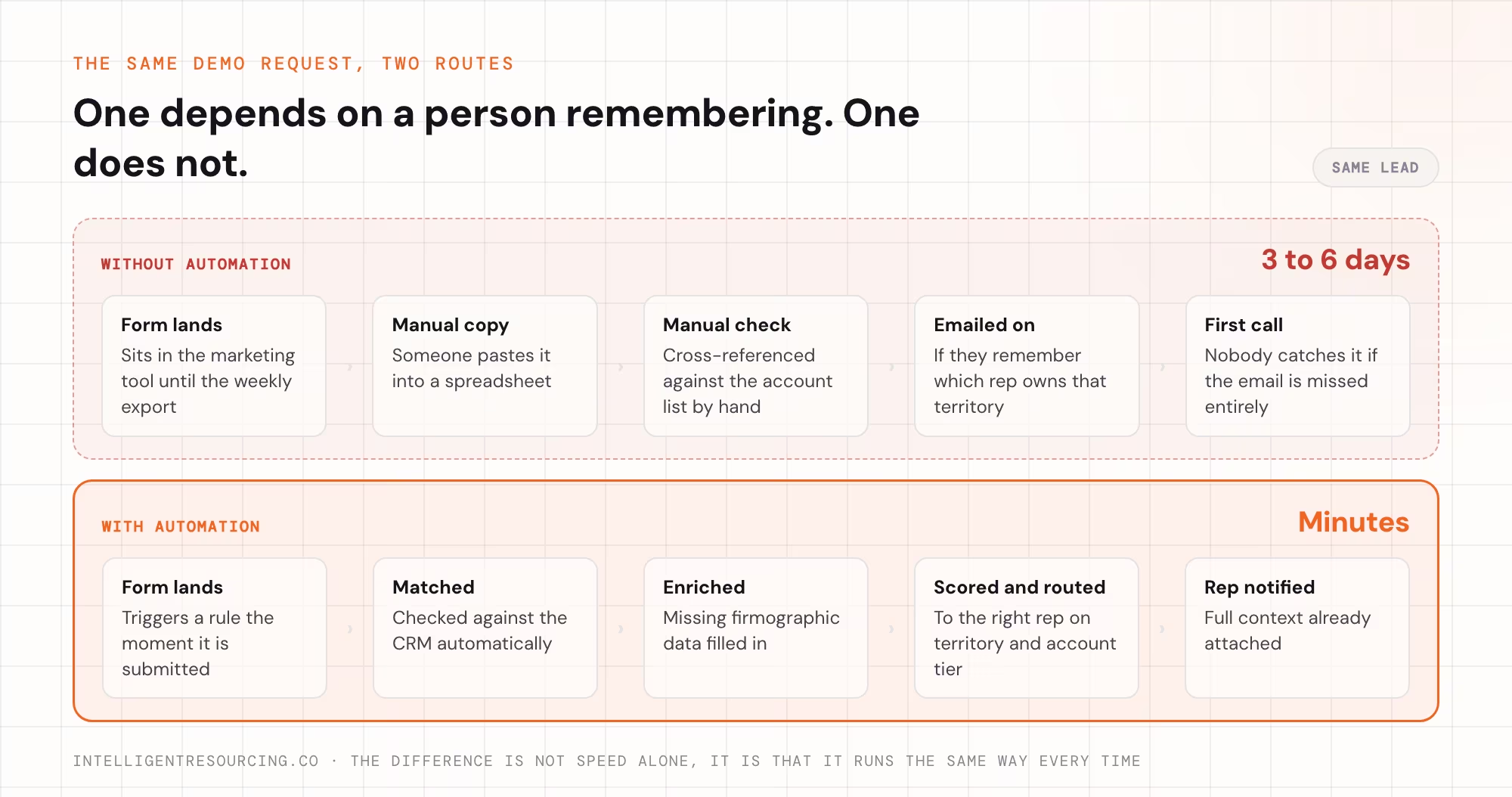
Abstract definitions are easy to nod along to and hard to picture. Here is what the same lead's journey looks like with and without RevOps automation in place.
Without it: a prospect fills out a demo request form. It lands in the marketing tool, where it sits until the weekly export. Someone copies it into a spreadsheet, checks it against the account list, and emails the right rep, if they remember which rep owns that territory. 3 to 6 days pass before the first call happens, and nobody catches it if the email gets missed entirely.
With automation in place, the same form submission triggers a rule the moment it happens. The system checks the account against the CRM and enriches missing firmographic data. It scores the lead and routes it to the correct rep based on territory and account tier, all within minutes.
The rep gets a notification with full context already attached. No export, no spreadsheet, no dependence on someone remembering.
The difference is not speed alone. It is that the process runs the same way every time, regardless of who is on holiday or how busy the team is that week.
Why This Matters More in 2026
RevOps automation has moved from a nice-to-have to a structural requirement. The reason is what companies now try to layer on top of it: AI. AI cannot fix a broken handoff. It just makes the break happen faster and hide better.
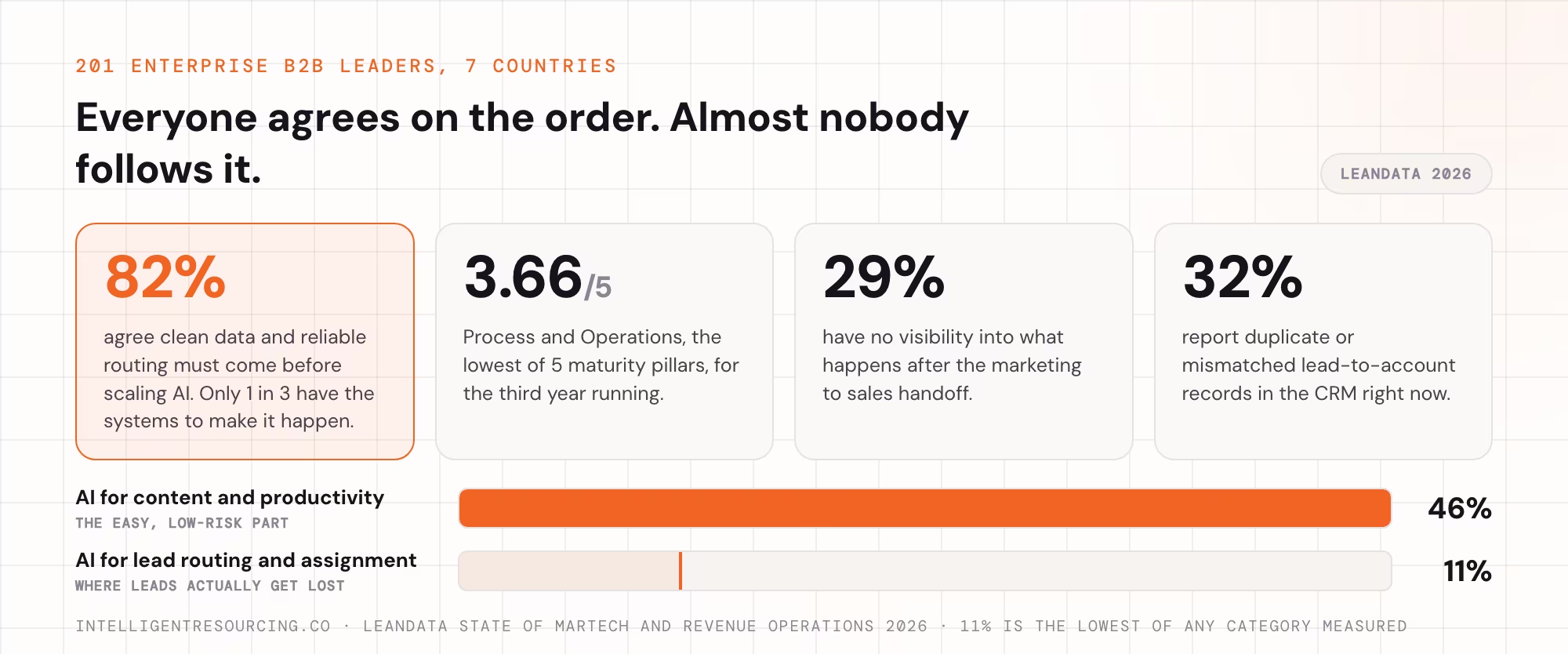
LeanData's State of Martech report surveyed 201 enterprise B2B leaders across 7 countries. It found that 82% agree clean data and reliable routing must come before scaling AI. Only 1 in 3 have the systems in place to make that happen. The same research scored Process and Operations at 3.66 out of 5, the lowest of 5 maturity pillars measured, for the third year running.
The same report found that AI lead routing and assignment sits at just 11% adoption, the lowest of any category measured. 46% of the same companies already use AI for content creation and productivity work. Teams are automating the easy, low-risk parts of the job while the actual handoff, where leads get lost, stays manual.
29% of the surveyed leaders said they have no visibility into what happens after a lead moves from marketing to sales at all. 32% report duplicate or mismatched lead-to-account records sitting in their CRM right now.
None of that is a tooling gap. Most of these companies already own a CRM, a marketing platform and a sales engagement tool. What they lack is the automated connective layer between them, which is the specific gap Intelligent Resourcing's go-to-market engineering approach exists to close.
What a RevOps Automation Stack Typically Includes
A RevOps automation stack connects the systems a company already uses so customer data, ownership and next actions move reliably between teams. The CRM usually sits at the centre as the shared record, with 4 supporting layers:
- CRM and shared data: Holds contact, company, deal and customer records that marketing, sales and customer success need to work from.
- Data enrichment: Updates missing or outdated information, matches leads to accounts and helps prevent duplicate records.
- Routing and workflow automation: Assigns leads and accounts using agreed rules, moves records between stages and notifies the next owner.
- Signal detection: Watches for events that need action, such as a demo request, pricing page visit, usage drop or approaching renewal.
The stack does not need to be complex. A smaller company may use its CRM's native workflow rules and a lightweight enrichment tool, while a larger revenue team may need a dedicated orchestration platform. The important test is whether the systems work together without relying on someone to move data or remember the next step.
Every stack also needs an owner and a way to monitor failures. Routing rules, territories and qualification criteria change over time, so someone must review exceptions, investigate unassigned records and update workflows when the business changes. Automation is only reliable when the team maintains it after launch.
How This Differs From Simply Buying More Software
Buying an orchestration platform will not fix unclear ownership, inconsistent data or a broken handoff. Software can automate a process, but the team must first agree on how that process should work. Otherwise, automation simply moves the same problems between systems faster.
Before choosing or configuring a tool, revenue teams need to define:
- Lead qualification: What makes a lead ready for sales, and which criteria must it meet?
- Required data: Which fields must be complete and accurate before a record moves to the next stage?
- Ownership: Who is responsible for a lead, deal or customer at each point in the journey?
- Handoff rules: What triggers a transfer between teams, and what context must move with the record?
- Exceptions and alerts: What happens when a record is incomplete, no owner matches or a response deadline is missed?
Once these decisions are agreed, the technical build has a clear specification. Workflow rules can route records using consistent criteria, while alerts flag exceptions that need human attention. Integration and testing still matter, but the team is no longer asking software to resolve disagreements that have never been settled.
The goal is not a bigger stack. It is a reliable operating process that the stack can run and the whole revenue team can trust.
Common Misunderstandings Worth Clearing Up
A few misconceptions come up often enough to address directly. The first is that RevOps automation means replacing a RevOps hire with software. It does not. It removes the manual, repetitive parts of the job so a RevOps hire spends time on strategy and exceptions, not on exporting spreadsheets.
The second is that this is only relevant to large enterprises with dedicated RevOps teams. Our own Evergreen CRM enrichment work applies the same enrichment and routing logic for mid-market companies with no RevOps title on the org chart. The handoff problem starts long before the headcount does.
The third misunderstanding is treating automation as a one-time project. A routing rule built for last year's territory map or last year's product line quietly breaks the moment either one changes. Nobody notices until the pipeline starts leaking again. Our roundup of RevOps agencies in Australia covers what ongoing support for this actually looks like.
Where to Start if You Do Not Have This Yet
The starting point is not a platform purchase. It is mapping where a lead, a deal or a renewal signal depends on a person remembering to act manually. Then pick the highest-volume one of those to fix first.
RevOps Tools
Map the points where a lead, a deal or a renewal signal still depends on someone remembering to act, then fix the highest-volume one first.
FAQs
What is RevOps automation in simple terms?
RevOps automation is the use of connected software and workflow rules. It moves data and triggers actions between marketing, sales and customer success automatically, instead of relying on someone to do it by hand. It covers tasks like lead routing, data enrichment and handoff alerts.
Is RevOps automation the same as marketing automation?
No. Marketing automation runs inside the marketing team's own tools, such as email sequences and lead scoring. RevOps automation runs across marketing, sales and customer success at once, specifically in the handoffs between those teams, which marketing automation does not touch.
Do small companies need RevOps automation, or only large enterprises?
Handoff problems start well before a company has a dedicated RevOps team or title. Any business where more than one team touches a lead, a deal or a renewal benefits from automating that handoff, even if the fix starts small.
What breaks first when a company has no RevOps automation?
Lead routing is usually the first visible break. Qualified leads sit unclaimed, or get assigned to the wrong rep, because nobody is watching the handoff in real time. Data quality issues, such as duplicate or outdated CRM records, tend to be the second, quieter problem.
Does adding AI tools fix a broken RevOps handoff automatically?
No. AI tends to make an existing handoff problem worse, not better, since it can act faster on the same broken data and routing rules. Fixing the underlying handoff and data quality first is what makes AI additions actually safe to layer on top.