

How Much Does a Bad First GTM Hire Cost in Australia?
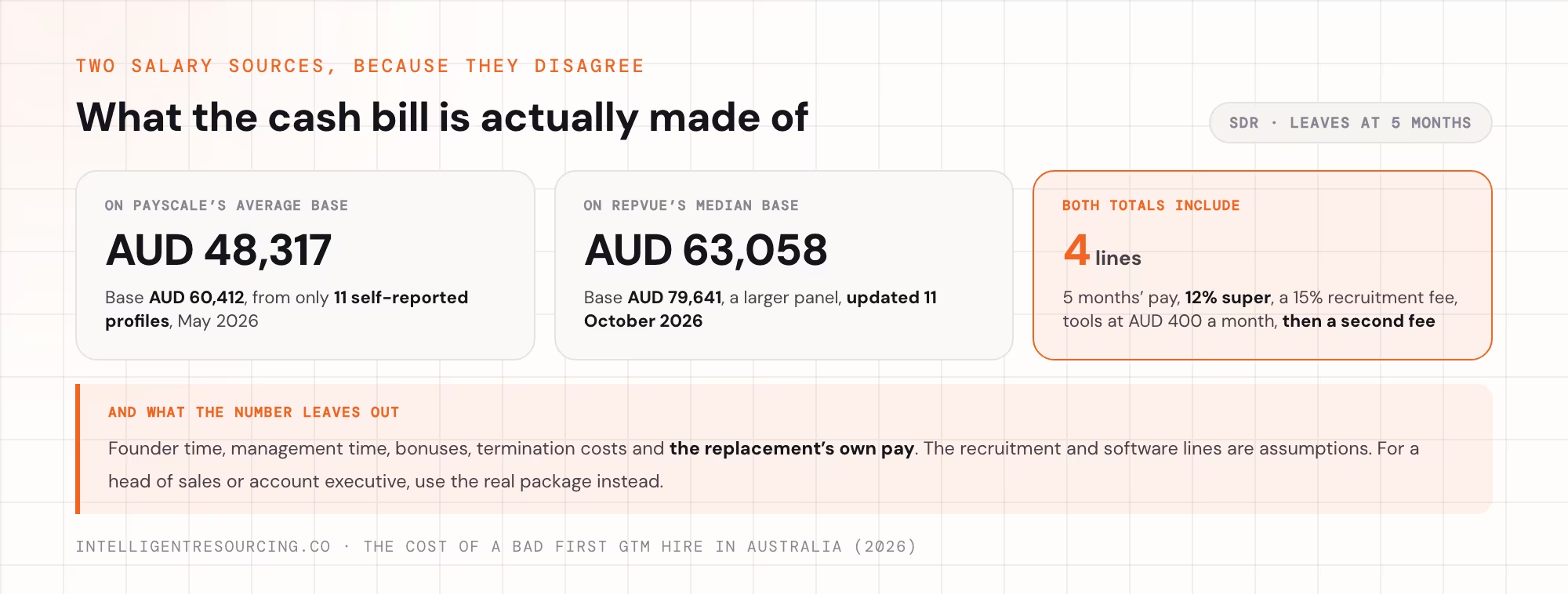
A bad first go-to-market (GTM) hire costs an Australian startup about AUD 48,300 to AUD 63,100 in cash. That is for a sales development representative (SDR) who leaves after 5 months, followed by a second recruitment fee. It covers pay, super, recruitment and tools, but not founder time, management time or the replacement's pay.
Salary data varies by source, so the example below uses two figures. Payscale's Australian SDR salary data shows an average base of AUD 60,412, based on only 11 salary profiles (updated May 2026). RepVue reports a higher median base of AUD 79,641 (updated 11 October 2026). The superannuation guarantee is 12% from 1 July 2025.
| Cost | Payscale average base | RepVue median base |
|---|---|---|
| 5 months' base salary | AUD 25,172 | AUD 33,184 |
| Superannuation at 12% | AUD 3,021 | AUD 3,982 |
| Recruitment fee, assumed at 15% of annual salary | AUD 9,062 | AUD 11,946 |
| Sales tools, assumed at AUD 400 a month | AUD 2,000 | AUD 2,000 |
| First-hire cash cost | AUD 39,255 | AUD 51,112 |
| Replacement recruitment fee | AUD 9,062 | AUD 11,946 |
| Total cash cost | AUD 48,317 | AUD 63,058 |
The two columns differ because the samples do. Payscale's average rests on 11 self-reported profiles, so a handful of entries can move it. RepVue's median draws on a larger panel of sales staff. Treat the pair as a range rather than picking the one that suits the argument.
The recruitment and software figures are assumptions. The totals exclude bonuses, management time, termination costs and onboarding the replacement. For a head of sales or account executive, use the real package and recruitment terms instead of SDR figures.
How Long Does It Take to Replace a Bad First Sales Hire?
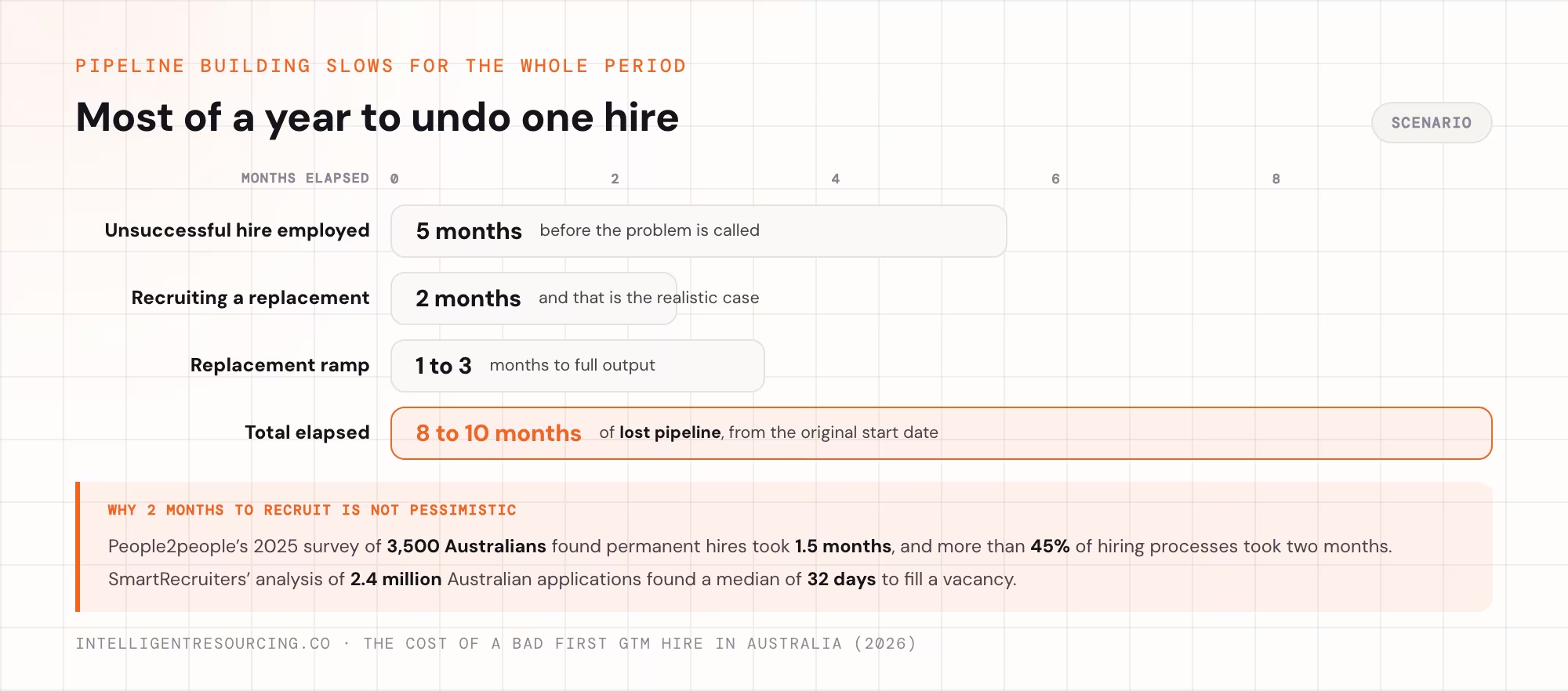
Replacing a failed first GTM hire usually takes 8 to 10 months from the original start date. The startup has to spot the problem, exit the hire, recruit a replacement and wait for that person to ramp. Pipeline building slows for the whole period, even when some sales work carries on.
| Stage | Duration |
|---|---|
| Unsuccessful hire employed | 5 months |
| Recruiting a replacement | 2 months |
| Replacement ramp | 1 to 3 months |
| Total elapsed period | 8 to 10 months |
These are scenario assumptions, and some stages can overlap. The 2-month recruiting stage is realistic: People2people's 2025 survey of 3,500 Australians found permanent hires took 1.5 months, and more than 45% of hiring processes took two months.
The problem is harder to diagnose when the founder never documented the sales process. An SDR may send plenty of outreach but book few good meetings. That points to the wrong targets or unclear rules, not a lack of effort. That pattern is the first of the common post-raise GTM mistakes, and the fix starts with writing the process down.
How Does a Bad GTM Hire Affect Startup Runway?
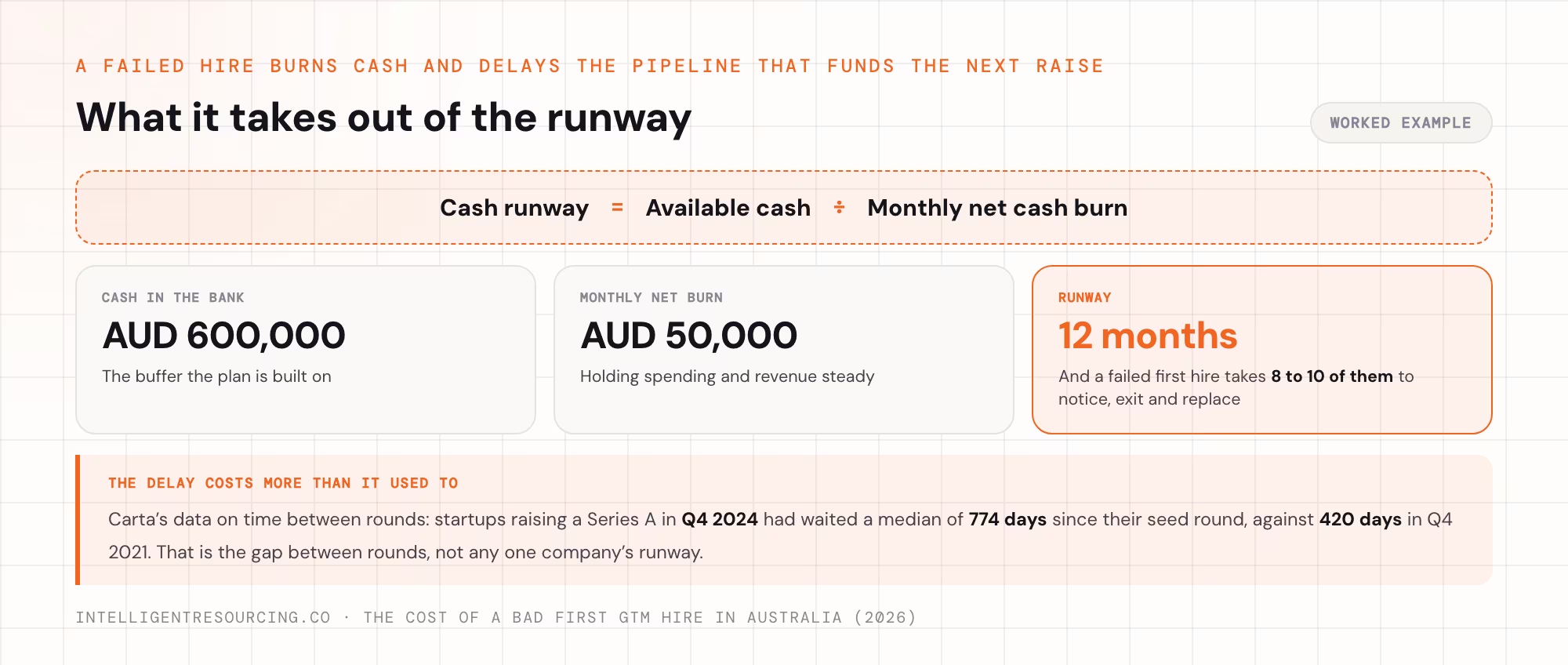
A bad GTM hire shortens runway in two ways. It adds cash burn for a role that does not produce pipeline, and it delays the pipeline needed for revenue growth or the next raise. Runway measures how long the business can operate on its available cash at the current rate of spending.
Cash runway = Available cash divided by monthly net cash burn
For example, a startup with AUD 600,000 in cash and monthly net burn of AUD 50,000 has 12 months of runway, if spending and revenue stay the same. A failed hire spends part of that buffer without moving the growth plan forward. Put the two numbers together and the shape of the problem is clearer. On that burn, the 8 to 10 months it takes to notice, exit and replace a first hire is most of a 12-month buffer, spent while pipeline growth stays flat.
Funding gaps make the delay costlier. Carta's data on time between rounds shows the wait is growing. Startups raising a Series A in Q4 2024 had waited a median of 774 days since their seed round, against 420 days in Q4 2021. That describes the gap between rounds, not any one company's runway.
Measure hiring risk against your actual burn and revenue milestones. If you are weighing a hire against outside help, compare both on pipeline produced, as set out in our guide to measuring GTM partner ROI.
How Do You Know the Process Is Ready for a First Hire?
The process is ready for a first hire when someone other than the founder can follow it and produce qualified pipeline. That means a documented ideal customer profile (ICP), clear qualification rules and evidence from real deals. Until those exist, a new hire inherits guesswork instead of a process.
Use 4 questions to check readiness:
| Buyer question | Evidence required |
|---|---|
| Do we know our ideal customer? | A documented ICP backed by previous wins |
| Can someone follow our sales process? | Clear targeting, qualification and handover rules |
| Has the process produced results? | Qualified pipeline or closed deals relevant to the role |
| Can we afford the full hiring period? | Budget for recruitment, salary, tools and ramp |
Even a working process does not guarantee results. RepVue's Australian data shows 75.8% of SDRs hit quota in the last 12 months, so about 1 in 4 miss even where the process holds. Plan for some misses before blaming the hire.
If the answers are not there yet, test the process first. A part-time specialist can write down your targeting and qualification rules in a fixed project with set outputs. Intelligent Resourcing's GTM engineering service builds the workflows that find, score and route accounts inside your own tools, and documents them as it goes.
For the wider choice between building a team and outsourcing it, see our guide to build versus outsource after funding.
What Should You Do If Your First GTM Hire Is Already Struggling?
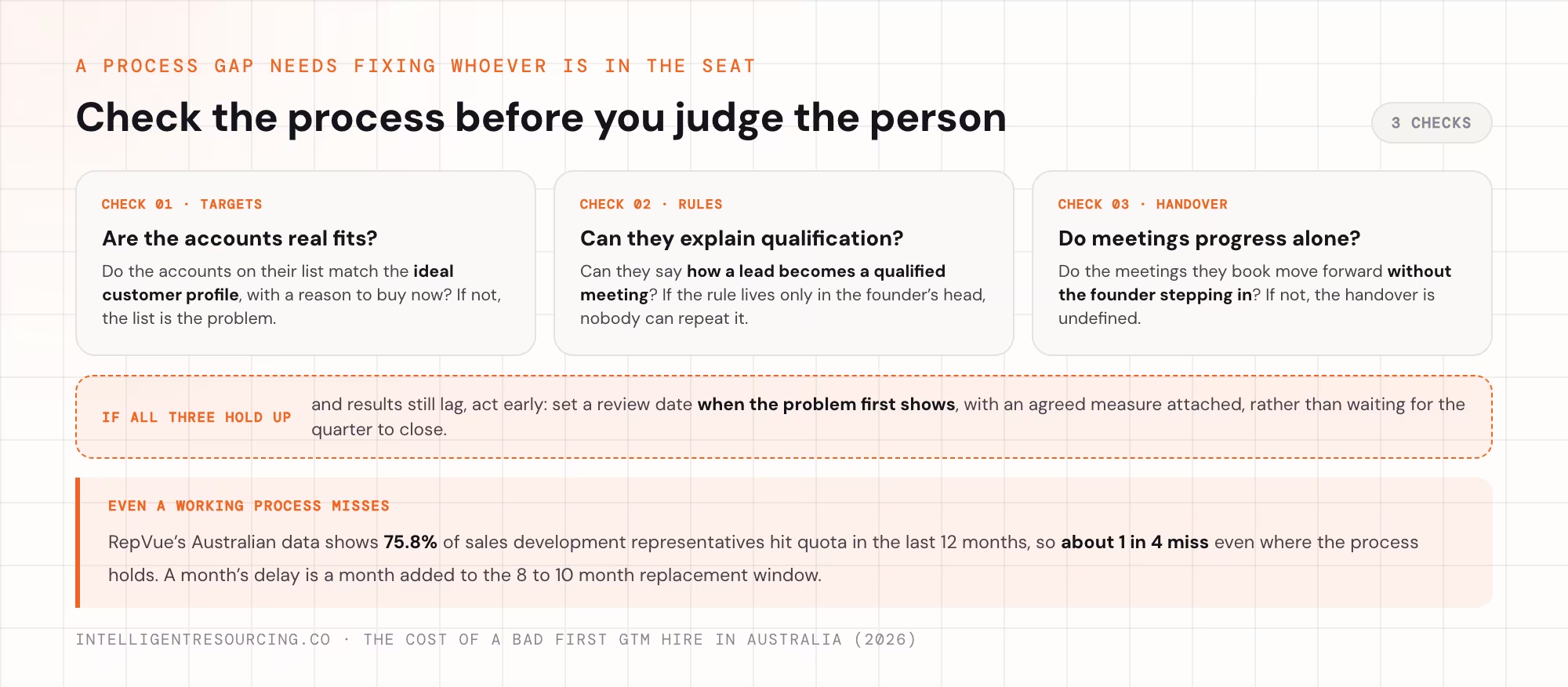
If your first GTM hire is struggling, check the process before you judge the person. Look at whether the accounts they work fit the ICP, whether qualification rules are written down and whether the founder still closes the deals. A process gap needs fixing whoever is in the seat.
- Check the targets: are the accounts in their list real ICP fits with a reason to buy now?
- Check the rules: can they explain how a lead becomes a qualified meeting?
- Check the handover: do meetings they book progress without the founder stepping in?
If the process holds up and results still lag, act early. Acting early means setting a review date when the problem first shows, with an agreed measure attached to it, rather than waiting for the quarter to close. The cost of a month's delay is a month added to the 8 to 10 month replacement window. A replacement will not arrive fast: SmartRecruiters' analysis of 2.4 million Australian job applications found a median of 32 days to fill a vacancy.
GTM Engineering
See how Intelligent Resourcing builds and measures the GTM system inside your own tools, then book a strategy session.
FAQs
How much does a bad first sales hire cost in Australia?
An illustrative SDR who leaves after 5 months costs about AUD 39,000 to AUD 51,100 in salary, superannuation, recruitment and tools. Adding a second recruitment fee takes the total to about AUD 48,300 to AUD 63,100, before founder time and onboarding the replacement.
What is the biggest hidden cost of a bad GTM hire?
Lost time is the biggest hidden cost. The business spends months spotting the problem, recruiting a replacement and getting back to full output. Pipeline building slows throughout, while the company keeps spending.
How long does it take to recover from a bad first GTM hire?
In a typical scenario, about 8 to 10 months from the original start date. That covers about 5 months in the role, about 2 months to recruit and 1 to 3 months for the replacement to ramp.
How can a startup avoid a bad first GTM hire?
Document the sales motion, write down the qualification rules and test whether someone other than the founder can produce results. If the process is unproven, check it through fixed-term expertise or a managed GTM system before committing to a permanent hire.
Is a bad first hire always the wrong person?
No. A bad first hire is often an unproven process rather than the wrong person. When the founder still closes most deals by instinct, any new hire will struggle until the targeting and qualification rules are written down.