

What Does Hiring 5 SDRs Actually Buy After a Raise?
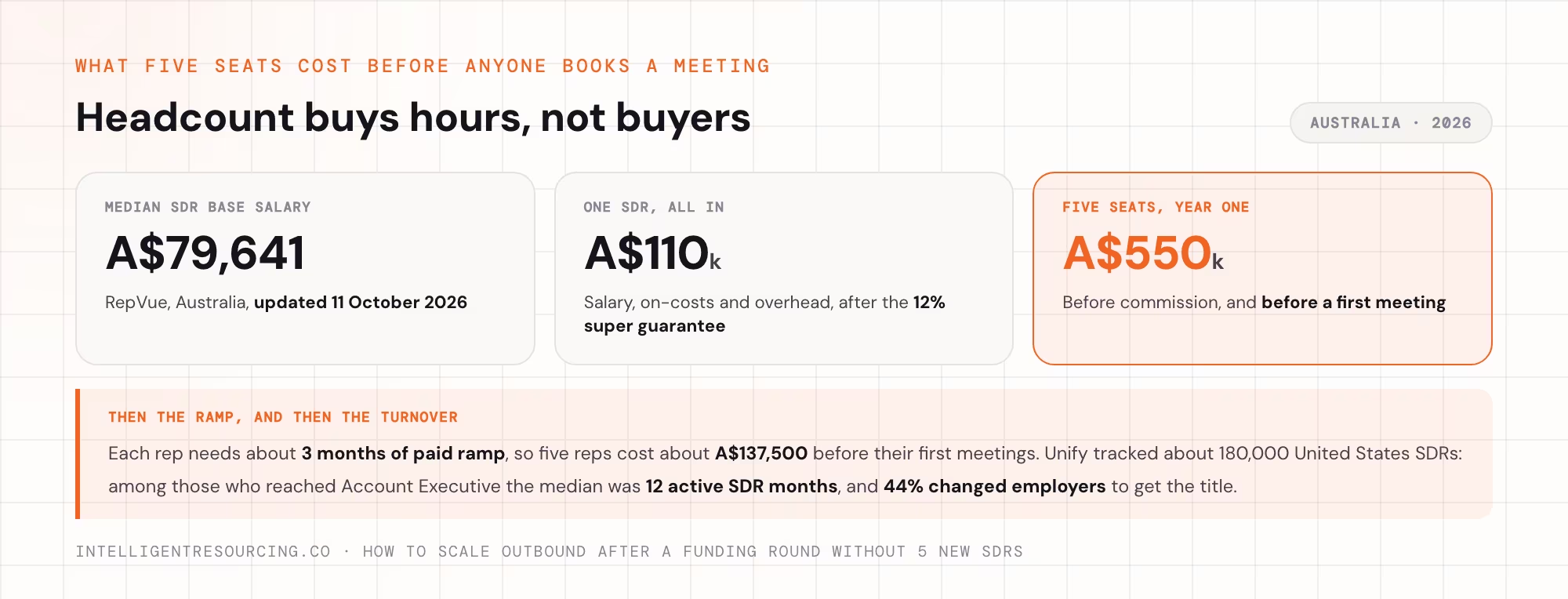
Hiring 5 sales development representatives (SDRs) buys about 5 people's prospecting hours, at roughly A$550,000 a year. It does not buy knowledge of which accounts are ready to purchase. Each rep also needs about 3 months of paid ramp before a first meeting, so the first quarter is mostly cost.
The base pay comes from market data. RepVue's Australian SDR salary data puts the median base at A$79,641, updated 11 October 2026. Add the 12% superannuation guarantee that has applied since 1 July 2025, then payroll tax, tools and management time, and the estimate below follows.
| Cost line | One SDR | Five SDRs |
|---|---|---|
| Salary, on-costs and overhead per year | About A$110,000 | About A$550,000 |
| Paid ramp before a first meeting | About 3 months | About 15 rep-months |
| Spend before first meetings | About A$27,500 | About A$137,500 |
Turnover then resets the ramp bill. Unify's research lab tracked about 180,000 US SDRs who started between 2021 and early 2026. Among those who became Account Executives, the median was 12 active SDR months, and 44% changed employers to get the title. That data is American, so read it as direction, not an Australian benchmark.
Commission sits on top of these figures once reps start hitting targets, and every replacement hire starts the ramp again. Paying for that ramp before the process is written down is one of the common mistakes after a raise.
What Should Outbound Scale On If Not Headcount?
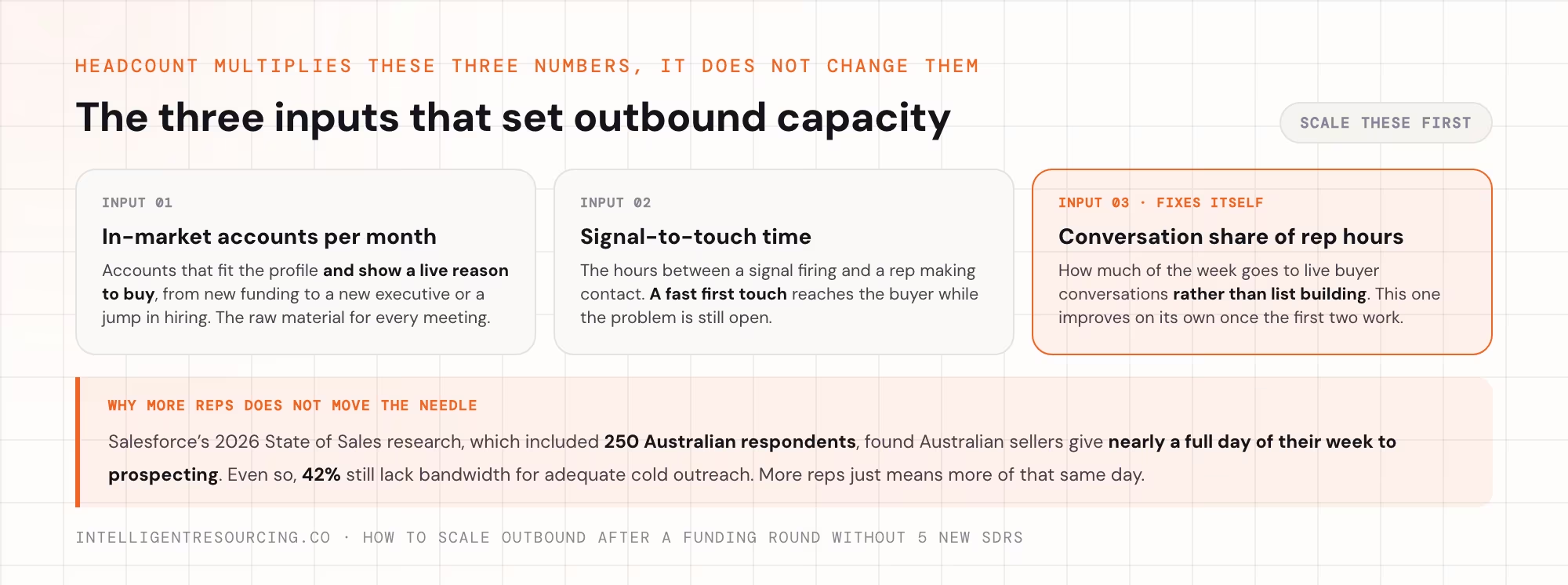
Outbound should scale on 3 inputs, not headcount. The inputs are how many in-market accounts reach the CRM each month, how fast a rep reaches each one, and how much of a rep's week goes to buyer conversations. Headcount just multiplies whatever those numbers already are.
Australian survey data shows where rep time goes today. Salesforce's 2026 State of Sales research, which included 250 Australian respondents, found Australian sellers give nearly a full day of their week to prospecting. Even so, 42% said they still lack bandwidth for adequate cold outreach. More reps just means more of that same day.
- In-market accounts per month. Count accounts that fit your ideal customer profile (ICP) and show a live reason to buy, from new funding to a new executive or a jump in hiring. This is the raw material for every meeting.
- Signal-to-touch time. Measure the hours between a signal firing and a rep making contact. A fast first touch reaches the buyer while the problem is still open.
- Conversation share of rep hours. Track how much of each rep's week goes to live buyer conversations rather than list building and research.
The first 2 inputs depend on agentic signal listening, where software watches for buying events and routes each one to the right rep. The third input improves on its own once reps stop building lists by hand.
How Does a Signal Engine Add Accounts Without Adding Reps?
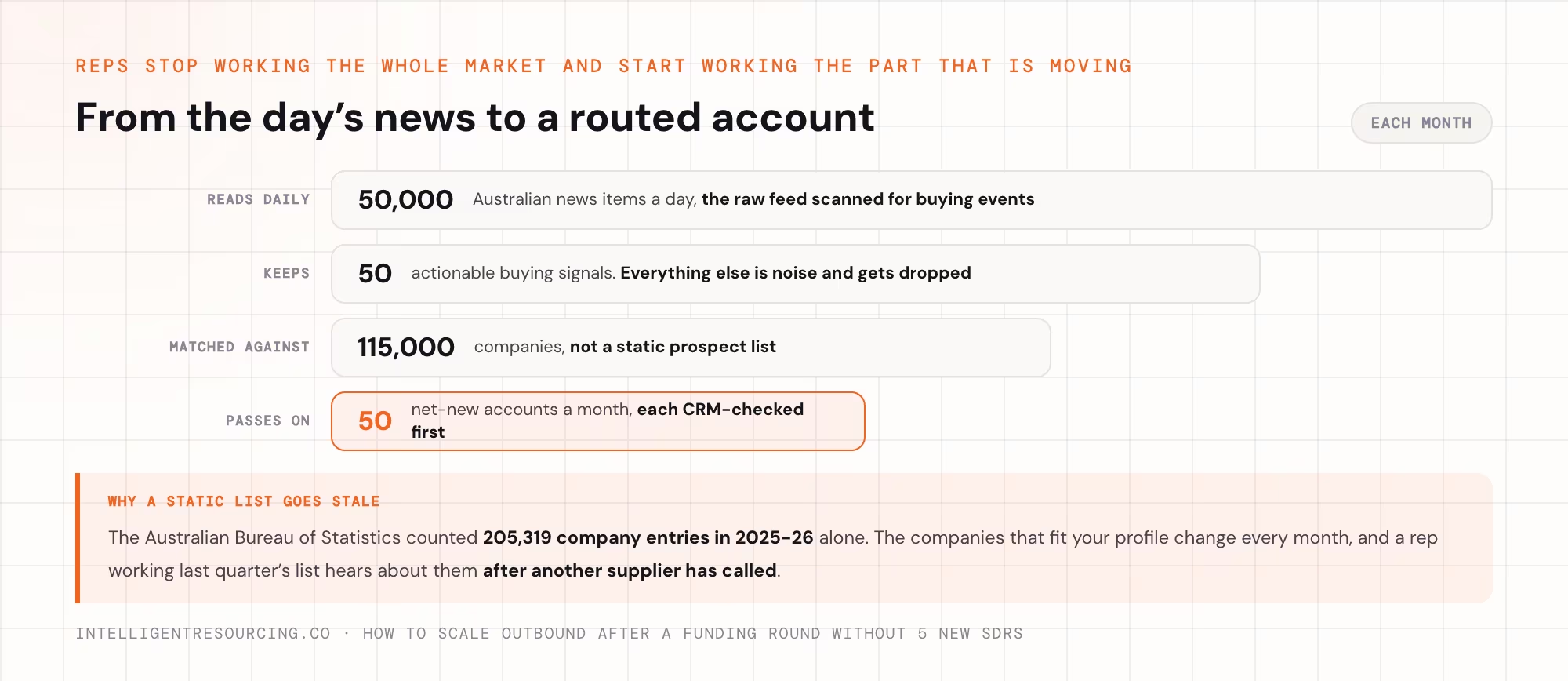
A signal engine adds accounts by watching a fixed market for buying events and passing on only the accounts with a live reason to buy. Reps stop working the whole market and start working the part that is moving. Here is how Intelligent Resourcing's go-to-market engineering work narrows the Australian market each month:
- Reads about 50,000 Australian news items a day. This is the raw feed the engine scans for buying events.
- Keeps about 50 as actionable buying signals. Everything else is noise and gets dropped.
- Narrows a universe of 115,000 companies. Signals are matched against that universe rather than a static prospect list.
- Passes on about 50 net-new accounts a month. Each is checked against the client's CRM first, so reps never chase a deal already in play.
Reps reach out only once a Verified Buying Window is confirmed, meaning the signal checks out and the account fits the ICP. The engine watches for signals such as:
- Funding rounds. New capital usually comes with a plan to spend it on growth.
- Leadership changes. A new executive often reviews suppliers in the first months of the role.
- Hiring spikes. A burst of job ads in one team points to a project with a budget.
- Technology installs. A new platform creates work that needs supporting tools and services.
The market also keeps moving under a static list. The Australian Bureau of Statistics counted 205,319 company entries in 2025-26 alone. Most are small, but the companies that fit your profile change every month too. A rep working last quarter's list hears about them late, after another supplier has called.
For a national waste-management company, this approach surfaced 150 net-new accounts in phase one and 250 over four months, each checked against the existing base. You can also run it in-house: our guide to build a signal-led prospecting system walks through the setup in order.
When Is Hiring More SDRs the Right Call?
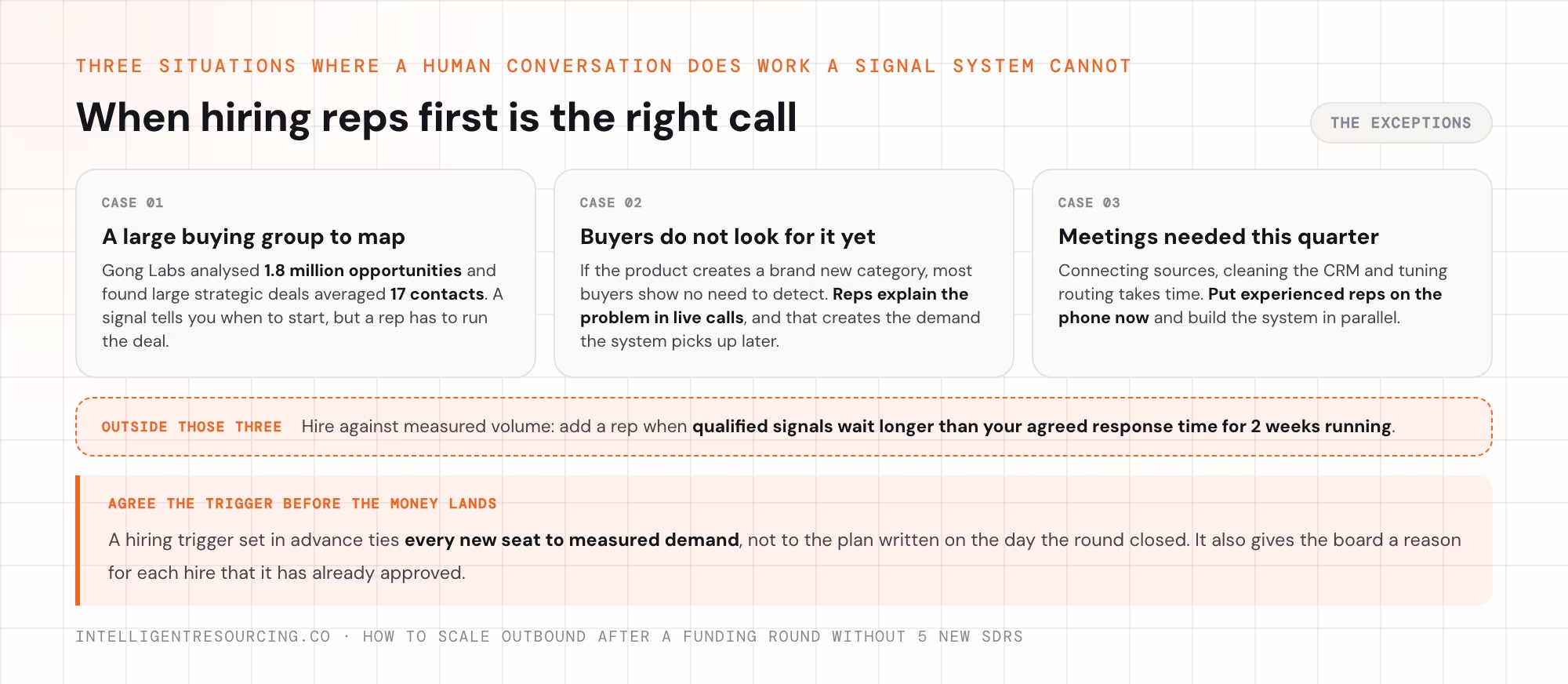
Hiring SDRs first is the right call when a human conversation does work a signal system cannot. That happens in 3 situations: deals with a large buying group to map, products that buyers do not yet know to look for, and boards that need meetings this quarter. Outside those, hire against measured volume instead.
Deals with a large buying group
Gong Labs analysed 1.8 million opportunities and found large strategic deals averaged 17 contacts. Mapping and calling 17 people is human work. A signal tells you when to start, but a rep has to run the deal.
If a competitor already has relationships inside the account, our guide to closing the post-raise pipeline gap covers how to win it back.
Products buyers do not look for yet
Signal engines find buyers who already show a need. If your product creates a brand new category, most buyers do not show that need yet. Reps explain the problem in live calls, and that creates the demand the system detects later.
Meetings needed this quarter
A system takes time to connect sources, clean the CRM and tune routing. If the board needs meetings this quarter, put experienced reps on the phone now and build the system in parallel.
The trigger for the next hire
Outside those 3 cases, hire against measured volume. Add a rep when qualified signals wait longer than your agreed response time for 2 weeks running. Agree that trigger with the board before the money lands, so every hire has a clear reason behind it. The reason matters because of what a bad first hire costs.
Which Metrics Prove Outbound Is Scaling, Not Just Spending?
Outbound is scaling when qualified meetings per rep rise and signal-to-first-touch time holds steady as volume grows. Activity counts such as emails sent or dials made show spend, not scale. Boards read these numbers against customer acquisition cost (CAC) payback, the months of gross profit needed to repay the cost of winning a customer.
Kyle Poyar, who produces the 2025 software benchmarks report with High Alpha, drew on more than 800 companies. The report named CAC payback and net revenue retention as the 2 strongest predictors of long-term, profitable growth. Outbound feeds CAC payback through what each rep and each meeting costs.
| Metric | What it shows | How often |
|---|---|---|
| Qualified meetings per rep | When the next hire is justified | Monthly |
| Signal-to-first-touch time | Whether routing keeps up with signals | Weekly |
| In-market accounts added | Whether the raw material is growing | Monthly |
| Cost per qualified meeting | Efficiency of the whole outbound motion | Monthly |
| CAC payback | How outbound compares with other spend | Quarterly |
GTM Engineering
See how Intelligent Resourcing builds the signal engine and routing inside your CRM, then book a strategy session.
FAQs
Can a funded startup run outbound with only 1 or 2 reps?
Yes, if the reps only work accounts with a live buying signal. A small team handles a steady flow of in-market accounts when software does the research and routing. Add reps when signals start waiting longer than your agreed response time.
What should trigger the next SDR hire after a raise?
Hire when qualified signals wait longer than your agreed response time for 2 weeks in a row. That trigger ties each new seat to measured demand, not to the hiring plan written when the round closed. Agree it with the board in advance.
How much do 5 SDRs cost in Australia?
About A$550,000 a year in salary, on-costs and overhead, before commission. Each rep also needs about 3 months of paid ramp, so 5 new reps cost about A$137,500 before their first meetings.
How many in-market accounts does a signal engine add each month?
It depends on the market and the ICP. Intelligent Resourcing's engine narrows a universe of 115,000 companies and passes on about 50 net-new accounts a month, each checked against the client's CRM before a rep sees it.
Does signal-based outbound work for enterprise deals?
It works for timing, not for running the deal. A signal shows when an enterprise account has a reason to buy. Large deals still need reps to map and engage many stakeholders, so pair the signal engine with experienced sellers.